Self-Emptying Robot Vacuum: Is It Worth the Upgrade
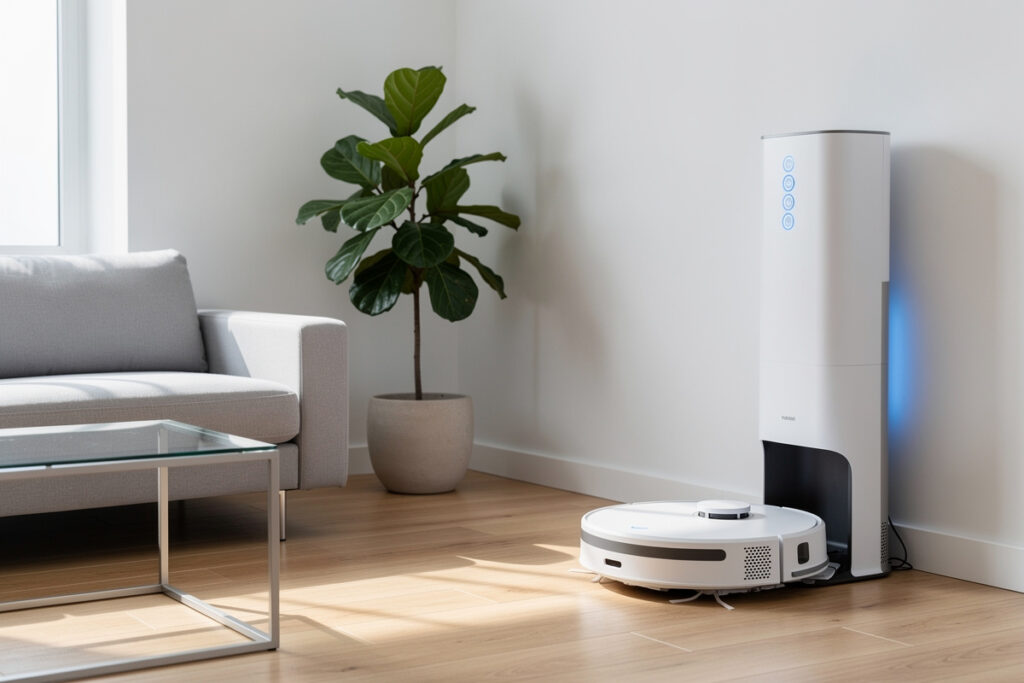
A self-emptying robot vacuum transfers collected debris from its small onboard dustbin into a larger docking station automatically after each cleaning session, extending the time between manual intervention from 1 to 2 days to 30 to 60 days. The self-emptying base adds $100 to $200 to the purchase price but eliminates the single most annoying aspect of robot vacuum ownership — remembering to empty a tiny dustbin before every run.
The self-emptying feature has become the dividing line between robot vacuums people use consistently and ones that end up in a closet. Studies of robot vacuum usage patterns show that owners of manual-empty models interact with their vacuum 4 to 5 times per week (emptying, restarting, troubleshooting full-bin alerts) while self-emptying owners interact once or twice per month. This guide explains how self-emptying systems work, compares bagged versus bagless designs, covers the ongoing costs, and helps you decide whether the upgrade justifies its premium.
Disclosure: HomeAutoCentral is reader-supported. As an Amazon Associate I earn from qualifying purchases, at no extra cost to you. I only recommend gear worth your money.
How Self-Emptying Bases Work
When the robot finishes a cleaning session and returns to its dock, the self-emptying base activates a powerful suction motor (separate from the robot’s own motor) that pulls debris upward through a sealed channel from the robot’s dustbin into the base’s larger collection container. The transfer takes 10 to 20 seconds and produces a loud noise — comparable to a standard upright vacuum at 75 to 80 dB. Most bases run the emptying cycle immediately upon docking, though some models allow scheduling the cycle to avoid nighttime noise.
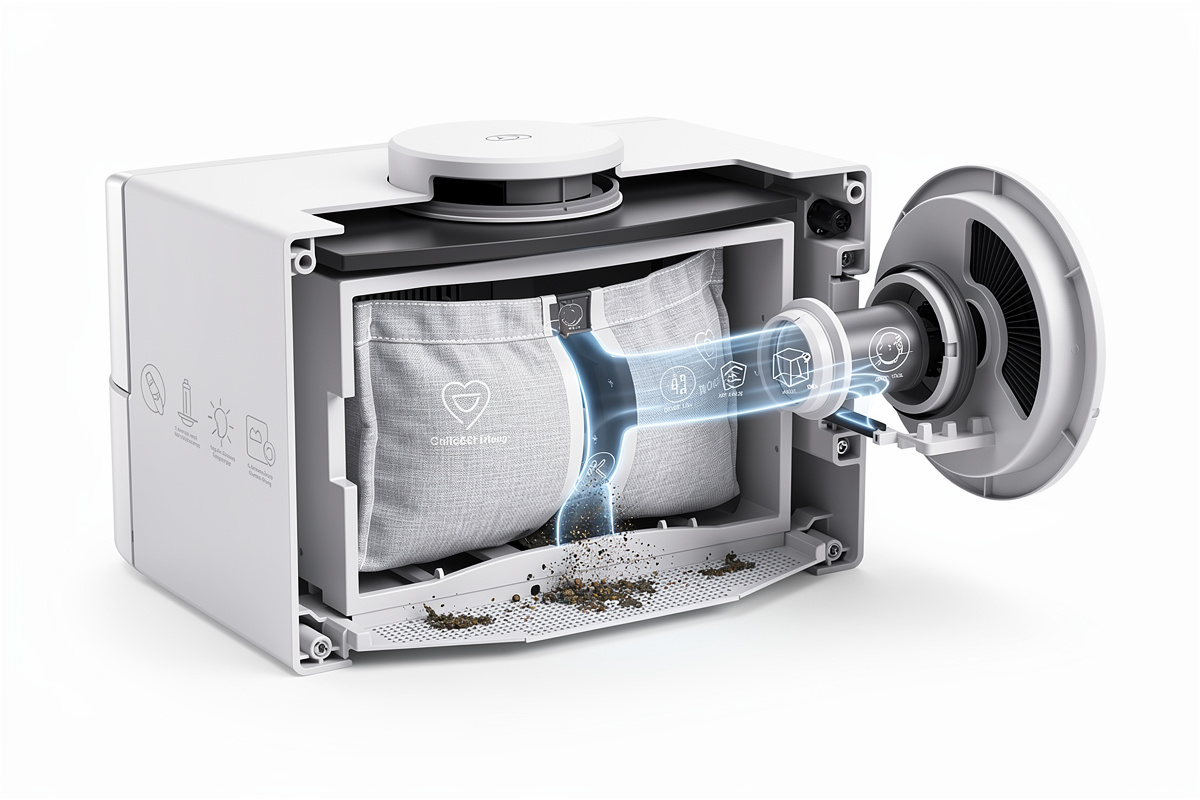
The suction transfer channel connects the robot’s dustbin port to the base through a sealed gasket. When the robot docks correctly, the ports align and the seal prevents debris from escaping during transfer. Misalignment — caused by a robot docking at a slight angle or debris blocking the port — results in incomplete emptying, leaving residual dust in the onboard bin. Most modern bases include alignment guides that physically correct the robot’s position during docking.
Base collection containers hold 2 to 4 liters of debris compared to the robot’s 300 to 600ml onboard bin. This 5 to 10x capacity increase translates directly into reduced interaction frequency. A household generating moderate floor debris (2-person, no pets, hard floors) empties the base every 45 to 60 days. Pet households and larger families with carpeting empty every 20 to 30 days.
Bagged vs Bagless Self-Emptying Systems
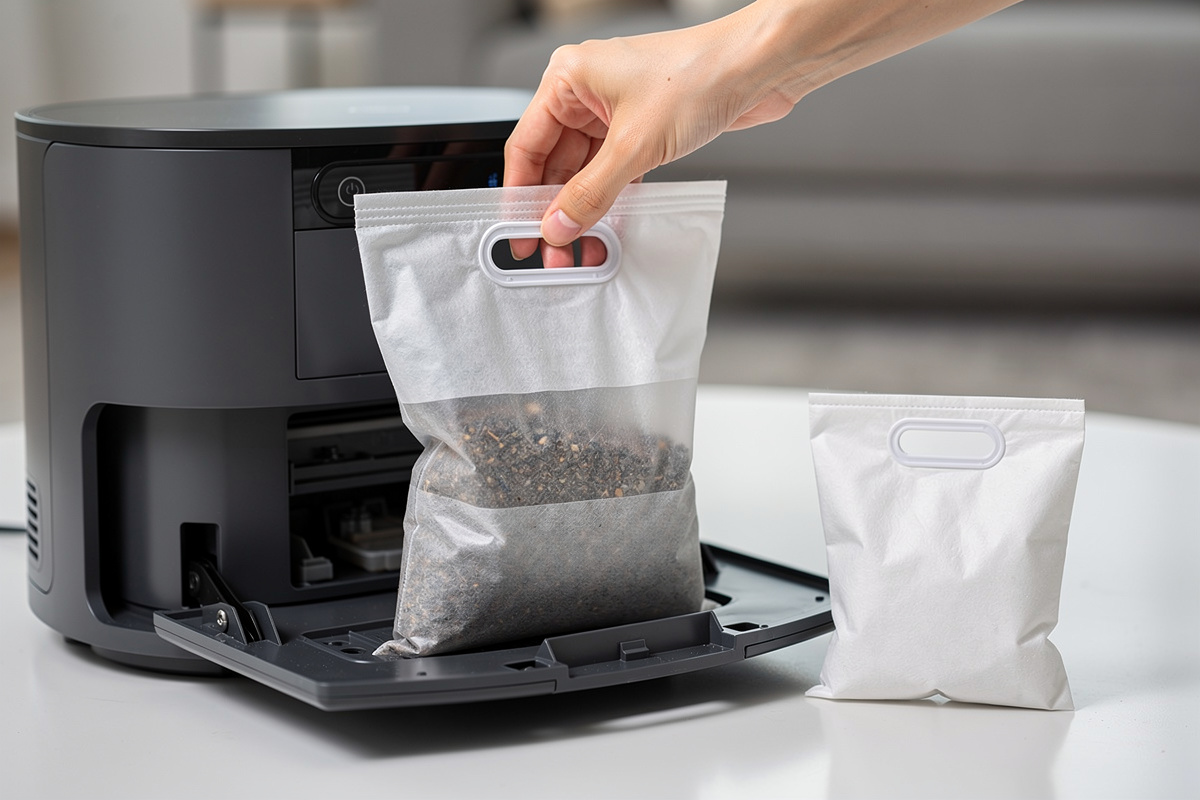
Bagged self-emptying bases collect debris in sealed disposable bags that you remove and discard when full. The bag seals on removal, trapping fine dust and allergens inside rather than releasing them into the air. Replacement bags cost $15 to $25 for packs of 3 to 6, adding $20 to $50 in annual consumable costs depending on replacement frequency. For allergy sufferers and pet owners, bagged systems are definitively superior because they prevent secondary allergen exposure during disposal.
Bagless self-emptying bases collect debris in a reusable canister that you empty into a trash bin. This eliminates ongoing bag costs but introduces the same allergen exposure problem as manually emptying the robot’s dustbin — opening the canister releases a puff of fine dust. Some bagless designs include a compaction mechanism that presses collected debris into a dense puck, reducing the dust cloud on emptying. The canister requires periodic washing to prevent odor buildup, adding a maintenance step that bagged systems avoid.
The ongoing cost argument for bagless systems is weaker than it appears. Bags cost $3 to $8 each and last 30 to 60 days — roughly $40 to $80 per year. For context, this is less than a single bag of premium coffee per month. The convenience of tossing a sealed bag versus washing a dusty canister tips the practical value toward bagged systems for most households.
When Self-Emptying Pays for Itself
Self-emptying is most valuable in three scenarios. First, pet households where the 300ml onboard bin fills during a single-room clean, requiring daily manual emptying or accepting incomplete cleaning runs. The pet hair volume in multi-pet homes makes self-emptying not a luxury but a functional necessity. Second, large homes over 2,000 square feet where a single cleaning run generates enough debris to fill the onboard bin before the robot completes all rooms. Third, busy households where the friction of daily dustbin emptying causes owners to skip runs, defeating the purpose of autonomous cleaning.
Self-emptying is less critical for small apartments under 800 square feet with hard floors and no pets. In this scenario, the onboard bin handles 2 to 3 full cleaning runs before needing attention, and the robot finishes its route in 30 to 40 minutes. The $100 to $200 self-emptying premium buys convenience rather than functional capability — valid if you value the hands-off experience, but not necessary for effective cleaning.
Self-Emptying Base Noise and Placement
The emptying cycle is the loudest moment in robot vacuum operation — 75 to 80 dB for 10 to 20 seconds, comparable to a food blender. This noise occurs every time the robot docks after a cleaning session. In open-plan homes where the base sits in the living area, the emptying cycle during nighttime scheduled cleans can wake light sleepers. Solutions include scheduling cleans to end during daytime hours, placing the base in a utility closet or laundry room, or selecting models with scheduled emptying that delays the cycle until morning.
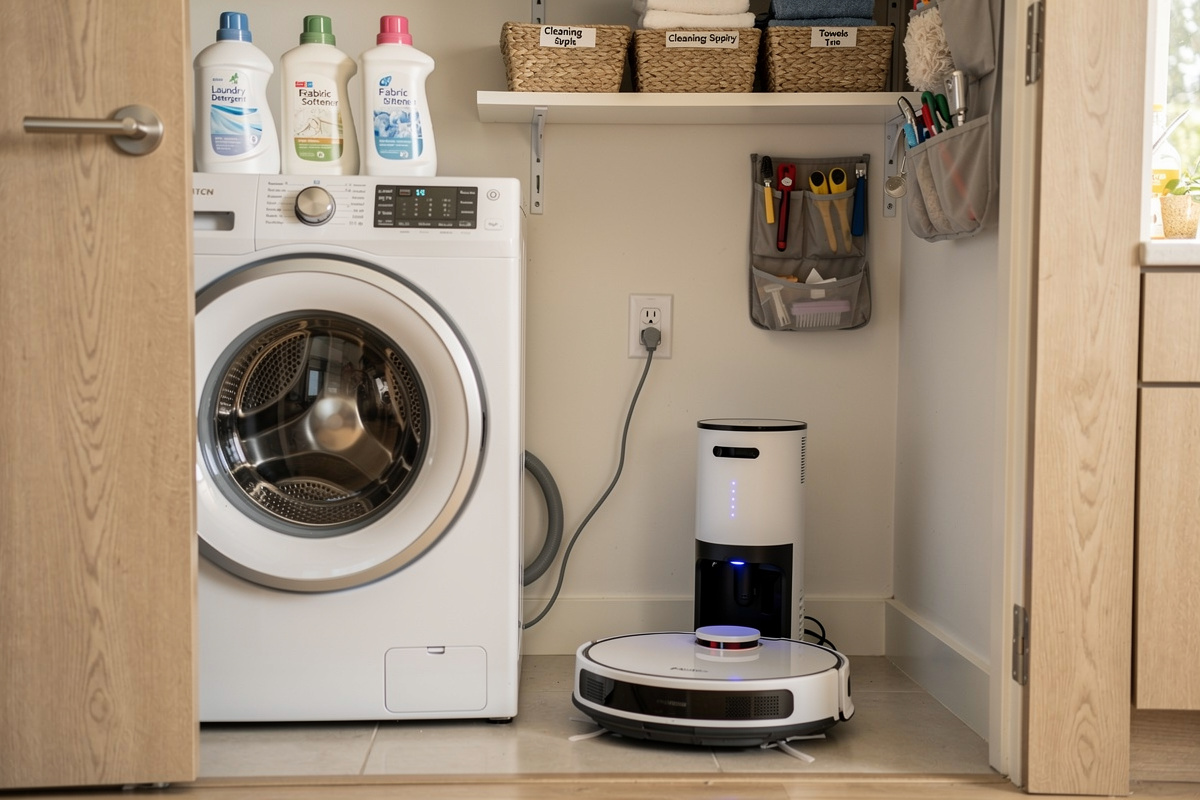
Base placement requires 24 to 36 inches of clear space in front of the dock for the robot to approach and align, plus 6 to 12 inches of clearance above for the dust transfer channel. Placing the base against a wall with open floor space in front is the standard configuration. Avoid placing bases on thick carpet — the robot may struggle to dock accurately on soft surfaces, and the seal between robot and base may not achieve full contact through carpet pile.
Power consumption for self-emptying bases is minimal. The base draws 1 to 3 watts on standby (maintaining charging circuits) and 500 to 800 watts during the 10 to 20 second emptying cycle. Annual electricity cost for the base is under $5 even with daily emptying cycles — negligible compared to any other household appliance. The robot’s own charging draws 30 to 60 watts for 2 to 3 hours per full charge. Combined with your other smart home energy devices, the total impact on your power bill is minimal.
Compatibility and Upgrade Paths
Most robot vacuum brands sell the self-emptying base as a separate purchase, allowing you to start with the robot alone and add the base later. However, not all robots from a brand are compatible with all bases — check model-specific compatibility before purchasing a base separately. Some brands lock base compatibility to specific robot generations, requiring both components from the same product line.
Third-party self-emptying bases exist for popular models at lower prices than manufacturer bases. Quality varies significantly — some work reliably while others create poor seals that leak dust or fail to empty completely. Stick with manufacturer bases for reliability, especially if your robot vacuum is still under warranty, as third-party accessories can void coverage.
Maintenance for Self-Emptying Systems
Self-emptying systems add maintenance tasks beyond standard robot vacuum care. Clean the transfer channel between robot and base monthly by checking for debris blockages at both connection ports. Wipe the seal gaskets on both the robot and base with a damp cloth to maintain suction integrity. For bagless systems, wash the collection canister every 2 to 3 months with warm water and mild soap, allowing it to dry completely before reinstalling.
The base’s suction motor filter (separate from the robot’s HEPA filter) requires cleaning or replacement every 3 to 6 months. This filter prevents fine dust from being blown into the room through the base’s exhaust during the emptying cycle. A clogged base filter reduces transfer suction and eventually leaves debris in the robot’s onboard bin — the first sign that the base filter needs attention.
Frequently Asked Questions
How long do self-emptying robot vacuum bags last?
Each disposable bag lasts 30 to 60 days depending on cleaning frequency, home size, and debris volume. Pet households and large homes go through bags faster. A 3-pack costing $15 to $25 typically lasts 3 to 6 months.
Are self-emptying robot vacuums worth the extra cost?
Yes for pet owners, large homes over 2,000 square feet, and busy households. The $100 to $200 premium eliminates daily dustbin emptying and extends hands-free operation to 30 to 60 days between any interaction.
How loud is a self-emptying robot vacuum base?
The emptying cycle produces 75 to 80 dB for 10 to 20 seconds, comparable to a food blender or standard upright vacuum. The robot itself runs at 55 to 70 dB during cleaning. Schedule emptying for daytime hours to avoid sleep disruption.
Bagged or bagless self-emptying base?
Bagged bases seal allergens inside disposable bags for cleaner disposal. Bagless bases save on bag costs but release dust when emptied manually. Bagged systems are better for allergy sufferers and pet owners despite the $40 to $80 annual bag cost.
Can I add a self-emptying base to my existing robot vacuum?
Many brands sell bases separately, but compatibility is model-specific. Check that your exact robot model is listed as compatible before purchasing. Third-party bases exist but may void warranty and have inconsistent seal quality.
How often do I empty the self-emptying base?
Every 30 to 60 days for average households. Pet owners and large families empty every 20 to 30 days. The companion app sends a notification when the base bag or canister is full and needs attention.