Roomba vs Roborock: Which Robot Vacuum Wins
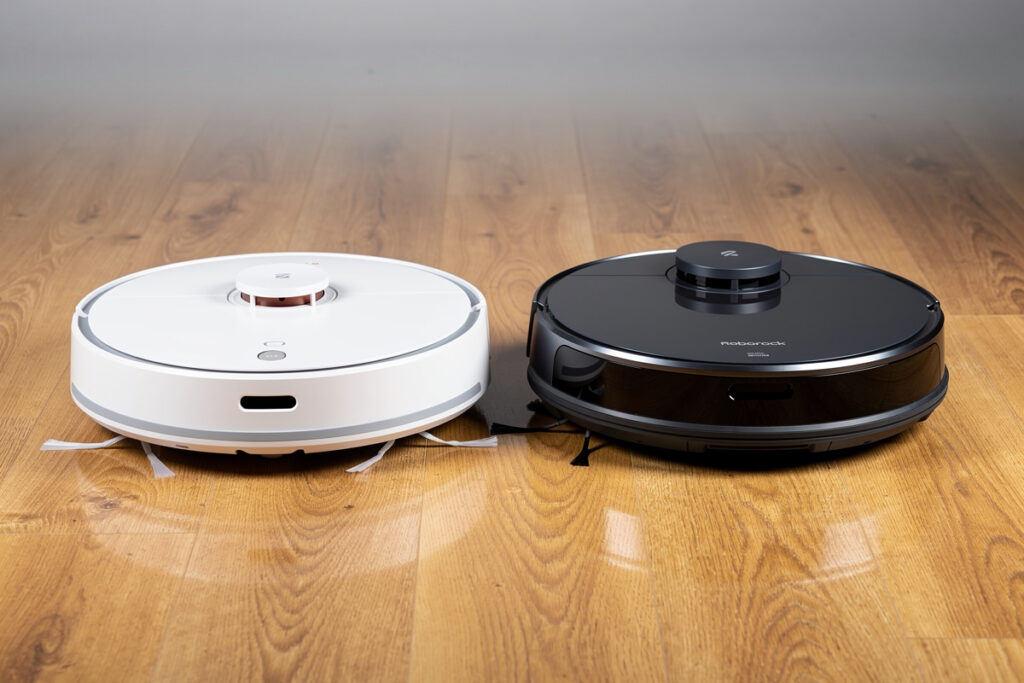
Roomba and Roborock are the two dominant robot vacuum brands in 2026, each taking fundamentally different approaches to autonomous floor cleaning. iRobot’s Roomba line prioritizes ecosystem reliability and customer support with 20 years of refinement behind it, while Roborock offers more features per dollar with aggressive hardware specifications that frequently outpace Roomba models at the same price point.
Choosing between Roomba and Roborock comes down to what matters most in your household: raw cleaning performance and features (Roborock advantage), or brand maturity and support infrastructure (Roomba advantage). Both brands produce genuinely good robot vacuums, but their engineering philosophies diverge on navigation, suction specifications, app ecosystems, and self-emptying dock designs in ways that make one clearly better than the other for specific use cases.
Disclosure: HomeAutoCentral is reader-supported. As an Amazon Associate I earn from qualifying purchases, at no extra cost to you. I only recommend gear worth your money.
Navigation Technology Comparison
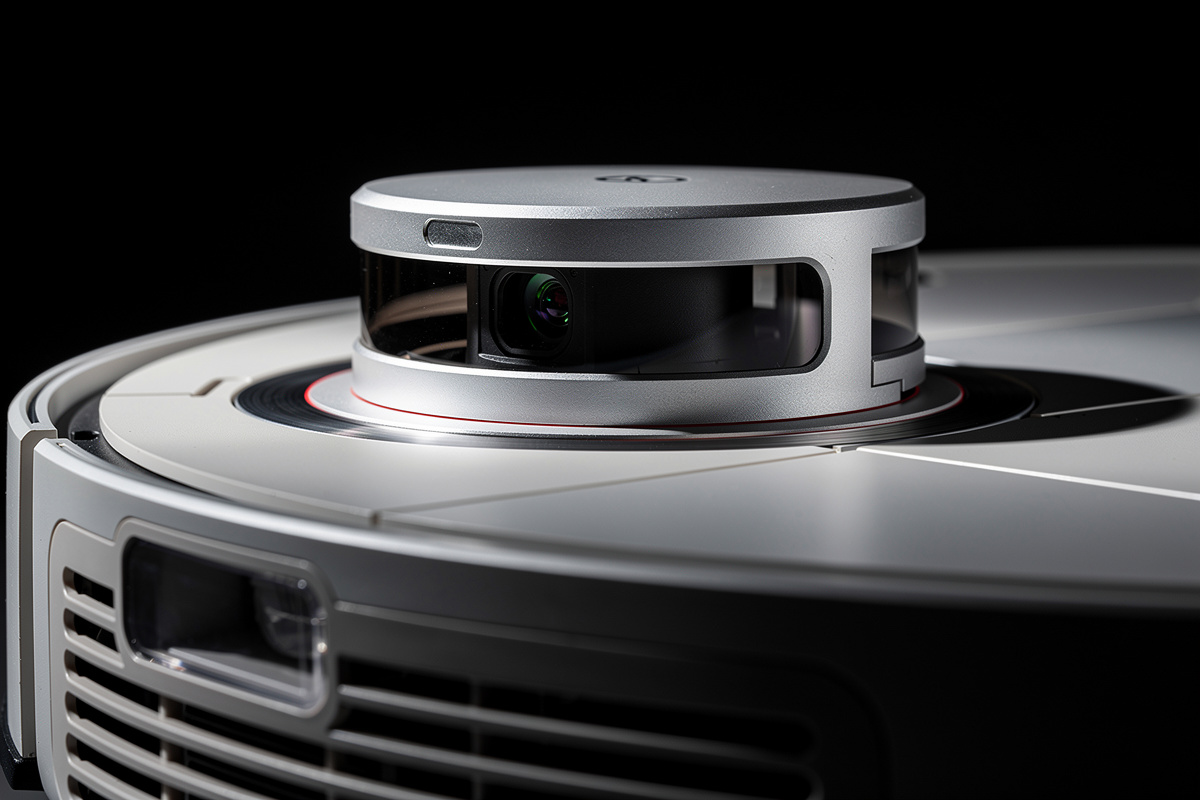
Roborock uses LiDAR navigation across its entire lineup from $300 entry-level models to $1,400 premium units. Every Roborock robot scans rooms with a spinning laser turret, builds precise floor maps in the first cleaning run, and stores multiple floor plans for multi-level homes. Even Roborock’s cheapest LiDAR model creates accurate maps and cleans in efficient parallel lines rather than random patterns.
Roomba’s navigation varies significantly across its product tiers. Entry-level Roomba models still use iAdapt bump-and-run navigation — the same random-bounce approach from the original Roomba that wastes battery on overlapping paths and misses spots. Mid-range models use camera-based visual SLAM navigation (iAdapt 3.0) that creates maps but struggles in low light. Only Roomba’s premium j-series models add obstacle avoidance cameras that compete with Roborock’s 3D structured-light detection.
For navigation quality per dollar, Roborock wins decisively. A Roborock Q-series with LiDAR outnavigates a $400 Roomba i-series using camera-based mapping. The Roborock maps faster, works in the dark, and produces more accurate floor plans. Roomba’s navigation only reaches parity at the $700+ j-series tier where obstacle avoidance cameras complement the mapping system.
Suction Power and Cleaning Performance
Roborock consistently offers higher suction specifications across price tiers. Mid-range Roborock models produce 5,500 to 8,000 Pa while comparable Roomba models specify “10x suction” relative to earlier models without providing Pa ratings. Roborock’s premium models reach 11,000 Pa, delivering measurably stronger carpet extraction that approaches upright vacuum territory.
Roomba compensates for lower raw suction with patented Dual Rubber Extractors — counter-rotating rubber rollers that have been refined over multiple generations. These extractors are exceptionally good at handling pet hair without tangling and adapt to different floor surfaces through automatic height adjustment. Roborock uses similar rubber-and-bristle hybrid brush designs that perform well but receive less iterative refinement between model generations.
In real-world testing on mixed hard floor and carpet, the differences are smaller than specifications suggest. Both brands clean hard floors effectively at all price tiers. On medium-pile carpet, Roborock’s higher suction pulls slightly more embedded debris, but Roomba’s brush extraction system compensates by agitating carpet fibers more effectively. The practical cleaning difference is 5 to 10 percent, noticeable in side-by-side testing but unlikely to matter in daily use.
App Ecosystem and Smart Home Integration
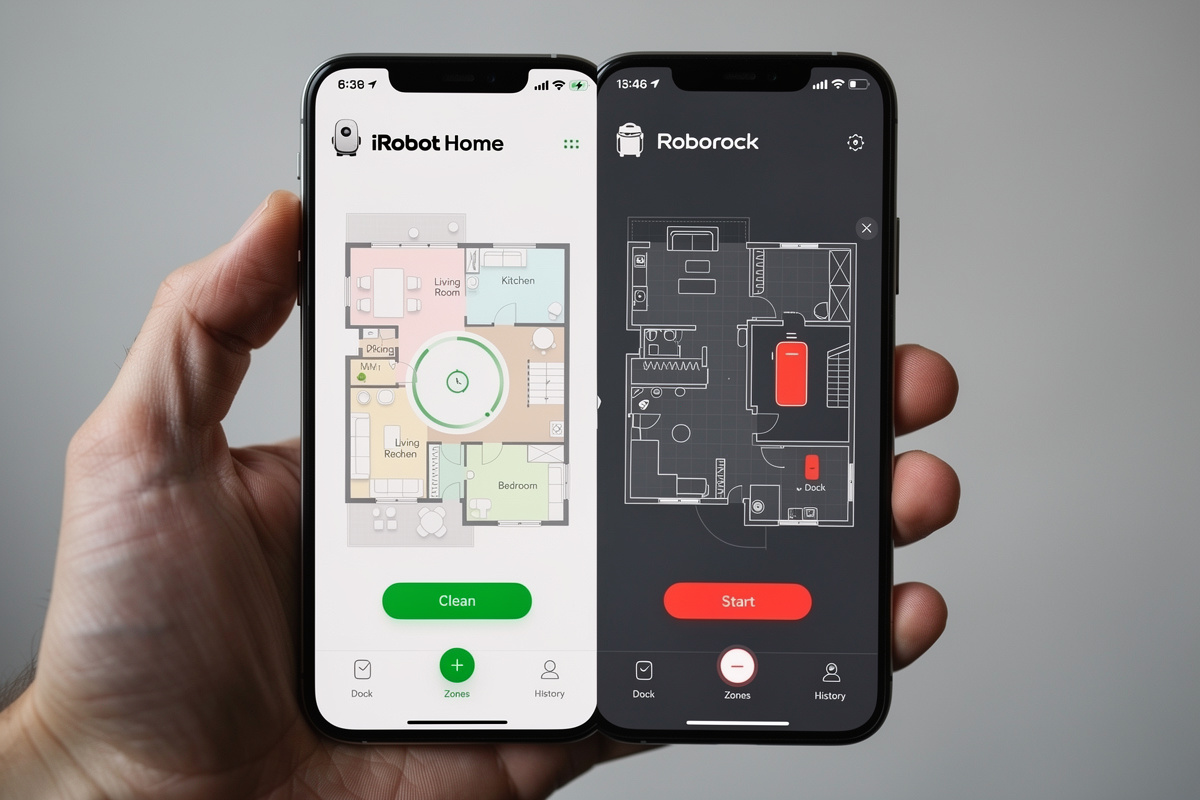
The iRobot Home app and the Roborock app are both mature platforms with room mapping, scheduling, no-go zones, and cleaning history. Roborock’s app offers more granular control — per-room suction levels, mopping water flow adjustment, furniture recognition zones, and real-time 3D mapping views. The iRobot app is simpler and more intuitive but with fewer customization options.
Smart home integration differs between brands. Roomba works with Alexa, Google Home, and IFTTT. Roborock works with Alexa, Google Home, and select models support Apple HomeKit and Matter protocol. For households deep in the Apple ecosystem, Roborock’s HomeKit support is a significant advantage that Roomba does not offer. Both brands integrate with voice assistant platforms for basic start, stop, and room-specific commands.
Firmware updates favor Roborock. Quarterly updates frequently add new features, improve navigation algorithms, and fix edge-case bugs. Roomba updates are less frequent and more focused on stability than feature additions. Roborock’s update cadence means the robot you buy today may be noticeably smarter in 6 months, while a Roomba delivers essentially the same experience throughout its lifespan.
Self-Emptying and Mopping Comparison
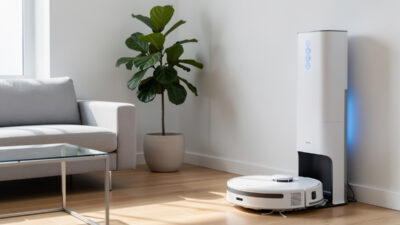
Both brands offer self-emptying bases, but Roborock’s premium docks significantly outspec Roomba’s Clean Base. Roborock’s all-in-one docks include self-emptying, mop washing with hot water, mop drying with warm air, and auto-refill water tanks — up to 7 features in a single dock. Roomba’s Clean Base handles self-emptying only, with no integrated mopping support.
Mopping capability heavily favors Roborock. Multiple Roborock models include sonic mopping pads vibrating at 3,000 Hz or dual spinning pads that genuinely scrub hard floors. Roomba’s mopping solution is the separate Braava line — a dedicated mopping robot that does not vacuum at all. If you want vacuuming and mopping in one robot, Roborock offers it across multiple price tiers while Roomba requires purchasing two separate devices.
Mop-lift technology on Roborock models automatically raises mop pads when transitioning to carpet. Roomba has no mop-lift because its vacuum line does not mop. For homes with mixed hard floor and carpet where a vacuum-mop combo is preferred, Roborock is the only viable choice between the two brands.
Price and Value Comparison
At every price tier, Roborock includes more features than the comparable Roomba model. A $400 Roborock typically matches a $600 Roomba in navigation quality and exceeds it in suction power and mopping capability. The value gap is widest in the $300 to $600 mid-range where Roborock offers LiDAR navigation, self-emptying options, and mopping — features that Roomba reserves for its $700+ premium tier.
Roomba commands a brand premium that reflects its 20-year track record, extensive retail presence, and established customer support network. iRobot has physical service centers in major North American cities, extensive replacement part availability, and a warranty process that most owners rate highly. Roborock’s support is entirely online with replacement parts shipped from regional warehouses — competent but less personal than iRobot’s network.
Resale value favors Roomba. Used Roomba models retain 40 to 60 percent of their retail price on secondary markets, while Roborock models retain 25 to 40 percent. The brand recognition and perceived reliability of Roomba translates directly into better resale, which partially offsets the higher initial cost if you upgrade frequently.
Which Brand Should You Choose
Both brands offer strong smart home automation capabilities including scheduled cleaning, zone targeting, and do-not-disturb modes. The automation depth is comparable, with Roborock offering slightly more granular room-by-room customization through its app.
Choose Roborock if you want the most features per dollar, need vacuum-and-mop in one robot, prefer LiDAR navigation at every price tier, or are in the Apple HomeKit ecosystem. Roborock delivers better hardware specifications at lower prices and receives more frequent firmware updates that improve the robot over time.
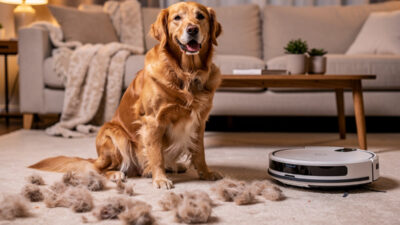
For pet owners specifically, Roomba’s Dual Rubber Extractors have a slight edge in anti-tangle durability — they are arguably the most refined pet hair brush design on the market after years of iterative improvement. Roborock’s brushes handle pet hair well but may require end-cap cleaning slightly more often. Both brands offer HEPA filtration on mid-range and premium models. See our pet hair robot vacuum guide for model-specific recommendations.
Choose Roomba if you value brand reliability and support infrastructure, have a simple cleaning setup that does not require mopping, prefer an established brand with 20 years of iteration, or plan to resell within 2 to 3 years. Roomba’s ecosystem is more mature and its customer support network is unmatched in the robot vacuum industry. For a broader comparison of all brands including Shark and Ecovacs, see our complete robot vacuum buyer guide.
Frequently Asked Questions
Is Roborock better than Roomba?
Roborock offers better value with more features per dollar, higher suction specifications, and integrated mopping across its lineup. Roomba offers better customer support, brand reliability, and resale value. Neither is universally better.
Does Roomba or Roborock have better navigation?
Roborock uses LiDAR across all models starting at $300. Roomba uses camera-based navigation on mid-range models, with LiDAR-comparable obstacle avoidance only on premium $700 and above j-series models.
Can Roomba mop floors?
Roomba vacuums do not mop. iRobot sells a separate Braava line of mopping robots. Roborock integrates mopping with vibrating or spinning pads directly into its vacuum models with automatic mop-lift for carpet.
Which is cheaper to maintain: Roomba or Roborock?
Roborock consumables cost slightly less than Roomba equivalents. Roborock brushes run $15 to $20 per set, Roomba brushes run $20 to $30. Both brands have similar filter and bag replacement costs at $10 to $25 per cycle.
Do Roomba and Roborock work with Alexa?
Yes, both brands fully support Amazon Alexa and Google Home for voice-controlled cleaning including room-specific commands. Roborock additionally supports Apple HomeKit and Matter protocol on select models.
How long do Roomba and Roborock robots last?
Both brands produce robots lasting 4 to 6 years with regular maintenance. Battery replacement at 2 to 4 years costs $30 to $60 for either brand. Roborock firmware updates may extend effective lifespan through software improvements.