Smart Home Energy Monitoring for Renters: Complete Guide (2026)
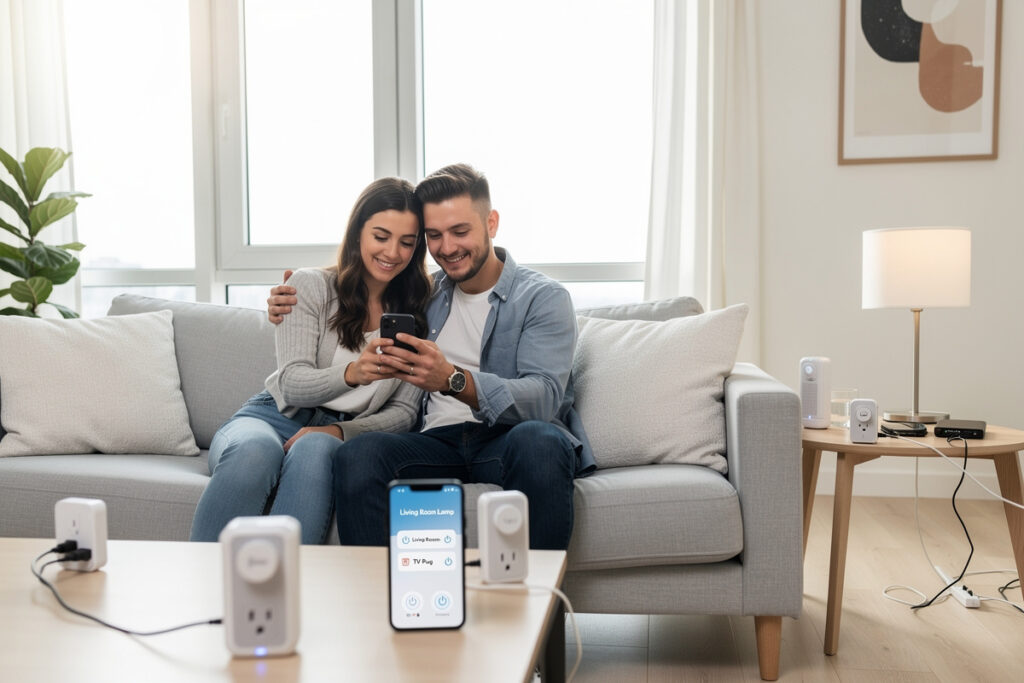
When I rented my first apartment in Stockholm, I could not touch a single breaker panel or change a light switch — and that turned out to be fine. I cut my electric bill 15% with three devices that plugged into existing outlets and stuck to the wall with adhesive strips, no landlord permission needed. The average renter spending $1,200-1,500 annually on electricity can save $120-300 yearly through smart plugs, portable energy monitors, and automated scheduling. Here is the portable stack that moves with you to the next apartment.
As an Amazon Associate I earn from qualifying purchases.
Why Energy Management Matters for Renters
Renters face unique energy challenges that differ from homeowners. You cannot modify electrical systems, install smart thermostats on landlord-controlled HVAC, or add whole-home monitoring without permission. Yet renters pay the same utility rates as homeowners and often have less visibility into consumption patterns since many apartments have shared meters or landlord-paid utilities that obscure individual usage.
The average apartment renter spends $1,200-1,800 annually on electricity depending on location, unit size, and climate. In states with high electricity rates like California, Massachusetts, and New York, annual costs can exceed $2,000. Renters in inefficient older buildings with poor insulation often pay even more because heating and cooling systems work harder to maintain comfortable temperatures.
Smart home technology specifically designed for renters addresses these challenges without requiring installation changes. Portable devices that plug into standard outlets, battery-powered sensors that mount with adhesive strips, and wireless devices that communicate via WiFi or Zigbee provide energy management capabilities that match or exceed what homeowners achieve with permanent installations.
Smart Plugs for Renters: Plug and Play Energy Management
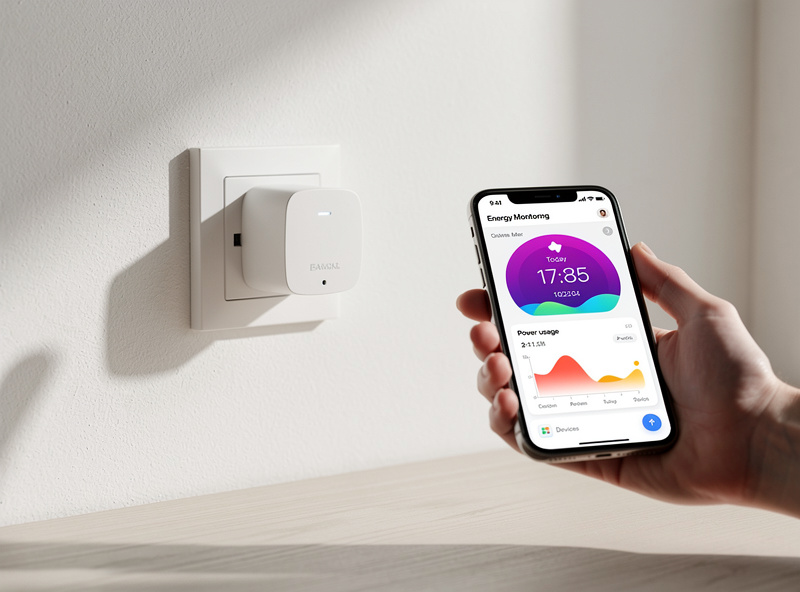
Smart plugs provide the easiest entry point for renter energy management. These devices simply plug into existing outlets and provide energy monitoring, scheduling, and remote control for whatever device you connect. No installation, no wiring, no landlord permission required. The best smart plugs for renters cost $15-30 each and pay for themselves within 2-4 months of use through reduced phantom loads and optimized operation schedules.
The TP-Link Kasa EP25 and Amazon Smart Plug offer reliable WiFi connectivity with straightforward app control. For renters wanting energy monitoring alongside control, the Kasa KP125 with energy monitoring tracks the connected device’s consumption and displays historical usage data. This helps identify which appliances consume the most and which ones run unnecessarily long hours.
Placement strategy matters for renters. Focus smart plugs on high-consumption devices that you control manually: space heaters, air conditioners, window fans, dehumidifiers, and entertainment centers. These devices often run for hours when you’re not actively using them or consume significant standby power. A single smart plug on a space heater can save $20-40 monthly during heating season by ensuring it runs only when you need warmth.
Portable Energy Monitors for Apartments
Whole-home energy monitoring typically requires electrical panel access that landlords rarely grant to tenants. Portable energy monitors provide an alternative by measuring the electricity flowing through any outlet using split-core CT clamps that clip around power cords. The P3 International P4400 and Kill A Watt EZ provide basic consumption tracking for under $40, while the Brunt Smart Plug offers energy monitoring with automatic scheduling for the same price as standard smart plugs.
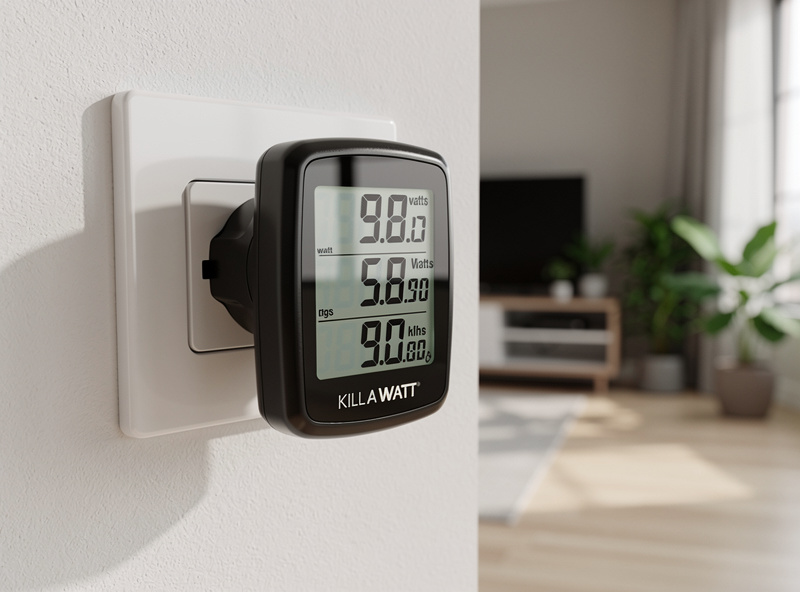
The Kill A Watt EZ represents the lowest-cost entry point at $20-25. Simply plug your appliance into the device, then plug the device into the wall outlet. The display shows real-time watts, cumulative kWh, and estimated cost based on your utility rate. This helps you identify which devices consume the most before investing in permanent smart plugs for those targets.
For renters who want continuous monitoring without panel access, the Sense Me plug-in monitor ($99) clips onto your refrigerator or another always-on appliance and tracks its consumption continuously. When paired with the Sense app, you receive alerts for unusual consumption patterns and historical data showing how your usage changes over time. This approach works without any electrical modifications and moves with you to your next apartment.
Smart Speakers and Voice Control for Energy Management
Smart speakers like the Amazon Echo Dot and Google Nest Mini serve as the hub for renter energy management, providing voice control for all your smart plugs and enabling automation routines that optimize consumption. These devices cost $20-50 and require only a WiFi connection and standard electrical outlet. They serve as the central controller for Zigbee, Matter, and WiFi smart devices without requiring any hub hardware or electrical modifications.
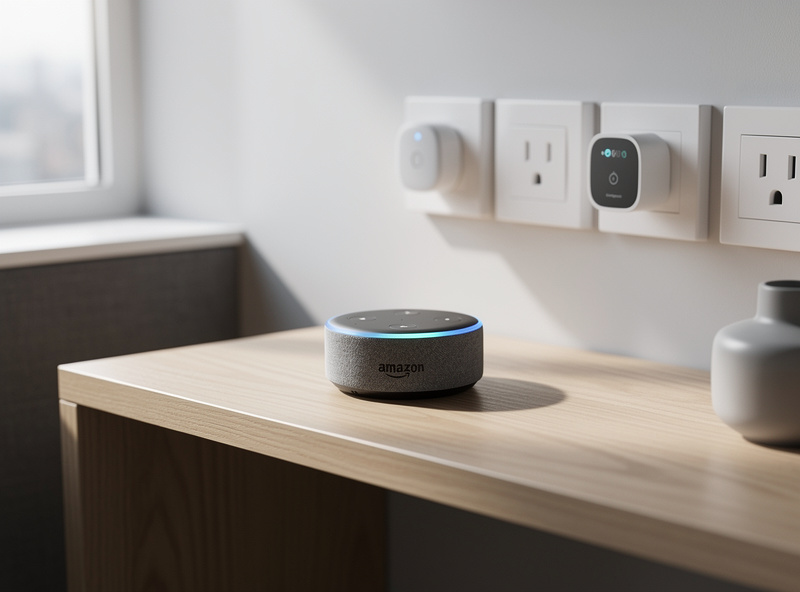
Voice control adds convenience that encourages energy-saving habits. Saying “Alexa, turn off the space heater” when you leave a room takes two seconds compared to walking across the room to unplug it manually. This convenience matters because the primary source of renter energy waste is devices left running when not needed. The easier it is to turn things off, the more often it happens.
Routines in Alexa and Google Home automate energy management without requiring programming knowledge. You can create “Goodnight” routines that turn off all entertainment devices, set space heaters to eco mode, and adjust smart thermostat settings. “Goodbye” routines ensure no lights or energy-consuming devices remain on when you leave. These automations eliminate the behavioral failure mode of forgetting to turn things off.
Portable HVAC Control for Renters
Smart thermostat installation typically requires modifying the HVAC wiring, which landlords prohibit in most leases. Renters can still achieve significant HVAC savings using smart plugs with temperature triggers or smart air conditioner controllers that work without modifying existing wiring.
The Sensibo Sky and Amap EA smart air conditioner controllers clip onto your AC unit’s control panel and learn your usage patterns while providing remote control and scheduling through smartphone apps. These devices work with through-the-wall and window air conditioners, which many apartments use instead of central HVAC. They typically pay for themselves within 3-6 months through reduced AC operation while maintaining comfort.
For apartments with central HVAC controlled by a wall thermostat, the Mysa for Baseboard Heaters provides smart control without wiring modifications. Mysa installs behind your existing wall thermostat and supports 120V and 240V electric baseboard heaters common in older apartment buildings. It requires neutral wires which may not exist in older buildings, but works reliably in newer constructions.
Energy Saving Tips Specific to Renters
Renters face inherent efficiency limitations that homeowners do not, but optimization opportunities still exist. Focus on the behaviors and devices you control directly rather than building envelope improvements that require landlord investment. Your controllable energy consumption typically falls into heating/cooling (30-40%), lighting (10-15%), entertainment and office (10-15%), and refrigeration and kitchen (20-25%).
Heating and cooling represent your largest controllable expense. Use smart plugs with scheduling or temperature automation for space heaters and window AC units. Set heating to 68°F and cooling to 76°F when occupied, with 8°F setbacks when sleeping or away. Each degree of setback saves approximately 3% on HVAC costs. In apartments with poor insulation, thermal curtains on windows reduce heat transfer significantly and cost nothing to install.
Lighting upgrades require only bulb replacement, which landlords cannot prohibit. LED bulbs use 75% less energy than incandescent and last 10-25 times longer. Replacing five frequently-used bulbs with LEDs costing $3-5 each saves $50-100 annually while reducing heat output that makes cooling more difficult. Smart bulbs like Philips Hue add scheduling and voice control for an additional $10-15 per bulb but enable presence simulation and automated scheduling.
My portable renter energy stack cost $120 total: a plug-in whole-home monitor that clips onto the meter (no breaker panel needed), two energy-monitoring smart plugs for the biggest appliances, and a smart thermostat that sits on the counter with a temperature sensor — no wiring. If you can only buy one thing, get the plug-in monitor. Knowing where the money goes is worth more than automating a lamp. The whole setup fits in a shoebox and moves to your next apartment in ten minutes.
Frequently Asked Questions
Can renters use smart home devices for energy management?
Yes. Renters can use any plug-in smart home device without landlord permission. Smart plugs, portable energy monitors, smart speakers, and battery-powered sensors require no installation or modifications. Only smart thermostats requiring wiring modifications need landlord approval, but alternative products like smart AC controllers and smart plugs for space heaters provide similar savings without any wiring.
How much can renters save with smart home devices?
Renters save 10-20% on electricity bills, typically $120-360 annually for renters spending $1,200-1,800 yearly. The highest-impact devices are smart plugs for space heaters ($20-40 monthly savings) and window AC controllers ($15-30 monthly savings). Total investment of $50-100 in smart plugs and a smart speaker pays back within 3-6 months.
What smart devices work in apartments without installation?
Plug-in smart plugs, portable energy monitors like Kill A Watt, smart air conditioner controllers, battery-powered sensors, and smart speakers all work in apartments without installation. Smart bulbs, smart locks (renter-friendly models with temporary mounting), and wireless door/window sensors also require no permanent modifications. All move with you when you relocate.
Do smart plugs work in older apartments?
Yes. Smart plugs work in any apartment with standard 120V outlets. They require only WiFi connectivity and draw minimal power themselves. Older buildings with two-prong outlets can use three-prong adapters. Smart plugs cannot control hardwired devices like built-in furnaces or ceiling fans, but everything plugged into an outlet works fine.
Can renters get whole-home energy monitoring?
Renters cannot access electrical panels for whole-home monitors, but portable alternatives work well. Clip-on monitors like the Sense Me attach to refrigerators or other appliances. The Kill A Watt EZ measures individual devices by plugging into outlets. For apartment-wide monitoring, check if your utility provides free smart meter data through their app.
Related Articles
- Best Smart Home Energy Management Systems 2026: Complete Guide
- Best Smart Electricity Monitors for Home
- How to Reduce Your Electric Bill with Smart Home Devices
- Best Smart Plugs 2026: Complete Buyer’s Guide
- Smart Home for Beginners: Complete 2026 Setup Guide