Best Solar Battery Storage Integration with Smart Home Systems (2026)
A 10 kWh battery paired with smart energy management turned my solar array from a daytime-only asset into 24-hour coverage. Before the battery, I exported surplus at wholesale rates every afternoon and bought it back at retail every evening — that math made zero sense. Smart load management now coordinates battery charging with solar peaks and discharges during the 4-9pm high-rate window. Grid dependence dropped nearly 70% in the first month. Here is what the Tesla Powerwall 2 and LG Chem RESU actually deliver, head to head.
As an Amazon Associate I earn from qualifying purchases.
How Solar Battery Storage Works with Smart Home Systems
Solar batteries store excess electricity generated during peak solar hours for use when the sun isn’t shining. A typical 6kW residential solar array produces 25-35kWh daily, but household consumption peaks in the evening between 5pm-9pm when solar production has declined. Without storage, this surplus exports to the grid at wholesale rates while households repurchase grid electricity at retail rates during evening peaks — a financial inefficiency that batteries eliminate.
Integration with smart home systems enables sophisticated charge and discharge management based on utility rate structures, weather forecasts, and consumption patterns. When solar production exceeds consumption, the battery charges. When consumption exceeds production, the battery discharges. Smart management systems coordinate this in real-time, maximizing self-consumption rates from 25-30% (passive solar) to 60-80% (active battery management).
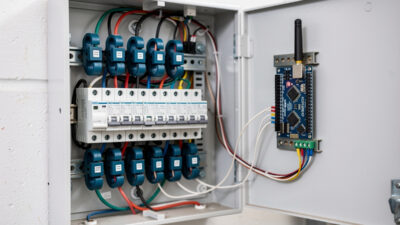
The integration requires three components: solar production monitoring (via inverter API or CT clamps), battery management system (via manufacturer integration), and automation platform (Home Assistant, SmartThings, or native apps). When these components communicate, the system achieves what engineers call “grid parity” — the point where solar plus storage costs less than grid electricity alone.
Best Solar Battery Options for Home Integration
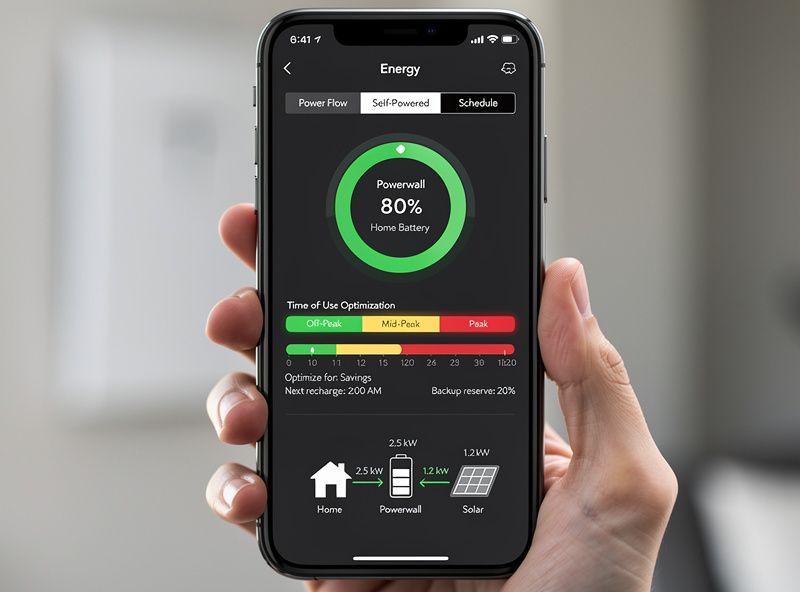
The Tesla Powerwall 2 remains the market leader with 13.5kWh usable capacity, 90% depth of discharge, and native integration with Tesla solar inverters. The Powerwall+ adds an integrated solar inverter for simplified installation. Both models provide whole-home backup capability, automatically switching to off-grid operation within 20 milliseconds during grid outages. The Tesla app provides comprehensive monitoring and supports time-of-use optimization for users on dynamic rate plans.
The LG Chem RESU10H offers comparable performance in a more compact form factor, with 9.8kWh usable capacity and 95% depth of discharge. It integrates with major inverter platforms including SolarEdge, SMA, and Enphase through standard protocols. The RESU’s advantage lies in its efficiency and the wide compatibility with third-party inverters that makes it the preferred choice for retrofit installations with existing solar systems.
The Franklin WHF (Whole Home Backup) provides 13kWh of usable capacity at a lower price point than Tesla or LG, making it attractive for budget-conscious installations. It supports integration with Home Assistant and major inverter platforms. The Franklin system includes built-in smart load management that can control up to 6 smart circuits for whole-home backup without requiring a separate transfer switch.
Backup Power Capability and Grid Independence
Beyond bill savings, battery storage provides whole-home backup power during grid outages. This capability proves increasingly valuable as climate change intensifies extreme weather events that strain grid infrastructure. A fully charged 13kWh battery powering essential loads — refrigerator, lights, internet router, phone chargers, and laptop — can sustain a household for 24-48 hours. With solar recharging, batteries can extend outage duration indefinitely.
The distinction between essential loads and whole-home backup matters for sizing and cost. Essential loads only backup critical circuits, typically consuming 500-1,500 watts continuously. A 13kWh battery running 1,000 watts of essential loads lasts 13 hours, or 24+ hours with solar recharging. Whole-home backup requires the battery to power HVAC, water heater, and all outlets simultaneously, consuming 3-5kW and depleting a 13kWh battery in 3-4 hours without solar support.
Smart load management enables whole-home backup from smaller battery systems by shedding non-essential loads during outages. A Franklin WHF or Tesla Powerwall with smart load control can manage up to 6 critical circuits, automatically shedding pool pumps, EV chargers, and other deferrable loads when grid power fails. This extends effective battery capacity by 2-3x compared to unmanaged whole-home backup.
Time-of-Use Optimization with Battery Storage
Battery storage dramatically amplifies time-of-use rate optimization by enabling you to shift from grid electricity entirely during peak periods. Without storage, TOU optimization means running appliances during cheap hours. With storage, peak period consumption draws entirely from battery, then the battery recharges during the cheapest hours — typically midnight to 6am at $0.06-0.08/kWh.
The optimization algorithm calculates optimal charge and discharge cycles based on your utility rate structure, weather forecast for solar production, and anticipated consumption. During summer peak rate periods (2pm-8pm at $0.35-0.50/kWh), the battery discharges to cover all household consumption. Overnight during super-off-peak hours ($0.05-0.07/kWh), the battery charges from grid or solar. The spread between $0.05 and $0.45/kWh means every kWh cycled through the battery saves $0.38-0.40.
For households with solar, the algorithm prioritizes solar self-consumption over grid arbitrage. When solar production exceeds consumption, surplus power charges the battery. When solar drops in the evening, the battery discharges before drawing from the grid at peak rates. Only when battery is depleted does the home draw from the grid, and even then, only at the lower off-peak rates if the algorithm schedules discharge to cover peak hours.
Smart Integration Platforms for Battery Management
Home Assistant provides the most flexible battery integration through custom integrations for Tesla Powerwall, LG Chem RESU, Franklin WHF, and most major inverter platforms. The Powerwall integration enables real-time control of charge and discharge, time-of-use optimization based on utility rate schedules, and storm watch mode that keeps the battery fully charged before predicted grid stress events.
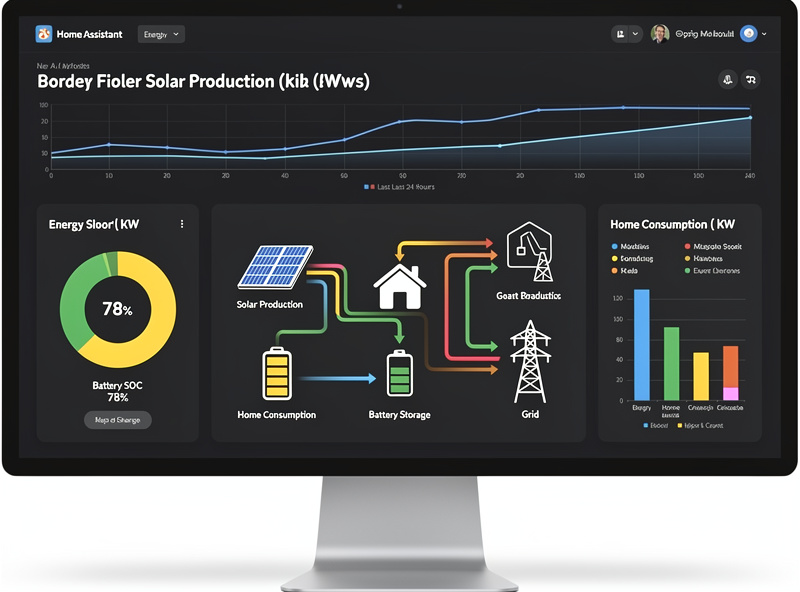
The Home Assistant Energy Dashboard displays battery state of charge, solar production, home consumption, and grid import/export in real-time. Energyflow cards visualize energy flows between sources and destinations, making it immediately obvious when solar is charging the battery versus exporting to the grid. This visualization helps users understand how their system behaves and identify optimization opportunities.
For users preferring native manufacturer apps, Tesla, LG, and Franklin all provide smartphone apps with basic monitoring and scheduling. These apps suffice for simple charge/discharge scheduling but lack the sophisticated optimization that Home Assistant enables. The gap matters most for households on time-of-use rates where optimal cycling can save $50-100 monthly compared to basic scheduling.
Installation and Smart Home Setup
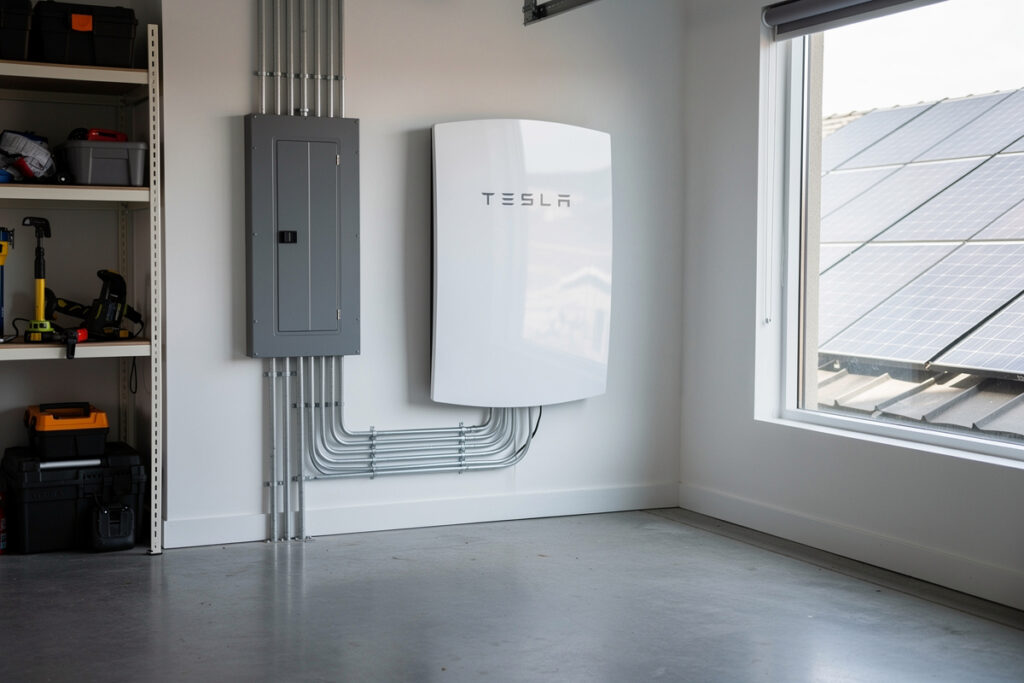
Battery storage installation requires professional electrician work connecting the battery to your electrical panel through a dedicated circuit or transfer switch. The battery itself typically mounts on a wall in a garage or mechanical room, requiring roughly 4 feet by 2 feet of floor space and adequate ventilation. Installation costs $500-2,000 depending on electrical panel upgrades needed and whether the battery integrates with existing solar or represents a new installation.
Integration with smart home platforms happens after physical installation, either through WiFi or Ethernet connection to your network. The battery manufacturer provides an app for initial setup, registration, and basic configuration. For Home Assistant integration, you install the appropriate integration component and authenticate with your manufacturer account. The process takes 15-30 minutes for most platforms.
Commissioning the smart battery system for optimal performance requires configuring rate schedules, backup reserve levels, and load management preferences. Set backup reserve to 20-30% for normal operation (keeping 3-4kWh in reserve for unexpected outages) and 100% when storm watch activates. Configure time-of-use schedules to match your utility rate periods, and enable storm watch mode during hurricane season or predicted severe weather events.
If I were buying a battery tomorrow, I would take a hard look at whether time-of-use rate arbitrage alone justifies the $8,000-12,000 cost — for most homes, it does not. What does justify it: frequent power outages, zero net-metering in your state, or an EV you charge nightly. My battery paid itself back faster through outage protection than rate savings. Run the numbers on your specific utility rate structure before buying. The smart energy management layer — the Emporia Vue or Sense monitor that coordinates the battery — costs $100-350 and is the part that actually maximizes every stored kilowatt-hour.
Frequently Asked Questions
How much does solar battery storage cost?
Solar battery storage costs $5,000-15,000 installed depending on capacity and integration requirements. The Tesla Powerwall 2 costs $11,000-13,000 installed. The LG Chem RESU costs $9,000-12,000. The Franklin WHF costs $7,000-10,000 as a budget option. Federal tax credits cover 30% of battery costs when paired with solar.
How long do solar batteries last?
Solar batteries last 10-15 years with typical usage. Most manufacturers warranty 10 years at 70% capacity for LFP chemistry batteries. Tesla Powerwall 2 is guaranteed to retain 70% capacity after 10 years. Daily cycling (charging and discharging) determines actual lifespan more than calendar time.
Is solar battery storage worth it without solar panels?
Solar battery storage is worth it without solar if your utility offers time-of-use rates with significant peak/off-peak differentials. A battery charged at $0.06/kWh off-peak and discharged at $0.40/kWh peak saves $0.34 per kWh cycled. A typical household cycling 10-15kWh daily saves $3.40-5.10 daily or $100-150 monthly, making batteries financially viable even without solar.
What size battery do I need for whole-home backup?
A 10-13kWh battery provides 24-48 hours of essential loads backup or 4-6 hours of whole-home backup. For essential loads only (refrigerator, lights, internet, phone charging), a 10kWh battery suffices. For whole-home backup including HVAC and water heater, consider 20kWh+ or a system designed for extended backup with solar recharging.
Can I add battery storage to existing solar?
Yes. Battery storage can be added to existing solar installations through retrofit inverters or batteries with integrated inverters. The LG Chem RESU and Franklin WHF integrate with most existing string inverters and microinverters. Consult a licensed solar installer to evaluate your current system’s compatibility and recommend retrofit options.
How much can I save with solar battery storage?
Solar battery storage saves $100-200 monthly on electricity bills through time-of-use optimization and maximized self-consumption. Combined with solar panels generating $1,500-2,000 annually in bill credits, a complete solar-plus-storage system pays back in 8-12 years and provides free electricity for 15-25 years thereafter.
Related Articles
- Best Smart Home Energy Management Systems 2026: Complete Guide
- Smart Solar Panel Integration with Home Automation
- Best Smart Electricity Monitors for Home
- Time-of-Use Pricing Optimization with Smart Devices
- How to Set Up a Smart Home Energy Dashboard