Time-of-Use Pricing Optimization with Smart Devices (2026)
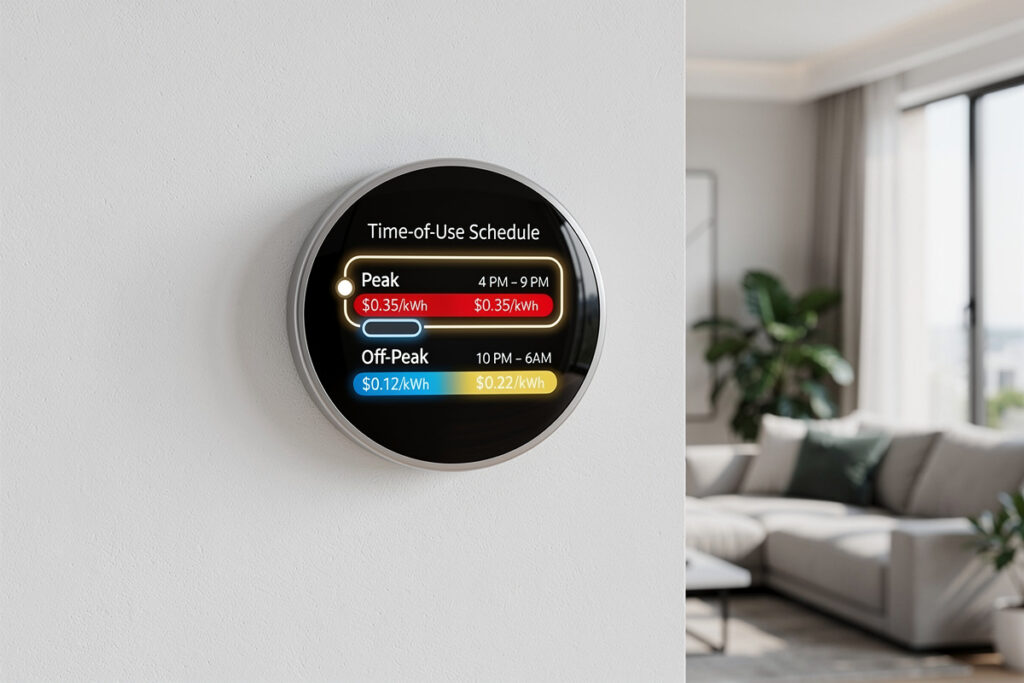
Time-of-use pricing is either the easiest money you will save or the biggest bill shock you will get — the difference is whether your smart devices know your rate schedule. Over 60% of US utilities now charge 2-4x more during 2-8pm weekday peaks compared to overnight. I switched to a TOU plan last year and saved $42 in the first month because my EV charger, dishwasher, and water heater all shifted to off-peak hours automatically. Here is how to set it up so you never pay peak rates for a flexible load again.
As an Amazon Associate I earn from qualifying purchases.
Understanding Time-of-Use Electricity Rates
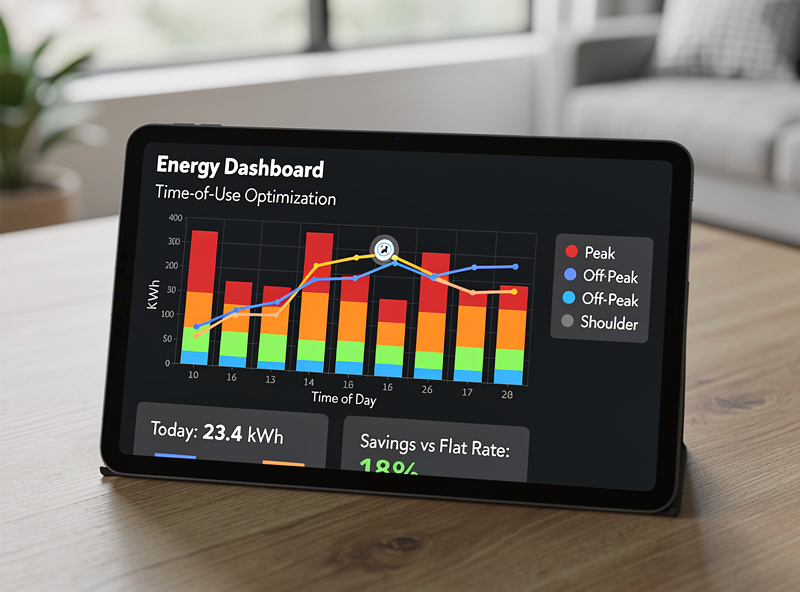
Time-of-use pricing structures divide the day into peak, off-peak, and sometimes shoulder periods with different rates for each. Peak periods typically run from 2pm to 8pm on weekdays in summer, with the highest demand and cost. Off-peak periods cover overnight and weekend hours when grid demand is lowest. Some utilities also have super-off-peak periods, usually from 12am to 6am, with the lowest rates of the day.
Over 60% of US utilities now offer TOU rate plans, and the percentage continues growing as regulators encourage demand-side management. The rate differentials have widened significantly as utilities invest in renewable energy integration. Solar generation peaks at midday but electricity demand peaks at 6-8pm when solar production falls. TOU pricing incentivizes consumers to shift consumption to match solar availability, reducing the need for expensive peaker plants.
The financial impact of TOU rates without optimization can be substantial. A household using 1,000kWh monthly on a flat rate of $0.14/kWh pays $140. The same consumption on a TOU rate with $0.35/kWh peaks and $0.08/kWh off-peaks could pay $180-200 if consumption occurs primarily during peak hours, or $90-100 if shifted entirely to off-peak. Smart optimization typically splits the difference, achieving $120-130 while maintaining normal lifestyle patterns.
Smart Thermostats and TOU Optimization
Smart thermostats from Nest, Ecobee, and Honeywell provide the most impactful TOU optimization for households with central HVAC. These devices integrate utility rate schedules when available through partnerships with utilities like Southern California Edison, PG&E, and SDG&E. The thermostat automatically shifts pre-conditioning and load management to align with rate periods, maintaining comfort while minimizing costs.
Eco+ mode in Ecobee thermostats automatically optimizes for time-of-use rates when enrolled through compatible utilities. The system learns your thermal mass and preferred temperatures, then shifts conditioning to cheaper hours when it can do so without compromising comfort. During peak rate periods, the thermostat allows temperatures to drift 1-3°F from setpoints in exchange for significant rate savings.
For utilities without direct rate integration, smart thermostats still optimize through user-defined schedules that mirror TOU periods. Set cooling to 76°F during peak hours and 72°F during off-peak overnight, with a 30-minute pre-conditioning window before the peak ends. This automated approach captures 60-70% of potential savings without requiring you to manually adjust settings throughout the day.
Smart Water Heater Control for Time-of-Use Rates
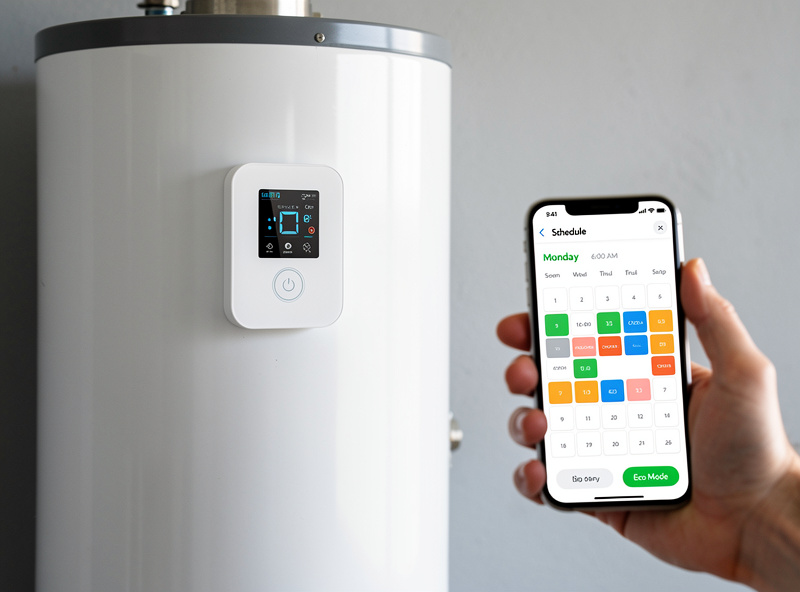
Water heating accounts for 15-20% of household energy consumption and represents an ideal load for TOU optimization because hot water tanks store thermal energy. A 50-gallon tank heated to 130°F contains enough thermal energy to maintain comfortable temperatures for 2-4 hours without active heating. Smart water heater controllers exploit this thermal mass by heating during cheap overnight hours and riding through expensive peak periods without active heating.
The YoLink Smart Water Heater Controller, Fibaro Smart Implant, and GridX all provide smart control of electric water heaters. Installation requires connecting the controller to the water heater’s high-voltage circuit, typically requiring a neutral wire. Professional installation is recommended for any device operating at 240V. The controller monitors temperature and activates heating only during off-peak hours, maintaining minimum temperatures throughout peak periods.
The economics of smart water heater control are compelling. A family of four using 50-60 gallons daily at $0.35/kWh peak rates saves $25-40 monthly by heating overnight at $0.08/kWh. The hardware costs $40-100 and pays back within 3-4 months. Some utilities offer rebates for smart water heater controllers, reducing the payback period to 2-3 months.
Smart EV Charging Optimization
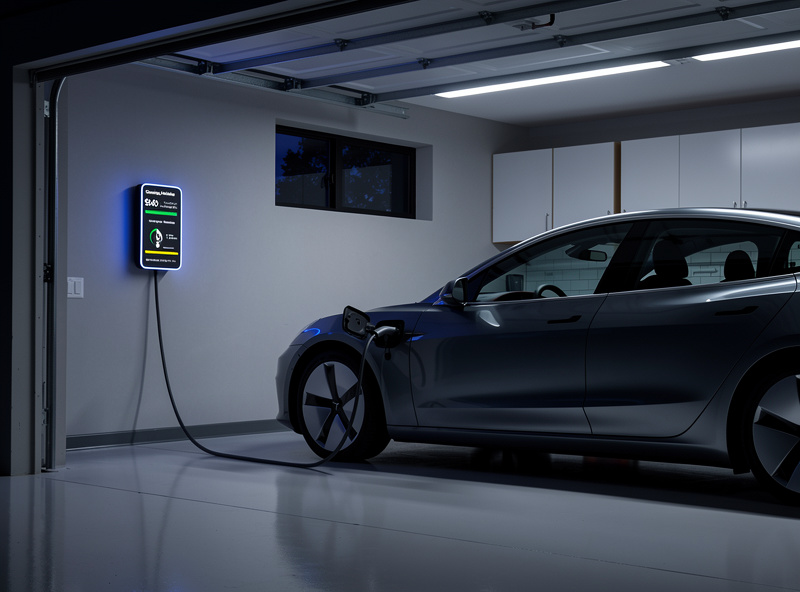
Electric vehicle charging represents the largest controllable load for households with EVs, consuming 10-40kWh daily depending on driving patterns. Level 2 chargers drawing 7-10kW can fully charge most EVs in 4-8 hours. Smart EV chargers with time-of-use optimization automatically schedule charging during overnight off-peak hours when rates are lowest, without requiring you to remember to plug in at specific times.
Most native EV apps support scheduled charging that starts and stops at designated times. The Tesla app allows you to set an off-peak charging window and plug-in reminders that ensure your vehicle is connected when cheap rates begin. ChargePoint and other network chargers support time-based scheduling through their apps. For households wanting integration with home automation platforms, the Wallbox Pulsar Plus and OpenEVSE support Home Assistant integration for sophisticated optimization logic.
The savings from TOU-optimized EV charging depend on your utility rate structure and daily driving patterns. A typical commuter driving 30-40 miles daily requires 8-12kWh. Charging at $0.08/kWh overnight versus $0.35/kWh during peak saves $3-4 per day or $90-120 monthly. Over a year of daily charging, the difference between uncontrolled and optimized charging amounts to $1,000-1,500.
Smart Pool Pump Scheduling for Time-of-Use Rates
Pool pumps run 4-8 hours daily and consume 2-8kWh depending on pump size and runtime. For pools with single-speed pumps, the entire daily consumption occurs during whatever hours you schedule. A pump running 6pm-10pm on peak TOU rates costs significantly more than the same pump running 12am-6am on off-peak rates.
Variable-speed pool pumps from Pentair, Jandy, and Hayward offer additional optimization through speed control. These pumps can run at 50% speed for circulation and 100% for cleaning cycles while consuming proportionally less energy. A smart variable-speed pump running 8 hours at low speed consumes 60-70% less energy than a single-speed pump running 4 hours at full speed, while maintaining equivalent water quality.
The Pentair IntelliFlo and SuperFlo VS pumps integrate with Home Assistant and SmartThings for sophisticated scheduling that considers both rate schedules and solar production. If you have solar panels, the pump runs during peak solar production regardless of rate periods, maximizing self-consumption. When no solar is available, the pump follows TOU schedules, running at low speed during peak rates and high speed during off-peak periods for filtering tasks.
Smart Appliance Scheduling for Peak Avoidance
Beyond HVAC, water heating, and EV charging, many household appliances have flexibility in when they operate. Dishwashers, clothes dryers, and EV chargers can all shift operation to off-peak hours with proper smart control. This flexibility, called load shifting, enables households to maintain normal lifestyles while automatically capturing TOU rate differentials.
Smart plugs with scheduling provide the simplest approach for appliances without native smart features. Set your dishwasher to run overnight at 2am using a smart plug, or schedule your electric dryer to start at 6am after the peak period ends. The clothes will remain warm if you use a moisture sensor dryer that doesn’t over-dry, or you can schedule for when you’ll be home to immediately unload.
For households with Home Assistant or similar platforms, template switches can coordinate multiple devices during demand response events. When your utility signals peak demand, the automation cuts power to non-essential loads like pool pumps and delays dishwasher operation until rates decline. This coordination achieves 10-20% additional savings beyond what individual device schedules provide.
If your utility offers a time-of-use rate plan, sign up tomorrow — but only after you have smart plugs or a scheduler on your three biggest flexible loads. My EV charger, dishwasher, and water heater handle 80% of the savings. The $42 monthly drop I saw came entirely from delaying those three devices to off-peak hours with $60 worth of smart plugs. The one device I would not bother automating for TOU: your refrigerator. It runs 24/7 regardless of rates, and smart-plugging it risks spoiling food. Focus on thermal loads and EV charging — those are the heavy hitters.
Frequently Asked Questions
How much can time-of-use optimization save?
Time-of-use optimization saves 30-60% on electricity costs during peak hours, typically $30-80 monthly for households on TOU rates. The exact savings depend on your rate differential, the flexibility of your loads, and how much consumption you can shift. Families with EVs, pools, and smart thermostats save the most because these devices have the most scheduling flexibility.
Do smart thermostats work with time-of-use rates?
Yes. Smart thermostats from Ecobee, Nest, and Honeywell support time-of-use optimization through utility partnerships or user-defined schedules. Ecobee Eco+ mode automatically optimizes for TOU rates when your utility offers it. Other thermostats allow manual schedule programming that mirrors your utility rate periods, achieving 60-70% of potential savings automatically.
What appliances can shift to off-peak hours?
Appliances with scheduling flexibility include water heaters (thermal storage), pool pumps (8-hour runtime), EV chargers (10-40kWh daily), dishwashers (any time), and clothes dryers (any time). Fixed-load appliances like refrigerators and lights cannot shift. The average household has 200-400kWh monthly of flexible load that can move to off-peak periods.
Is time-of-use pricing worth it without smart devices?
No. Without smart devices, TOU pricing typically costs more than flat rates because households naturally use more electricity during peak evening hours when cooking, watching TV, and running air conditioning. Smart devices that automatically shift loads to off-peak periods are essential for TOU rates to save money. Manually timing appliance use is unreliable and inconvenient.
How do smart water heater controllers save on TOU rates?
Smart water heater controllers heat water only during off-peak overnight hours when rates are lowest, typically $0.06-0.10/kWh versus $0.30-0.45/kWh during peaks. The tank’s thermal mass maintains water temperature through peak periods without active heating. For a typical family of four, this saves $25-40 monthly in water heating costs alone.
Related Articles
- Best Smart Home Energy Management Systems 2026: Complete Guide
- Smart Solar Panel Integration with Home Automation
- How Much Does a Smart Thermostat Save? Real Data
- How to Reduce Your Electric Bill with Smart Home Devices
- Best Smart Thermostats 2026: Complete Buyer’s Guide