Outdoor Smart Speakers and Weatherproofing Your Devices
An outdoor smart speaker brings voice control, music, and automation announcements to the patio and garden — but the real challenge isn’t the audio, it’s surviving weather. A speaker rated IP55 or better, mounted under some shelter, with a plan for winter, is the difference between a system that lasts years and one that dies the first wet autumn. This guide covers both the speaker choice and the broader weatherproofing logic that protects every electronic device outdoors.
I treat outdoor voice as a comfort layer, not a load-bearing one. Voice is an input that pokes my automations; it is never the thing the automation depends on. So the bar for an outdoor speaker is different from an indoor one: it needs to handle rain and cold first, sound good second, and integrate locally third. In my setup the patio speaker is mostly there for music and the occasional “is it going to rain” question, with announcements piped to it from the hub. Let’s go through ratings, placement, and the winter problem.
What Rating an Outdoor Speaker Needs
For a covered patio or porch, IP55 is a sensible floor: protected against dust and low-pressure water jets. For fully exposed mounting, look for IP65 or IP66. The number tells you what the speaker survives, and outdoors you should always buy a margin above what you think you need, because driven rain finds gaps a spec sheet doesn’t anticipate.
The distinction that matters is exposure. A speaker tucked under a deep eave can get away with IP55 because it rarely sees direct rain; one bolted to an open fence post needs IP65 or better and ideally a downward-facing or sheltered orientation so water can’t pool in the driver. Marine-grade outdoor speakers carry the toughest ratings because boats are a brutal environment, and they’re worth considering for fully exposed spots. Whatever the rating, the mounting and orientation matter as much as the number — the same lesson that runs through every outdoor device.
It’s also worth reading the rating honestly rather than as marketing. An IP-rated speaker is tested under specific lab conditions; real weather adds wind-driven rain, UV that degrades plastics over years, and freeze-thaw cycles the IP number says nothing about. That’s why I treat the rating as a minimum and add my own margin: a sheltered mount, a downward tilt, and an autumn inspection. A speaker that’s nominally fine in open weather will still last longer and sound better if you give it the same care you’d give any electronics living outside year-round.
Placement and Coverage
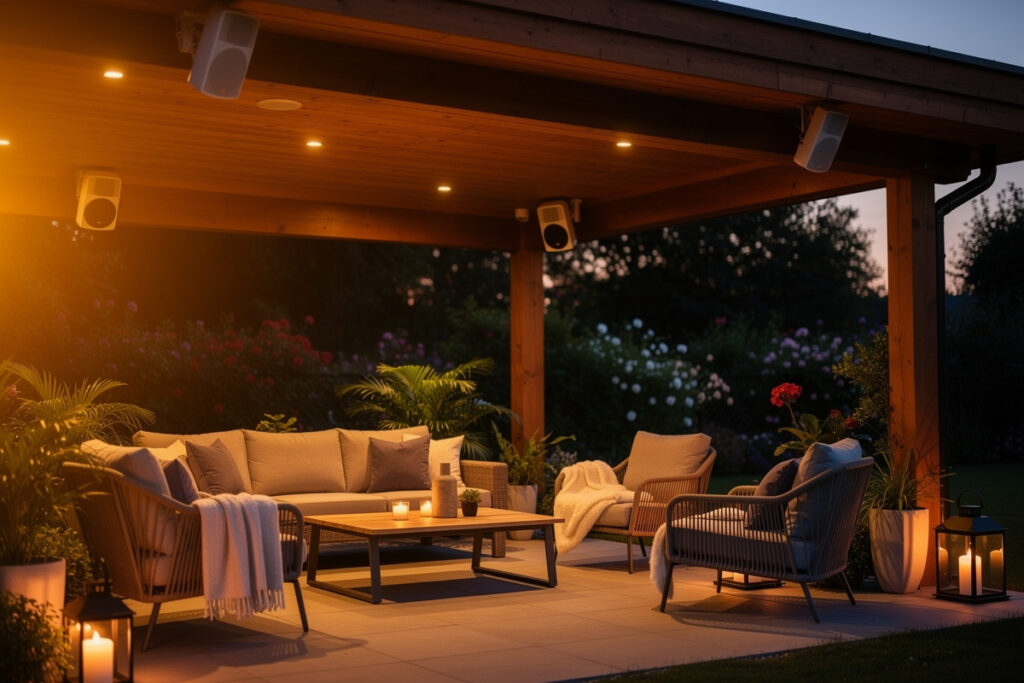
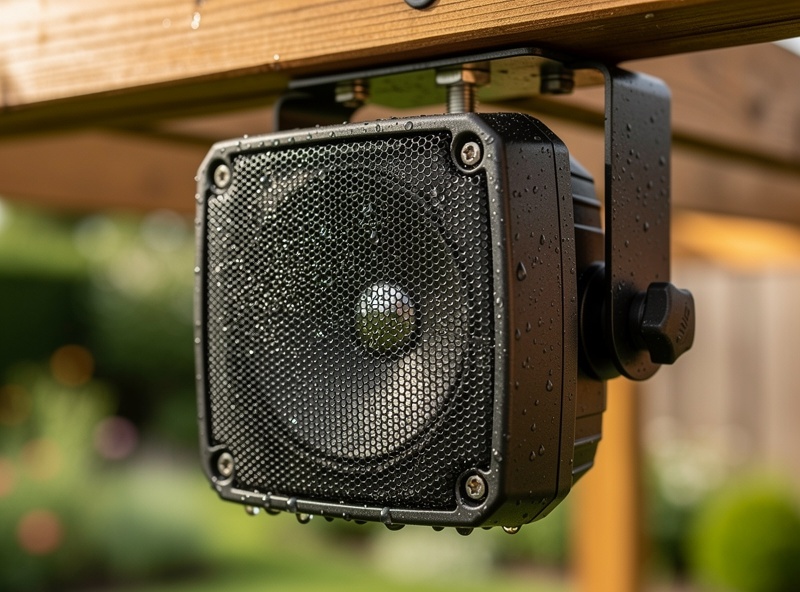
Where you mount an outdoor speaker shapes both its survival and how it sounds. Two speakers placed at the corners of a patio, angled inward and downward, give even coverage without anyone standing in a dead zone or a blast of volume. Spreading the sound across two well-placed units beats one loud speaker fighting the open air every time.
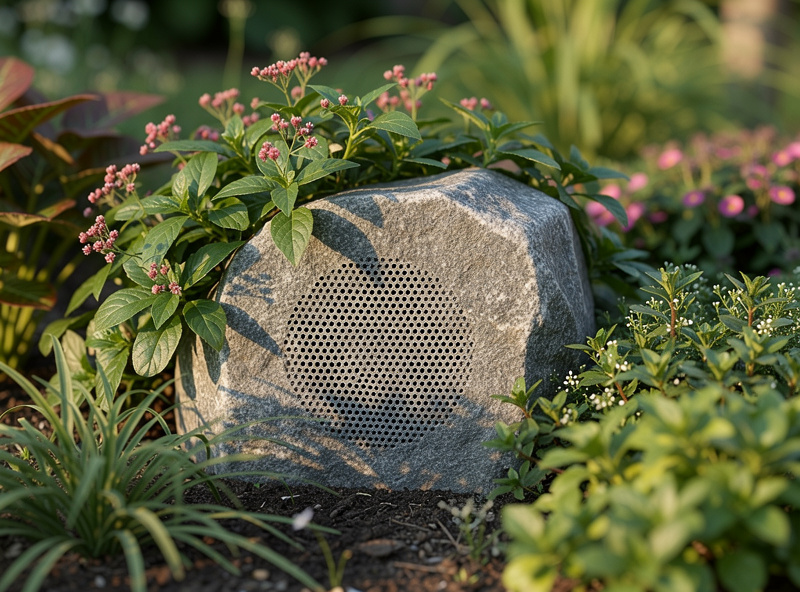
Open-air spaces swallow sound, so a single speaker cranked up tends to be harsh near it and inaudible across the garden. Lower volume from two or more speakers spread around the space is more pleasant and carries better. For mounting, pick spots under some shelter where you can — beneath an eave, a pergola beam, or a wall overhang — which both improves longevity and keeps the driver from filling with rain. For whole-garden coverage, in-ground or rock-style landscape speakers distribute several low-profile units through the beds so the audio is even rather than coming from one point, which is the same layering instinct I apply to landscape lighting: spread the source, don’t blast from one corner.
Voice and Local Control Outdoors
Most smart speakers lean heavily on the cloud for voice processing, which is fine for “play some music” but means voice commands stop working in an outage. The resilient approach is to treat the speaker as an output for hub announcements and a convenience input, while keeping the actual automations running locally on the hub regardless of whether voice is available.
In practice that means my outdoor automations — lights, irrigation, the driveway alert — all run on the hub and would work identically if the speaker were unplugged. The speaker adds two things: it plays music, and it receives spoken announcements the hub pushes to it, like a freeze warning or “the garage door is still open.” Local voice assistants are maturing and can keep basic commands working offline, which is the direction I’m moving, but I’d never design an outdoor system where a cloud-dependent speaker is the only way to trigger something important. Voice is the convenience layer on top of the local rule engine I describe in the outdoor automation guide, not the foundation. The same “voice as input only” philosophy applies to my indoor kitchen smart speaker.
Outdoor Speaker Mounting Options Compared
Here is how the common outdoor speaker setups compare on weather exposure, the rating they need, audio coverage, and best use.
| Setup | Exposure | Rating Needed | Coverage | Best For |
|---|---|---|---|---|
| Portable speaker, brought out | None when stored | IPX5 splash | One area | Occasional use |
| Under-eave fixed speaker | Low | IP55 | Patio zone | Covered patios |
| Open-mount outdoor speaker | High | IP65 / IP66 | Wide | Exposed decks |
| In-ground / rock landscape speaker | High | IP65+ | Garden-wide, even | Whole-garden audio |
Weatherproofing Any Outdoor Electronics
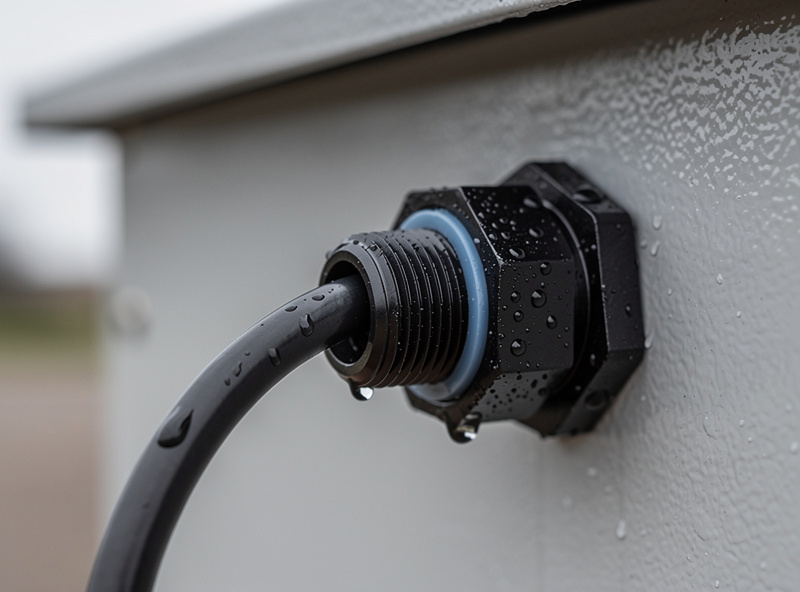
The weatherproofing rules that protect a speaker protect every outdoor device: choose an IP rating with margin, seal the cable entry with a proper gland, add a drip loop, mount so water drains away from seams, and shelter the unit where you can. The cable entry and the mounting orientation cause more failures than the rated enclosure ever does. Seal the seam you create, not just the one the manufacturer sealed.
Across years of outdoor installs, almost every early failure I’ve had traced to the same few causes: a cable gland that wasn’t tightened, a unit mounted so rain pooled on a seam, condensation inside a sealed box with no breather membrane, or a connector left exposed instead of sealed. The fixes are boring and cheap — gel-filled connectors, a downward-facing mount, a breather vent on enclosures, and a drip loop on every cable. Get those right and the rated IP number actually does its job. This is the discipline that underpins the whole cluster, from the outdoor smart plug to the landscape lighting fixtures to the speaker on the patio.
The Winter Problem
Cold is the test most outdoor speakers and electronics quietly fail. Batteries lose capacity, adhesives and gaskets stiffen and crack, and condensation forms as devices cycle between cold nights and sun-warmed afternoons. A device that’s happy all summer can die in its first hard freeze, so plan for the cold explicitly rather than hoping.
For a speaker specifically, that usually means bringing a portable one indoors over winter and choosing fixed units rated for the temperature range your climate actually hits — not just the IP rating. For any outdoor electronics that stay out, I favor sealed enclosures with breather membranes that vent condensation, lithium cells over alkaline in anything battery-powered, and a quick autumn check of every gasket and gland before the weather turns. The same freeze-aware thinking drives the protective automations in my weather-based automation guide — the system that warms a pipe on a freeze warning is the same one I’d trust to remind me to bring the patio speaker in.
Using the Speaker for Announcements
The most genuinely useful job an outdoor speaker does isn’t music — it’s spoken announcements pushed from the hub. A speaker on the patio that says “the front gate just opened” or “rain is starting, the awning is retracting” turns passive automations into something you actually notice while you’re outside. Announcements are where an outdoor speaker earns its place in an automation system rather than just a stereo.
I route a small set of announcements to the patio speaker: a freeze warning in the evening, a reminder that a door or the garage is still open, and a soft chime when the driveway sensor fires while we’re out there so a delivery doesn’t go unnoticed. Because these come from the hub, they keep working independently of the speaker’s own cloud voice features, and I can decide exactly which events are worth interrupting a quiet evening for. That selectivity matters: a speaker that announces everything gets muted, while one that only speaks up for things that matter stays useful. It’s the audio equivalent of the high-stakes-versus-low-stakes split I use across the outdoor sensor automations.
A Note on Gear
Some links below are affiliate links. If you buy through them I may earn a small commission at no extra cost to you. I only point to gear that fits the local-control approach I run.
For outdoor audio I’d look at a rugged waterproof outdoor speaker, a set of landscape rock speakers for whole-garden coverage, and for the weatherproofing itself a pack of waterproof cable glands to seal the entries that otherwise fail first.