Outdoor Smart Plugs: Weatherproof Power for the Yard
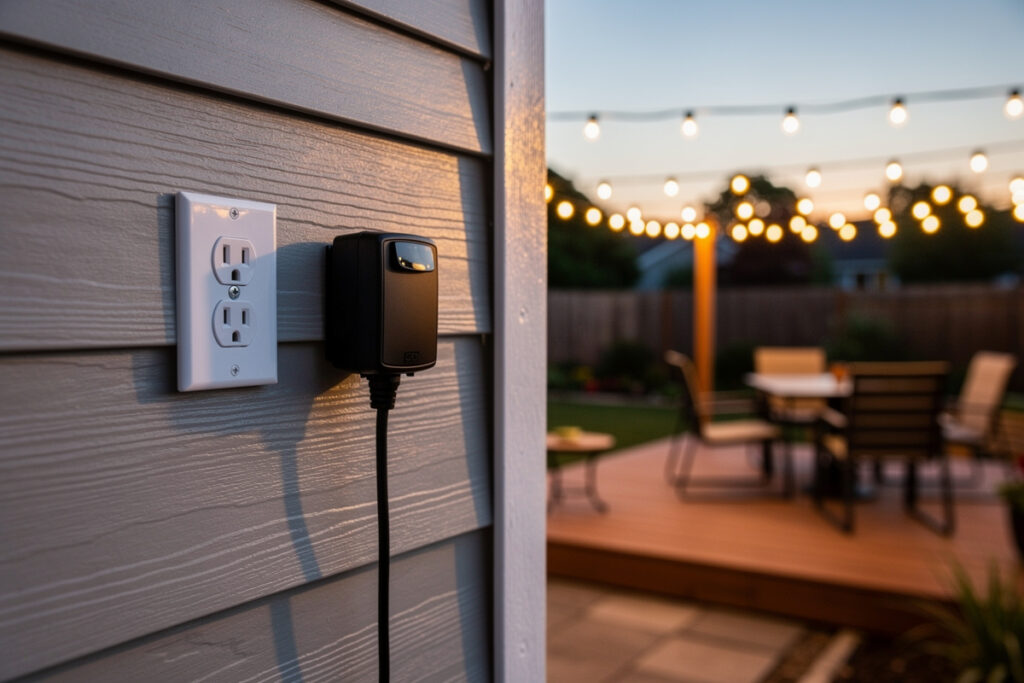
An outdoor smart plug is the cheapest, most flexible actuator you can add to a yard: a weatherproof, app- and hub-controllable outlet that switches string lights, a pond pump, a block heater, or holiday displays on local schedules. The one rule that matters is the ingress rating — an indoor plug in a plastic box is not the same as a true IP65-rated outdoor unit.
In my setup, an outdoor smart plug on the exterior wall does double duty: it switches whatever’s plugged into it and, if it’s a Zigbee model, acts as a mains-powered repeater that pulls the garden’s battery sensors back to the hub. That second job is why I treat the outdoor plug as the foundation of the whole outdoor mesh, not just a convenience. This guide covers how to pick one, where the ratings actually matter, and how to wire it into a local-control system that survives an outage.
The IP Rating Is the Whole Decision
For an open-weather location, you need IP65 or better: dust-tight and protected against water jets from any direction. IP44 is splash-resistant only and is fine under a covered porch or eave but will fail in open rain within a season. The rating is the single most important spec — features come second.
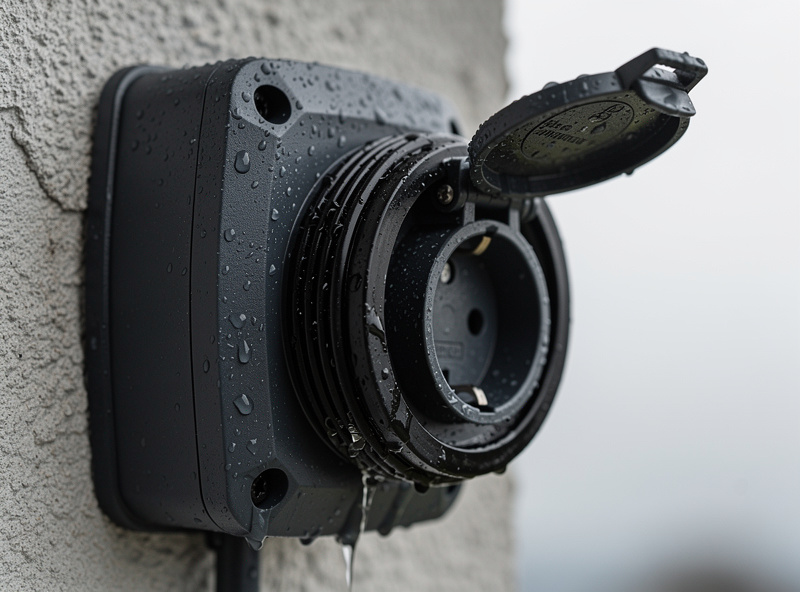
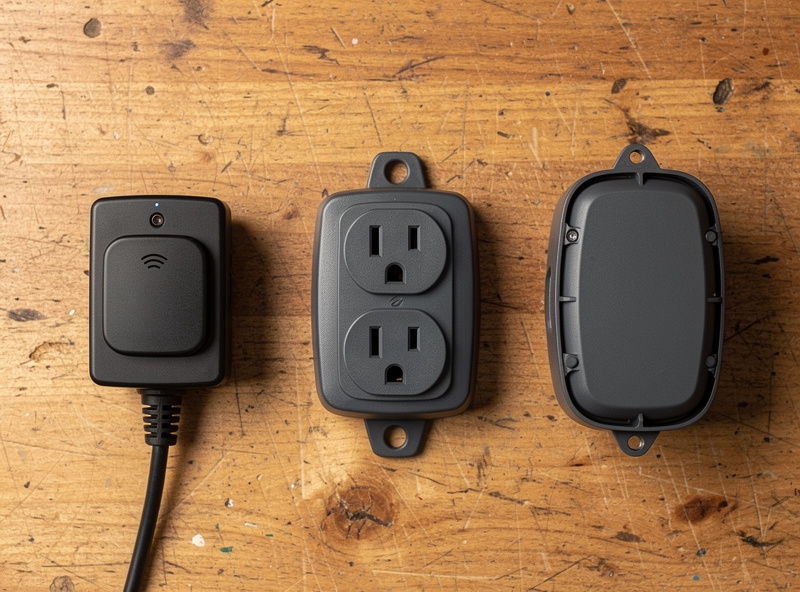
The subtle trap is that many “outdoor” smart plugs are only IP44, marketed for outdoor use but really meant for sheltered spots. If the plug will sit in open weather — on a fence post, in a garden bed, exposed to driving rain — IP65 is the floor and IP66 is better. Just as important is the cover design: a good outdoor plug has spring-loaded gasketed flaps over each socket and a cable channel that lets the lid close on a plugged-in cord. I’ve watched cheap units fail not at the rated body but at a socket cover that wouldn’t seat over the plug, leaving a gap straight to the contacts.
Wi-Fi vs Zigbee Outdoor Plugs
Wi-Fi outdoor plugs are simplest to set up but depend on your router reaching the yard and often lean on the cloud. Zigbee or Z-Wave plugs integrate into a local mesh, repeat the signal for nearby battery devices, and keep working offline. For a serious outdoor setup, a mesh plug earns its place.
The deciding factor is usually range and reliability rather than features. A Wi-Fi plug at the end of the garden may show “connected” in summer and drop out in wet winter, exactly when you want the block heater running. A Zigbee plug on the exterior wall sits at the boundary of the mesh and strengthens it, and because the switching logic lives on my hub rather than a vendor server, the schedule runs through any outage. If you’re weighing the broader radio tradeoff, my Wi-Fi vs Zigbee guide and the three-radio comparison go deeper than I can here.
What an Outdoor Smart Plug Actually Runs
The best outdoor plug jobs are anything mains-powered that benefits from a schedule or a trigger: string and patio lights at dusk, a pond or fountain pump on a duty cycle, a pipe-heat cable on a freeze trigger, holiday lights, and a trickle charger or block heater in winter. One plug, many automations.
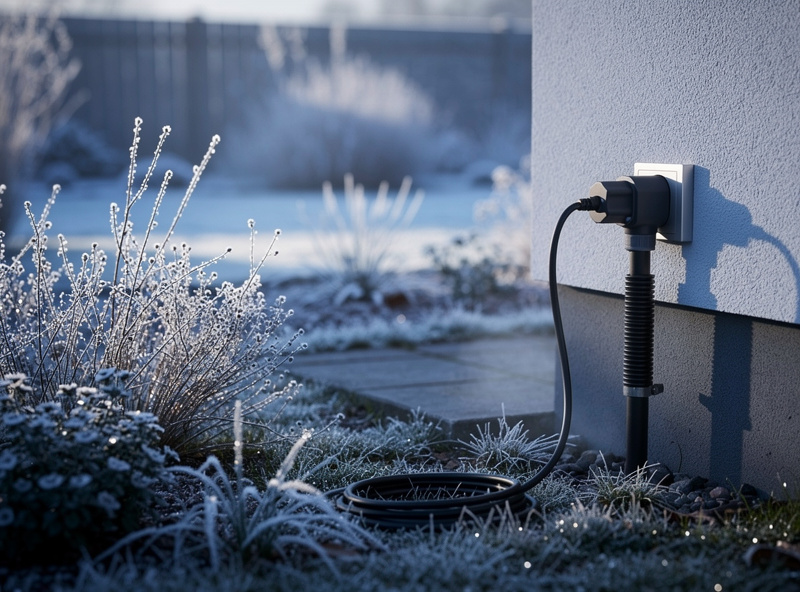
My most-used outdoor plug automation isn’t glamorous — it’s the freeze-protection one. When the forecast drops below freezing, the hub switches on a plug feeding a pipe-heat cable overnight and turns it off once temperatures recover, so I’m not paying to heat a pipe on a mild night. The second is patio lights that fade on at sunset and off at a set hour, driven by the hub’s sun calculation rather than a fixed clock that drifts across the seasons. Both are trivial once the plug is just an entity on the hub, and both keep running whether or not the manufacturer’s app or servers are reachable.
Outdoor Smart Plug Options Compared
Here is how the common outdoor plug types compare on the factors that decide real-world reliability: weather rating, radio, offline operation, and best use.
| Type | Typical Rating | Radio | Works Offline? | Best For |
|---|---|---|---|---|
| Budget Wi-Fi outdoor plug | IP44 | Wi-Fi | Often no | Covered porch only |
| Rugged Wi-Fi outdoor plug | IP65 | Wi-Fi | Sometimes | Open-weather, simple setup |
| Zigbee outdoor plug | IP65+ | Zigbee | Yes | Mesh + repeater duty |
| Z-Wave outdoor plug | IP65+ | Z-Wave | Yes | Long range, far corners |
Installing It Safely
Plug the outdoor smart plug into a weatherproof GFCI outlet, never a daisy chain of indoor extension cords run out a window. The GFCI protects against the ground faults that wet outdoor power invites, and the smart plug adds the switching and scheduling on top. Mount it so water drips away from the seams.
Add a drip loop on any cable so rain runs off the wire before it reaches the plug body, and orient the unit so the socket covers face down or sideways rather than catching rain. If you’re feeding a permanent fixture, a weatherproof in-use cover over the whole outlet is worth the few dollars. The plug ties into the wider outdoor build I lay out in the smart outdoor automation guide, and its power monitoring feeds the same approach I use on the whole-home energy dashboard.
A Note on Gear
Some links below are affiliate links. If you buy through them I may earn a small commission at no extra cost to you. I only recommend gear that fits the local-first approach I run.
For an outdoor install I’d point you toward a proper IP65 outdoor smart plug, a weatherproof in-use outlet cover for the receptacle behind it, and for mesh setups a Zigbee outdoor smart plug that doubles as a repeater.
Frequently Asked Questions
What IP rating does an outdoor smart plug need?
For open weather, choose IP65 or better, which is dust-tight and protected against water jets. IP44 is splash-resistant only and belongs under a covered porch. The socket-cover design matters as much as the headline number for staying sealed in rain.
Can I use an indoor smart plug outside?
No. An indoor smart plug lacks the gaskets, sealed socket covers, and conformal coating to survive rain and condensation, and using one outdoors is a shock and fire risk. Always use a plug rated IP44 for covered areas or IP65 for open weather.
Should an outdoor smart plug be Wi-Fi or Zigbee?
Zigbee or Z-Wave plugs integrate into a local mesh, keep working offline, and repeat the signal for nearby battery sensors. Wi-Fi plugs are simpler but depend on router range reaching the yard and often need the cloud. For reliability outdoors, a mesh plug is better.
Do I still need a GFCI outlet with a smart plug?
Yes. A smart plug switches and schedules power but does not provide ground-fault protection. Always plug an outdoor smart plug into a weatherproof GFCI-protected outlet, which guards against the ground faults that wet outdoor power can cause.
What can I run on an outdoor smart plug?
Common jobs include patio and string lights on a dusk schedule, a pond or fountain pump on a duty cycle, holiday lights, a trickle charger, and a pipe-heat cable on a freeze trigger. Match the plug’s amperage rating to the load before connecting anything.