Smart Landscape Lighting: Path, Accent, and Scene Design
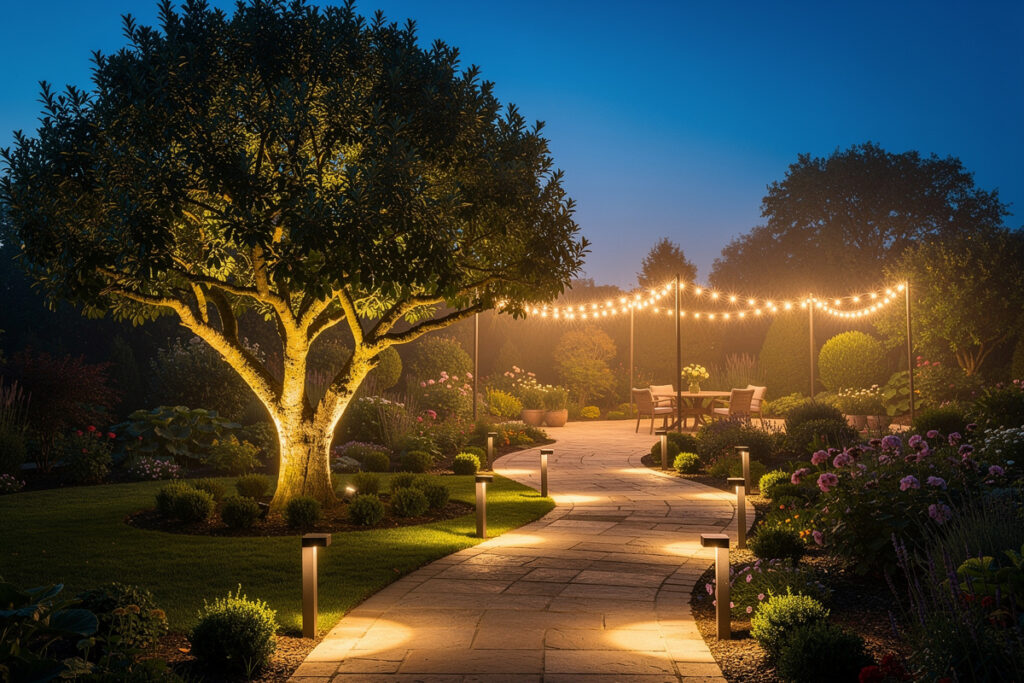
Smart landscape lighting is the warm, scheduled, scene-driven side of outdoor light: path lights, accent uplights, deck and step lighting, and string lights that fade up at dusk and shift through scenes — not the harsh motion floodlights of a security setup. In my setup, the whole garden lighting scheme runs on the hub’s sunset calculation, so it tracks the seasons instead of drifting against a fixed timer.
People conflate landscape lighting with security lighting, and they are genuinely different jobs. Security lighting wants brightness and motion triggers; landscape lighting wants warmth, dimming, scenes, and reliable schedules. This guide is about the ambiance side — designing layered outdoor lighting that looks intentional and runs locally — and it pairs with, rather than replaces, the security-focused approach in my outdoor security lighting guide.
Low-Voltage Is the Right Foundation
Most quality landscape lighting runs on a 12V or 24V low-voltage system fed by a transformer, which is safer to bury, easier to extend, and pairs naturally with smart low-voltage controllers. Line-voltage fixtures exist but low-voltage is the standard for garden lighting and the easier path to smart control. Build around a transformer with a smart relay or a low-voltage smart controller.
The architecture I prefer is a low-voltage transformer switched by a smart relay or an outdoor smart plug, so the whole run comes up and down on the hub’s schedule, plus individually addressable fixtures where I want per-light color or zoning. For a simpler setup, smart RGBW low-voltage controllers let you dim and color a whole zone at once. Because the switching lives on the hub, the lights follow sunset and sunrise automatically and keep running through an outage. An outdoor smart plug feeding the transformer is the cheapest way to make an existing dumb low-voltage system schedulable.
Designing in Layers
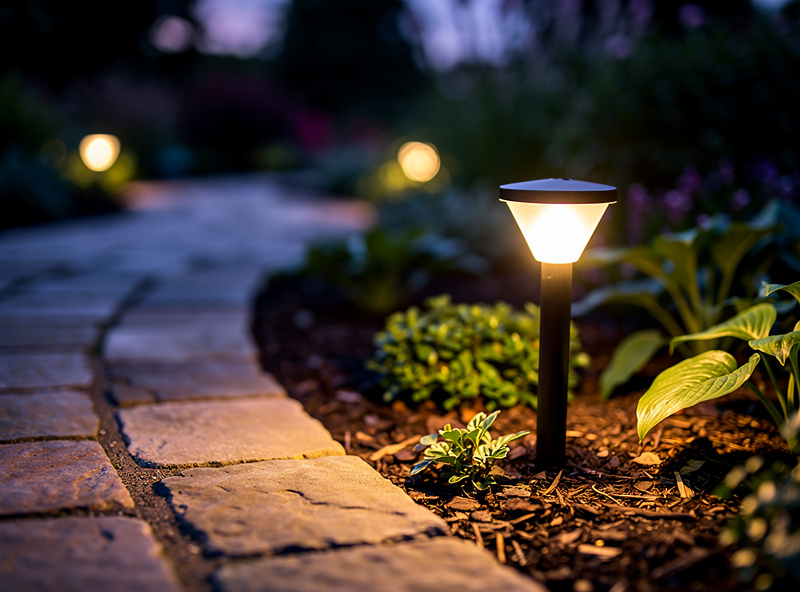
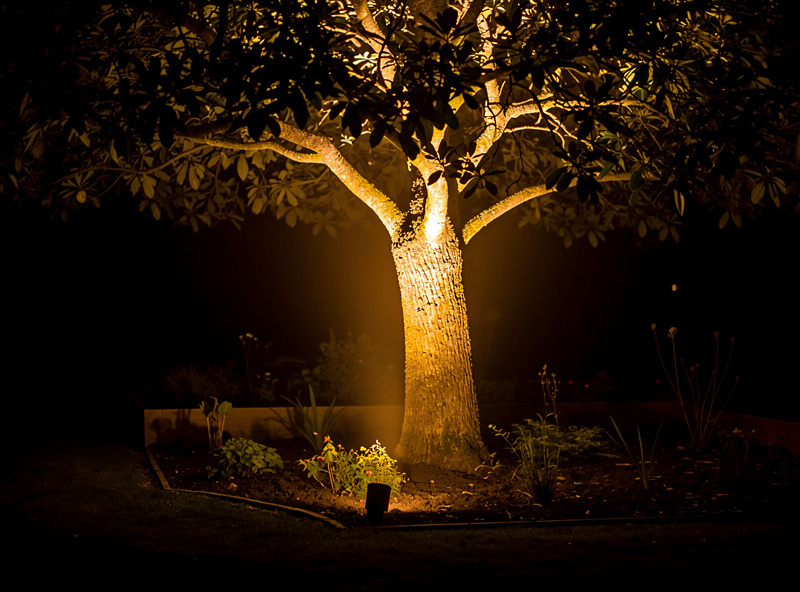
Good landscape lighting uses three layers: path lighting for safe navigation, accent lighting to uplight trees and architecture, and ambient lighting like string or step lights for mood. Layering these — rather than over-lighting one zone — is what separates a designed garden from a floodlit one. Aim for pools of warm light, not uniform brightness.
Path lights at low level guide movement without glare; uplights tucked at the base of a tree or wall create depth and drama; and warm string lights over a seating area set the mood. Keep the color temperature warm — around 2700K — for a natural, inviting look, and resist the urge to light everything, because contrast is what makes a scheme feel intentional. With smart control, each layer becomes a scene: a bright “entertaining” scene, a low “late evening” scene, and a minimal “overnight” scene that leaves only the path lights on. Scene control is where smart bulbs earn their place outdoors, the same way I argue they do indoors in my best smart lights guide.
Scenes and Schedules That Track the Sun
The core automation is simple but high-value: fade the landscape lights up at sunset, transition to a dimmer scene later in the evening, and drop to path-only or off overnight, all driven by the hub’s astronomical sunset and sunrise times. This tracks the seasons automatically, so you never re-time the lights as the days shorten.
I run mine as a sunset-offset trigger — lights begin fading up fifteen minutes before calculated sunset — then a fixed late-evening scene transition, then an overnight minimum. Layering presence on top makes it smarter still: the seating-area lights can brighten when someone’s actually out there and settle back to ambient when they leave. Tying schedules to the hub’s sun position rather than a clock is the single biggest upgrade over a basic outdoor timer, and it’s the same sunrise-and-sunset logic I use for indoor lighting in my sunrise light schedule guide.
Landscape Lighting Control Methods Compared
Here is how the common ways to add smart control to landscape lighting compare on flexibility, per-fixture control, install effort, and best use.
| Method | Control Granularity | Color? | Install Effort | Best For |
|---|---|---|---|---|
| Smart plug on transformer | Whole system on/off | No | Easy | Retrofitting a dumb system |
| Smart low-voltage controller | Per-zone dimming | Often RGBW | Moderate | Zoned scenes |
| Addressable smart fixtures | Per-fixture color | Yes | Moderate-Hard | Full scene design |
| Smart string lights | Whole strand | Often RGB | Easy | Patio ambiance |
Weatherproofing the Fixtures
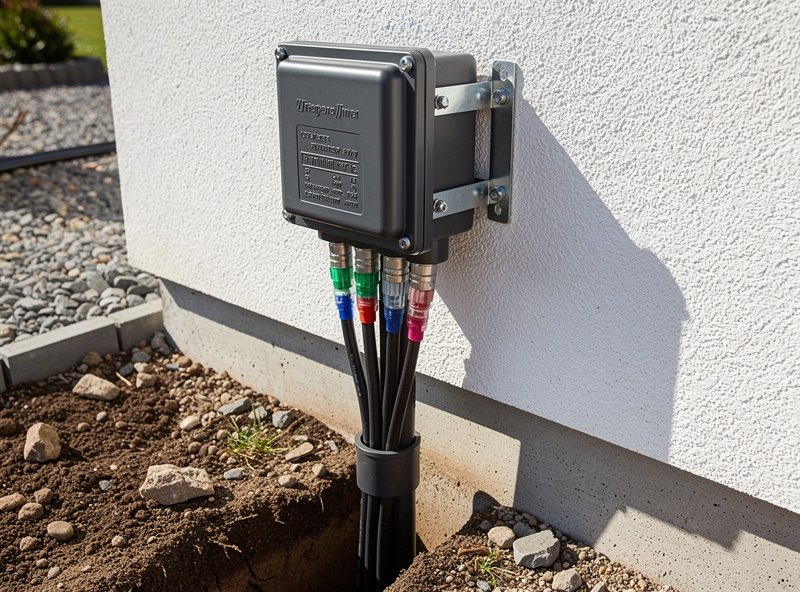
Landscape fixtures and any in-ground or near-ground gear should be IP65 or better, and buried connections need waterproof wire connectors rated for direct burial. The connection points fail before the fixtures do, so seal every splice. A transformer should be mounted off the ground in a rated enclosure, not sitting in a puddle behind a shrub.
Use gel-filled or heat-shrink waterproof connectors on every low-voltage splice, leave a drip loop on cable runs, and bury cable at the depth your local code specifies. For uplights that sit in beds, choose sealed fixtures rather than ones with a removable lens that invites water. I learned the hard way that the cheapest fixtures fail at the lens gasket within a season; the slightly better sealed units last for years. The broader weatherproofing logic — IP ratings, cable glands, drip loops — applies across the whole outdoor build I cover in the smart outdoor automation guide.
A Note on Gear
Some links below are affiliate links. If you buy through them I may earn a small commission at no extra cost to you. I only point to gear that fits the local-control approach I run.
For a smart landscape scheme I’d look at a low-voltage landscape lighting kit as the base, a smart RGBW low-voltage controller for zoned scenes, and waterproof wire connectors for the splices that otherwise fail first.
Frequently Asked Questions
What is the difference between landscape and security lighting?
Landscape lighting is warm, dimmable, and scene-driven for ambiance: path lights, accent uplights, and string lights on schedules. Security lighting is bright and motion-triggered for deterrence. They are different jobs and are best kept on separate zones and automations.
Should landscape lighting be low voltage?
Yes, for most gardens. A 12V or 24V low-voltage system fed by a transformer is safer to bury, easier to extend, and pairs naturally with smart low-voltage controllers. Line-voltage fixtures exist but low-voltage is the standard and the simpler path to smart control.
What color temperature is best for landscape lighting?
Around 2700K warm white gives the most natural, inviting look for gardens and architecture. Cooler temperatures read as harsh and clinical outdoors. Reserve adjustable color for accent scenes where you genuinely want it rather than lighting the whole garden in color.
How do smart landscape lights track sunset?
A smart hub calculates local sunset and sunrise times astronomically and triggers the lights with an offset, such as fifteen minutes before sunset. This tracks the seasons automatically, so the lights always come on at the right time without manual re-timing as days shorten.
Do I need waterproof connectors for landscape lighting?
Yes. Buried and near-ground low-voltage splices need gel-filled or heat-shrink connectors rated for direct burial, because connection points fail before fixtures do. Sealing every splice and using IP65 fixtures is what makes a landscape system last years rather than a season.