Smart Driveway Alert Systems: Early Warning Done Right
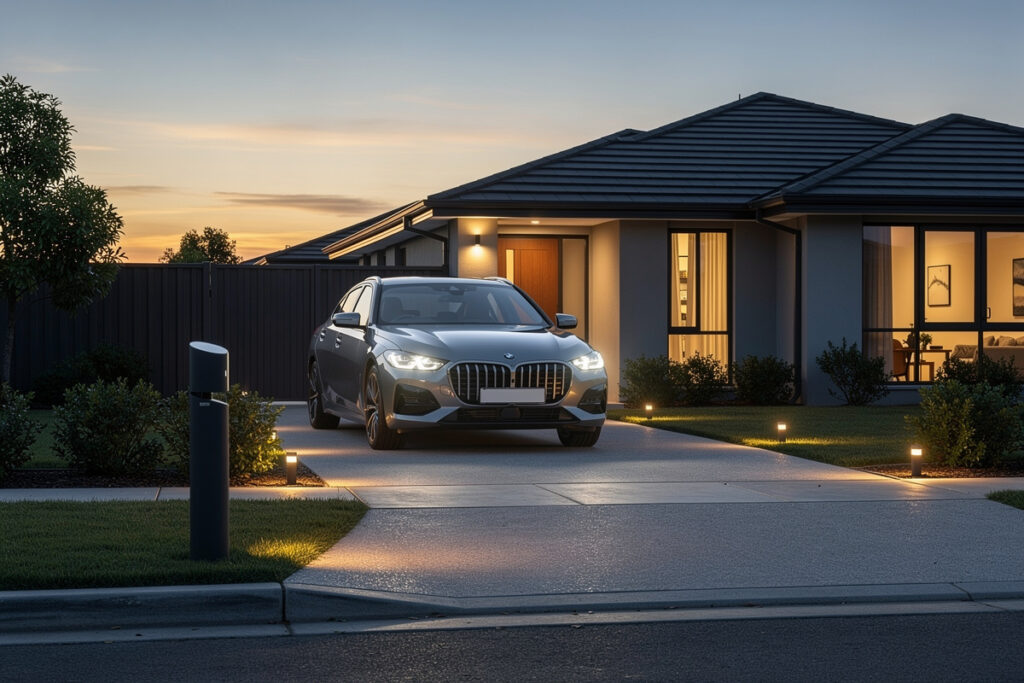
A smart driveway alert system detects a vehicle or person entering your driveway and notifies your hub before they reach the house, giving you a few seconds of warning that turns into useful automations: porch lights up, a phone notification, a camera recording. The key is reach — a sensor at the property edge, sending its trigger back to a hub indoors, often over a long-range radio rather than Wi-Fi.
This is the early-warning layer of an outdoor setup, and it solves a specific problem: by the time a doorbell camera sees someone, they’re already at the door. A driveway sensor catches them at the entrance. In my setup, the driveway trigger is one of the most satisfying automations precisely because it’s proactive — the house reacts before anyone knocks. This guide covers the sensor types, how to get the signal back over distance, and the automations worth building on top.
Driveway Sensor Types
Driveway alerts use one of three detection methods: a PIR motion beam that catches anything crossing it, a magnetic probe buried beside the drive that detects metal (vehicles only), or a camera with object detection. PIR is cheapest and catches people and cars; magnetic probes ignore pedestrians and animals; cameras add visual confirmation. Match the method to what you want to detect.
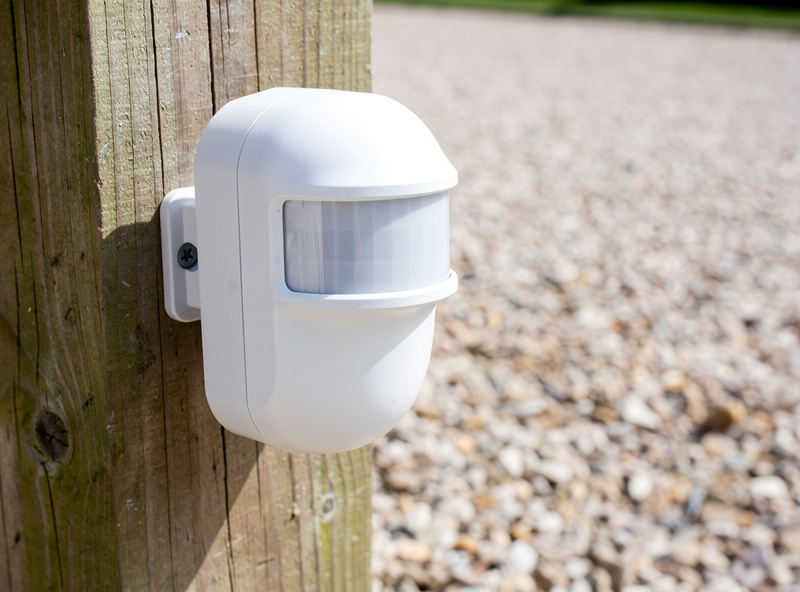
A PIR driveway sensor is the simplest and triggers on any movement across its zone, which is great for catching both a delivery on foot and a car, but it will also fire on a wandering cat. A buried magnetic probe only responds to the steel mass of a vehicle, which eliminates animal and pedestrian false alarms entirely if vehicles are all you care about. The most informative option is a camera with person-and-vehicle detection, which I lean on because it tells me what triggered, not just that something did — the same local object-detection approach in my smart security camera guide. Many setups combine a fast PIR trigger with a camera that confirms.
Getting the Signal Back Over Distance
The hard part of driveway alerts isn’t detection — it’s getting the trigger from the property edge back to the hub, which can be 30 to 100 meters away through obstacles. Wi-Fi rarely reaches that far. The reliable options are a long-range 900 MHz driveway system, a Z-Wave sensor relayed through repeaters, or a dedicated wireless probe-to-receiver pair.
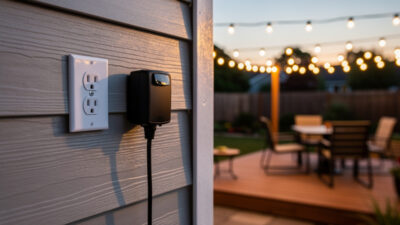
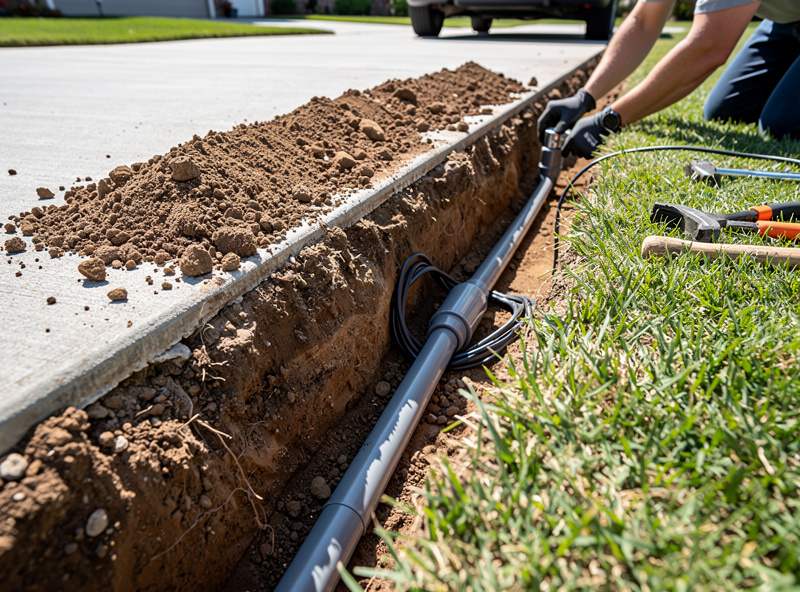
Purpose-built driveway alarms often use a 900 MHz or proprietary sub-GHz link specifically because it penetrates distance and obstacles far better than 2.4 GHz Wi-Fi, and many include a receiver you can wire into the hub. For an integrated setup, Z-Wave’s longer range and mesh — relayed through a mains-powered node like an outdoor smart plug near the boundary — can carry a sensor’s trigger back to the coordinator. The principle is the same one from my outdoor sensor guide: a battery sensor at the edge needs a powered repeater between it and the hub, or it drops out exactly when you need it. Plan the radio path before you buy the sensor.
Driveway Alert Methods Compared
Here is how the common driveway detection methods compare on what they detect, false-alarm tendency, typical range solution, and best use.
| Method | Detects | False Alarms | Range Solution | Best For |
|---|---|---|---|---|
| PIR beam | People and vehicles | Animals, sun | 900 MHz link | General early warning |
| Buried magnetic probe | Vehicles only | Very few | Wired or sub-GHz | Ignoring pedestrians/pets |
| Camera object detection | People, vehicles (typed) | Low with AI | Wired / strong Wi-Fi | Visual confirmation |
| Z-Wave motion + repeater | Movement | Tunable | Z-Wave mesh | Full hub integration |
Automations Worth Building
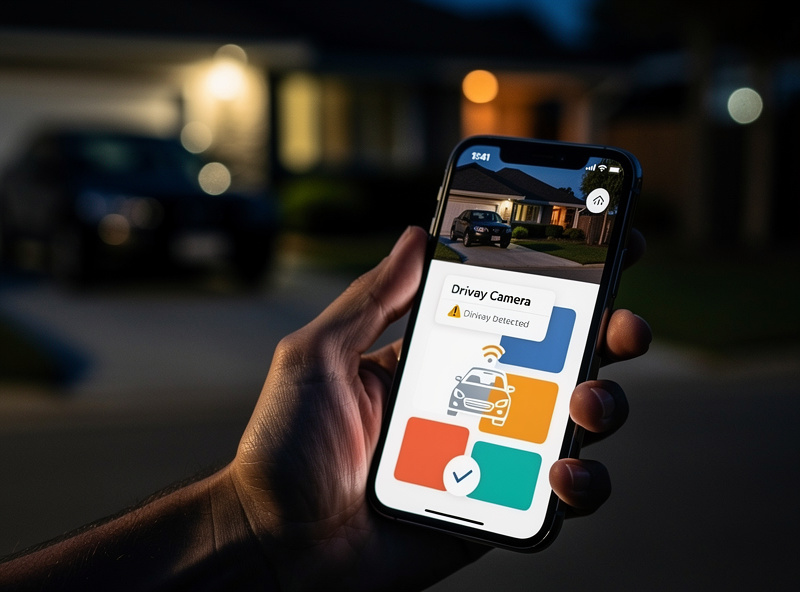
The core driveway automation is a notification plus a context-aware action: push an alert, bring up the driveway and porch lights after dark, and start the camera recording — but tailor the response to whether you’re home and what time it is. A 2 PM delivery and a 2 AM visitor deserve very different reactions.
Mine branches on house state and time. During the day when we’re home, a driveway trigger just chimes softly so we know a delivery arrived. After dark with the house armed, the same trigger fades the floodlights to full, pushes a priority notification with the camera’s snapshot, and starts a recording. The proactive lighting alone is a strong deterrent — a driveway that lights up as a car pulls in tells anyone with bad intentions that the house is paying attention. Layering the camera’s person-or-vehicle classification on top means I can route “person on foot at night” to a louder alert than “a car turned around in the drive.” It all runs on the local hub, so it works in an outage, and it fits into the wider build in my outdoor automation guide.
Placement and Avoiding False Alarms
A driveway sensor’s reliability comes down to where it sits and what it can see. Mount it to cover the single choke point every arrival must cross — the entrance throat of the drive — rather than the whole open area, and angle it across the line of travel so vehicles and people break the beam cleanly. Covering the chokepoint, not the whole driveway, is what keeps the alert meaningful.
The false alarms that erode trust come from the road, the weather, and animals. Aim a PIR sensor so its zone stops at your property line, not out into passing traffic, and shield it from direct afternoon sun that can wash out the heat signature. If neighborhood cats or deer are a constant problem, a buried magnetic probe sidesteps them entirely by responding only to vehicle mass. For the cases where you do want to know about a person on foot, let a camera’s object detection do the discriminating and route only confirmed-person events to a loud alert. The discipline is the same one I apply across every outdoor sensor: separate low-stakes triggers, which can fire freely, from high-stakes alerts, which should require a second confirming signal before they interrupt you.
A Note on Gear
Some links below are affiliate links. If you buy through them I may earn a small commission at no extra cost to you. I only point to gear that fits the local-control approach I run.
For a driveway alert I’d look at a long-range wireless driveway alarm for distance, a buried magnetic vehicle probe if you want to ignore pedestrians and pets, and an outdoor camera with object detection for visual confirmation.
Frequently Asked Questions
How does a smart driveway alert work?
A sensor at the property edge detects a vehicle or person and sends a trigger back to your hub, which then runs automations like lighting, notifications, or camera recording. The value is early warning, catching arrivals before they reach the door.
What is the best driveway sensor type?
PIR beams catch both people and vehicles cheaply but can false-alarm on animals. Buried magnetic probes detect only vehicles, eliminating pedestrian and pet false alarms. Cameras with object detection add visual confirmation. Many setups combine a fast PIR with a confirming camera.
How do I get the driveway signal back to the house?
Wi-Fi rarely reaches a distant driveway. Purpose-built alarms use long-range 900 MHz links, or a Z-Wave sensor relays through a mains-powered repeater near the boundary back to the hub. Plan the radio path before buying, since reach is the hard part, not detection.
Can a driveway alert deter intruders?
Yes. A driveway that automatically lights up and starts recording as a vehicle or person enters signals that the house is monitored, which is a meaningful deterrent. Pairing proactive lighting with a notification gives both deterrence and awareness before anyone reaches the door.
Does a driveway alert work without internet?
It can, if the sensor reports to a local hub and the automations run locally. Lighting, chimes, and local recording then fire during an outage. Cloud-only driveway cameras lose notifications when their server is unreachable, so a local hub adds reliability.