Smart Microchip Pet Door: A Practical Guide
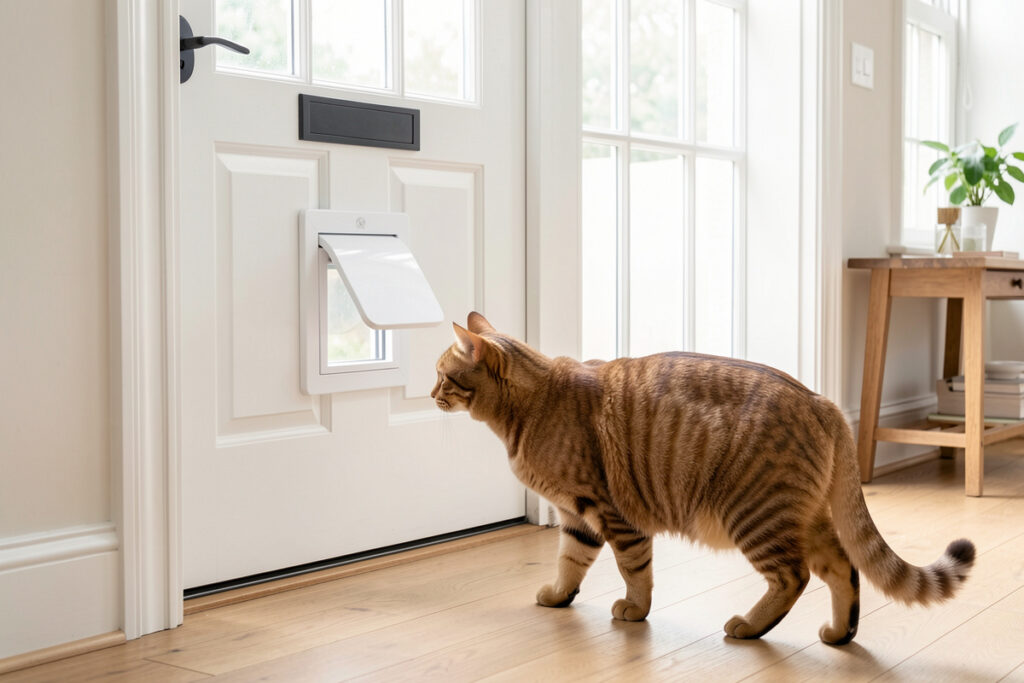
A smart microchip pet door reads your pet’s existing 15-digit ISO ID chip and unlocks only for them — keeping the neighbour’s cat, the local wildlife, and the cold air out. A good one stores 30-plus approved pets in its allow-list and runs 6–12 months on a single set of batteries, all without ever touching the internet. The best part for a local-first home: a microchip door is inherently offline. It does its core job with no internet at all, because the chip reader and lock live entirely in the door.
Of every device in a pet automation setup, this is the one I tell people to buy first after a feeder, because it solves real problems immediately: no more midnight intruders raiding the food bowl, no more letting the cat in and out manually, and a hard barrier against strays bringing fleas or fights into the house. I’ve run microchip doors as part of a local-control home for years, and the guidance below is about choosing one that fails safe, integrates with your hub for the bonus automations, and doesn’t trap a pet when the battery dies.
Microchip vs RFID Collar Tag
There are two ways a “smart” pet door identifies your pet, and the difference matters. A true microchip door reads the ISO chip already implanted in your pet — the same one the vet scans — so there’s nothing on the collar to lose. An RFID-collar door reads a tag clipped to the collar instead, which works but reintroduces the failure of a collar that slips off or a tag that goes flat. I prefer microchip reading because it’s one less thing to maintain and one less thing your pet can shed.
That said, collar systems have a niche: if your pet’s implanted chip uses an unusual frequency the door can’t read, or you want one door to behave differently per pet with very fine control, a tag system can be the pragmatic choice. Most modern microchip doors read all the common chip standards, but verify your pet’s chip type before buying — a door that can’t read your specific chip is an expensive cat flap. Always test-scan the chip against the door’s compatibility list first.
Why a Microchip Door Is the Most “Local” Device You Own
Here’s what I love about these doors from a reliability standpoint: the core function has zero cloud dependency. The chip reader, the lock motor, and the allow-list of approved pets all live inside the door, running on batteries. The internet could be down for a week and your cat still gets in and out exactly as programmed. That’s the opposite of a cloud feeder or camera, and it’s why I trust a microchip door with something as important as my pet’s access to the house.
The “smart” connected models add a Wi-Fi or hub bridge on top of that solid offline base — and crucially, they add it as a layer, not a dependency. The door keeps working if the bridge drops; you just lose the remote notifications and automations until it reconnects. That’s the right architecture, and it’s exactly how I think about every device in my pet automation setup: a dependable local core, with connectivity as an optional enhancement.
Door Types Compared
Microchip doors come in a few flavors depending on where you’re fitting them and how much connectivity you want. Here’s how the main options compare on the things that actually drive the decision.
| Door type | Identifies by | Connectivity | Best for | Trade-off |
|---|---|---|---|---|
| Basic microchip flap | Implanted chip | None (fully offline) | Most cats, doors and panels | No notifications |
| Connected microchip flap | Implanted chip | Wi-Fi / hub bridge | Automations + alerts | Bridge needs power |
| RFID collar door | Collar tag | Varies | Unreadable chip frequencies | Tag can be lost |
| Large dog door | Chip or tag | Varies | Dogs, multi-pet homes | Bigger wall cut, cost |
Battery, Fail-Safe, and the Trap You Must Avoid
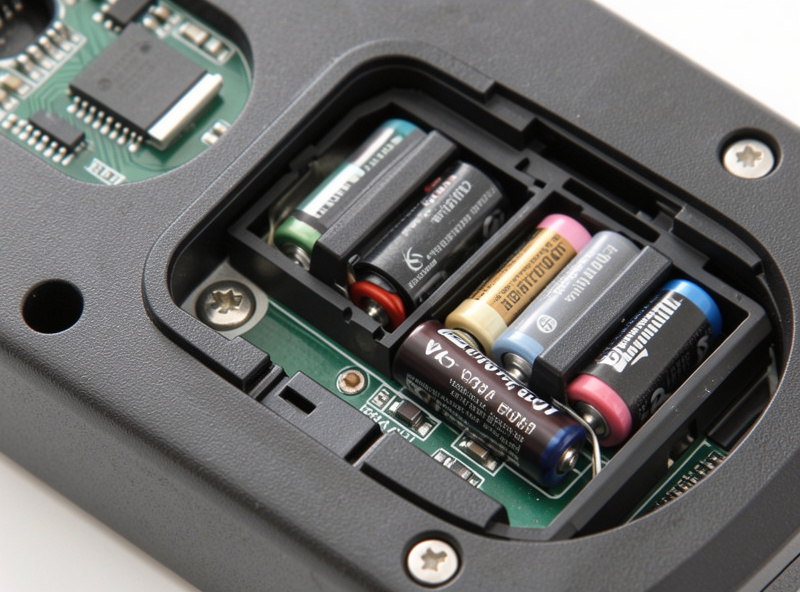
Battery behavior is the single most important thing to check, because it’s a safety issue. The question I always ask: when the batteries die, does the door fail locked or fail open? A door that fails locked can trap a pet outside in the cold or inside without litter access. I want either a clear, early low-battery warning with plenty of runway, or a documented fail-safe behavior I’m comfortable with — and ideally a connected model that pushes a low-battery alert to my hub before it’s a problem. On the doors I’ve run, that warning fires with roughly two to three weeks of runway left — enough time to order batteries without ever risking a 2am lockout, as long as you don’t ignore the first alert.
In my setup the door’s battery level is a sensor I monitor alongside everything else, so a low-battery warning lands in the same place as my other sensor alerts rather than only in a separate app I might ignore. I also keep the right batteries on hand, because the failure mode of “I’ll change them later” is a locked-out pet at 2am. Treat the door’s power like you’d treat a smoke alarm’s: never let it run to empty.
The Automations Worth Adding
The basic door is already brilliant on its own, but the connected models unlock genuinely useful routines. Curfew mode is my favorite: the door locks the cat in after dark and unlocks at dawn, automatically, so there’s no 2am scramble and no cat out hunting overnight. A connected door reports each entry and exit, so my hub knows whether the cat is currently in or out — which feeds the “everyone left” routine and even a rough activity log if the cat seems off.
I also wire the door’s state into the wider house. A door-used event after the “away” routine is armed is a useful signal; an entry at an odd hour can trigger a soft notification. None of this is essential — the door earns its keep on day one offline — but it’s the kind of layered intelligence you get when the door talks to a local hub instead of a standalone app. For the full picture of how door events plug into presence and security, see my pet automation routines guide.
Installation Realities
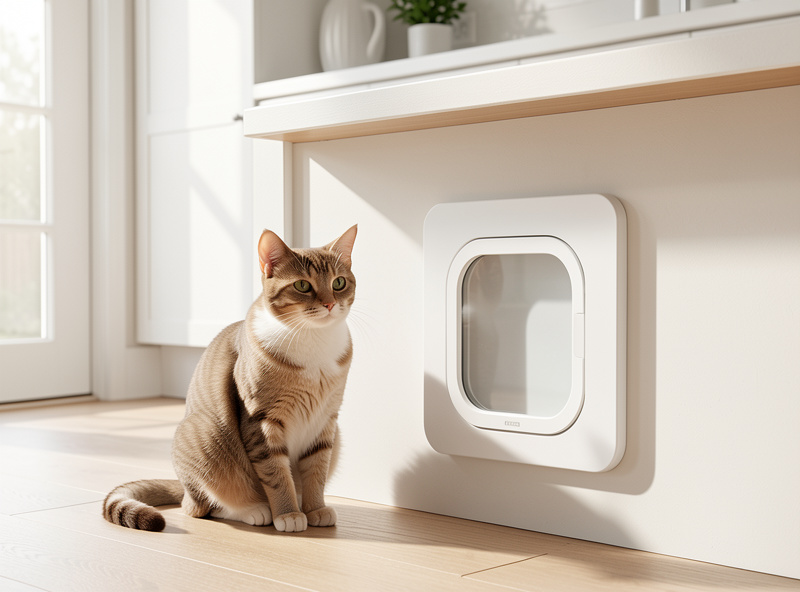
Be honest about the install before you buy. Fitting a microchip flap into a wooden door is straightforward DIY; fitting one into glass, a metal door, or a wall is a bigger job that may need a professional or a special mounting adapter. Measure your pet’s shoulder height and width — the door’s step-over and flap size have to suit the actual animal, and a flap that’s too small means a cat that simply refuses to use it. Most manufacturers publish a sizing guide; use it.
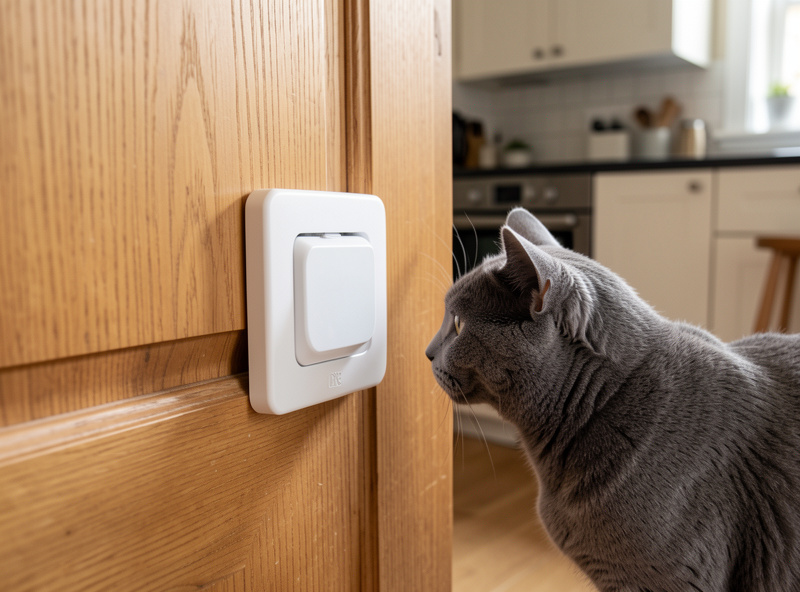
There’s also a training curve. Some pets walk through a new door immediately; others treat the locked flap as a hostile object for a week. Prop it open initially, let them learn the path, then enable the locking. And mount a contact sensor on the flap if your model doesn’t report state natively — it’s a cheap way to bring door events into your hub even on a basic door. Get the physical fit and the training right, and the door becomes the most invisible, reliable device in the whole pet setup.
Frequently Asked Questions
Does a microchip pet door need the internet?
No. The core function — reading your pet’s chip and unlocking — runs entirely inside the door on batteries, with no internet at all. Connected models add Wi-Fi for alerts and automations as a bonus layer, but the door keeps working if that connection drops.
Will a microchip door work with my pet’s existing chip?
Usually yes — most modern doors read the common ISO chip standards your vet implanted. But verify your pet’s specific chip frequency against the door’s compatibility list before buying, because a door that can’t read your chip is just an expensive flap.
What happens when the door’s batteries die?
It depends on the model: some fail locked, some fail open. This is the most important spec to check, because a fail-locked door can trap a pet. Look for an early low-battery warning, and if it’s a connected model, route that alert to your hub so you never run it to empty.
Can a microchip door keep stray cats out?
Yes — that’s its main strength. Because it only unlocks for the chips or tags on its allow-list, neighbourhood cats and wildlife can’t get in to raid food or fight. It’s one of the most effective upgrades for an indoor-outdoor pet’s safety.
Can I set a curfew on a smart pet door?
On connected models, yes. A curfew automation locks the door after dark and unlocks it at dawn, keeping your cat safely in overnight without you having to remember. The door also reports entries and exits so your hub knows if the pet is in or out.
Are microchip doors hard to install?
Fitting one into a wooden door is a manageable DIY job. Glass, metal, or wall installations are harder and may need a professional or a mounting adapter. Measure your pet to confirm the flap size suits them, and plan for a short training period.
Related Guides
- Smart Home Pet Automation: The Local-First Guide
- Best Automatic Pet Feeder for a Smart Home
- Best Pet GPS Tracker Comparison
- Best Smart Home Sensors
- Smart Home Automation for Pets