Best Smart Pet Water Fountain: What to Watch For
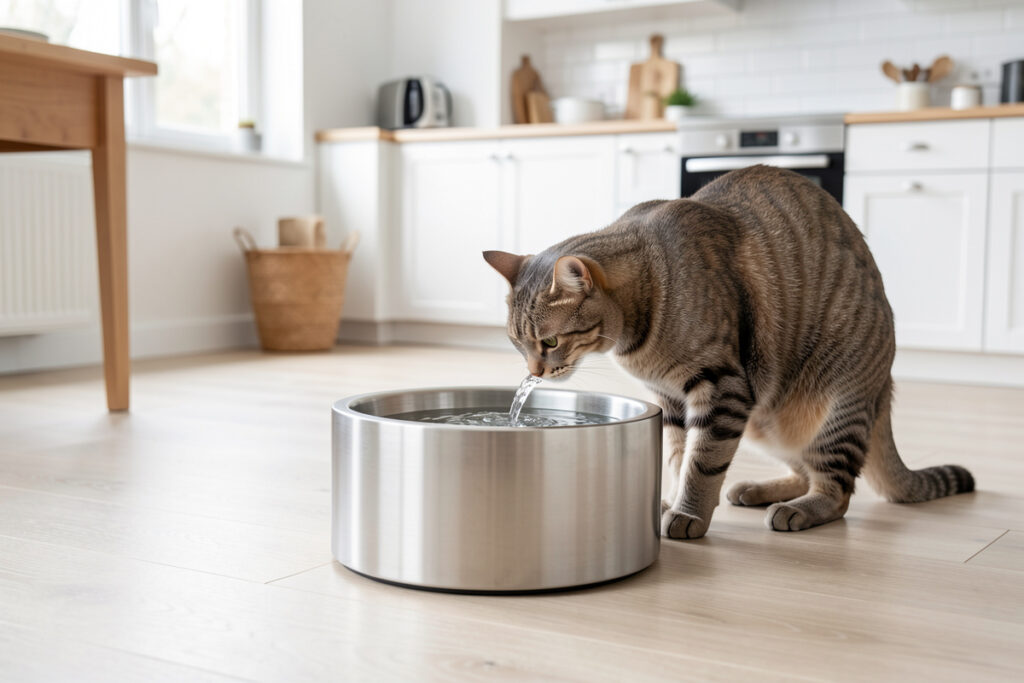
The best smart pet water fountain isn’t isn’t the one with the fanciest app — it’s the one that tells you when the water is low or the pump has stalled. In my setup a fountain earns its “smart” label through sensing, not control, because the failure that matters is a dry bowl you didn’t notice, and a pump running dry can burn through its bearings within hours — a $15–30 replacement you shouldn’t have to keep buying.
Water is the one resource I refuse to leave to chance. A feeder skipping a meal is bad; a fountain running dry for two days is a sick pet and a dead pump. After running fountains as part of a local-first home for years, I’ve landed on a simple truth: there is very little you need to control on a water fountain, and quite a lot you want to monitor. That reframing is what separates a genuinely useful smart fountain from a gimmick with Wi-Fi bolted on.
Why “Smart” on a Fountain Means Sensing, Not Switching
Think about what you’d actually automate. You don’t schedule water the way you schedule meals — the pump should just run. So the intelligence isn’t in turning it on and off; it’s in knowing the state. Is the reservoir low? Has the pump stalled or started running dry? Is the filter overdue? Those are the alerts that prevent the real problems, and they’re what I build every fountain automation around.
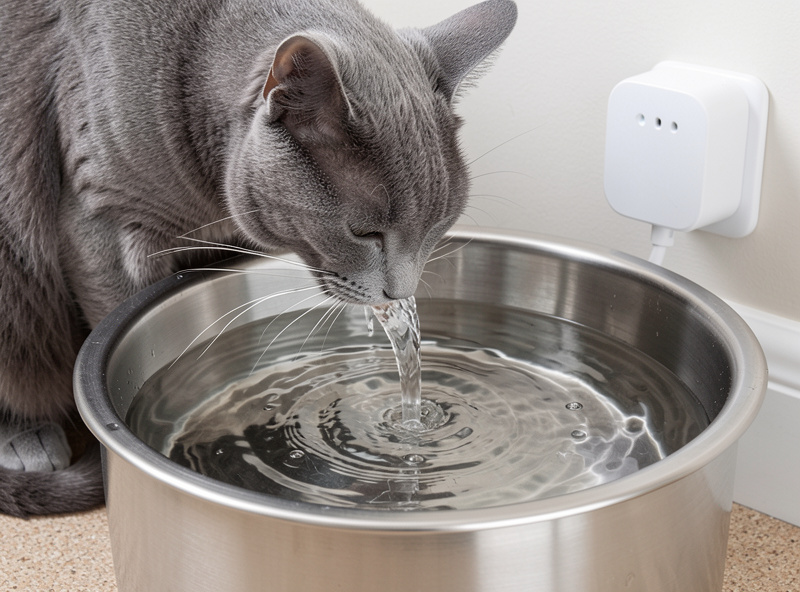
The cleanest signal is power. A fountain pump draws a small, steady current; when the water drops below the intake or the impeller jams, that draw changes or drops to near zero. Put the pump on an energy-monitoring smart plug and your hub can see a stall the moment it happens — no proprietary fountain app required. That trick turns a $25 “dumb” fountain into a monitored device, and it’s more reliable than most built-in cloud sensors because there’s nothing to phone home.
Built-In Smarts vs the Smart-Plug Approach
Some fountains ship with their own water-level sensors, app alerts, and filter-life counters. When they integrate locally, they’re convenient — a real low-water reading beats inferring it from power draw. But many of them lock those readings behind a cloud app and a login, which means the alert you depend on rides on the manufacturer’s servers staying up. I treat any cloud-only fountain sensor as a nice-to-have, never the safety net.
My preferred setup is deliberately boring: a quiet, well-built fountain with a large reservoir and a simple, reliable pump, plugged into an energy-monitoring plug that reports to Home Assistant. The hub watches the power signature and pings me on a stall or a dry-run pattern. If a fountain also offers a genuine local water-level sensor, that’s a bonus layer — but I never let the built-in app be the only thing standing between my pet and an empty bowl.
What Actually Matters When You Buy One
Reservoir size comes first. A larger reservoir means more margin before a refill becomes urgent — for a single cat I want at least a couple of days of buffer — in practice a 2–2.5 litre reservoir — so a busy weekend never turns into a dry pump. Scale that up by roughly a litre per additional cat, because the published runtime figures almost always assume a single light drinker and a bowl you topped up that morning. Pump quietness is second; a fountain that buzzes gets unplugged by an irritated household, and an unplugged fountain is the least smart device in the house. Material is third — stainless steel or ceramic over plastic, because plastic scratches, harbors biofilm, and is the usual culprit behind feline chin acne.
Then filtration and maintenance. The smartest fountain in the world still needs its filter changed and its pump descaled, so look for a model that’s easy to dismantle and clean without a degree in engineering. A filter-life reminder is genuinely useful here — but I’d rather set a simple recurring reminder in my hub than depend on a cloud counter. Easy teardown beats clever software every time, because the maintenance you’ll actually do is the maintenance that’s not a chore.
The Automations I Run
My core fountain automation is the dry-run alarm: if the pump’s power draw falls outside its normal band for more than a few minutes, the hub assumes a stall or low water and sends a high-priority alert — the same class of notification as a leak sensor, because to me it’s the same severity. I pair it with a leak sensor tucked under the fountain, since a tipped or overfilled fountain is a small flood waiting to happen, and that sensor has saved my floor more than once.
The second automation is a refill nudge. I can’t measure water level by power alone, so I use a soft heuristic: a recurring reminder paced to my reservoir size, snoozable, that pauses while we’re away on the assumption the auto-top-up (a gravity bottle) is handling it. None of this needs the fountain to be clever — it needs the hub to be clever and the fountain to be reliable. That division of labor is the whole philosophy in my pet automation routines: dumb-but-dependable hardware, intelligence in one local brain.
Hygiene Is the Hidden Half
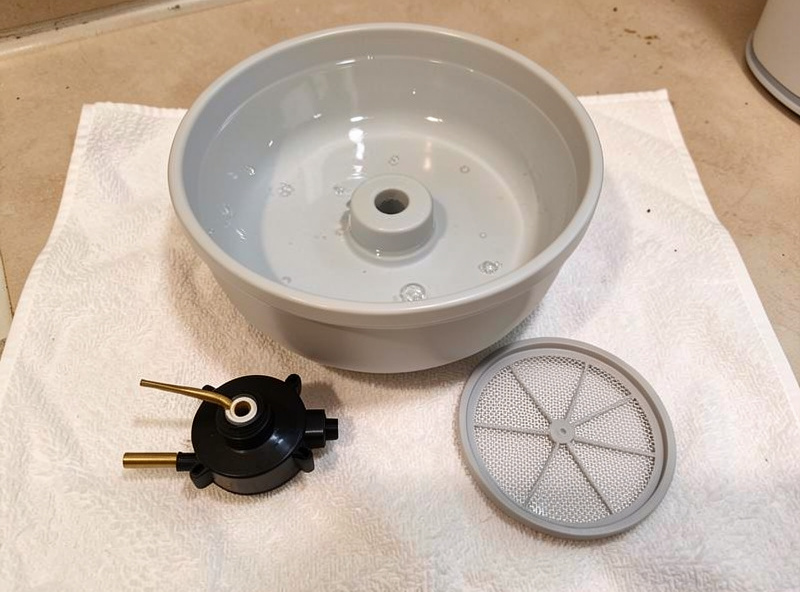
A fountain’s job is to encourage drinking, and pets drink more from moving water — that’s the real health case for one, especially for cats prone to urinary issues. But a dirty fountain does the opposite. Biofilm builds on every surface the water touches, and it builds faster than people expect. I clean mine on a fixed weekly cadence and descale monthly, both driven by hub reminders so they don’t slip. Skip a week or two and you will see the flow rate visibly drop as biofilm narrows the impeller passages. If your water is hard, scale will clog the impeller and trip your dry-run alarm for the wrong reason, so factor descaling into the routine from day one.
This is also where the smart-plug monitoring earns a second keep: a pump that’s working harder against scale draws differently, and over weeks you can sometimes see maintenance creeping up in the power trend before the pump actually fails. It’s a small thing, but it’s the kind of quiet, local insight you only get when the device lives on your own hub instead of someone else’s cloud.
Multi-Pet Homes and Placement
More animals means more drinking, faster evaporation, and a reservoir that empties quicker than the spec sheet implies, so in a multi-pet home I size up the reservoir and tighten the refill cadence rather than trusting the manufacturer’s “X days” claim. I also run two smaller fountains in separate rooms instead of one large one — it cuts the queueing that makes a timid cat skip drinking, and it means a single stalled pump never leaves the whole household dry. Both pumps sit on their own monitored plugs, so the hub knows exactly which one needs attention.
As an Amazon Associate I earn from qualifying purchases.
Placement follows the same logic as the feeder: away from the food bowl (cats instinctively prefer water separated from food), off the main traffic path so it isn’t knocked, and on a hard floor with that leak sensor underneath. Run the cable cleanly to a socket you won’t accidentally switch off — a fountain killed by a flipped wall switch is the most avoidable dry-pump there is, and I’ve done it once, which was enough.
Frequently Asked Questions
Do I really need a smart water fountain?
The fountain itself doesn’t need to be smart — it needs to be reliable. The value of going smart is monitoring: an alert when the reservoir runs low or the pump stalls. You can add that to almost any fountain with an energy-monitoring smart plug and a hub.
How can I tell if a pet fountain pump has stopped?
The easiest way is power. A running pump draws a small, steady current; a stall or dry run changes that draw. Put the pump on an energy-monitoring plug and your hub can alert you the moment the pattern breaks, with no proprietary app needed.
Are stainless steel pet fountains better than plastic?
Yes. Stainless steel and ceramic resist biofilm and scratches far better than plastic, and plastic fountains are a common cause of feline chin acne. They cost a little more but are easier to keep genuinely clean, which is the point of a fountain.
How often should I clean a pet water fountain?
I clean mine weekly and descale monthly, both on hub reminders so they don’t slip. Hard water builds scale faster and can clog the impeller, so if your area has hard water, lean toward more frequent descaling.
Will a smart fountain work if my internet goes down?
The pump keeps running because it’s just plugged in. What you lose with a cloud-only fountain is the alerts. That’s why I prefer monitoring through a local hub and smart plug, so the low-water and stall warnings survive an outage.
Related Guides
- Smart Home Pet Automation: The Local-First Guide
- Best Automatic Pet Feeder for a Smart Home
- Best Automatic Self-Cleaning Litter Box
- Best Smart Plugs for Reliable Automation
- Smart Home Automation for Pets