Best Automatic Self-Cleaning Litter Box (2026)
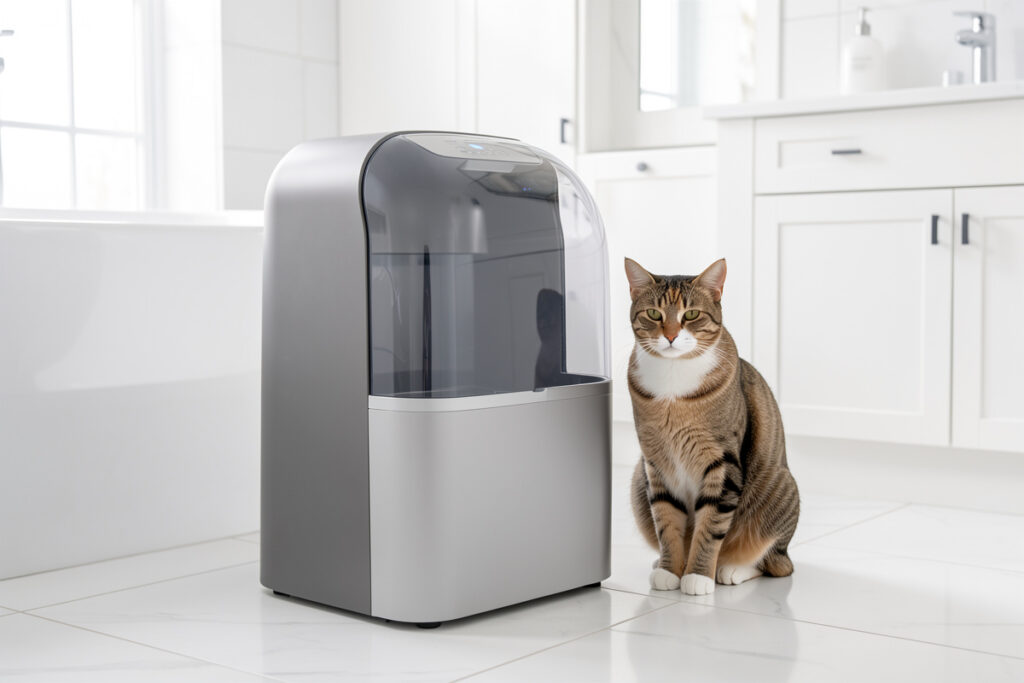
The best automatic self-cleaning litter box scoops itself after every use, logs your cat’s visits for early health warnings, and — critically — works without a forced subscription. In my setup it’s the highest-effort and highest-cost pet device to automate well — figure $150–700 up front — but it turns daily scooping into a drawer swap every 5–7 days, and the usage data it produces is genuinely useful for catching problems early.
I’ll set expectations honestly: a self-cleaning box is a bigger commitment than a feeder or a fountain. It’s expensive, it’s mechanically complex, and the cheap ones fail in ways that range from annoying to unsafe. But a good one, integrated properly, turns litter duty from a daily grind into a weekly waste-bag swap, and the visit-logging quietly became one of my favorite health signals. Here’s how to choose one that’s safe, that you actually own, and that fits a local-first home.
How Self-Cleaning Boxes Actually Work
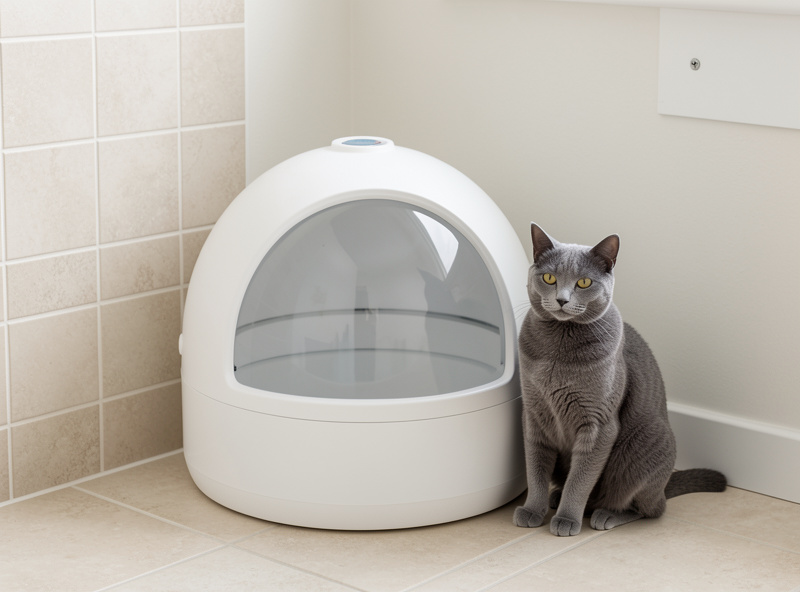
There are two main mechanisms, and they suit different cats. Rake-style boxes drag a comb through the litter after the cat leaves, pushing clumps into a sealed compartment — simpler, often cheaper, but fussier about litter type. Rotating-globe boxes tumble the whole chamber to sift clumps into a drawer below; they handle more cats and clump better, but they’re bulkier and pricier. Both rely on a sensor to detect when the cat has entered and left, then run the cleaning cycle a safe interval later.
That sensor-and-timing logic is where quality shows. A good box uses weight and motion sensing to know the cat is fully out before any mechanism moves, with a generous delay and an obstruction stop. A bad one cuts corners there — which is exactly the safety issue you must not compromise on. The cleaning cycle is also where the better boxes log a timestamped visit, and that log is the foundation for the health monitoring I’ll come back to.
Safety Comes Before Every Other Feature
This is the one device where I won’t soften the warning: a litter box with a moving mechanism and a cat inside has to be engineered to never run while occupied. Look for redundant detection — weight plus infrared, not one sensor — a long post-exit delay, and a documented obstruction-stop that reverses the mechanism if anything blocks it. For homes with kittens, very small cats, or elderly cats that move slowly, the safety margin matters even more, and some boxes are explicitly not rated for kittens under a certain weight. Read that rating before you buy.
I treat the box’s safety sensors the way I treat a smoke alarm: non-negotiable and regularly checked. If a model has a history of cycling early or weak obstruction detection, no amount of app polish makes up for it. The whole point of automating the litter box is to make life easier and the cat safer — a box that does the chore but introduces a hazard has failed at its actual job, full stop.
The Subscription Trap and De-Clouding
Litter boxes have quietly joined the subscription-creep club, and it’s the thing I most want you to watch for. Some models gate the visit history, the multi-cat tracking, or even cleaning-schedule controls behind a monthly app tier — the same recurring-revenue play I rail against on cameras and feeders. The box should do its core job, scoop and log, without paying rent. Before buying, check whether the features you care about are free or fenced behind a plan.
Where possible I prefer boxes with a local integration or at least an open enough API to pull the data into my own hub, so the visit log lives in my house alongside the rest of my pet data instead of only in a vendor cloud. Even when a box is Wi-Fi-and-app by design, putting it on a segmented IoT network keeps it from chatting with everything else and lets me see what it phones home. The cheapest box is rarely the cheapest to live with once a subscription is attached.
Models Compared by What Matters
Forget star ratings for a moment — here’s how the categories compare on the factors that actually decide whether a self-cleaning box is worth it for your home.
| Factor | Rake-style | Rotating-globe | What to prioritize |
|---|---|---|---|
| Multi-cat capacity | Lower | Higher | Globe for 2+ cats |
| Litter flexibility | Picky | More forgiving | Check clumping type |
| Footprint | Smaller | Bulky | Measure your space |
| Safety sensing | Varies | Varies | Weight + IR, obstruction stop |
| Health logging | Some | Most | Visit log without a subscription |
| Odor control | Sealed drawer | Sealed drawer | Carbon filter, easy empty |
Health Monitoring: The Underrated Payoff
The feature that surprised me most isn’t the scooping — it’s the data. A box that logs each visit with a timestamp and, on the better models, the cat’s weight builds a quiet baseline of normal behavior. A sudden jump in litter-box trips, a drop in visits, or a steady weight change are among the earliest signs of common feline health issues, and a box that surfaces them gives you a reason to see the vet sooner. I’m careful here: the box is an early-warning flag, not a diagnosis, and anything unusual is a conversation with your vet, not a self-treatment project.
In a multi-cat home this gets trickier, because the box needs to tell the cats apart — usually by weight, sometimes by a collar tag. If health tracking is your goal and you have several cats, prioritize a model with reliable per-cat identification, and verify it isn’t the feature locked behind the premium subscription. Tied into my wider pet setup, those visit events become just another signal the hub watches, alongside whether the cat ate and drank.
Wiring It Into Your Routines
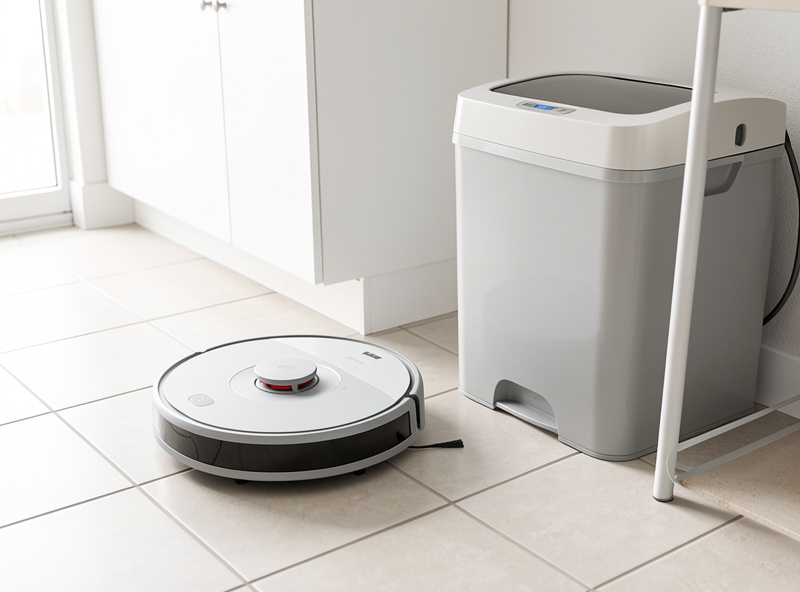
The automation that makes a self-cleaning box shine isn’t on the box — it’s around it. My favorite is pairing it with the vacuum: a “everyone left” routine that runs the litter cycle and then sends the robot vacuum past the box area, so tracked litter is cleaned up while the house is empty. The box does its job, the vacuum does its job, and you come home to a clean floor without lifting a finger.
I also wire a maintenance reminder off the visit count rather than a fixed calendar — the waste drawer fills based on use, not the day of the week, so a usage-based “empty the drawer” nudge is far more useful than a generic weekly alert. And a fault alert matters: if the box reports a cycle error or jam, I want to know immediately, because a stalled box means a cat with nowhere clean to go. These are exactly the kinds of cross-device rules I walk through in the pet automation routines guide.
Litter, Maintenance, and the Honest Downsides
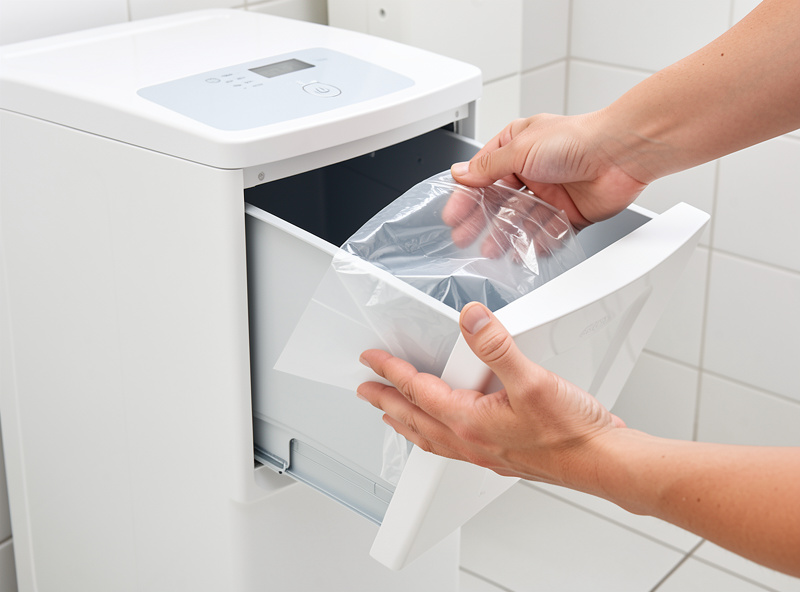
A self-cleaning box still needs maintenance — less of it, but it’s not zero. You’ll empty the sealed drawer every few days to a week depending on cats, top up litter, and do a full teardown clean periodically because clumping litter and humidity build residue the auto-cycle doesn’t reach. Most boxes demand a specific clumping litter for the mechanism to work; using the wrong type is the top cause of “my self-cleaning box stopped clumping properly.” Buy the litter the manufacturer specifies and don’t fight it.
The honest downsides: they’re loud enough that some cats are wary at first, they take up real floor space, and the upfront cost is high. Introduce it slowly — leave it unpowered next to the old box for a while so the cat accepts it — and accept that a nervous cat may need weeks. For most households the trade is worth it, but go in clear-eyed: it’s a genuine appliance, not a gadget, and it rewards buying quality once over buying cheap twice.
Frequently Asked Questions
Are automatic self-cleaning litter boxes safe for cats?
Good ones are, because they use redundant weight and infrared sensing, a long post-exit delay, and an obstruction stop so the mechanism never runs while the cat is inside. Cheap models cut corners here. For kittens or small cats, check the box’s minimum weight rating before buying.
Do self-cleaning litter boxes need a subscription?
Some lock visit history, multi-cat tracking, or even scheduling behind a monthly plan. The box should scoop and log without paying rent, so check before buying whether the features you want are free or fenced behind a subscription tier.
Can a self-cleaning litter box track my cat’s health?
The better models log each visit with a timestamp and sometimes weight, building a baseline. Sudden changes in frequency or weight are early warning signs worth a vet visit. Treat the box as a flag that prompts a check-up, not as a diagnosis on its own.
Do self-cleaning litter boxes work with any litter?
No — most require a specific clumping litter for the mechanism to sift properly. Using the wrong type is the most common reason a box stops clumping well. Use the litter the manufacturer specifies rather than substituting a cheaper one.
Will the litter box work if my Wi-Fi goes down?
The scooping mechanism keeps working because it runs on its own sensors and timer. What you lose during an outage is the app notifications and visit logging. That’s another reason to prefer a box that stores data locally or integrates with your own hub.
Related Guides
- Smart Home Pet Automation: The Local-First Guide
- Best Robot Vacuum for Pet Hair
- Best Automatic Pet Feeder for a Smart Home
- Best Smart Pet Water Fountain
- Smart Home Automation for Pets