Plug-In Smart Home Automation: No Wiring Required
Plug-in smart home automation means building real routines out of devices that only plug in or stick on — no wiring, no electrician, nothing the landlord has to approve. With three ingredients (a smart plug, a sensor, and a local hub) you can run presence-based lighting, shut a heater off when the apartment empties, and stop a leak before it spreads — and every bit of it unplugs when you move.
People assume “automation” requires rewiring. It doesn’t. In my own apartment-grade layer, the most useful automations run entirely off plug-in actuators and battery sensors talking to a local Home Assistant install. This guide is the recipe book: the building blocks, the routines worth setting up, and why presence beats a plain timer. It pairs with the smart home for renters guide and the renter-friendly smart devices guide.
What plug-in automation can actually do
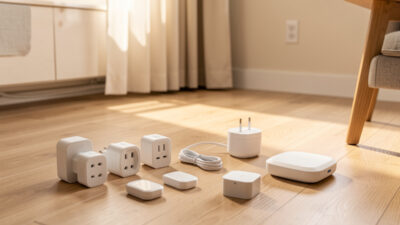
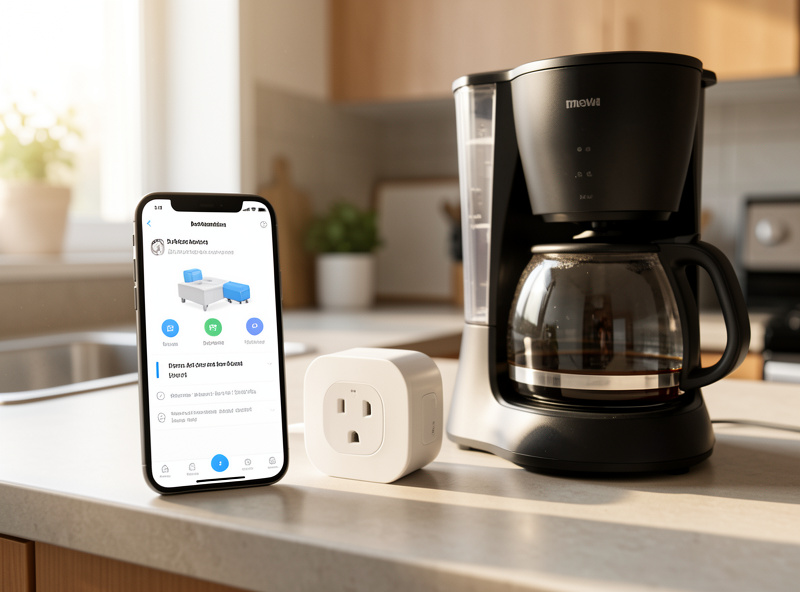
A smart plug does one physical thing — switch power on or off — but with a hub and a trigger, that one action covers a surprising amount. Anything that runs off a wall outlet becomes schedulable, presence-aware, and remotely controllable: lamps, fans, space heaters, window AC units, coffee makers, chargers, and the standby loads quietly draining your bill.
The energy-reporting models add a second trick: they measure draw, so an automation can react to power state. A plug can tell that the washing machine has finished because its draw dropped, then notify you — no special appliance required. That “sense the power, then act” pattern is the heart of plug-in automation, and it needs zero modification to the apartment.
The three building blocks
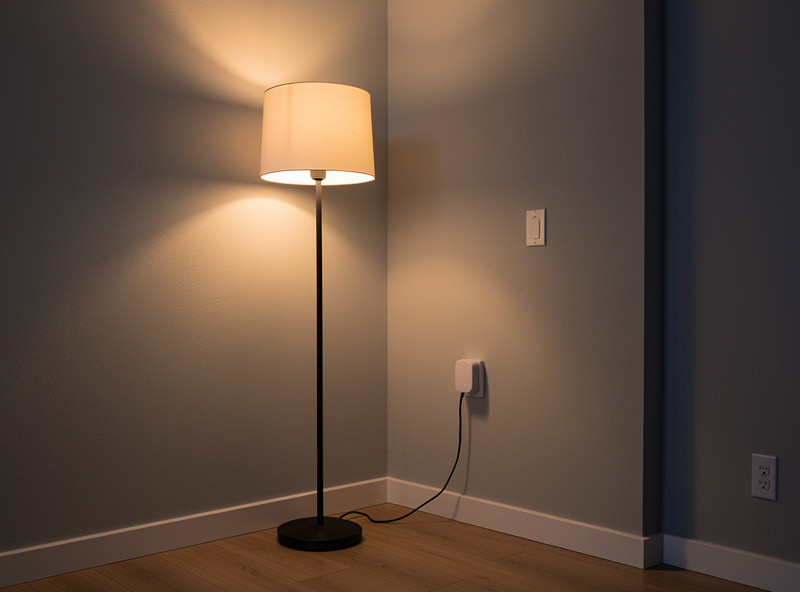
Every plug-in automation is some combination of three things: a trigger, a brain, and an actuator. The trigger is usually a sensor (motion, contact, presence, a schedule, or another plug’s power reading). The brain is your hub, deciding what to do. The actuator is the smart plug or relay that switches the load. Get those three talking and the rest is just writing rules.
I lean on Zigbee and Z-Wave for the sensors and plugs so they don’t crowd the apartment Wi-Fi, and I keep the brain local so the rules fire in milliseconds and survive an outage. If you’re choosing hardware, the best smart plugs guide and the smart plug explained primer cover the actuator side, and the smart plug vs smart switch comparison helps you decide where a plug fits versus a switch.
Automations that earn their keep
The routines worth your time are mundane and reliable, not flashy. Presence lighting is the first one everybody loves: a motion or mmWave sensor turns a plugged-in lamp on when you enter and off a few minutes after you leave, so you stop thinking about light switches. Use mmWave where you sit still, so the light doesn’t drop while you read.
The money-saver is the empty-apartment rule: when presence sensors and door contacts agree nobody’s home, the hub cuts power to the space heater, the AC, and the standby loads. A leak sensor by the dishwasher can trigger an alert — and, if you put a smart valve or a plug on the appliance, cut it off automatically. A “good morning” routine can warm the coffee maker’s outlet and bring lights up gently; a “good night” routine kills everything but the essentials. None of these touch a wall. For the energy side specifically, the smart home energy monitoring for renters guide shows how the plug data turns into a smaller bill.
Schedules are fine; presence is better
A plain timer — “lamp on at 6 pm” — is the easiest automation and a perfectly good start. But a schedule doesn’t know whether you’re home, awake, or away for the weekend, so it runs whether it makes sense or not. Presence-based rules react to the actual state of the apartment, which is why they feel smart instead of just automatic.
The upgrade path is simple: start with schedules to get comfortable, then add a motion or presence sensor and let the rule check “is someone here?” before acting. That one condition turns a dumb timer into something that saves energy and never leaves a heater running in an empty room. It’s the single highest-value habit in plug-in automation, and it costs the price of one sensor.
Keep the rules local
An automation that depends on a manufacturer’s cloud is an automation that breaks when their servers do — and you’ll never know why. Plug-in automation is at its best on a local hub, where the trigger, the logic, and the plug all live in your apartment and respond instantly. That’s also what lets the whole setup come down in an afternoon and go back up at your next place.
This is the same conviction that runs through everything I build: judge each rule by whether it still works when the internet is down. If it doesn’t, it’s a convenience that will let you down at the worst moment. Build the load-bearing routines — lights, heat, leaks — on local control, and treat cloud features as a bonus. When you’re ready to assemble the whole thing from scratch, the smart home starter kit for renters lays out the shopping order.
A worked example: the empty-apartment rule
The automation that pays for the sensors is worth spelling out. The trigger is agreement between two signals — no motion for ten minutes AND every door contact closed — which together mean the apartment is genuinely empty rather than someone sitting quietly. When the hub sees both, it cuts the plugs feeding the space heater, the window AC, and the cluster of standby loads behind the TV.
The reverse rule restores comfort the moment you are back: a door contact opening, or the first motion event, powers the climate plugs on again so the room is warming by the time you have your coat off. That ten-minute delay is the tuning knob that matters — too short and it cuts power during a quiet evening, too long and it wastes the energy you set out to save. I settled on ten minutes after watching how my own presence sensors behaved; mmWave in the rooms where I sit still lets me shorten it, because it sees breathing, not just movement.
Match the plug to the load
Switching a space heater or window AC on an automation is safe only inside the plug’s rating, so this is the one place to read the label before you buy. A standard North American smart plug on a 15-amp circuit tops out around 1,800 watts, and the continuous-load rule of thumb is to stay under 80 percent of that — roughly 1,440 watts — for anything that runs for hours, like a heater. A 1,500-watt space heater sits right at that edge, so give it its own plug rated for the full load and never run it through a daisy-chained power strip.
Prefer a plug with built-in over-temperature protection for high-draw devices, and check the wattage rating, not just the amperage, since cheaper plugs sometimes quote a generous amp figure they cannot actually sustain. Used within its rating, a quality plug switching a heater on a presence rule is both safe and one of the biggest energy wins in the whole apartment — but it is the one automation where the hardware spec genuinely matters.
As an Amazon Associate I earn from qualifying purchases.
Frequently Asked Questions
Can you automate a home with just smart plugs?
To a surprising degree, yes. With a smart plug, a sensor, and a hub you can run presence-based lighting, shut off heaters when the apartment is empty, react to a leak, and trigger morning and night routines. Anything that runs off a wall outlet becomes schedulable and presence-aware with no wiring.
What is the easiest smart home automation to start with?
A schedule on a smart plug, such as turning a lamp on at sunset, is the simplest. Once that works, add a motion or presence sensor so the rule checks whether anyone is home before acting. That single condition turns a basic timer into a genuinely smart, energy-saving routine.
Do plug-in automations work without internet?
They do if you run them on a local hub. With Zigbee or Z-Wave plugs and sensors bound to a hub in your home, the trigger, logic, and switching all happen locally and survive an internet outage. Cloud-dependent automations stop working when the manufacturer’s servers go down.
Can a smart plug detect when an appliance is finished?
An energy-reporting smart plug can. When the washing machine or dryer finishes, its power draw drops, and a hub rule can detect that change and send you a notification. This power-sensing trick needs no special smart appliance, just an energy-monitoring plug.
Are plug-in automations safe for high-power devices like heaters?
Only if the plug is rated for the load. Match the plug’s amperage and wattage rating to the heater or AC unit, never daisy-chain through a strip, and prefer a plug with over-temperature protection. Used within its rating, a quality smart plug switching a heater on a presence rule is safe and saves energy.