Renter-Friendly Smart Devices: What to Buy First (2026)
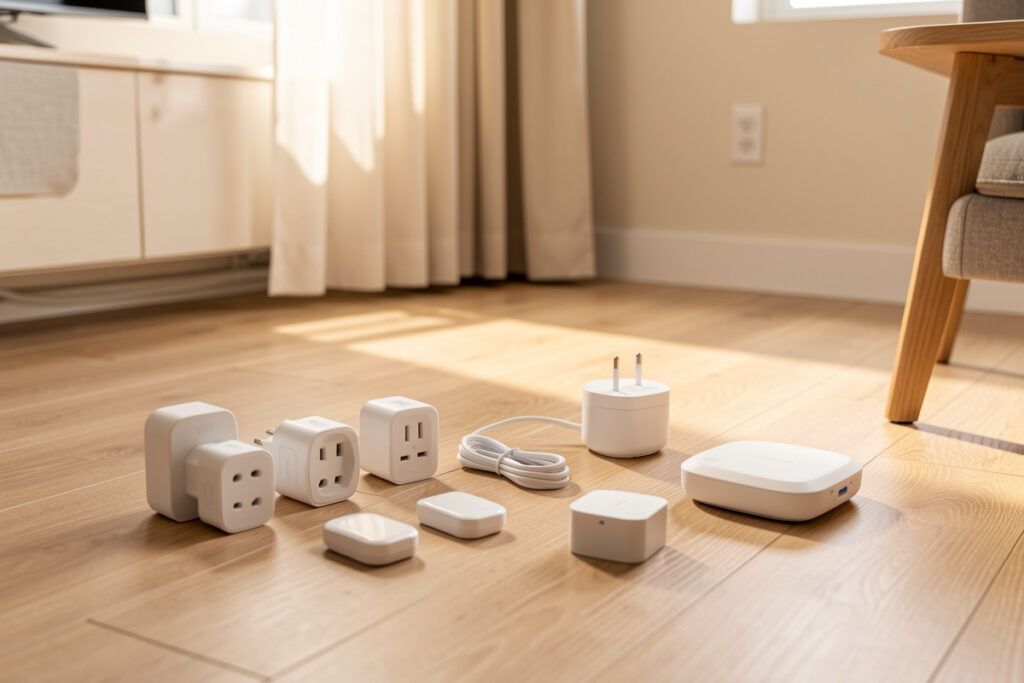
The most renter-friendly smart devices share three traits: they plug in or stick on, they keep working when the cloud is down, and they fit in a box when you move. Judged that way, the best first buys for a renter are energy-reporting smart plugs and a handful of battery sensors — not the video doorbell and color bulbs most people start with.
I’ve added dozens of devices to my own local-first hub over the years, and the ones that earned their place in a rental are rarely the photogenic ones. This guide ranks the categories by how well they actually serve a renter — reversibility, portability, and whether they survive an outage — and tells you what to buy first and what to leave on the shelf. For the wider picture of how it all fits together, start with the smart home for renters guide.
The three-part renter test
Before buying anything, run a device through three questions. Does it install without altering the apartment? Does it travel when the lease ends? And does it still work if the manufacturer’s servers go down? A device that passes all three is renter-grade. Most plug-in and battery devices pass; most hard-wired and cloud-only devices fail at least one.
That last question is the one buyers skip. A Wi-Fi gadget that only works through one company’s app is a gadget you’ve rented from that company, no matter that you paid full price. When I judge a device, “works locally on my hub” is worth more than any feature printed on the box.
Smart plugs and relays: buy these first
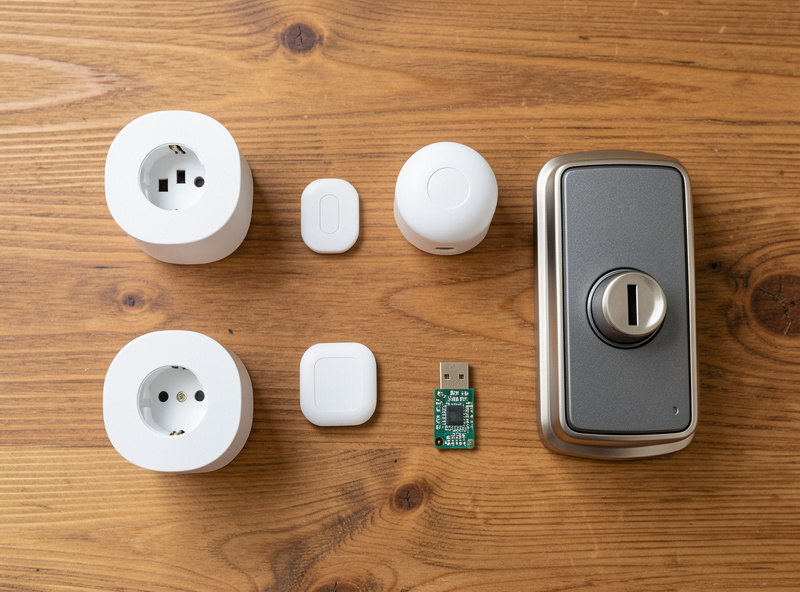
If you buy one category, buy energy-reporting smart plugs. A plug turns any lamp, fan, heater, kettle, or charger into an automatable, schedulable device with zero wiring, and the energy reporting shows you what each thing actually draws. In my setup, plugs handle schedules, presence-based shutoffs, and the “everyone left” routine that kills standby loads.
The reason plugs beat smart bulbs in most rooms is the dumb wall switch: a smart bulb goes dark the instant someone flips it, while a plug under a lamp keeps the lamp controllable and the switch working. The full argument is in the smart plug vs smart switch comparison and the are smart plugs worth it breakdown, and the renter-specific automations live in the plug-in smart home automation guide. For picks, our best smart plugs guide covers the field; I’d point renters at a Zigbee or Matter plug with local control and a good set of energy-monitoring smart plugs over the cheapest cloud-only ones. As an Amazon Associate I earn from qualifying purchases.
Sensors: the cheap layer that makes it feel smart
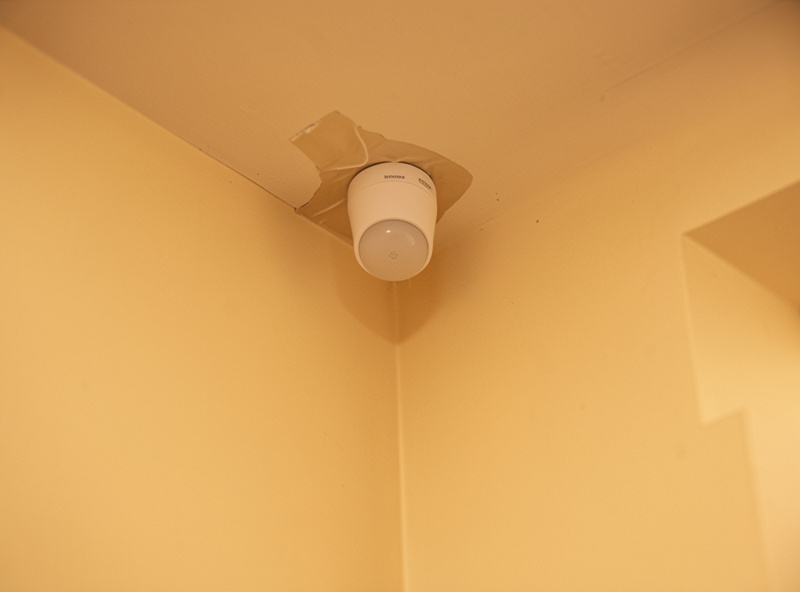
Sensors are where a rental crosses from “app-controlled gadgets” into an actual smart home. Door and window contacts, temperature and humidity sensors, illuminance sensors, leak sensors, and motion or mmWave presence sensors are all battery-powered and stick on with adhesive — the most reversible category you can buy, and the cheapest.
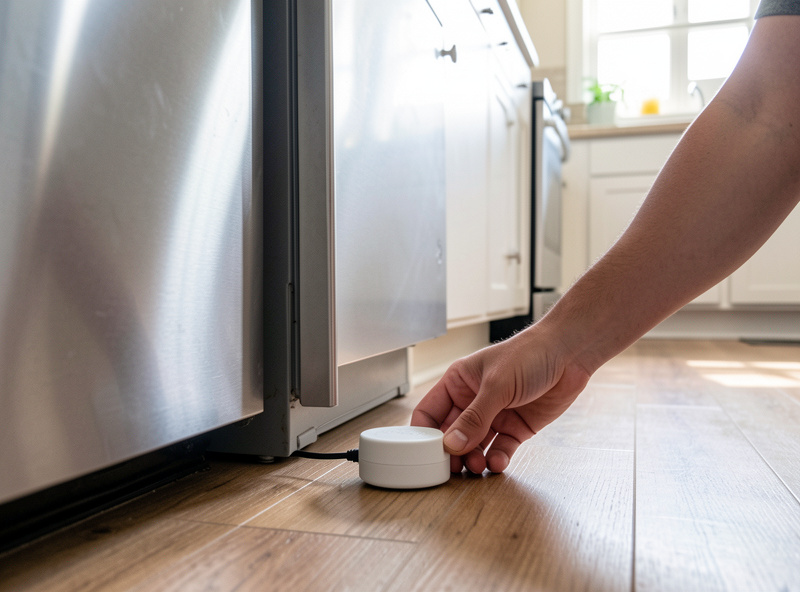
I run cheap PIR motion in low-stakes zones and mmWave presence sensors where I need the lights to stay on while someone sits still. A leak sensor next to the dishwasher or under the sink is the single highest-value few-dollar device a renter can own — it warns you before a slow leak becomes a deposit-eating flood. None of it touches the walls, and all of it pairs to a local hub over Zigbee or Z-Wave instead of fighting your Wi-Fi for airtime.
Locks, lights, and climate
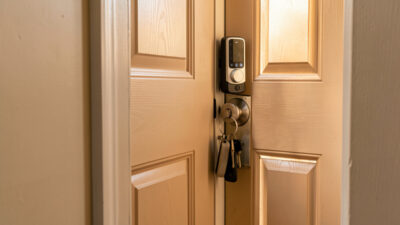
A retrofit smart lock replaces only the interior thumb-turn of an existing deadbolt, so the exterior keyway and the landlord’s key are untouched — full detail in the no-drill smart lock options guide. For lighting, use smart bulbs in fixtures where color and brightness genuinely matter and plug modules everywhere else; the smart lights for apartment renters guide walks through no-wiring options. For climate, a plug on a space heater or window AC gives you scheduled, presence-aware heating and cooling without touching the building’s system, and a swappable smart thermostat works where the lease allows — see the smart thermostat for apartment guide.
The common thread is choosing the version of each device that reuses what’s already there. If the only install path runs through an electrician, it’s not a renter device — it belongs in the landlord-friendly upgrades conversation instead.
What to skip in a rental
Skip anything hard-wired: in-wall smart switches that need a neutral, wired thermostats tied to central HVAC, and wired doorbells. Skip cloud-only cameras with mandatory subscriptions — a local-recording camera does the same job and the footage stays in your apartment. And skip “smart” major appliances; the premium rarely pays back, and you can’t take the landlord’s fridge with you anyway.
Be wary of anything that demands a manufacturer account just to function offline. The whole point of a renter kit is that you own it and it moves with you. A device you can’t migrate to a new home or a new hub isn’t a fit, however clever it looks. This is the same standard that runs through the main renter guide: judge every purchase by whether it survives an outage and a move.
Renter device categories at a glance
Here’s how the categories stack up on the things that matter in a rental — what they cost relative to each other, how reversible they are, and whether they belong in your first order.
| Category | Relative cost | Renter value | Install | Buy first? |
|---|---|---|---|---|
| Energy-reporting smart plugs | Low | Very high | Plug in | Yes |
| Battery sensors (contact, motion, leak) | Low | Very high | Adhesive | Yes |
| Local-control hub | Medium | Essential | Sits on a shelf | Yes |
| Retrofit smart lock | Medium | High | Thumb-turn swap | Soon |
| Smart bulbs | Low-Medium | Situational | Screw in | Where color matters |
| Cloud-only camera / smart appliance | High | Low | Varies | No |
The hub: the device that makes the rest worth buying
The table calls the local hub essential for a reason: without it, a pile of smart plugs and sensors are just separate apps that never talk to each other. The hub is the brain that turns “a motion sensor” and “a lamp plug” into “lights that follow me around the apartment,” and a local-first hub keeps those rules running when the internet drops. For a renter it has one more virtue — it carries your whole setup to the next place in a single box.
For a rental I would run a small, low-power hub on solid-state storage rather than an SD card you are afraid to reboot — it boots fast, survives power cuts, and never corrupts mid-automation. Whatever platform you choose, the test is the same as for every device: does it control your gear locally, over Zigbee and Z-Wave and Matter, without routing everything through a manufacturer’s cloud? Get the hub right and every later purchase just slots onto it.
Which radio: Zigbee, Z-Wave, or Matter for a renter
For a renter the radio matters more than the brand, because it decides whether a device crowds your Wi-Fi and whether it survives a move. Zigbee is my default for plugs and the cheap sensor layer — abundant, inexpensive, and it builds a self-healing mesh through your mains-powered plugs. Z-Wave I reserve for locks and the long-range battery devices, since it runs on a less crowded frequency and tends to reach across an apartment cleanly.
Matter-over-Thread is the newer option and worth choosing for fresh gear, because it is built to bind to a local hub and move between ecosystems rather than lock you to one. What ties all three together is that they pair to your hub locally and never touch the congested 2.4 GHz Wi-Fi band — which is exactly why a sensor-heavy rental stays reliable on radios and goes flaky on Wi-Fi.
Frequently Asked Questions
What smart device should a renter buy first?
An energy-reporting smart plug. It turns any lamp, fan, or heater into a schedulable, automatable device with no wiring, reports power draw so you can cut waste, and moves with you when you leave. A few plugs plus battery sensors deliver more than any single flashy gadget.
Are smart plugs better than smart bulbs for renters?
In most rooms, yes. A smart bulb stops responding the moment someone flips the dumb wall switch, while a smart plug under a lamp keeps the lamp automatable and the switch working. Use smart bulbs only in fixtures where color and brightness control genuinely matter.
Do renter smart devices need an internet connection?
The good ones do not. Zigbee and Z-Wave devices bound to a local hub keep working through an outage because they talk to your hub, not a server. Cloud-only Wi-Fi devices stop working when the manufacturer’s servers go down, which is why I avoid them in a rental.
What smart devices should renters avoid?
Avoid hard-wired switches and thermostats, wired doorbells, cloud-only cameras with mandatory subscriptions, and smart major appliances. None of them are reversible or portable, and the appliance premium rarely pays back over a lease.
Are battery sensors reliable enough to rely on?
Yes. Quality Zigbee and Z-Wave contact, motion, and leak sensors run a year or more on a coin cell and report battery level to the hub so you get warned before one dies. A leak sensor by the dishwasher is one of the highest-value few-dollar devices a renter can own.