Smart Kitchen Scale 2026: Recipe, Macro, Coffee Picks
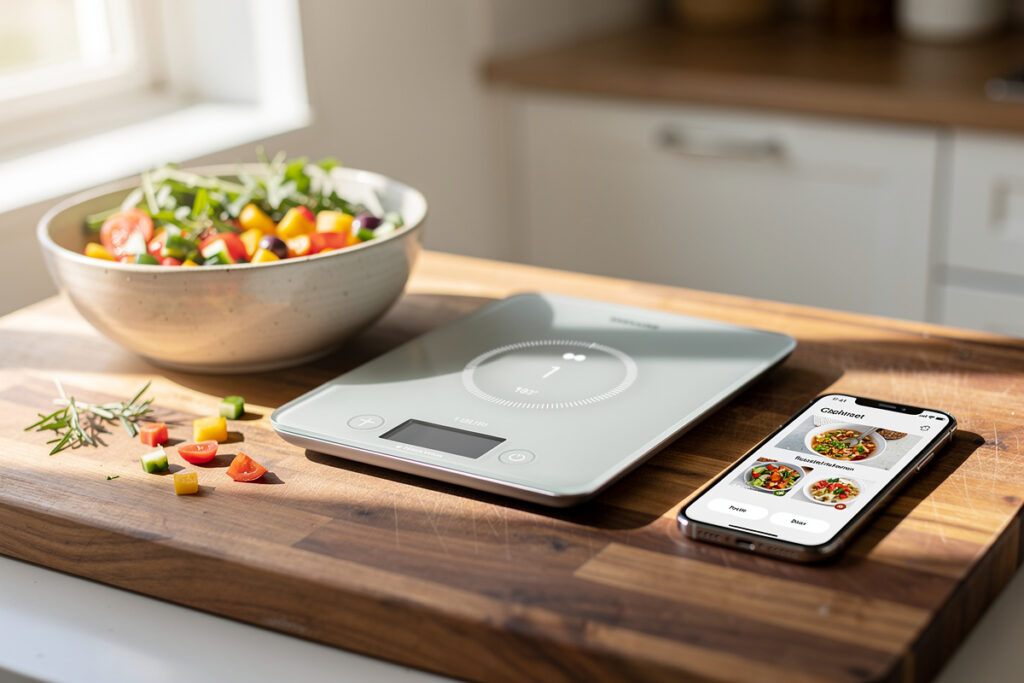
A smart kitchen scale connects every weighed ingredient to a recipe app or nutrition database, eliminating mental math on portion sizing and macro tracking. The 2026 smart kitchen scale market starts at $39 for Bluetooth-connected basics and reaches $99 for Wi-Fi units with built-in displays and recipe-guided weighing — and the right pick depends on whether your friction is recipe scaling, calorie counting, or coffee brewing precision.
This guide covers what changes when a kitchen scale goes connected, the four main use cases that justify the premium over a $15 dumb digital scale, and the specific brands worth shortlisting for each.
What a Smart Kitchen Scale Actually Does
A smart kitchen scale is a digital scale with Bluetooth or Wi-Fi connectivity to a companion app. The 2026 minimum viable feature set: real-time weight streaming to a phone or tablet, recipe ingredient checking (the app shows green when you reach the target weight), and a database link to either nutrition data or recipe scaling. Premium tiers add coffee-specific timing modes (brew time + weight), barcode scanning for packaged ingredients, and integration with macro-tracking apps like MyFitnessPal.
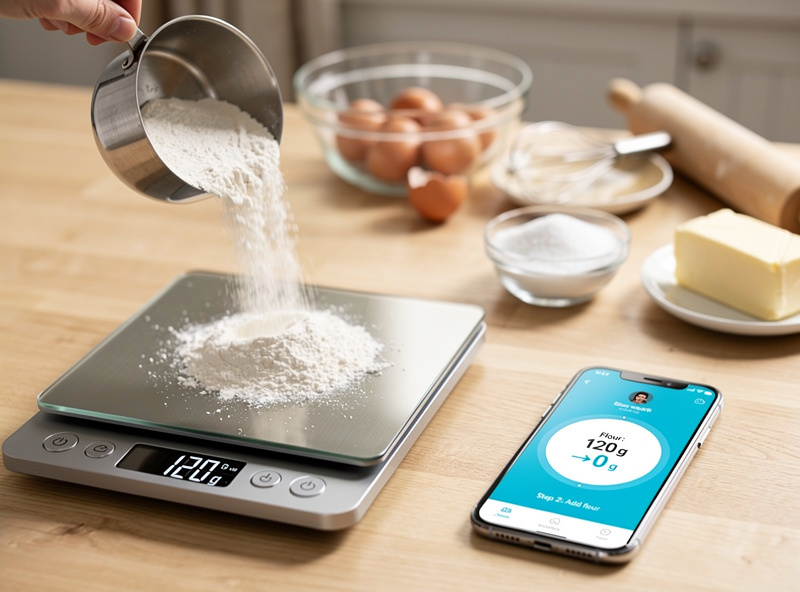
The single feature that earns the connected premium for most households is recipe-guided weighing. A standard scale requires you to read a recipe, calculate “I need 240g of flour, currently weighed 180g, need 60 more,” and pour. A smart scale shows you a single number that counts down to zero — pour until you hit zero, the app advances to the next ingredient. Saves 10-30 seconds per ingredient, eliminates math mistakes that ruin baking.
Four Smart Kitchen Scale Use Cases
| Use Case | Best Scale Type | Price Range | Key Connected Feature |
|---|---|---|---|
| Recipe Scaling and Baking | Bluetooth scale + recipe app | $39-$99 | Real-time ingredient countdown |
| Macro and Calorie Tracking | Bluetooth scale + nutrition app | $49-$79 | Barcode scan + auto-log to MyFitnessPal |
| Pour-Over Coffee Brewing | Bluetooth scale with built-in timer | $59-$99 | Brew time + weight ratio in one display |
| Espresso Dialing-In | Acaia or Felicita scale (sub-second response) | $99-$249 | Real-time flow rate and brew ratio |
Recipe scaling and macro tracking are the two highest-volume use cases. The $39-$79 tier covers both reliably with brands like Etekcity Smart Nutrition, Drop, and Greater Goods Connected. Coffee-specific scales (Acaia Pearl, Felicita Arc) live in their own enthusiast bracket and only make sense if pour-over or espresso is a daily ritual.
Connected Features Ranked by Daily Value
1. Real-time recipe ingredient countdown. The app shows the target weight; you pour until the number hits zero, then the app advances to the next ingredient. Saves 10-30 seconds per ingredient, eliminates baking math errors. Most-used connected feature across smart scale owners.
2. Barcode scan for packaged ingredients. Scan the barcode on a yogurt container, weigh the portion, and the app logs the actual macros for the actual amount eaten. Used heavily by macro-tracking households; not relevant to baking-only households.
3. Recipe scaling for different serving counts. Tap “scale recipe to 8 servings” in the app and every ingredient weight adjusts. Eliminates the percentage math that ruins doubled or halved recipes.
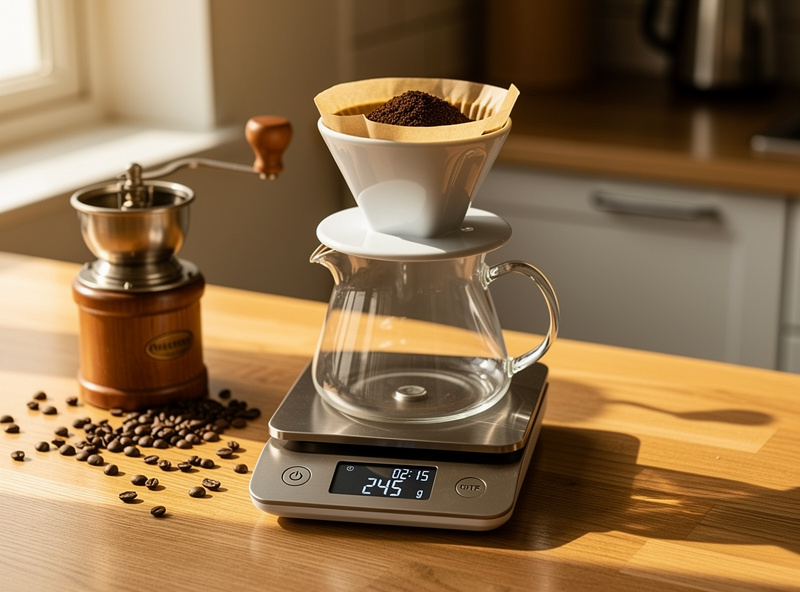
4. Coffee timer and ratio mode. Coffee-focused scales display brew time and weight in one screen, calculate brew ratio in real time. Essential for pour-over consistency.
5. Multi-unit conversion. Switch between grams, ounces, milliliters, cups, tablespoons. Useful for following recipes from different sources (US recipes use cups, European use grams).
6. Auto-log to fitness apps. Smart scales tied to MyFitnessPal, Lose It, or Cronometer push the weighed amount and macros automatically. Saves 2-4 minutes per logged meal for users who already track macros.
Smart Kitchen Scale Brand Reality
Drop, Etekcity Smart Nutrition, and Greater Goods Connected dominate the 2026 mass-market smart kitchen scale category. Drop pioneered the smart-scale-meets-recipe-app concept and remains the strongest baking-focused choice. Etekcity Smart Nutrition leads on macro tracking with the cleanest MyFitnessPal integration. Greater Goods Connected is the strongest budget option for general use.
For coffee enthusiasts, Acaia Pearl officially runs about $150 (the newer Pearl S runs closer to $220) and Felicita Arc runs about $110 — both lead with sub-second response times and dedicated brew-timer modes. Both are overkill for non-coffee weighing.
Smart kitchen scales are the only smart-kitchen category where Bluetooth (versus Wi-Fi) is genuinely fine. The scale stays in the kitchen and the app runs on your phone within 10 feet — Wi-Fi adds no functionality and increases cost. Buy Bluetooth unless you have a specific, unusual need for cloud-only weighing logs synced across multiple devices.
Six Shopping Criteria for a Smart Kitchen Scale
1. App ecosystem and recipe library quality. Drop ships with hundreds of interactive baking recipes designed for the scale-guided workflow. Etekcity’s own product page links its Smart Nutrition Scale to the Nutritionix database (roughly 1 million food items) for macro tracking, not the much larger figure sometimes quoted online. The recipe library and ingredient database matter more than the scale hardware itself for daily satisfaction.
2. Maximum weight capacity. Most scales handle 5-11 kg; coffee scales typically 2-3 kg. Buy at least 5 kg if you ever bake bread doughs or roast a turkey — a stand mixer bowl full of dough plus the bowl itself will exceed the smaller coffee-scale capacities easily.
3. Resolution accuracy. 1-gram resolution covers baking and macro tracking; 0.1-gram resolution is needed for espresso dialing-in or precise spice weighing. Most home cooks do not need 0.1-gram — it mostly matters once you are dialing in espresso ratios where a gram or two of dose changes the shot noticeably.
4. Battery type and life. Most scales use AAA or AA batteries lasting 6-12 months; some premium models use rechargeable internal batteries. Battery type rarely matters; check that battery life is 6+ months under regular use.
5. Surface material and cleanability. Stainless steel and tempered glass are the two practical surfaces. Both wipe clean; stainless is more scratch-resistant, glass shows fingerprints more readily but is easier to fully sanitize between raw-ingredient sessions. Avoid plastic surfaces — stains accumulate from oils and acids, and the platform tends to yellow within a year or two of regular use.
6. App and firmware update history. Drop and Etekcity have both shipped app updates in the last 90 days. Smart-scale brands have a real history of abandoning companion apps a few years after launch, orphaning the connected features while the scale itself keeps working as a basic digital scale — verify the specific brand and app you’re buying into is still actively updated before purchase rather than assuming any smart-kitchen app will be supported long-term.
When a Dumb Scale Plus Phone Timer Is Enough
The cheapest path to “weighing ingredients while reading a recipe” is a $15 dumb digital scale plus your phone showing the recipe. This works for casual baking and cooking. The smart-scale upgrade pays back when (1) you bake or follow weighed recipes 2+ times per week, (2) you track macros daily, or (3) you do pour-over coffee where time and weight need to be on one display.
For households cooking from feel rather than recipes, the smart features earn nothing. For households that follow weighed recipes regularly, the $25-$50 premium pays back in saved time and reduced math errors within a few months. For broader smart kitchen context see the smart kitchen appliances guide.
As an Amazon Associate I earn from qualifying purchases.
Where a Smart Kitchen Scale Fits (and Doesn’t) in a Local-First Setup
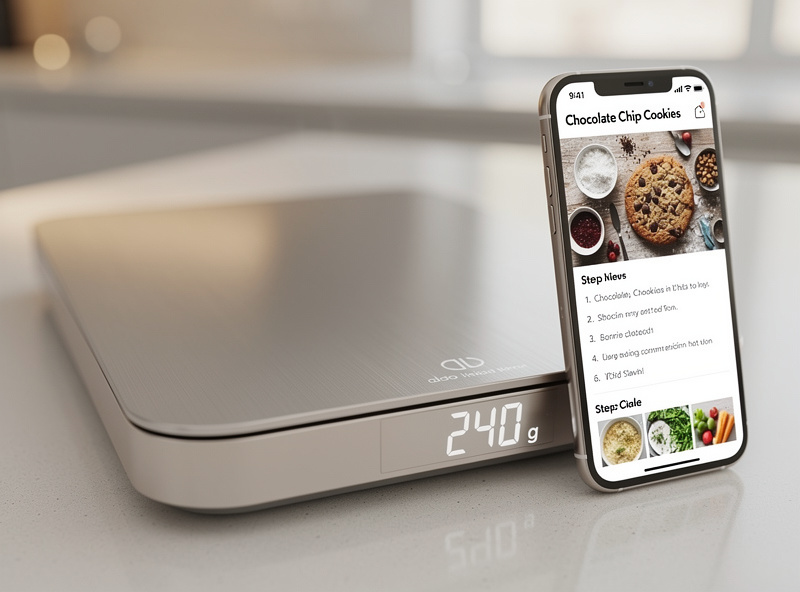
Unlike the sensors and relays that make up the rest of my Home Assistant setup, a smart kitchen scale has no real place on a local-control hub — it is a Bluetooth-to-phone-app device with a cloud-hosted recipe or nutrition database behind it, not a device that publishes an entity you can automate against. Drop and Etekcity don’t expose a local API, and there’s no meaningful automation use case for “trigger something when the kitchen scale reads 240 grams.” This is one of the few kitchen categories where the smart layer is genuinely just a phone-and-Bluetooth convenience feature, not a piece of your home automation system.
That’s fine — not every connected gadget needs to report to a hub. Where I do care about local-vs-cloud with a kitchen scale is the same place I care about it everywhere: verify the app still works if the company’s servers have a bad day. A dumb digital scale never has this problem because there’s no cloud dependency to fail. If the brand’s app has been abandoned (a real risk in this category — several smart-scale apps have quietly stopped receiving updates a few years after launch, leaving the hardware working but the smart features frozen), you’re back to reading numbers off a screen and doing the subtraction yourself, which is exactly what a $15 dumb scale already does for free.
Smart Kitchen Scale Versus Smart Pressure Cooker for Recipe Following
Both smart scales and smart pressure cookers solve recipe-following problems but in different ways. The scale guides ingredient weighing during prep; the pressure cooker handles cook time and pressure during the cook itself. They are complementary, not competing — scales handle the prep phase, pressure cookers handle the cook phase. Many serious cooks own both.
My Kitchen Scale Integration
The smart scale I use connects via Bluetooth to a recipe app that tracks macronutrients as I weigh ingredients. The integration is straightforward: tare the scale, add flour, the app logs the weight and calculates protein/carbs/fat automatically. For baking, where precision matters more than cooking, the smart scale eliminates the measuring-cup cleanup entirely. The Bluetooth range is limited to about 10 meters, which is fine for a kitchen counter. The one gap in my own setup: nothing about the scale talks to Home Assistant, so it stays outside the automations that run the rest of the kitchen — the smart oven, the coffee maker schedule, the exhaust-fan trigger. It is a standalone convenience tool, not a node in the rule engine, and I’ve made peace with that rather than trying to force an integration that doesn’t exist.
Frequently Asked Questions
What is the best smart kitchen scale?
Drop Smart Scale (around $80-99 officially, sometimes discounted) leads on baking-focused use with hundreds of recipes designed for scale-guided workflow. Etekcity Smart Nutrition (around $40) leads on macro tracking with the cleanest MyFitnessPal integration. For coffee enthusiasts, Acaia Pearl at $150 leads on sub-second response and brew-timer modes. All three brands have shipped app updates in the last 90 days.
Is a smart kitchen scale worth it?
A smart kitchen scale is worth the $25-$50 premium over a dumb digital scale for households baking 2-plus times per week, tracking macros daily, or making pour-over coffee. The recipe-guided ingredient countdown saves 10-30 seconds per ingredient and eliminates baking math errors. For occasional weighing, a $15 digital scale plus the recipe on your phone works just as well.
Do smart kitchen scales work with MyFitnessPal?
Yes — Etekcity Smart Nutrition, Greater Goods Connected, and several other brands integrate with MyFitnessPal to auto-log weighed portions and macros. Barcode scanning a package, weighing the actual portion, and the app pushes the precise calories and macros to your daily food log. Saves 2-4 minutes per logged meal for users who already track.
Are Bluetooth smart scales as good as Wi-Fi?
Yes — for kitchen scales specifically, Bluetooth is fine because the scale stays in the kitchen and the app runs on your phone within 10 feet. Wi-Fi adds cost without functionality for normal weighing. Wi-Fi only matters if you want cloud-only weighing logs without your phone present, which is a rare use case.
How accurate are smart kitchen scales compared to professional scales?
Mass-market smart kitchen scales (Drop, Etekcity, Greater Goods) hit 1-gram accuracy across the typical kitchen range, which matches mid-tier professional scales. Coffee-focused scales (Acaia, Felicita) hit 0.1-gram accuracy, matching laboratory standards. For home cooking and baking, 1-gram accuracy is more than sufficient.
How long do smart kitchen scales last?
Smart kitchen scales typically last several years with daily use, similar to dumb digital scales. The load cells (the actual weighing mechanism) wear slowly and rarely fail first. Connected components (Bluetooth chips, companion apps) are the more likely long-term failure point — when they go, the scale usually still works as a basic digital scale via its on-device display.
Related Articles
- Smart Kitchen Appliances 2026: Complete Buyers Guide (parent hub)
- Smart Coffee Maker Buyers Guide 2026
- Smart Air Fryer Buyers Guide 2026
- Smart Oven Buyers Guide 2026
- Voice Assistants & Smart Home Protocols Guide