Smart Coffee Maker Buyers Guide 2026: 4 Categories
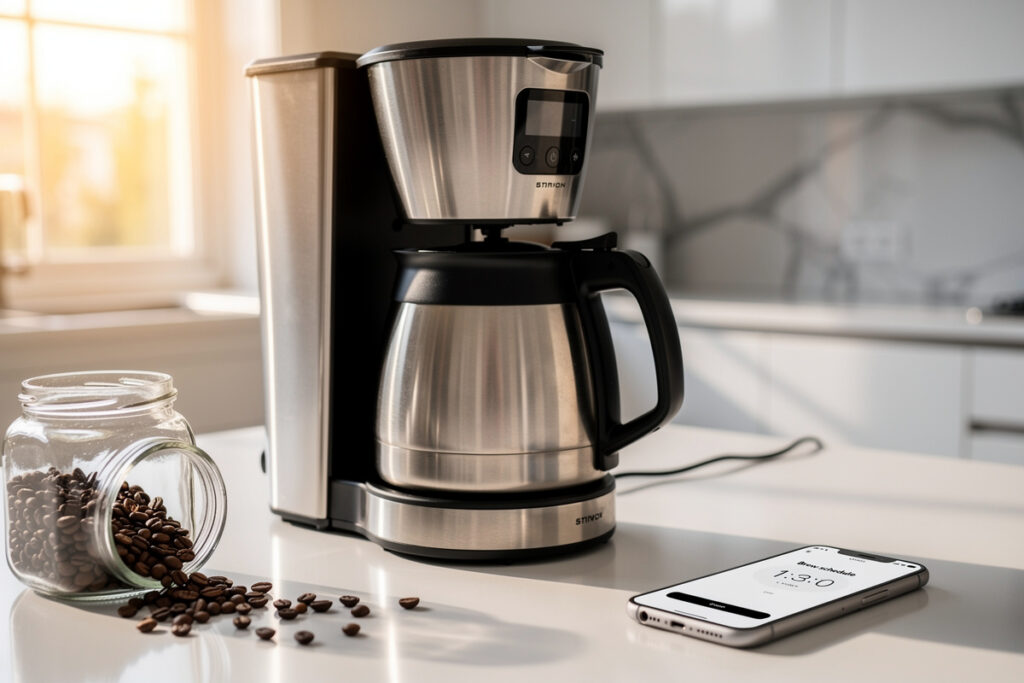
A smart coffee maker hands you a fresh cup the moment you walk into the kitchen because the brew schedule, the grind setting, and the carafe-warm timer all adjust from your phone or a voice command before your feet hit the kitchen floor. The 2026 smart coffee category runs from $129 entry-level drip machines up to $1,799 connected espresso machines, and the right pick depends on whether you want set-and-forget mornings, recipe-pushed pour-overs, or barista-grade espresso with remote pre-infusion control.
This guide covers the four product categories that count as smart in 2026, the connected features that pay back the premium, and the specific brands worth shortlisting at each price tier.
What Makes a Coffee Maker Smart in 2026
The 2026 working definition: a smart coffee maker accepts remote brew start, schedules brews on a calendar (not just the next morning), reports brew status to your phone, and integrates with at least one major voice assistant for hands-free start. Older Bluetooth-only coffee makers — which only let you start a single program from across the room — no longer qualify. They were the first generation; they have been replaced by Wi-Fi cloud-connected models that can be triggered from anywhere with internet access.
The single most-used connected feature on a smart coffee maker is the morning routine integration — most owners set up a recurring schedule that brews 5-10 minutes before their normal wake time and then never touch the settings again. That schedule alone — eliminating the hand-grind, water-pour, button-press routine before caffeine — is the feature that earns the connected premium for most households.
Four Smart Coffee Maker Categories
| Category | Price Range | Brew Style | Best Connected Feature |
|---|---|---|---|
| Smart Drip Coffee Maker | $129-$249 | Carafe drip, 8-12 cups | Wake-time schedule + voice “start brew” |
| Smart Single-Serve Pod | $149-$329 | K-Cup, Nespresso, or proprietary pod | Per-cup pod tracking + reorder alerts |
| Smart Bean-to-Cup | $549-$899 | Built-in grinder, brew-on-demand | Grind setting per profile + recipe push |
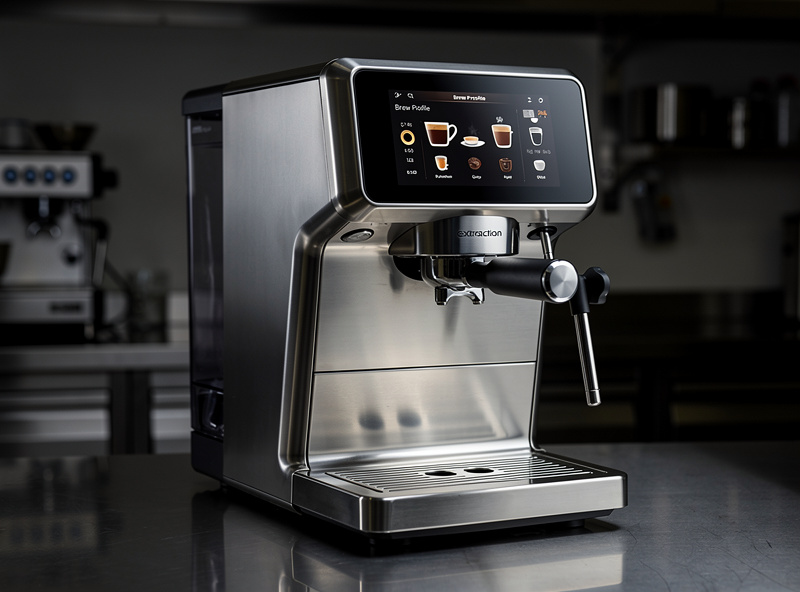
| Smart Espresso Machine | $899-$1,799 | Pump-driven espresso, milk steam | Remote pre-infusion + temp logging |
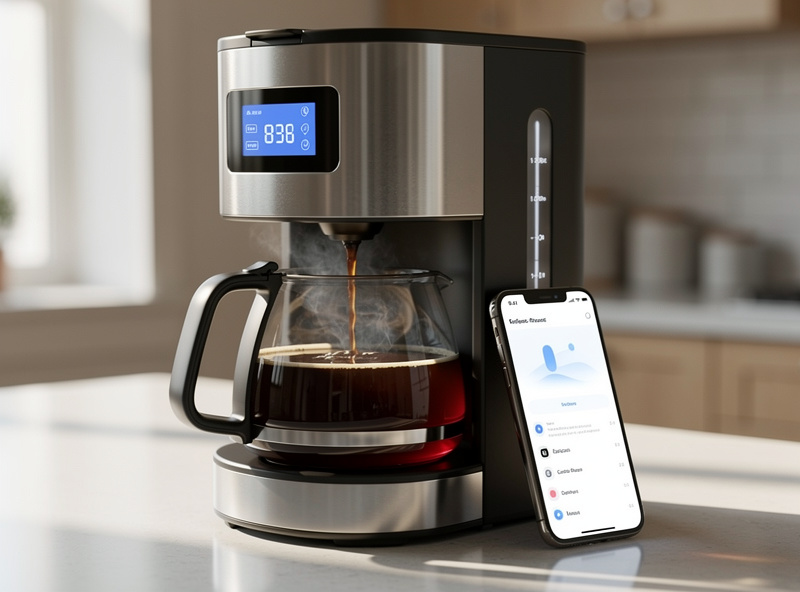
The smart drip category is where most households start. A Hamilton Beach WiFi-connected drip at $129 or a Spinn Original at around $979 covers the morning-coffee use case at price points that map cleanly to non-smart equivalents. Bean-to-cup and espresso categories are enthusiast territory — buy these only if grinding fresh beans for every cup matters to you.
Connected Features Ranked by Daily Value
Five connected features separate a smart coffee maker you use daily from one that runs on the same fixed schedule it would have run on with a $30 timer.
1. Calendar-aware morning schedule. The best smart coffee makers (Spinn, Atomi, Behmor Connected) read your phone calendar and shift the brew time when an early meeting moves your alarm. This is one of the few connected features that owners actually keep using long-term rather than abandoning after the novelty wears off.
2. Voice-triggered brew start. “Alexa, brew coffee” works on every Alexa-supported smart coffee maker. The use case that actually matters is mid-morning second-cup brewing, when stopping work to push physical buttons interrupts focus.
3. Per-user profile with custom strength and grind. Bean-to-cup machines like the De’Longhi Eletta Explore Connected and the Spinn Pro store per-user grind, temperature, and strength settings. Tap your profile in the app, get your specific cup. Useful in 2-3 person households where preferences differ.
4. Pod and bean-level tracking with reorder alerts. Single-serve smart pod machines (Keurig K-Café Smart) count pods used and ping when the bin is below 10. Bean-to-cup machines track bean reservoir level. Saves the “out of coffee” morning crisis.
5. Cleaning and descaling reminders. Smart machines track cycles since last descale and push a reminder at 60 cycles. Mineral buildup from skipped descaling is a well-documented cause of pump and heating-element failure in espresso machines, so a reminder that actually gets acted on meaningfully extends the machine’s working life versus descaling on memory (or not at all).
Smart Coffee Maker Ecosystem Compatibility
Alexa support is universal across smart coffee makers in 2026. Google Home covers all major brands except Behmor (which still trails on Google integration as of Q1 2026). Apple Home support is sparse — only Spinn, La Marzocco, and the high-end De’Longhi connected line offer Apple HomeKit certification.
Matter has no defined coffee-maker device type as of 2026 — coffee is one of the kitchen categories the Connectivity Standards Alliance’s Matter specification hasn’t gotten to yet. If Apple Home matters to you, your shortlist is short — Spinn for drip and pour-over, La Marzocco for espresso.
Six Shopping Criteria for a Smart Coffee Maker You Will Actually Use
1. Maximum scheduled brews per day. Some smart coffee makers (older Mr. Coffee WeMo) cap at one scheduled brew per 24-hour window. Two-coffee households need at least 2 scheduled brews; busy households want 4-6.
2. Carafe insulation versus warming plate. Smart drip machines split between heated glass carafes (keep warm 30-45 min before degrading flavor) and thermal stainless carafes (4-6 hour hold without flavor degradation). Thermal carafes pair better with scheduled brewing because the cup at 8:00 AM tastes the same as the one at 10:30 AM.
3. Grinder build quality on bean-to-cup units. Conical burr grinders are the more durable, better-regarded design and generally outlast disc grinders by a meaningful margin. Spinn, Spinn Pro, De’Longhi Eletta Explore, and Jura E-series all use conical burrs. Lower-tier bean-to-cup machines often use plastic disc grinders that wear noticeably faster.
4. Water reservoir capacity. Smart coffee makers with Wi-Fi schedules need water in the tank when the brew triggers — there is no “I’ll fill it later” workaround. Single-day drip households want 60+ oz reservoirs; pod machines want 60-72 oz; espresso machines want 80-100 oz.
5. App-pushed recipe library or open recipe parameters. The Spinn Original and Pro push specific brew recipes (Ethiopian Yirgacheffe at 200°F with 4:00 bloom, etc.) tuned to common bean origins. Open-parameter machines let you adjust temperature, pre-infusion, and bloom time per cup. Either approach works; closed-parameter machines that only have “strong/medium/weak” presets are a compromise.
6. Firmware update history. Smart coffee makers from Spinn, Behmor Connected, and Atomi have shipped multiple firmware updates in the last 12 months. Brands with no firmware updates for 18+ months are probably moving on from connected features.
Energy and Operating Cost Reality Check
Smart coffee makers use roughly the same energy as their non-connected siblings while brewing. The Wi-Fi module adds 2-4 watts of standby draw, which works out to less than $4 per year on US residential electricity rates. The energy upside of a smart coffee maker is the elimination of “I forgot to turn it off” — automatic shut-off after the cycle ends, which prevents 2-4 hour warming-plate runs that cost $0.10-$0.25 each.
Operating cost beyond electricity is dominated by beans or pods, not the machine. A smart coffee maker does not change bean cost, but the cleaning-reminder feature can extend working life of the machine itself by 12-18 months on average — meaningful on a $549+ bean-to-cup or espresso unit.
Smart Coffee Maker Versus Smart Plug Plus Standard Coffee Maker
The cheapest path to “scheduled morning coffee” is a $25 smart plug attached to any standard coffee maker that powers on with a physical button held down. This works for the schedule use case but loses every other connected feature: no remote brew start mid-day, no per-user profiles, no pod or bean tracking, no descale reminders, no recipe push.
The smart-plug approach makes sense for households where morning coffee is the only use case and the existing coffee maker still works. The dedicated smart coffee maker makes sense when daily friction includes mid-day brews, multiple household members with different preferences, or maintenance forgetfulness. See the broader smart kitchen comparison in the smart kitchen appliances guide.
How I Actually Run the Smart Plug Version
My own coffee maker is the plug version, not a dedicated smart machine, and it lives on the same rule engine that handles the grow lights and the sauna pre-heat. A Zigbee smart plug behind the machine gets a scheduled trigger from Home Assistant, and because the automation lives on my hub rather than in a manufacturer’s cloud app, it’s trivial to layer in conditions a standalone coffee maker’s own scheduling never offers — skip the weekday trigger entirely on a day nobody’s phone shows up on the network, or push the brew time later automatically when a calendar entry says the first meeting isn’t until later than usual. That second part is exactly the calendar-aware feature the higher-end connected machines advertise as a headline feature, and it costs nothing extra once you already have a rule engine handling the rest of the house.
The limitation is real, though, and worth being honest about: a smart plug can only cut power and restore it, so it works for a machine that starts brewing the moment it gets power and holds nothing in memory between cycles. It won’t grind beans, adjust strength, or track descale cycles, and if the machine has a clock that resets on every power cycle, you’ll be fighting it instead of the app. Check that a specific coffee maker actually restarts its brew cycle cleanly from a cold power-on before committing to the plug route — some models default to a rinse or self-test sequence on every power-up that eats into your wake-up window. Test it manually a few times — unplug it, plug it back in, and time how long it takes before coffee actually starts — before you trust the automation to run unattended every weekday morning. It’s a five-minute check that saves you from finding out the hard way on a morning you actually needed the coffee ready on time — and it’s the same habit worth applying to any appliance you’re about to hand over to an automation instead of a human finger on a button.
As an Amazon Associate I earn from qualifying purchases.
Frequently Asked Questions
What is the best smart coffee maker for most households?
For drip coffee, the Spinn Original at around $979 covers the widest range of brew styles (drip, pour-over, espresso, cold brew) with strong app reliability and 5+ years of firmware updates. For pod coffee, the Keurig K-Cafe Smart at $249.99 MSRP has the best Alexa integration and per-pod tracking. Both work with Alexa and Google Home and have shipped firmware updates in 2025-2026.
Can a smart coffee maker brew at a different time each day?
Yes — calendar-aware smart coffee makers (Spinn, Atomi, Behmor Connected) sync with your phone calendar and shift the brew time when an early meeting moves your alarm. Older Wi-Fi coffee makers offer fixed daily schedules only; calendar-aware models cost more but eliminate the need for manual schedule changes.
Do smart coffee makers work without internet?
Most smart coffee makers continue to brew on their stored schedule when internet drops, since the schedule is cached on the device. You lose remote start, voice control, and recipe push during outages. Bluetooth-only machines work fully without internet but require you to be within 30 feet of the device with the app open.
Are smart coffee makers worth the extra cost?
They are worth it for households brewing 2+ pots per day, multi-person households with different preferences, and homes where someone forgets descaling for months at a time. They are not worth it for single-cup-per-day households who already have a working coffee maker — a $25 smart plug delivers the morning-schedule benefit at a fraction of the cost.
Can you control a smart coffee maker with Alexa or Google Home?
Yes — every Wi-Fi smart coffee maker in 2026 supports at least one major voice assistant. Alexa coverage is universal; Google Home covers all major brands except Behmor. Voice commands typically include start brew, stop brew, set strength, and check status. Apple HomeKit support is limited to Spinn, La Marzocco, and high-end De’Longhi connected models.
How long do smart coffee makers last compared to regular ones?
Build quality is the dominant factor, not connectivity. Smart drip machines last 5-8 years on average — same as non-smart equivalents at the same price tier. Smart espresso and bean-to-cup machines often outlast non-smart equivalents because automated descaling reminders help households that previously descaled by memory (or not at all) actually keep up with maintenance that prevents mineral-buildup failures.
Related Articles
- Smart Kitchen Appliances 2026: Complete Buyers Guide (parent hub)
- Smart Oven Buyers Guide 2026: 4 Tiers Compared
- Best Smart Plugs 2026
- Best Smart Home Energy Management Systems
- Voice Assistants & Smart Home Protocols Guide