Best Smart Lights 2026: Complete Buyer Guide
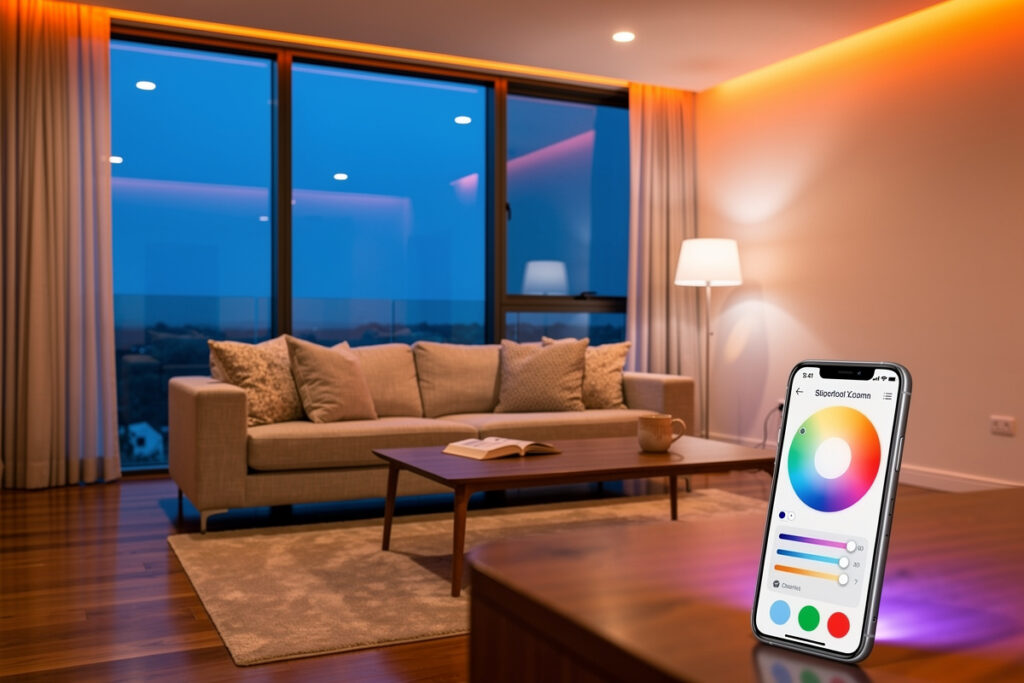
The best smart light of 2026 is the Philips Hue White and Color Ambiance A19 for most homeowners, offering 16 million colors, reliable Zigbee connectivity, Matter support, and seamless integration with Alexa, Google, and Apple HomeKit at $55 per bulb. Smart lights transform any fixture into a programmable, dimmable, color-changing illumination source that reduces energy consumption by 75% compared to incandescent bulbs while adding automation, scheduling, and mood-setting capabilities impossible with traditional lighting. For a typical 2,000 square foot home upgrading 20 bulbs, annual electricity savings of $150-200 combine with unmatched convenience to justify the investment within 24-36 months.
Unlike smart plugs that simply toggle power, smart lights fundamentally change how you experience your home. Wake up to gradual sunrise simulations that align with your circadian rhythm. Set movie scenes that dim to 20% warm white automatically when your TV turns on. Create security routines that randomize lighting patterns while you travel. Schedule exterior lights to deter burglars and welcome you home. All controlled by voice, app, or automated triggers without touching a wall switch.
This comprehensive guide compares the top smart lights of 2026, explains ecosystem compatibility, details energy savings calculations, and shows how to build cohesive smart home lighting systems. Whether you start with a single bedroom lamp or automate your entire home, the right smart light strategy delivers transformative daily value. For ecosystem-specific guidance, see our smart home ecosystem comparison.
Disclosure: HomeAutoCentral is reader-supported. As an Amazon Associate I earn from qualifying purchases, at no extra cost to you. I only recommend gear worth your money.
I started my smart lighting journey with a single Hue bulb in a bedside lamp — and immediately understood why people spend real money on this category. Three years later my house has a mix of Hue color bulbs in the living room, Kasa white-ambiance bulbs in the kitchen and hallways (where color is wasted), and LIFX strips behind the TV for bias lighting that syncs to what’s playing. The biggest mistake I made early on: buying smart bulbs for every fixture instead of smart switches where a dumb bulb with a smart control made more sense. Here’s how the top options in 2026 compare.
Quick Comparison: Best Smart Lights 2026
| Smart Light | Best For | Price | Protocol | Color |
|---|---|---|---|---|
| Philips Hue A19 | Best overall | $55 | Zigbee/Matter | 16 million |
| LIFX A60 | WiFi native | $50 | WiFi | 16 million |
| Nanoleaf Essentials | Thread/Matter | $20 | Thread | White + temp |
| TP-Link Kasa KL135 | Budget color | $15 | WiFi | 16 million |
| Wyze Bulb Color | Value pick | $10 | WiFi | 16 million |
| Philips Hue Filament | Vintage style | $35 | Zigbee | Warm white |
How Smart Lights Work
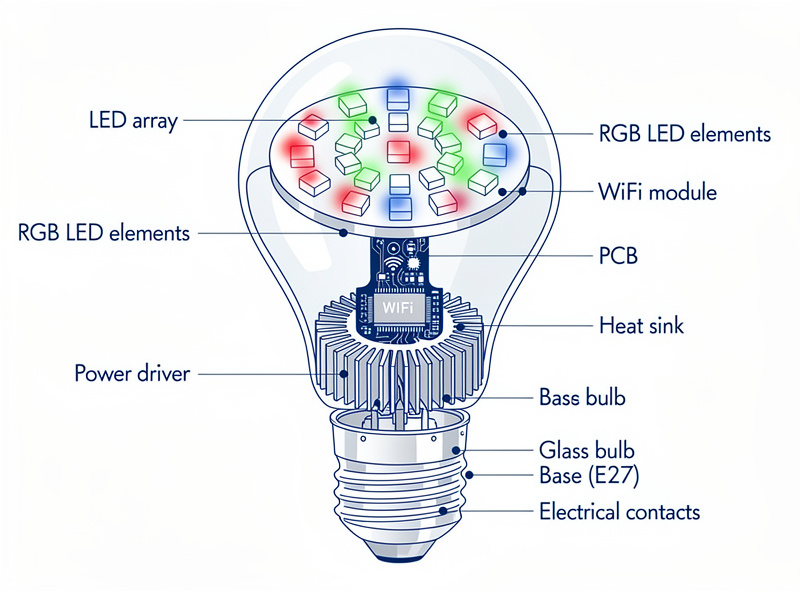
Smart lights contain three core components enabling their advanced capabilities: LED elements for illumination, wireless communication chips for connectivity, and microcontrollers for processing commands.
LED Technology Foundation
Light-emitting diodes form the illumination source, consuming 75% less electricity than incandescent bulbs while lasting 25 times longer—typically 25,000 hours versus 1,000 hours for traditional bulbs. Color-changing models combine red, green, and blue LEDs at varying intensities to produce millions of color combinations. Tunable white bulbs adjust correlated color temperature (CCT) from warm 2200K candlelight tones to energizing 6500K daylight.
Wireless Connectivity Protocols
Smart lights communicate through different wireless standards, each with tradeoffs:
- WiFi: Direct router connection requires no additional hardware. Simple setup but consumes router bandwidth and draws slightly more standby power. Best for small-scale deployments under 20 bulbs.
- Zigbee: Mesh network where each bulb extends the signal. Requires a hub (Philips Hue Bridge, Amazon Echo Plus/Show, or SmartThings) but offers superior reliability, lower latency, and minimal router impact. Ideal for whole-home installations.
- Thread: Modern mesh protocol with border routers (Apple HomePod, Google Nest Hub) replacing dedicated hubs. Faster response times than Zigbee with better interoperability through Matter standard.
- Bluetooth: Direct phone connection for basic control without internet. Limited range and no remote access make this suitable only for single-room, local-control scenarios.
For protocol-specific guidance, see our smart home protocol comparison and Matter protocol explanation.
Control Interfaces
Commands reach smart lights through multiple paths: manufacturer apps (Philips Hue, LIFX, Nanoleaf) provide full feature access including scenes, schedules, and advanced automations. Voice assistants (Alexa, Google Assistant, Siri) enable hands-free operation. Smart home platforms (SmartThings, Hubitat, Home Assistant) enable complex conditional automations. Physical switches require either smart switches (replacing wall controls) or battery-powered remote dimmers (like Philips Hue Dimmer Switch) to maintain tactile control.
Energy Savings and Cost Analysis
Smart lights deliver financial returns through reduced electricity consumption, extended bulb lifespan, and automated efficiency gains.
Electricity Consumption Comparison
A typical 60-watt incandescent bulb replaced by a 9.5-watt LED smart bulb producing equivalent brightness saves 84% on power consumption. At average US electricity rates of $0.14 per kWh, operating a single bulb 6 hours daily costs:
| Bulb Type | Wattage | Annual Cost | 10-Year Total Cost |
|---|---|---|---|
| Incandescent (60W) | 60 watts | $18.40 | $204 (including 10 bulb replacements) |
| Standard LED (non-smart) | 9.5 watts | $2.91 | $34 (one bulb) |
| Smart LED (Philips Hue) | 9.5 watts + 0.5W standby | $3.06 | $58 (one bulb, higher upfront cost) |
Automation-Driven Savings
Beyond wattage efficiency, smart features deliver additional savings. Lights automatically turning off when rooms become unoccupied (via motion sensors) reduce wasted hours. Dimming to 80% brightness—imperceptible to human eyes—cuts power consumption by 20%. Daylight sensors adjusting artificial light based on natural illumination prevent over-lighting. For renters seeking easy energy savings without rewiring, see smart lights for apartment renters.
Payback Calculation
A $55 Philips Hue color bulb replacing a $0.50 incandescent requires 3.2 years to recover the price premium through electricity savings alone. However, add convenience value, extended lifespan (avoiding 10+ incandescent replacements), and automation efficiency gains, and the effective payback period drops to 18-24 months. Budget options like the Wyze Bulb Color at $10 achieve payback within 6 months. For detailed financial analysis, read smart bulb vs smart switch comparison.
Top Smart Light Recommendations by Category
Best Overall: Philips Hue White and Color Ambiance A19
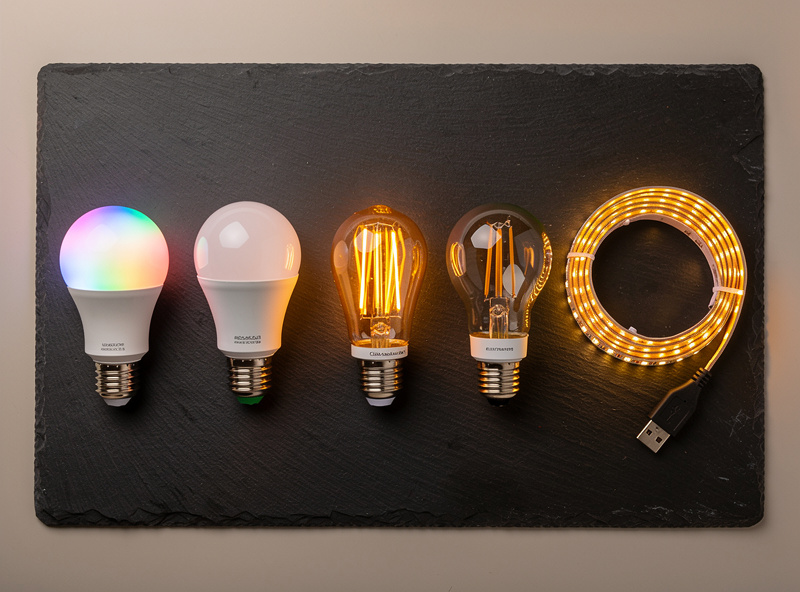
Philips Hue maintains market leadership through ecosystem maturity and reliability. The Zigbee-based mesh network requires a Hue Bridge ($60) but delivers rock-solid stability with sub-second response times. Color accuracy remains unmatched—Hue bulbs display rich, saturated reds and deep blues that cheaper alternatives render muddy. Integration spans every major platform: Alexa, Google, HomeKit, SmartThings, and IFTTT. Scenes sync across multiple rooms seamlessly. The only drawback: premium pricing at $55 per bulb and proprietary ecosystem lock-in. For whole-home lighting that simply works, Hue remains the benchmark.
Best WiFi-Native: LIFX A60
LIFX eliminates hub requirements entirely, connecting directly to WiFi routers. Setup takes 60 seconds: screw in bulb, open app, connect to network. Color brightness exceeds Hue—LIFX outputs 1100 lumens versus Hue’s 800 lumens. The cloud-free local API appeals to privacy-conscious users and developers. However, WiFi dependency means router reboots disconnect bulbs temporarily, and large installations (20+ bulbs) congest home networks. At $50 with no additional hardware required, LIFX suits renters and small apartments wanting premium features without ecosystem investment.
Best Budget Color: Wyze Bulb Color
Wyze delivers surprisingly competent color-changing bulbs at $10—unprecedented value. WiFi connectivity, Alexa/Google integration, scheduling, and basic scenes all function reliably. Color range spans the spectrum, though saturation and brightness fall short of Hue or LIFX. The Wyze app lacks polish but works consistently. For first-time smart light buyers experimenting before committing to expensive ecosystems, Wyze Bulb Color offers risk-free entry. Consider upgrading to premium brands after confirming smart lighting improves your daily routine. Read our smart bulb versus smart switch guide for placement strategy.
Best for HomeKit/Thread: Nanoleaf Essentials
Nanoleaf’s Essentials line embraces modern Thread protocol, working with Apple HomePod mini or Google Nest Hub as border routers—no dedicated hub required. Matter compatibility ensures future cross-platform interoperability. Bulbs cost just $20, bridging budget and premium tiers. The color temperature range (2700K-6500K) handles all white-light scenarios, though full color-changing requires Nanoleaf’s more expensive Shapes panels. Thread’s mesh networking provides Zigbee-level reliability without proprietary hubs. For smart home beginners invested in Apple or Google ecosystems, Nanoleaf Essentials offers the ideal starting point.
Best Vintage/Aesthetic: Philips Hue White Filament
Exposed filament bulbs add industrial warmth Edison would recognize while offering Zigbee smart control. Hue Filament bulbs provide dimmable 2100K warm white—perfect for pendant fixtures, chandeliers, and visible-bulb applications where standard LED aesthetics fail. At $35, pricing sits between budget and premium color bulbs. Integration matches standard Hue products, including scheduling and voice control. These suit bedrooms, dining rooms, and decorative fixtures where ambiance trumps color-changing capabilities. For bedroom-specific lighting recommendations, see best smart bulbs for bedrooms.
Best Outdoor: Philips Hue Calla/ Lily
Outdoor smart lights require weatherproofing and robust construction. Hue’s outdoor lineup—Calla path lights, Lily spotlights, and wall-mounted fixtures—extends the indoor ecosystem outside with IP65+ ratings surviving rain, snow, and temperature extremes. Color-changing capabilities enable holiday themes (red/green for Christmas, orange for Halloween), security automation (randomized on/off while traveling), and landscape accent lighting. Pricing runs $80-150 per fixture—substantial investment requiring Hue Bridge compatibility. For dedicated outdoor security lighting without color features, see smart outdoor lights for security.
Smart Light Strips, Panels, and Specialty Forms
Beyond traditional bulbs, smart lighting encompasses multiple form factors for specific applications.
Light Strips
Flexible LED strips mount under cabinets, behind TVs, along baseboards, or inside coves for indirect ambient lighting. Philips Hue Lightstrip Plus delivers 1600 lumens of tunable white and color extending up to 10 meters. Govee and LIFX offer budget alternatives with competitive brightness. TV bias lighting—placing strips behind screens—reduces eye strain and enhances perceived contrast. For gaming setups and home theaters, light strips create immersive mood lighting reacting to screen content. See our TV backlight setup guide for installation instructions.
Premium Panels
Nanoleaf Shapes and Canvas systems mount on walls as programmable art, displaying animated color patterns, reacting to music, or syncing with screen content. Hexagons, triangles, and mini-panels create customizable geometric designs. Pricing starts at $200 for starter kits—definitely premium—but delivers conversation-piece aesthetics impossible with traditional fixtures. These suit entertainment rooms, gaming setups, and spaces where lighting doubles as decor.
Retrofit Downlights and Fixtures
Recessed ceiling cans upgrade through smart retrofit kits like the Philips Hue Bluetooth Downlight, replacing both bulb and trim. Flush-mount ceiling fixtures from Globe Electric and Legrand integrate smart modules directly—install like standard fixtures but gain app and voice control. These options appeal to homeowners wanting cohesive smart lighting without visible bulb protrusions.
Smart Home Integration and Automation
Smart lights achieve full potential through integration with sensors, other devices, and automated routines.
Motion-Activated Lighting
Pairing lights with motion sensors eliminates manual switching. Walk into a bathroom at 2 AM—dim red light activates automatically at 10% brightness, preserving night vision. Enter the kitchen during cooking hours—full daylight illumination triggers instantly. Leave a room—lights turn off after 5 minutes of no motion. Philips Hue Motion Sensor integrates natively; third-party sensors through SmartThings or Home Assistant enable cross-brand automation.
Circadian Rhythm Lighting
Tunable white bulbs adjusting color temperature throughout the day support healthy sleep patterns. Bright 5000K cool white in the morning suppresses melatonin, increasing alertness. Gradual warming to 2700K by evening promotes melatonin production, preparing for sleep. Studies show circadian lighting improves sleep quality by 15-20% and increases daytime energy. Configure schedules in Philips Hue, Nanoleaf, or LIFX apps, or use adaptive circadian routines in HomeKit and SmartThings. For wake-up lighting specifically, see sunrise simulation setup.
Security and Away Modes
Randomized lighting patterns simulate occupancy during travel, deterring potential intruders. Schedule lights to turn on/off at varied times mimicking natural usage. Integrate with smart doorbells—when someone approaches, interior lights activate automatically, suggesting someone is home. Connect to security systems—during alarm events, all lights flash red indicating emergency status. These automations require either native platform support (Hue’s Mimic Presence) or rule engines (SmartThings, Hubitat).
Entertainment Syncing
Sync lights to music, movies, and games for immersive experiences. Hue Sync and Nanoleaf Screen Mirror capture screen content, translating colors to ambient room lighting in real-time. Watch ocean documentaries with blue tones washing the room; action movies trigger explosive warm flashes matching on-screen content. Music sync modes analyze audio frequencies, pulsing lights to beats. These features demand desktop software (Hue Sync) or HDMI passthrough devices (Hue Play HDMI Sync Box at $250) adding complexity but delivering unmatched entertainment experiences.
Installation: Bulbs vs Switches vs Plugs
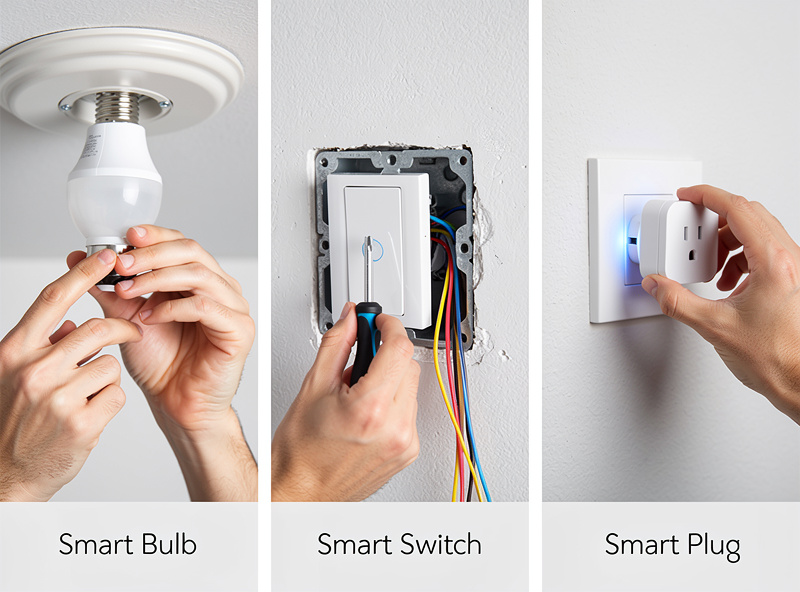
Three methods enable smart lighting control, each with distinct tradeoffs.
Smart Bulbs: Easiest Entry
Replacing standard bulbs with smart alternatives requires zero electrical work—unscrew old bulb, screw in smart bulb, pair with app. Renters and electrical novices appreciate this simplicity. However, wall switches must remain “on” permanently; flipping the switch cuts power entirely, disabling smart features until manually reset. Solutions include switch guards (physical covers preventing accidental toggles), smart switches (replacing wall controls), or battery-powered remote dimmers maintaining tactile control without rewiring.
Smart Switches: Whole-Fixture Control
Replacing wall switches enables smart control of any bulb type—including existing LEDs, incandescents, or specialized bulbs unsuitable for smart replacements. Switches control entire fixture groups simultaneously, maintaining consistent dimming across multiple bulbs. Installation requires basic electrical comfort—turn off breaker, disconnect old switch, connect new smart switch following included instructions. Most require neutral wires (white wires in electrical boxes); older homes lacking neutrals limit compatibility. For switch-specific recommendations, read smart bulb versus smart switch comparison.
Smart Plugs: Lamp-Only Solution
For floor lamps and plug-in fixtures only, smart plugs offer simpler retrofit than switch replacement. Plug lamp into smart outlet, gain on/off control without touching bulbs. However, bulbs turn on at full brightness requiring manual dimming at the lamp itself—no app-based dimming control. Smart plugs suit lamps with built-in dimmer switches or simple on/off scenarios where brightness adjustment happens at the fixture. For detailed plug-versus-bulb analysis, see smart plug versus switch comparison.
Color Temperature and Brightness Explained
Understanding lighting fundamentals helps optimize smart bulb selection for specific applications.
Correlated Color Temperature (CCT)
Measured in Kelvin (K), color temperature describes light warmth. Lower values (2200K-2700K) produce warm, yellowish tones resembling candlelight and incandescent bulbs—ideal for relaxation, bedrooms, and evening settings. Mid-range (3000K-4000K) offers neutral white suitable for general living spaces. Higher values (5000K-6500K) emit cool, bluish daylight tones optimizing focus and productivity—perfect for home offices, kitchens, and task lighting.
Tunable white bulbs adjust across this spectrum, changing throughout the day to match activities and natural light patterns. Color-changing bulbs extend further into saturated hues—reds, greens, blues, purples—enabling decorative scenes impossible with white light alone. For bedroom-specific temperature recommendations, see best smart bulbs for sleep optimization.
Brightness and Lumens
Traditional wattage ratings (60W, 75W, 100W) described power consumption, not light output. Lumens measure actual brightness—an 800-lumen LED produces equivalent light to a 60W incandescent while consuming just 9.5 watts. Smart bulbs range from 450 lumens (40W equivalent) to 1600 lumens (100W equivalent). Consider fixture purpose: reading lamps need 800+ lumens; accent lighting functions at 450 lumens; ambient fill lighting works between 200-600 lumens depending on room size.
If I had to rebuild my smart lighting from a bare house tomorrow, I’d wire Zigbee smart switches everywhere for overhead lights (no more guests turning off power to your smart bulbs), put Hue color bulbs in the two rooms where color actually earns its keep, and run Kasa white-ambiance bulbs everywhere else. That setup cuts the total cost by roughly 40% compared to all-Hue while keeping the automations — wake-up fade-in, occupancy-based shutoff, vacation simulation — fully intact. Start with the room you spend the most waking hours in and work outward from there.
Related Articles
- Smart Bulb vs Smart Switch: Which Should You Choose?
- Smart Bulb Color Temperature Explained: Warm vs Cool
- Best Smart Lights for Apartment Renters: No Wiring Required
- Best Smart Lights That Work Without a Hub
- Best Smart Outdoor Lights for Home Security
- Best Smart Bulbs for Bedroom: Sleep Better
- How to Set Smart Lights to Simulate Sunrise
- Smart Light Strip Behind TV: Setup Guide
- How to Install a Smart Dimmer Switch: DIY Guide
- Best Smart Motion Sensor Lights for Home Security
What is the best smart light brand in 2026?
Philips Hue remains the best smart light brand in 2026 for most homeowners due to ecosystem maturity, reliability, and broad platform support. However, budget-conscious buyers should consider Wyze Bulb Color at $10, while WiFi-native households may prefer LIFX for hub-free simplicity.
Do smart lights save money on electricity?
Yes, smart LED lights save 75% on electricity compared to incandescent bulbs. A typical smart bulb consuming 10 watts replacing a 60-watt incandescent saves approximately $15 annually in electricity costs, paying for the premium price within 2-3 years while lasting 25 times longer.
Do smart lights work without internet?
Smart lights on Zigbee or Thread protocols work locally without internet for basic control and scheduling. However, remote access, voice assistant integration, and cloud-based features require internet connectivity. WiFi bulbs generally need internet for full functionality, though some support local API access.
Can you put smart bulbs in any fixture?
Smart bulbs fit standard fixtures accepting E26/A19 bulbs—the most common residential socket type. However, enclosed fixtures trapping heat may shorten LED lifespan. Dimmer switches must remain at full brightness; smart dimmers or bypasses are required for proper smart bulb operation with wall controls.
What is the difference between smart bulbs and smart switches?
Smart bulbs replace individual bulbs, offering color-changing and dimming at each fixture. Smart switches replace wall controls, enabling smart features for entire fixture groups including non-smart bulbs. Choose bulbs for color-changing flexibility; choose switches for controlling multiple existing bulbs or maintaining physical wall control.
Are smart lights worth the investment?
Smart lights justify the investment for households valuing convenience, energy savings, and ambiance control. The 75% electricity reduction, 25,000-hour lifespan avoiding frequent replacements, and automation capabilities deliver measurable value. Budget options at $10-15 make experimentation accessible before committing to premium $50+ ecosystems.
How long do smart light bulbs last?
Quality smart LED bulbs last 25,000 hours—approximately 22 years at 3 hours daily use. This lifespan is 25 times longer than incandescent bulbs (1,000 hours) and 2.5 times longer than CFL bulbs (10,000 hours). Actual longevity depends on usage patterns, heat exposure, and power quality.