Whole-Home Water Monitor Guide: Catch Hidden Leaks
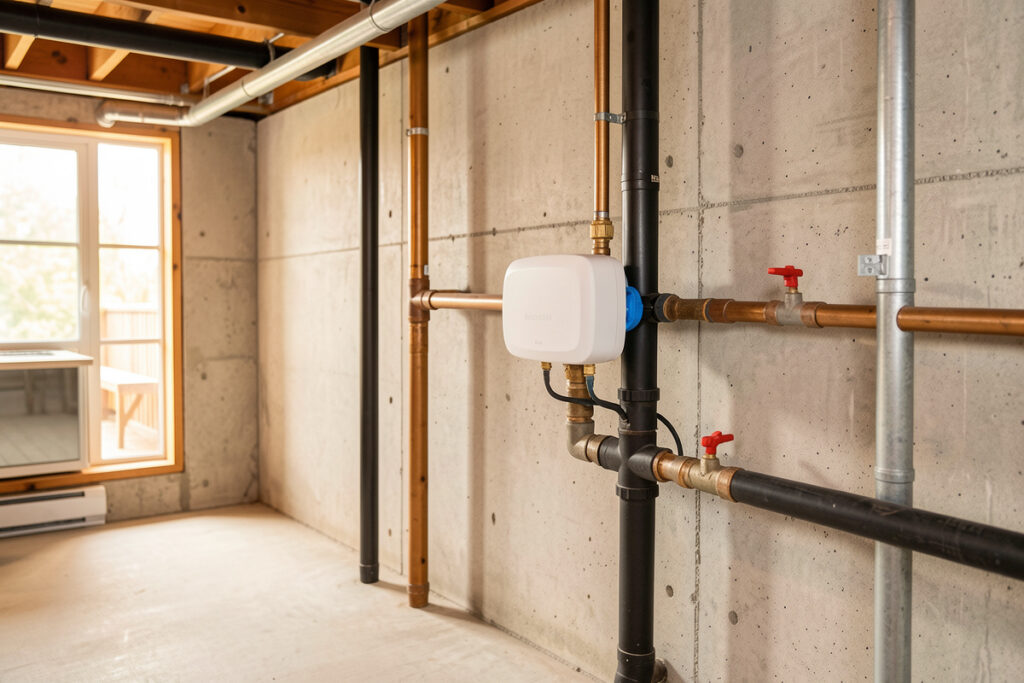
A whole-home water monitor sits on your main supply line and watches every drop that enters the house — flow rate, pressure, and often temperature — so it catches the leaks no floor sensor ever will: the pinhole inside a wall, the toilet flapper that never seats, the slab leak under the foundation. The EPA estimates about 10% of homes have leaks wasting 90 gallons or more a day — the slow, hidden kind a flow monitor is built to surface. This whole-home water monitor guide is how I think about that layer: what the devices measure, how they detect hidden leaks, and why local control matters as much here as anywhere else in the house.
Spot leak pucks are reactive — they only know about water once it is already pooling on a floor they happen to cover. A flow monitor is proactive: it learns what normal usage looks like and flags the abnormal continuous flow that means a pipe is weeping somewhere you cannot see. It is the detection layer in my smart water leak management system that turns “I hope there is a sensor in the right spot” into “I will know about any leak, anywhere.”
What a Whole-Home Water Monitor Measures
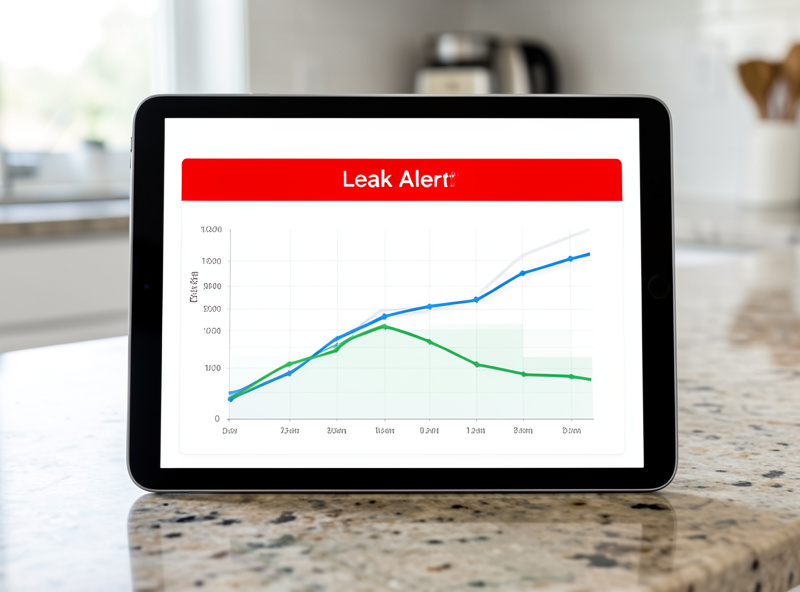
At its core, a water monitor is a flow meter with a brain. It tracks flow rate (how much water is moving and for how long), and the good ones add line pressure and water temperature. From those three signals it builds a picture of normal household behavior — showers in the morning, the dishwasher at night, irrigation on a schedule — and then watches for patterns that do not fit. A faucet left running, a toilet that refills every few minutes around the clock, or a steady trickle at 3 a.m. when nobody is awake all look like anomalies against your baseline.
The temperature reading is a quiet bonus: a monitor on the main can warn you when incoming water approaches freezing, giving you a head start on the kind of burst a dedicated pipe freeze sensor watches for at the pipe itself. The whole point is to see the water system as a system, the same way a smart home energy dashboard sees your electricity — baseline, anomalies, and trends instead of a single yes/no contact.
How They Detect Hidden Leaks
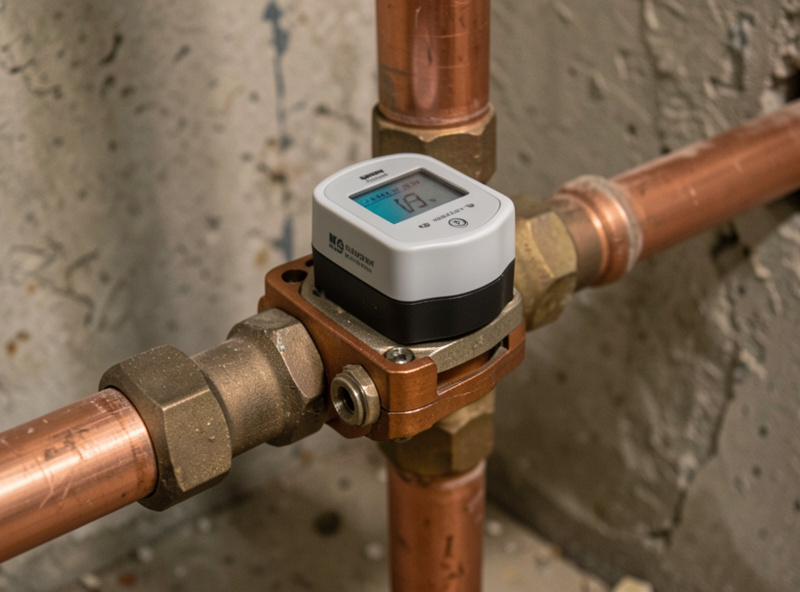
The clever part is the leak logic. Because the monitor sees total flow, it can run tests no spot sensor can. Many run a periodic pressure test: briefly closing or watching the line when the house should be idle and seeing whether pressure holds. If pressure bleeds off with every fixture shut, water is escaping somewhere — a leak you would otherwise discover from a water bill or a stain months later. The EPA’s WaterSense program estimates these minor household leaks waste nearly 1 trillion gallons of water nationwide every year. Others simply flag continuous flow beyond a duration you set: water running nonstop for, say, longer than any normal use, which almost always means a stuck valve or a burst line.
This is detection that finds problems while they are still cheap. A slab leak caught by a flow anomaly in its first week is a repair; the same leak found after it has soaked a foundation for two months is a renovation. No amount of floor pucks would have caught it, because the water never reached a floor — it went into the ground or the wall. That blind spot is exactly what the monitor exists to close.
Inline, Clamp-On, and Acoustic Monitors
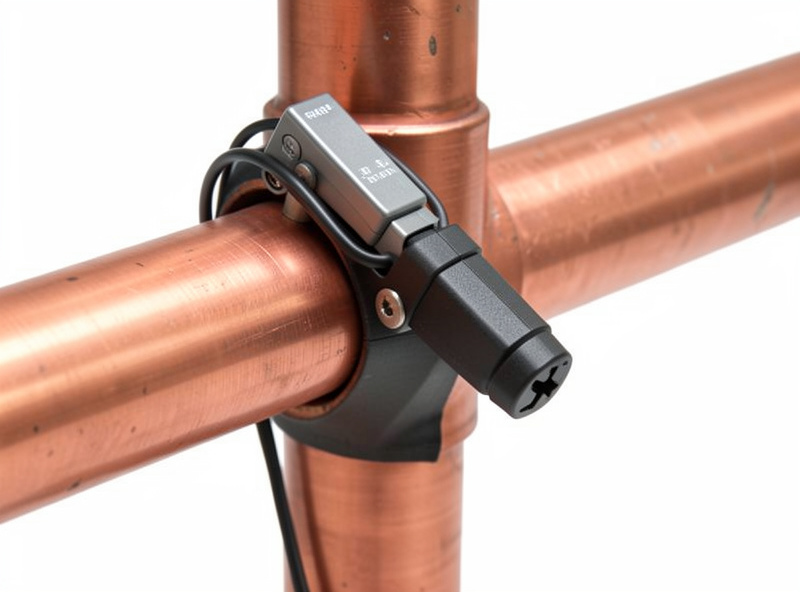
There are three approaches. An inline flow monitor cuts into your main and measures flow directly — the most accurate, but it needs a plumber unless you are confident with the pipe. A clamp-on ultrasonic monitor straps to the outside of the pipe and reads flow through the wall with no cutting, which makes it DIY and renter-friendlier at some cost to absolute precision. An acoustic leak listener takes a different tack entirely: it clamps to the pipe and listens for the high-frequency hiss of water escaping under pressure, flagging leaks by sound rather than flow.
I lean toward an inline monitor for a house I own because the data quality is worth the install, but a clamp-on is a genuinely good answer for renters or anyone unwilling to touch the plumbing. Whichever you pick, the buying question that matters most is the same as for every safety device: does it give your hub the data and control locally, or does it lock the leak alerts and any shutoff behind a subscription?
Water Monitor Types Compared
| Type | How it mounts | Accuracy | Install | Best for |
|---|---|---|---|---|
| Inline flow monitor | Cuts into the main line | Highest | Plumber or confident DIY | Homeowners wanting best data |
| Clamp-on ultrasonic | Straps outside the pipe | Good | DIY, no plumbing | Renters, reversible installs |
| Acoustic leak listener | Clamps to the pipe | Detects by sound | DIY | Finding hidden pressurized leaks |
| All-in-one monitor + valve | Inline on the main | Highest | Plumber | One unit that detects and shuts off |
Local Data vs Cloud Dashboards
Most consumer water monitors push their data to a slick cloud app, and that is fine for the pretty graphs — but I want the raw signal landing on my own hub. When the flow and pressure values are local entities, I can write my own anomaly rules, cross them with presence (“everyone is out and water has run for ten minutes — close the valve”), and keep a history that does not vanish if the company folds. A monitor whose leak alerts only exist inside the vendor’s cloud is a monitor that goes dark the day that service does.
Before buying, check for a local API or an existing integration with your hub platform. Some popular monitors expose their data locally or through community integrations; others are sealed cloud boxes. The first kind becomes a genuine part of your system that can drive a smart shutoff valve; the second is a standalone gadget that emails you and hopes you are paying attention. For the broader case for keeping everything local, see my take on Wi-Fi vs Zigbee and local control.
Do You Need One If You Already Have Leak Pucks?
They solve different problems, so the honest answer is that a complete system has both. Spot leak detectors are cheap, cover the obvious appliance failures, and scream the instant water pools. A whole-home monitor is the more expensive layer that catches the invisible, slow, and hidden leaks — and gives the shutoff valve a flow-based trigger that does not depend on a sensor being in the right square foot. If budget forces a choice, start with pucks; they cost a fraction as much and stop the most common catastrophic bursts. Add the monitor when you are ready to close the hidden-leak blind spot.
As an Amazon Associate I earn from qualifying purchases. If you want the hidden-leak layer, look for a monitor that exposes its data locally — browse whole-home water monitors on Amazon and check for local or hub integration before you commit.
Frequently Asked Questions
What does a whole-home water monitor actually detect?
It measures flow rate, line pressure, and often temperature on your main supply, then flags abnormal patterns. That lets it catch hidden leaks a floor sensor cannot see, like a pinhole inside a wall, a running toilet, or a slab leak, by spotting continuous or unexpected flow against your normal baseline.
Is a water monitor better than spot leak sensors?
They solve different problems, so a complete system uses both. Spot sensors are cheap and catch visible pooling at appliances. A whole-home monitor catches the invisible, slow leaks inside walls and floors. If budget forces a choice, start with cheap spot sensors and add the monitor later.
Can I install a whole-home water monitor myself?
A clamp-on ultrasonic monitor straps to the outside of the pipe with no cutting and is fully DIY, which also makes it renter-friendly. An inline flow monitor splices into the main line for the best accuracy but usually needs a plumber or solid plumbing skills.
Will a water monitor shut off my water?
Only if it includes a valve or you pair it with a separate smart shutoff valve. The monitor detects the leak and your hub runs the automation that closes the valve. Keep that logic local so the shutoff does not depend on the monitor’s cloud service or a subscription.
Do water monitors require a subscription?
Some do for their leak alerts and history, which is exactly what I avoid for a safety device. Look for a monitor that exposes flow and pressure data to your own hub locally, so you can write your own leak rules and keep your data even if the manufacturer’s cloud goes away.
Related Guides
- Smart Water Leak Management — the full layered system
- Best Smart Water Leak Detectors — the cheap spot-coverage layer
- Smart Water Shutoff Valve Guide — give the monitor a way to act
- Pipe Freeze Sensor Guide — protect the pipes from cold
- Smart Home Energy Dashboard — the same baseline approach for power