Best Smart Smoke Detectors — Phone Alerts (2026)
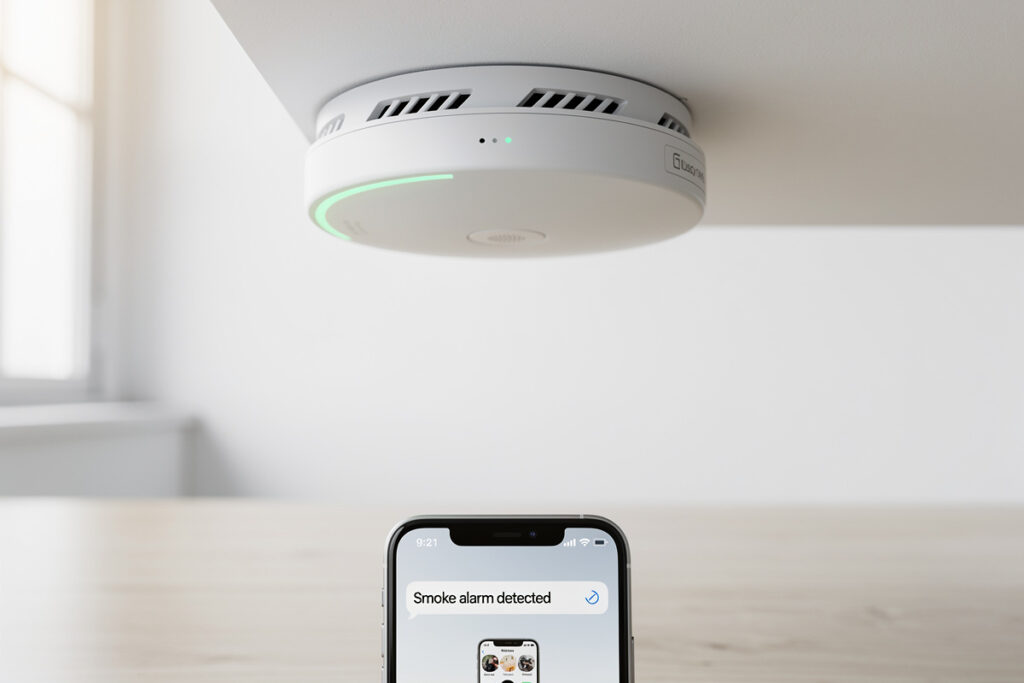
I replaced every smoke detector in my house with Nest Protects three years ago after a midnight kitchen false alarm had me standing on a chair at 2 AM fanning the detector with a dish towel. Traditional smoke detectors only sound a local alarm — useless when you are at work or traveling. Smart smoke detectors push phone alerts within seconds, letting you call 911 from anywhere. Split-spectrum sensors in models like the Nest Protect distinguish fast-flaming kitchen fires from slow-smoldering electrical faults. In Nest’s own nuisance-alarm testing, the split-spectrum sensor triggered on only 30% of cooking/steam nuisance events, versus 48-54% for single-sensor ionization detectors — roughly half the false alarms of a standard ionization-only unit.
My Nest Protects talk to my Home Assistant setup and I have two automations wired to them: smoke triggers every light in the house to 100% white brightness and unlocks the front door smart lock for emergency access; CO triggers an HVAC shutdown via my smart thermostat to stop the furnace from circulating gas. I test those automations quarterly — not just the sensor self-test, but the full chain from trigger to action. It is the only safety automation in my house that I hope I never need to see work in a real event.
Disclosure: HomeAutoCentral is reader-supported. As an Amazon Associate I earn from qualifying purchases, at no extra cost to you. I only recommend gear worth your money.
Why Smart Smoke Detectors Save Lives
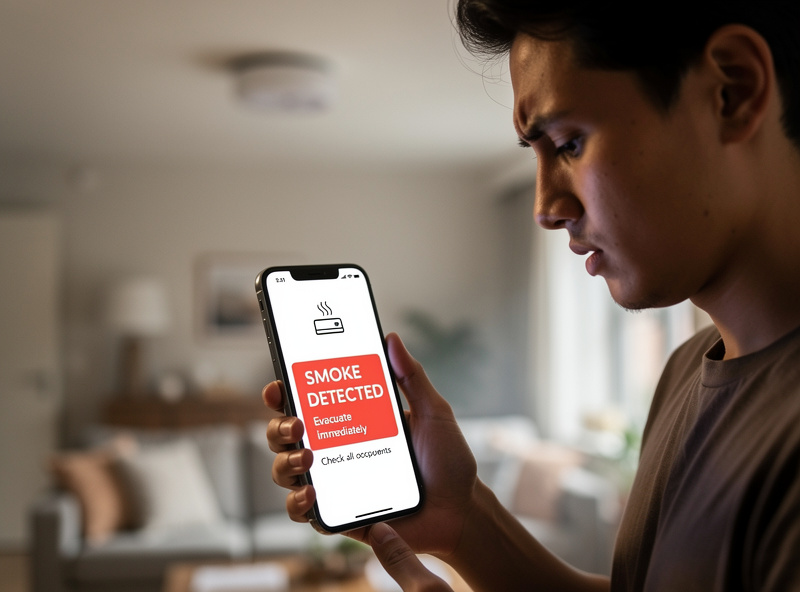
Traditional smoke detectors have a critical limitation: they only alert people inside the home. When you are at work, traveling, or running errands, a conventional detector’s alarm goes unheard. Smart detectors solve this by sending instant phone notifications wherever you are — I have received Nest alerts while grocery shopping and could verify via my indoor camera that it was a cooking false alarm, not a real fire.
Key Benefits of Smart Smoke Detection:
- Phone alerts within 5-10 seconds of smoke detection
- Carbon monoxide detection in most models
- Integration with smart home emergency automations
- Self-testing and maintenance reminders
- Location-specific alerts (“Smoke detected in bedroom”)
- Voice announcements for clear evacuation instructions
The National Fire Protection Association (NFPA) reports that roughly three of five home fire deaths occur in homes with no smoke alarm or one that failed to operate. Smart detectors add an extra layer of protection by ensuring homeowners know about emergencies immediately, even when away.
Best Smart Smoke Detectors 2026
Smart Smoke Detector Comparison
| Feature | Nest Protect | Onelink | Ring Listener | Kidde |
|---|---|---|---|---|
| Price | $119 | $189 | $35 | $70 |
| CO Detection | Yes | Yes | Via existing | Yes |
| Smart Protocol | WiFi/Thread | WiFi | Z-Wave | WiFi |
| Voice Control | Alexa/Apple | Alexa | Alexa/Google | |
| Night Light | Pathlight | No | No | No |
| App Silencing | Yes | Yes | No | Yes |
| Battery Life | 6 AA (1-2 yrs) | 10 years | 3 years | 10 years |
1. Google Nest Protect — Best Overall
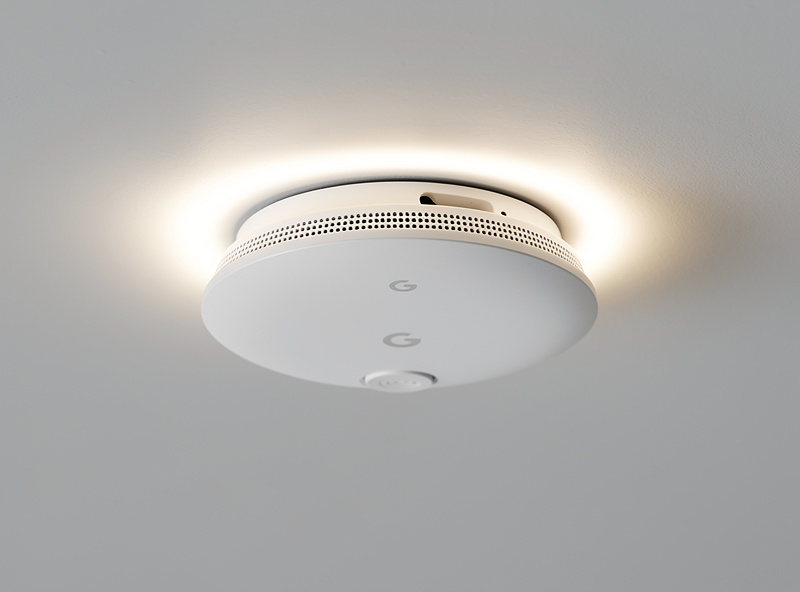
The Nest Protect sets the standard for smart smoke and CO detection with dual-sensor technology, pathlight motion-activated night light, and comprehensive app integration. I have four of these in my house and the pathlight feature alone — a soft glow that lights the hallway when you walk under it at night — is the most-used smart home feature nobody talks about.
Key Features:
- Split-spectrum smoke detection (catches both fast and slow-burning fires)
- Carbon monoxide detection with a 10-year sensor lifespan per Google’s official spec
- Phone alerts with specific room location
- Pathlight motion sensor (gentle night light when you walk by)
- Steam Check (reduces false alarms from cooking)
- App silence (silence false alarms from your phone)
- Works with Google Home for voice alerts
Price: $119-129
Best For: Google ecosystem users, premium safety requirements
2. First Alert Onelink Safe & Sound — Best with AirPlay
Combines smoke/CO detection with premium speakers and Alexa integration, essentially turning your smoke detector into a smart speaker.
Key Features:
- Smoke and carbon monoxide detection
- High-quality speakers with AirPlay 2 support
- Built-in Alexa voice assistant
- Multi-room audio capability
- Apple HomeKit compatibility
- Emergency alerts with room-specific notifications
Price: $189-249
Best For: Apple users, audiophiles wanting ceiling speakers
3. Kidde Smart Smoke Detector — Best Budget Option
Kidde brings smart features to affordable smoke detection without the premium price tag of Nest or Onelink.
Key Features:
- WiFi-connected phone alerts
- Photoelectric smoke sensor (reduces false alarms)
- Works with Alexa and Google Assistant
- Battery backup during power outages
- Low battery phone notifications
- Simple DIY installation
Price: $60-80
Best For: Budget-conscious homeowners, basic smart features
4. Ring Alarm Smoke Alarm Listener — Best for Ring Systems
Not a smoke detector itself, but a smart listener that monitors existing smoke alarms and integrates them into the Ring ecosystem.
Key Features:
- Listens for existing smoke/CO alarm sounds
- Sends Ring app notifications
- Integrates with Ring Alarm security system
- Professional monitoring compatibility
- No need to replace existing hardwired detectors
- Battery-powered (3-year life)
Price: $35 per listener
Best For: Existing Ring Alarm users, homes with hardwired detectors
Smart Smoke Detector Technology Explained
Understanding detection methods helps you choose the right protection:
Photoelectric Sensors: Use a light beam that triggers the alarm when smoke particles scatter the light. Best for detecting slow, smoldering fires (like electrical fires or cigarettes on upholstery). Reduces false alarms from cooking.
Ionization Sensors: Use radioactive material between electrically charged plates to ionize air. Triggers when smoke disrupts the ion flow. Best for fast-flaming fires but more prone to false alarms from cooking steam.
Split-Spectrum (Nest Protect): Combines two light wavelengths to detect both fast-flaming and slow-smoldering fires with fewer false alarms than single-sensor detectors.
Carbon Monoxide Detection: CO sensors use electrochemical cells that detect carbon monoxide gas. Essential for homes with gas appliances, fireplaces, or attached garages. CO is odorless and deadly — detection is critical.
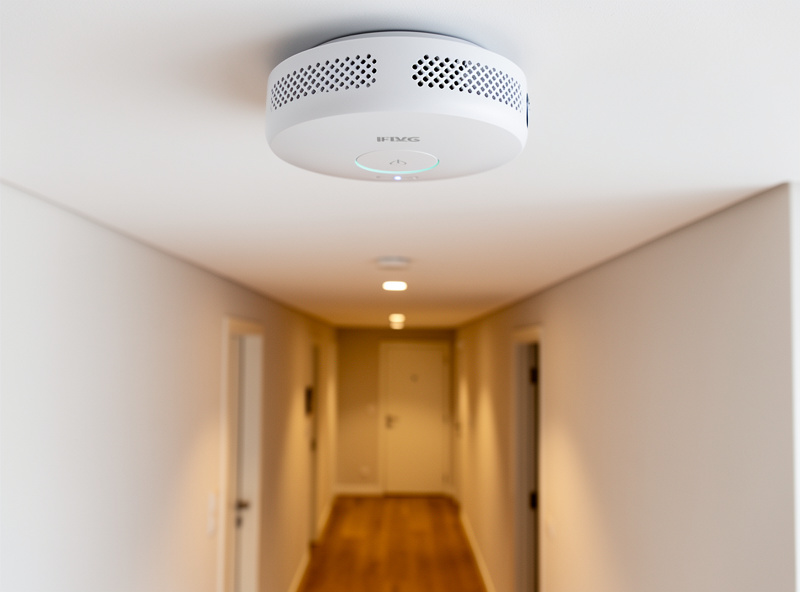
Installation and Placement Guidelines
Proper placement ensures maximum protection:
Required Locations:
- Inside every bedroom
- Outside each sleeping area
- On every level of the home (including basement)
- At least 10 feet from cooking appliances (reduces false alarms)
- Near attached garages (CO detection)
Placement Tips:
- Mount on ceiling or high on walls (smoke rises)
- Avoid corners where air does not circulate
- Keep 3 feet away from HVAC vents
- Test monthly using the test button
- Replace every 10 years (or per manufacturer)
Smart Home Integration
Smart detectors become more powerful when integrated with your smart home. In my Home Assistant setup, the Nest Protects integrate through the Google Nest integration and trigger emergency automations:
Emergency Automations:
- Smoke detected → All lights turn on (aid evacuation)
- Smoke detected → Smart locks unlock (emergency access)
- Smoke detected → HVAC system shuts off (prevents spread)
- CO detected → Phone notifications sent to family members
Platform Compatibility:
- Google Home: Nest Protect integrates natively
- Apple HomeKit: Onelink provides best integration
- Amazon Alexa: Most smart detectors work with Alexa
- Ring: Ring Listener for Ring Alarm integration
Maintenance and Testing
I test my Nest Protects on the first weekend of every month using the app’s Sound Check feature, and once per quarter I run the full emergency automation chain to verify the lights and locks respond. The Nest app sends push notifications for low battery, sensor end-of-life, and connectivity issues — I have not had to climb a ladder to check a detector manually in three years.
Emergency Response Planning
Smart smoke detectors are most effective when part of a comprehensive emergency plan:
Family Emergency Protocol:
- Designate meeting point outside home
- Assign who helps children/elderly evacuate
- Keep phones charged for emergency notifications
- Have fire extinguisher accessible on every floor
- Test escape routes monthly (especially from bedrooms)
Our Recommendation
Best Overall: Google Nest Protect — the split-spectrum detection, CO monitoring, and polished app experience make this the gold standard. The pathlight feature adds daily utility beyond safety and is the feature I appreciate most after three years of living with them.
Best Budget: Kidde Smart Smoke Detector at $60-80 provides essential smart features without premium pricing.
Best for Ring Users: Ring Alarm Smoke Alarm Listener at $35 per room makes existing detectors smart without replacing hardware.
Best for Apple Users: First Alert Onelink Safe & Sound with HomeKit integration and premium audio.
Related Articles
- Best Smart Water Leak Detectors — Prevent Damage (2026)
- Best Smart Air Quality Monitors for Home (2026)
- Best Smart Temperature Sensors for Each Room (2026)
- Smart Window Sensors — Security and Climate Control (2026)
- Smart Door Sensors with Phone Notifications (2026)
My Smoke Detector Choices
I run Nest Protect throughout the house because the interconnect feature matters: if the kitchen detector triggers, every Protect in the house announces the room and sounds the alarm simultaneously. The phone notification with the room name is useful when I am away — I know immediately whether it is the kitchen (probably toast) or the basement (probably something real). The battery versions are renter-friendly; the wired versions are better for permanent installs.
The one drawback worth naming: Nest Protect is a cloud-dependent device for the phone notifications and the interconnect setup. The local alarm siren always works, but the smart features require Wi-Fi. If the internet is down, you still get a siren but not the phone alert. For me that tradeoff is acceptable; for a fully offline setup, hardwired interconnected detectors are the only option.
Frequently Asked Questions
Do smart smoke detectors require WiFi?
Yes, smart features require WiFi for phone notifications and app control. However, the smoke detection and local alarm function work without internet. Battery-powered detectors maintain basic protection during outages.
Can I silence false alarms from my phone?
Yes, Nest Protect and Onelink allow app-based silencing. This is particularly useful for cooking false alarms. Silence the detector from your phone instead of frantically fanning it or removing batteries.
Do smart detectors interconnect like hardwired ones?
Yes, most smart detectors create wireless mesh networks. When one detects smoke, all interconnected units sound — meeting NFPA 72 interconnection requirements without running wires, and units sold in the US must pass UL 217 testing for smoke alarms.
Are smart smoke detectors required by code?
No, standard smoke detectors satisfy code. Smart detectors provide additional convenience and safety features but are not required. However, some insurance companies offer discounts for smart home security systems including smoke detection.
Can smart detectors call the fire department automatically?
Only with professional monitoring services like Ring Alarm with monitoring or ADT integration. Standard smart detectors send you notifications and you decide whether to call emergency services. Professional monitoring plans add automatic emergency dispatch.
How long do smart smoke detector batteries last?
It depends on the model. Kidde and First Alert Onelink units use sealed 10-year lithium batteries built into the unit, no swapping required. Nest Protect’s battery model instead uses six replaceable Energizer Ultimate Lithium AA batteries that typically need swapping every 1-2 years. Hardwired models with battery backup typically need that backup battery replaced every 1-2 years. Apps notify you weeks before battery failure on any of these.