Can Smart Locks Be Hacked? Security Facts (2026)
The Quick Answer
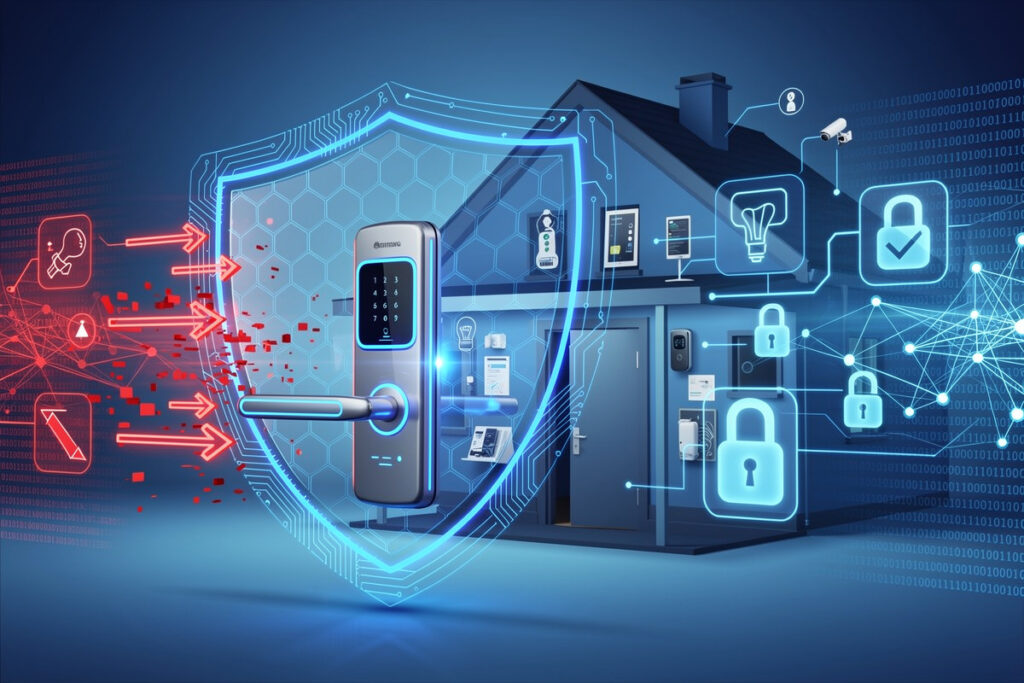
Yes, smart locks can be hacked in theory — but FBI Uniform Crime Reporting data puts forcible entry at roughly 56% of burglaries, not digital attacks. Quality locks with AES-128 encryption make electronic intrusion harder than physical bypass. I have made mistakes that taught me exactly where smart lock security actually fails, and I will walk you through every one of them so you do not repeat them.
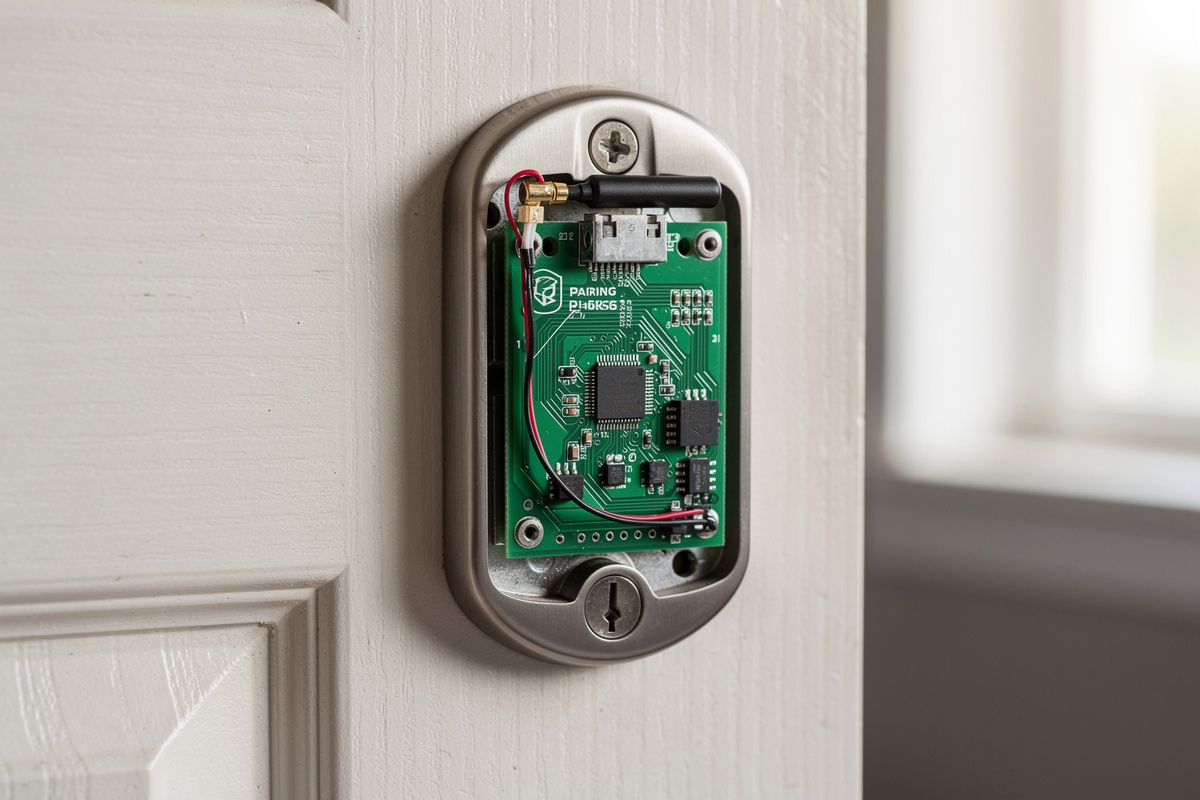
The one vulnerability most homeowners overlook costs nothing to fix and takes 30 seconds — and it is exactly how I came home once to find someone had let themselves in with a code I forgot was still active. Every attack type below is real, but the gap between a security-conference demo and your actual threat level is enormous.
As an Amazon Associate I earn from qualifying purchases.
Understanding Smart Lock Vulnerabilities
Smart locks combine physical locking mechanisms with electronic components—creating two potential attack surfaces. For our complete smart lock security recommendations, see the best smart locks guide. While this sounds scary, context matters: your lock is one entry point among many (windows, garage, back doors), and determined burglars typically choose the easiest target.
Types of Smart Lock Attacks
| Attack Type | Risk Level | Skill Required | Affects Smart Locks | Affects Traditional | Primary Mitigation |
|---|---|---|---|---|---|
| Bluetooth Replay | Low | High | Yes (old models) | No | Buy 2023+ models |
| WiFi Network Attack | Very Low | High | Yes | No | WPA3, strong password |
| Cloud Breach | Low | Very High | Yes | No | Reputable brand + 2FA |
| Stolen Phone/App | Moderate | Low | Yes | No | Phone lock + app PIN |
| Lock Picking | Moderate | Moderate | Yes | Yes | Grade 1 deadbolt |
| Forced Entry (kick) | High | None | Yes | Yes | Reinforced frame + strike |
1. Bluetooth Hacking
Some smart locks communicate via Bluetooth Low Energy (BLE). Early generations had vulnerabilities where attackers could intercept or replay Bluetooth signals to unlock doors. Modern locks use pairing encryption, rotating keys, and proximity requirements that largely eliminate this threat.
Risk Level: Low for current-generation locks (2023+)
Mitigation: Buy from reputable brands with security certifications
2. WiFi Network Attacks
WiFi-connected locks could theoretically be attacked through your home network. If a hacker compromises your router or WiFi password, they might access the lock. However, quality locks use TLS/SSL encryption similar to online banking, making interception difficult.
Risk Level: Very Low
Mitigation: Secure WiFi with WPA3, strong unique password, router firmware updates
3. Cloud Service Breaches
Smart locks communicate with manufacturer servers for remote access. If those servers are compromised, attackers could theoretically control locks. While rare, this has happened—emphasizing the importance of choosing established security-focused brands.
Risk Level: Low but non-zero
Mitigation: Choose brands with strong security track records; enable 2FA
4. App and Account Takeover
The most common “hack” is simply stealing or accessing a phone with an unlocked smart lock app — and a neighbor of mine learned this the expensive way. Their phone was grabbed at a gym, and before they could remote-wipe it, the thief walked through their front door using the lock app. If someone has your unlocked phone and knows your lock exists, they can control it. This is social engineering, not technical hacking.
Risk Level: Moderate
Mitigation: Phone PIN/biometric lock, separate PIN for lock app, remote wipe capability
5. Physical Bypass
Any lock can be picked, bumped, or drilled—smart or traditional. Smart locks using standard deadbolt mechanisms face the same physical attacks as regular locks. Some cheap smart locks have weaker physical construction than quality mechanical deadbolts.
Risk Level: Varies by lock quality
Mitigation: Choose Grade 1 or Grade 2 locks; reinforce door frames
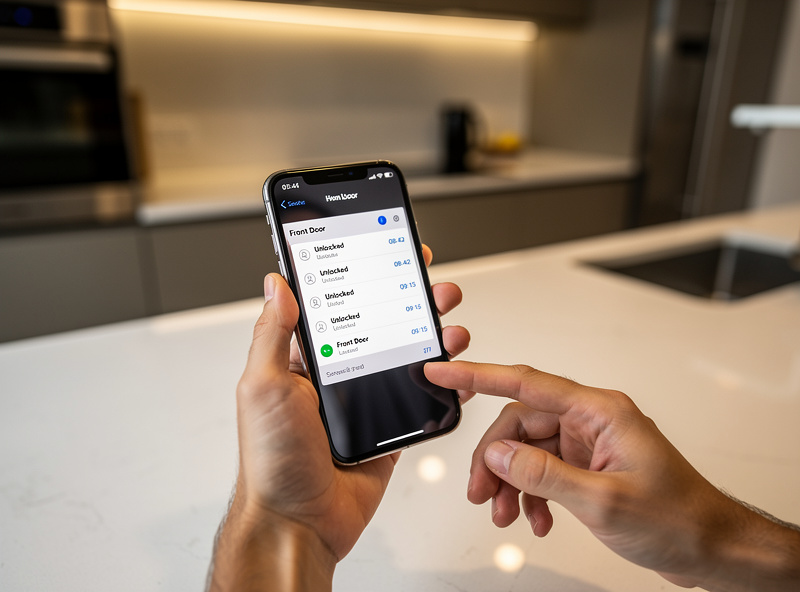
My own worst smart lock mistake was purely my fault — not the hardware. I gave a dog-walker a permanent code instead of a time-limited one, and she kept using it months after we stopped working together. I only caught it because my Schlage Encode logs showed the same code triggering at odd hours. Now every service worker, guest, and contractor gets a temporary code with a hard expiration. The lock was never the weak point — my code hygiene was.
Security Certifications to Look For
When comparing smart locks, three certification layers separate genuinely secure hardware from marketing claims: ANSI/BHMA physical grades, encryption standards for data transmission, and the manufacturer’s security audit transparency. A lock that skimps on any of these three is not worth bolting to an exterior door.
ANSI/BHMA Grades
Per the ANSI/BHMA A156.36 auxiliary deadbolt standard:
- Grade 1: Highest security—residential and commercial (250,000 open/close cycles, withstands a 1,350 lb force test against the bolt)
- Grade 2: Good residential security (150,000 cycles, withstands a 1,125 lb force test)
- Grade 3: Basic residential (100,000 cycles, withstands a 675 lb force test)
A Grade 1 deadbolt throws with a solid mechanical clunk you feel through the door frame — nothing like the flimsy click of a builder-grade lock a boot can kick through in one hit. That physical quality matters more than any encryption protocol when someone is actually at your door.
Recommendation: Choose ANSI Grade 1 or Grade 2 certified deadbolts for exterior doors. Established brands like Schlage, Yale, and Kwikset offer Grade 1 certified smart locks.
Encryption Standards
- AES-128 or AES-256: Military-grade encryption for data transmission
- TLS 1.2 or higher: Secure communication protocol
- Encrypted Local Storage: Access logs and codes stored securely on device
Security Audit History
Quality brands undergo third-party penetration testing and publish security whitepapers. Research whether the manufacturer has:
- Bug bounty programs (rewards for finding vulnerabilities)
- Regular third-party security audits
- Transparent disclosure of past vulnerabilities and fixes
Real-World Risk Assessment
The Criminal Perspective
Professional burglars prioritize speed and stealth. Hacking a smart lock requires technical skill, specialized equipment, and time—none of which typical burglars possess. FBI statistics show most burglaries involve forced entry (kicking doors, breaking windows) or simply walking through unlocked doors.
A hacker targeting your smart lock specifically likely knows you personally and wants something inside. Random criminals choose easier targets.
Your Threat Model
Assess your actual risk:
- High Value Targets: Celebrity homes, wealthy neighborhoods, known cryptocurrency holders
- Corporate Espionage: Executives with sensitive information at home
- Stalking Victims: People with obsessive pursuers
- Average Homeowner: Standard valuables, standard risks
For average homeowners, smart lock security is adequate — I trust the Schlage on my own front door with AES-128 encryption and 2FA, and I sleep fine. High-value targets might consider additional measures: multiple authentication factors, security systems, reinforced doors, or traditional high-security mechanical locks.
Best Practices for Smart Lock Security
Smart lock security comes down to three layers that must all be solid — a weak spot in any one of them makes the others irrelevant. Account security prevents remote takeover, physical reinforcement stops the roughly 56% of break-ins that use forcible entry, and disciplined code management closes the most common real-world gap: unauthorized people who technically still have permission.
Account Security
- Unique Passwords: Never reuse the password from other accounts
- Two-Factor Authentication (2FA): Always enable—prefer authenticator apps over SMS
- Regular App Updates: Keep lock firmware and apps current
- Review Access Logs: Check who accessed your lock monthly
- Revoke Old Access: Remove former partners, roommates, service providers immediately
Physical Security
- Reinforce Door Frame: Strike plates with 3-inch screws into framing studs
- Grade 1 Deadbolt: Physical strength matters more than electronic features — my Schlage Encode has survived four years of daily use on the front door without a single jam or electronic fault
- Cover Windows: Prevent “shoulder surfing” of keypad codes
- Secure Backup Keys: Do not hide keys under mats or in obvious places
Code Management
- Change Default Codes: Immediately customize factory codes
- Use Complex Codes: 6-8 digits, avoid birthdays or 1234
- Limit Distribution: Only share codes with trusted individuals
- Set Expirations: Use temporary codes for service workers that auto-expire
- Regular Rotation: Change codes every 6-12 months
When Smart Locks May Be Riskier
Smart locks shift from security upgrade to liability when code-sharing spirals out of control — the four highest-risk scenarios are domestic disputes (ex-partners with app access), rotating service workers, short-term rental turnover, and anyone facing elevated personal risk from stalking or targeted attacks. For renters, installation adds another layer: the smart locks for renters guide covers non-destructive options.
Situations Requiring Extra Caution
- Domestic Disputes: Ex-partners may retain app access or know codes
- Frequent Service Workers: More people with codes = more risk
- Short-Term Rentals: Constant code sharing creates exposure
- High-Profile Individuals: Targeted attacks more likely
Alternatives for Maximum Security
If smart lock risks concern you, consider:
- Traditional High-Security Locks: Mul-T-Lock, Medeco, or Abloy with restricted keyways
- Hybrid Approach: Smart lock on secondary door, Grade 1 deadbolt on primary
- Physical Security Layering: Cameras, alarms, reinforced doors matter more than lock type
What I Would Do If I Were Starting From Scratch
If I were securing a house today with nothing on the doors, I would bolt on a Grade 1 ANSI smart deadbolt, enable 2FA with an authenticator app — not SMS — and set every shared code to auto-expire. Then I would stop worrying about the lock and start worrying about the door frame and the strike plate, because that is where forced entry actually happens. The hardware is not the weak link. Code management is. Fix that and you have closed the door on the real threat.
Frequently Asked Questions
Can smart locks be hacked remotely?
Remote hacking of smart locks is theoretically possible but extremely difficult for typical criminals. Quality locks use AES-128 encryption, secure bootloaders, and TLS connections making remote attacks comparable to online banking security. The more realistic risks are physical bypass, stolen phones, or shared access codes.
Are smart locks less secure than traditional deadbolts?
ANSI Grade 1 smart locks meet the same physical security standards as premium traditional deadbolts. The electronic components add convenience without reducing physical security. Smart locks actually improve security through activity logging, auto-lock features, and tamper alerts that traditional locks cannot provide.
What is the most secure smart lock brand?
Schlage, Yale, and August lead in security certifications and track records. Look for ANSI Grade 1 certification, AES-128 encryption, tamper detection, and regular firmware updates. Avoid cheap, uncertified brands that may have known vulnerabilities.
Should I enable two-factor authentication on my smart lock?
Yes, always enable two-factor authentication if your smart lock app supports it. This prevents account takeover even if your password is compromised. Most major brands including Schlage, Yale, and August offer 2FA in their mobile apps.
What should I do if I suspect my smart lock was compromised?
Change all access codes immediately, update the lock firmware to the latest version, change your app password and enable 2FA, review the activity log for unauthorized entries, and contact the manufacturer if you find evidence of tampering.
Are cheap smart locks from unknown brands safe to use?
Budget smart locks from unverified manufacturers pose real security risks. They may use outdated encryption, lack regular firmware updates, or have undisclosed vulnerabilities. Stick to established brands like Schlage, Yale, August, and Kwikset that undergo third-party security audits and offer ANSI Grade 1 or 2 certification.
Related Articles
- Best Smart Locks 2026: Complete Security Guide
- Smart Home Privacy Guide: Keep Your Data Local
- Smart Door Sensors with Phone Notifications
- Indoor Security Camera Privacy: What You Should Know
- Best Smart Cameras Without Monthly Subscription