Nest vs Ecobee — Honest Comparison (2026)
The Quick Answer
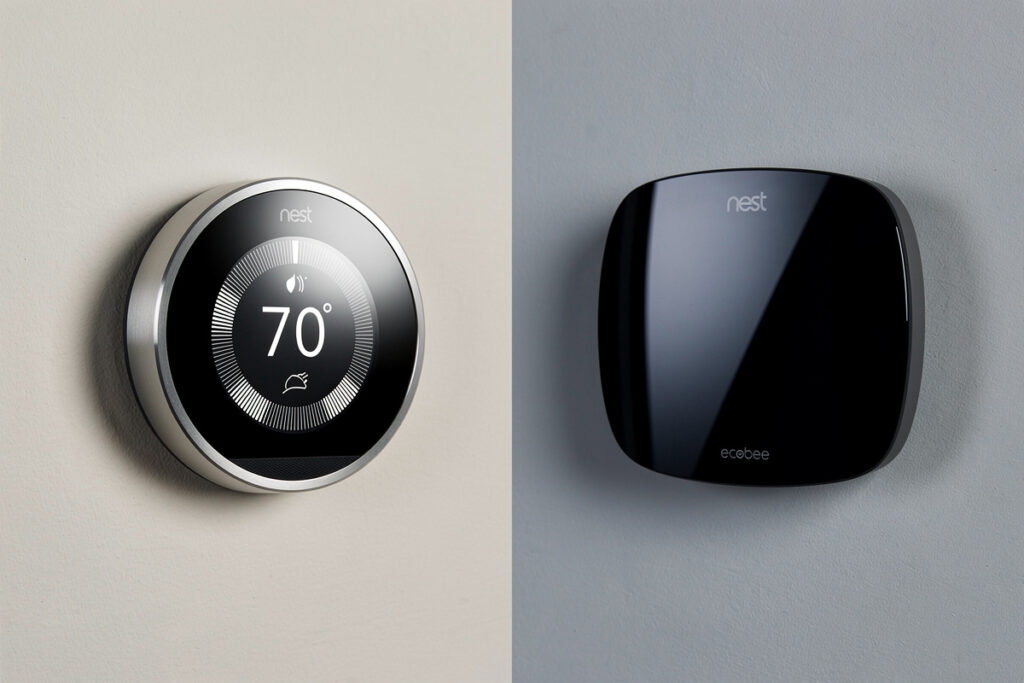
Nest excels at learning your schedule automatically and costs $180-250, while Ecobee at $190-250 adds remote room sensors that balance temperatures across rooms with up to 5°F differences. Choose Nest if you want set-it-and-forget-it simplicity. Either way, avoid these common smart home mistakes first; choose Ecobee if you have hot/cold rooms, want room-by-room control, or use Apple HomeKit. See the complete smart thermostat buyer’s guide for more top picks.
Disclosure: HomeAutoCentral is reader-supported. As an Amazon Associate I earn from qualifying purchases, at no extra cost to you. I only recommend gear worth your money.
Brand Overview
Google Nest
Originally developed by Nest Labs (founded by former Apple engineers), acquired by Google in 2014. Nest pioneered learning thermostats that adapt without programming. The brand focuses on AI-driven automation, beautiful hardware design, and deep Google ecosystem integration.
Current Lineup:
- Nest Thermostat – Entry-level, basic scheduling
- Nest Learning Thermostat – Premium learning features, high-res display
Ecobee
Canadian company founded in 2007, now owned by Generac. Ecobee differentiated early with remote sensors that monitor multiple rooms. The brand emphasizes data transparency, open integrations, and solving the problem of uneven temperatures throughout homes.
Current Lineup:
- Ecobee3 Lite – Basic model, works with sensors
- Ecobee SmartThermostat – Premium features, built-in Alexa, included sensor
Head-to-Head Comparison
Learning vs. Programming
Nest: True learning algorithm observes your adjustments and builds a schedule automatically. After 1-2 weeks, it knows when you wake, leave, return, and sleep—adjusting without any manual programming. This works brilliantly for people with consistent routines.
Ecobee: Relies primarily on manual scheduling plus Smart Home/Away detection via occupancy sensors. You set specific times and temperatures, then Ecobee follows that schedule unless it detects you are unexpectedly home or away.
Winner: Nest for consistency, Ecobee for flexibility. If your schedule varies, Ecobee’s manual approach may actually work better.
Room Sensors
Nest: The Learning Thermostat supports temperature sensors, but they only report temperature—no occupancy detection. You cannot prioritize specific rooms; sensors just help the thermostat make better decisions.
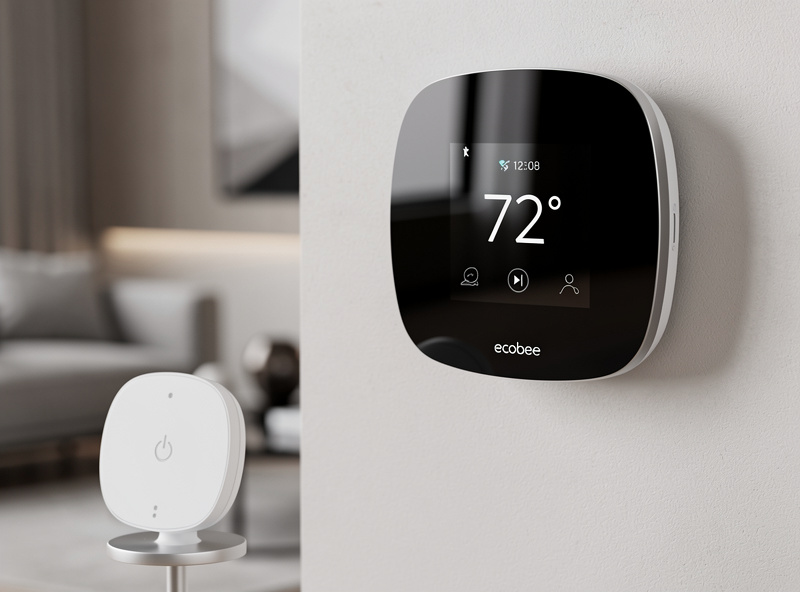
Ecobee: SmartSensors monitor both temperature and occupancy. You can follow specific sensors (“Use bedroom temp at night”), create comfort profiles, and eliminate hot/cold spots. This is Ecobee’s killer feature.
Winner: Ecobee by a wide margin. Room sensors are the primary reason to choose Ecobee.
Smart Home Integration
Both thermostats integrate with popular platforms, but with different strengths. Ecobee offers superior geofencing for multi-user households, while Nest excels in Google-centric homes.
| Platform | Nest | Ecobee |
|---|---|---|
| Google Assistant | Native (excellent) | Good |
| Amazon Alexa | Good | Native (Ecobee has built-in Alexa) |
| Apple HomeKit | Limited | Full support |
| Samsung SmartThings | Via Google | Native |
| IFTTT | Limited | Full support |
| Hubitat/Home Assistant | Difficult | Excellent |
Winner: Ecobee for multi-platform households; Nest for Google-centric homes.
App Experience
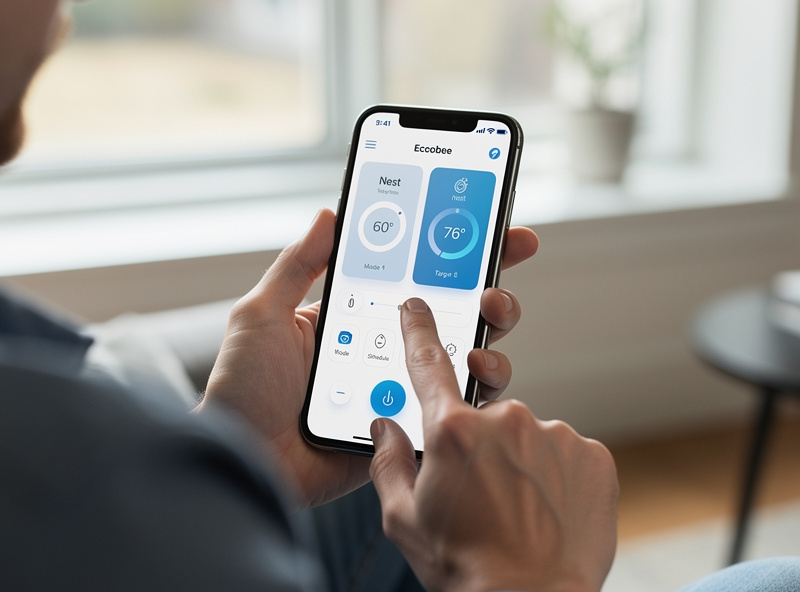
Nest App: Beautiful, intuitive, consistent with other Google products. Energy History shows exactly when and why your system ran. Family Accounts let household members control the thermostat. The app rarely crashes and updates regularly.
Ecobee App: More detailed but busier. Home IQ provides extensive data on HVAC runtime, weather impact, and savings. Follow Me settings for sensors, comfort profiles, and scheduling are powerful but have a learning curve. Occasional connectivity complaints.
Winner: Nest for simplicity, Ecobee for data nerds.
Hardware Design
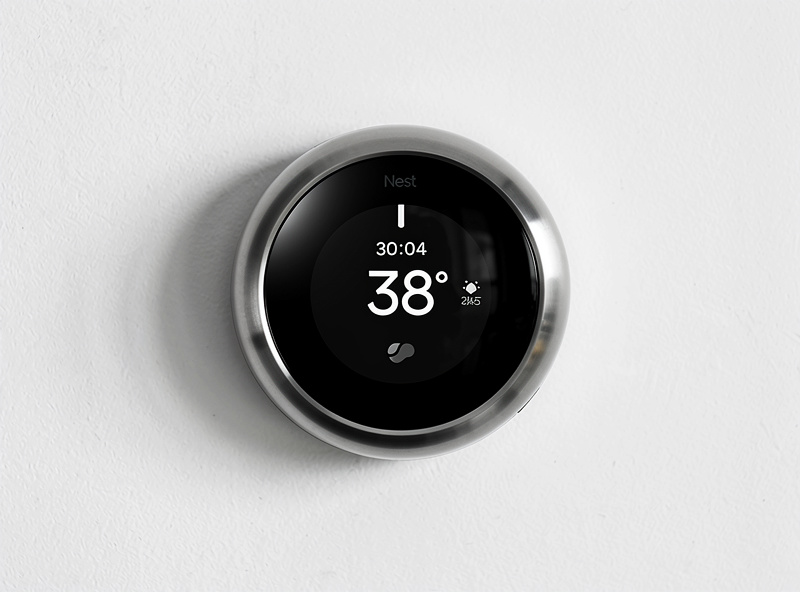
Nest Learning Thermostat: Iconic stainless steel ring, high-resolution display that lights up when you approach, premium feel. Looks like art on your wall. Available in multiple metal finishes (copper, black, white, stainless).
Ecobee SmartThermostat: Glass touchscreen, clean modern look, built-in Alexa microphone/speaker. Less visually striking than Nest but very attractive. Plastic construction feels lighter than Nest’s metal.
Nest Thermostat (2020): Plastic body, lower-res display, touch strip instead of rotating ring. Still nice but clearly entry-level.
Winner: Nest Learning Thermostat wins on pure aesthetics; Ecobee wins on features (built-in Alexa).
Installation and C Wire
Nest: Works without C wire more reliably than competitors due to efficient components. Power Connector accessory available if needed. Compatibility checker is excellent.
Ecobee: Includes Power Extender Kit (PEK) in the box, which repurpose existing wires to create a C wire equivalent. Slightly more complex installation but guarantees compatibility.
Winner: Tie—both handle C wire issues well, just differently.
Energy Savings Features
Nest:
- Auto-Schedule: Learns and optimizes automatically
- Home/Away Assist: Uses phone location and motion detection
- Early-On: Pre-heats/cools to reach target temperature at scheduled time
- Airwave: Runs fan after compressor shuts off to use residual cooling
- Sunblock: Adjusts if direct sunlight heats the thermostat
Ecobee:
- Smart Home/Away: Uses occupancy sensors to detect presence
- Follow Me: Averages temperatures only from rooms with occupancy
- Smart Recovery: Reaches target temperature by scheduled time
- AC Overcool to Dehumidify: Runs AC longer to reduce humidity
- Feels Like: Adjusts for humidity to maintain comfort
Winner: Tie—both meet ENERGY STAR’s certification bar (at least 8% lower heating runtime, at least 10% lower cooling runtime versus a standard non-programmable thermostat), and real-world savings depend more on how aggressively you use the scheduling than which brand you pick.
Additional Features
| Feature | Nest Learning | Nest (2020) | Ecobee Smart | Ecobee3 Lite |
|---|---|---|---|---|
| Built-in Voice Assistant | No | No | Yes (Alexa) | No |
| Remote Sensors | Limited | No | Yes (included) | Yes (buy separate) |
| Spotify/Streaming | No | No | Yes (via Alexa) | No |
| Dual-Fuel Support | Yes | Yes | Yes | Yes |
| Humidifier Control | Yes | Yes | Yes | Yes |
When to Choose Nest
Pick Nest if:
- You want the thermostat to figure out your schedule automatically
- You primarily use Google Assistant/Android
- You value beautiful hardware design
- You do not need room-specific temperature control
- You want the simplest possible experience
- You have a consistent daily routine
When to Choose Ecobee
Pick Ecobee if:
- You have hot/cold spots in different rooms
- You use Apple HomeKit, SmartThings, or multiple platforms
- You want granular control over settings and scheduling
- You like analyzing energy data and optimizing manually
- You have a large home or multiple floors
- You want built-in Alexa (SmartThermostat model only)
Price Comparison
| Model | Price | Sensors Included | Best For |
|---|---|---|---|
| Nest Thermostat (2020) | $130 | 0 | Budget, simple needs |
| Nest Learning Thermostat | $250 | 0 | Premium, auto-learning |
| Ecobee3 Lite | $150 | 0 | Value, room sensor capable |
| Ecobee SmartThermostat | $250 | 1 | Premium, sensors, Alexa |
| Additional Sensors | $40-75 each | – | Multi-room control |
Real User Scenarios
Scenario 1: Young Professional Apartment
Recommendation: Nest Thermostat ($130)
Simple, works without C wire, automatically learns irregular schedule. No need for room sensors in a small apartment.
Scenario 2: Family Home with Hot Upstairs
Recommendation: Ecobee SmartThermostat + 2 extra sensors ($330 total)
Follow Me prioritizes occupied rooms, eliminating the 5°F difference between floors. Kids’ rooms stay comfortable.
Scenario 3: Apple Household
Recommendation: Ecobee (any model)
Full HomeKit integration allows Siri control and automation with other Apple devices. Nest has limited HomeKit support.
Scenario 4: Google/Android Home
Recommendation: Nest Learning Thermostat
Native integration with Google Assistant, Nest cameras, and Android phones. Seamless ecosystem experience.
Related: How Much Do Smart Thermostats Save? | Smart Thermostats Without C Wire | Smart Thermostats for Apartments
Which Should You Buy?
Buy Nest Learning Thermostat if:
- You want minimal interaction—true “set it and forget it” operation
- Your schedule is relatively consistent week-to-week
- You prioritize premium hardware design and aesthetics
- You use Google Assistant as your primary voice platform
- You have a smaller home or apartment without significant temperature variations
- You prefer Google’s ecosystem and data privacy approach
Buy Ecobee SmartThermostat if:
- You have hot and cold rooms requiring sensor-based balancing
- You use Apple HomeKit, Alexa, or multiple smart home platforms
- You want granular control and detailed energy data
- You have a larger home (2,000+ sq ft) with temperature variations
- You prefer built-in voice control without separate smart speakers
- You want maximum flexibility in scheduling and automation
Our Verdict
For most households, the decision comes down to room sensors. If you have noticeable temperature differences between rooms, Ecobee’s sensor system provides genuine comfort improvements that justify its cost. If your home maintains consistent temperatures and you value simplicity, Nest’s learning algorithm delivers excellent results with minimal effort.
Both thermostats meet ENERGY STAR’s certification bar for energy savings, so your choice should focus on which features align with your lifestyle and home characteristics rather than which saves more money.
Which One I Would Buy Today
I run an ecobee in the main living area because the remote room sensors matter — without them, the thermostat reads the hallway temperature and the bedroom freezes. If I had a small apartment where the thermostat was in the main room anyway, I would save the $50 and buy the Nest. The learning schedule on the Nest is genuinely good for households with irregular routines; the ecobee wins when you need temperature data from a different room than where the thermostat lives.
Frequently Asked Questions
Which saves more money, Nest or Ecobee?
Both meet ENERGY STAR’s certification bar (at least 8% lower heating runtime, at least 10% lower cooling runtime versus a standard non-programmable thermostat). Ecobee may save slightly more in larger homes with temperature variations due to room sensors avoiding heating/cooling empty spaces. Nest excels in smaller, consistent-temperature homes through superior learning algorithms.
Can I use Ecobee sensors with Nest?
No, Ecobee SmartSensors only work with Ecobee thermostats. Nest offers its own Temperature Sensors, but they only report temperature—not occupancy—and cannot prioritize specific rooms like Ecobee sensors.
Does Nest work with Alexa?
Yes, Nest works with Alexa through the Google Nest skill. However, integration is not as seamless as Ecobee, which has Alexa built directly into the thermostat hardware. Both support voice temperature adjustments and routine integration.
Which is better for large homes?
Ecobee is generally better for large homes (2,500+ sq ft) due to room sensors that address hot/cold spots. The Follow Me feature prioritizes occupied rooms, providing more consistent comfort throughout the house than a single thermostat location can achieve.
Can I switch from Nest to Ecobee easily?
Yes, switching takes 30-45 minutes. Both use the same standard wiring (Rc, Y1, G, W1, C). Simply remove Nest, install Ecobee base, reconnect wires, and configure via the Ecobee app. You will need to manually program schedules since learning data does not transfer.
Which has better privacy protections?
Both offer reasonable privacy, but approaches differ. Ecobee emphasizes data transparency and local processing options. Nest, owned by Google, integrates with Google’s ecosystem and data practices. Both allow you to opt out of data sharing for improvements, but neither stores sensitive information locally by default.
Related Articles
- Best Smart Thermostats 2026: Complete Buyer’s Guide
- How Much Does a Smart Thermostat Save? Real Data
- Best Smart Thermostat for Apartment Renters
- Best Smart Thermostats Without C Wire Required
- Smart Thermostat Geofencing: How It Saves Energy