Window Robot Cleaner: Automated Glass Cleaning Guide
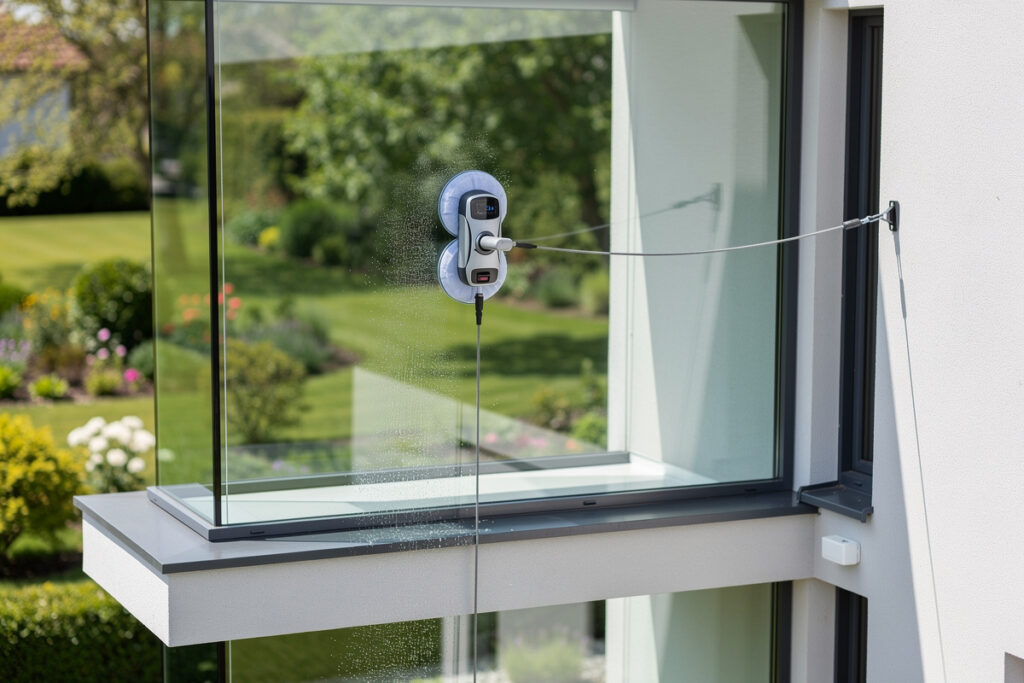
A window robot cleaner attaches to glass surfaces using suction motors or vacuum pressure, then navigates across the pane while spinning microfiber pads remove dirt, water spots, and grime without ladders or squeegees. Current models clean a standard 3-by-4-foot window in 3 to 5 minutes with consistent edge-to-edge coverage, making them practical for second-story windows, skylights, and large glass doors that are dangerous or difficult to clean manually.
As an Amazon Associate I earn from qualifying purchases.
Window cleaning robots are the newest category of home cleaning automation, solving a genuine safety problem — falls from ladders send well over 100,000 people to the emergency room every year in the United States, and window and gutter cleaning are among the most common reasons a homeowner climbs one in the first place. These robots suction-grip to glass surfaces with enough force to stay attached even on wet exterior windows during light wind, clean with rotating or vibrating microfiber pads, and follow pre-programmed path patterns that cover the full window surface. This guide covers how they work, what surfaces they handle, their limitations, and whether the investment makes sense for your home.
I bought a window robot after a near-miss on a ladder cleaning my second-story bedroom windows — the ladder slipped on wet grass and I caught myself on the gutter. For $280, the robot now cleans those same windows in four minutes each while I stand safely on the ground watching it work. The first run was surprisingly satisfying: watching a machine methodically buff a streak of bird droppings off glass you have not touched in two years is the kind of specific joy that makes home automation worth pursuing. That said, window robots are not magic — they struggle with corners, cannot handle mullions dividing a pane, and leave a dry border about an inch wide around the edge. This guide gives you the honest limits alongside the genuine benefits so you know exactly what you are buying.
How Window Robot Cleaners Work
Window cleaning robots maintain their grip on glass through one of two attachment methods. Vacuum suction models use an internal fan that creates negative pressure between the robot’s chassis and the glass surface, and current models on the market run anywhere from roughly 2,800 to 10,000+ Pa of suction depending on the model — more than enough to support the robot’s weight (typically 1.5 to 3 kg) against gravity on vertical surfaces. Magnetic models use paired magnetic units on opposite sides of the glass, sandwiching the window pane between the cleaning unit and a counterweight — this design only works on glass up to 15mm thick.
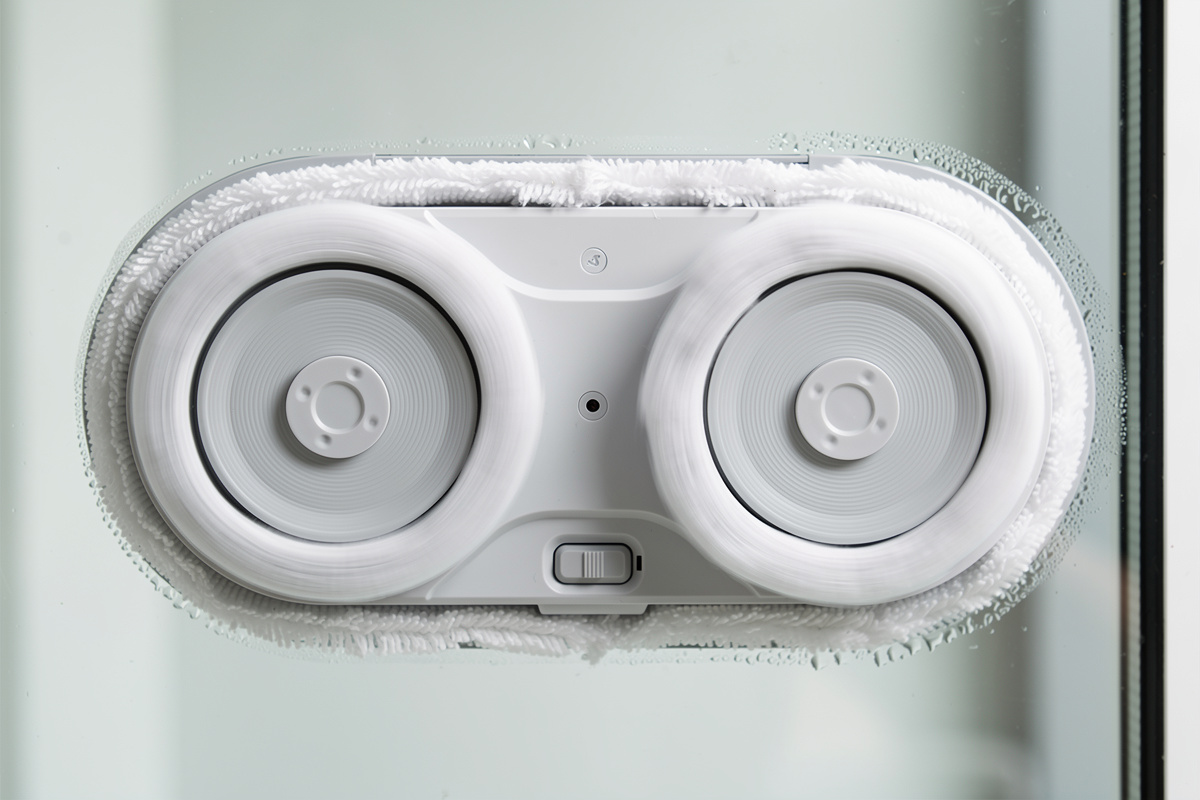
Cleaning is performed by spinning microfiber pads that rotate at 100 to 200 RPM on the glass surface. The robot sprays cleaning solution ahead of the pad, scrubs through the wetted area, and a squeegee edge behind the pad removes excess liquid for a streak-free finish. Some models include dual cleaning stages — a scrubbing pad followed by a polishing pad — for cleaner results on heavily soiled glass.
Navigation follows pre-programmed zigzag patterns that start at one corner and work across the entire glass surface in overlapping horizontal or vertical rows. Edge detection sensors (infrared or physical) identify the window frame boundaries and reverse direction. Most robots complete the full window in one pass, though heavily soiled glass may benefit from running a second cleaning cycle. A safety tether attached to the window frame or nearby anchor point prevents the robot from falling if suction is interrupted by a power outage.
What Surfaces Window Robots Can Clean
Standard glass windows are the primary use case, and all window robots handle single-pane and double-pane glass effectively. The surface must be flat and smooth — textured glass, leaded windows, and frosted glass prevent proper suction grip and pad contact. Minimum window size for most robots is approximately 15 by 15 inches; smaller panes do not provide enough surface for the robot to navigate effectively.
Beyond windows, these robots clean glass shower doors, large mirrors, sliding glass patio doors, glass storefronts, and glass railings. Some owners use them on smooth tile surfaces (bathroom walls, kitchen backsplashes) with good results, though these surfaces are not officially supported by most manufacturers. Skylights and roof-mounted windows are among the best use cases — these surfaces are nearly impossible to clean manually without scaffolding, and the robot handles them with the same ease as a vertical window.
Exterior windows with heavy environmental buildup (pollen, tree sap, hard water deposits, oxidation) may require pre-treatment before the robot can clean effectively. The robot’s microfiber pads and cleaning solution handle normal dust and water spots, but years of accumulated grime may need a manual first pass with a specialized glass cleaner before the robot can maintain the surface on an ongoing schedule. Your robot vacuum handles floors autonomously; the window robot extends that same automation to glass surfaces throughout your home.
Window Robot Cleaner Limitations
Edge coverage is the biggest weakness. Most window robots leave a 5 to 15mm uncleaned strip along each edge of the glass where the robot’s chassis prevents the cleaning pad from reaching the frame junction. This perimeter strip requires manual wiping with a cloth for complete cleanliness. Newer models with edge-hugging designs have reduced this gap to 3 to 5mm, but no current model achieves true edge-to-edge coverage.
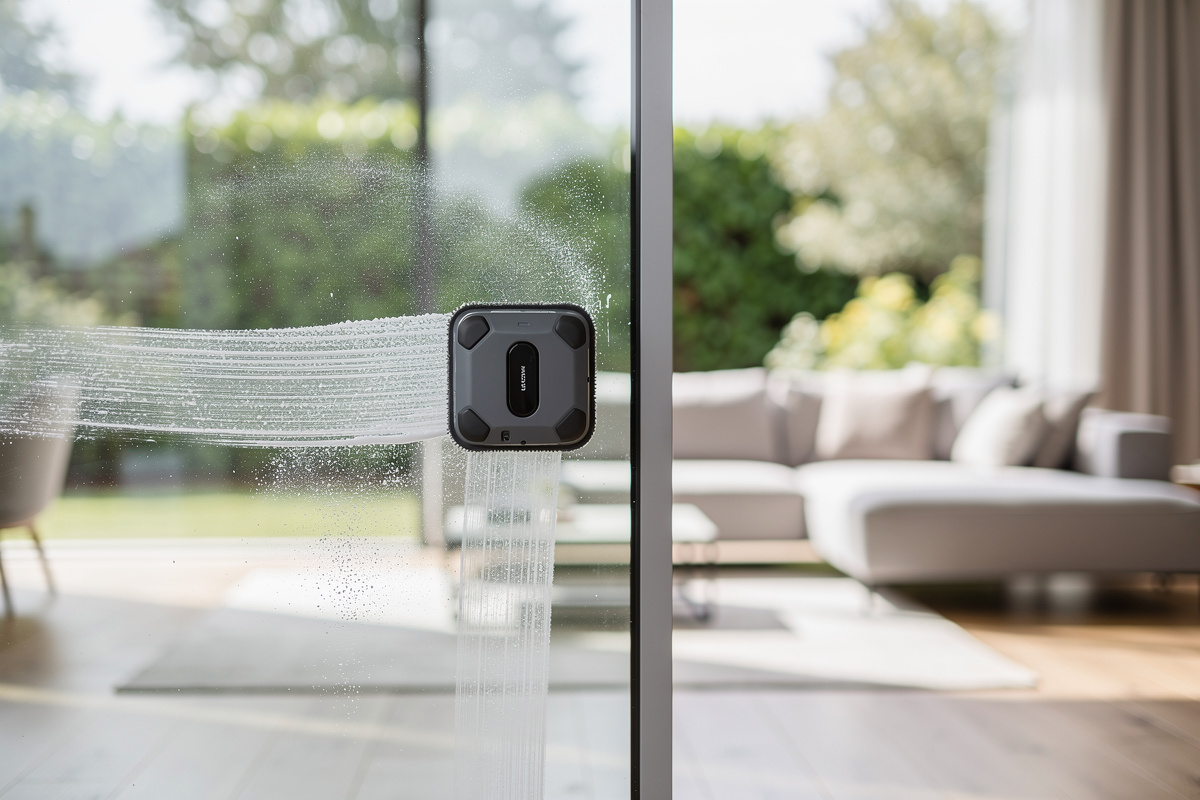
Wind affects exterior cleaning performance. Models using vacuum suction maintain their grip in winds up to 15 to 20 mph but may lose cleaning effectiveness as wind pushes the robot against the glass unevenly. High-rise apartment windows exposed to consistent wind above 15 mph should schedule cleaning for calm weather days. Magnetic models are less wind-affected because the magnetic clamping force is independent of atmospheric conditions.
Power delivery limits operational flexibility. Most window robots use a corded power supply rather than battery operation because the vacuum suction motor draws 60 to 100 watts continuously — more than current battery technology can sustain for a full cleaning session while keeping the robot light enough to grip the glass. The power cord means you need an accessible outlet within 15 to 20 feet of the window, and cord management across multiple windows requires repositioning the robot and its cable for each pane.
Safety Features and Fall Prevention
Every window robot includes a safety tether — a cord or cable that attaches to the robot and anchors to the window frame, a suction cup on the glass above, or a nearby fixed point. If the robot loses suction due to power failure, surface irregularity, or mechanical fault, the tether catches it within inches of falling. Battery backup systems on premium models maintain suction for 15 to 30 minutes after power loss, giving you time to retrieve the robot safely.
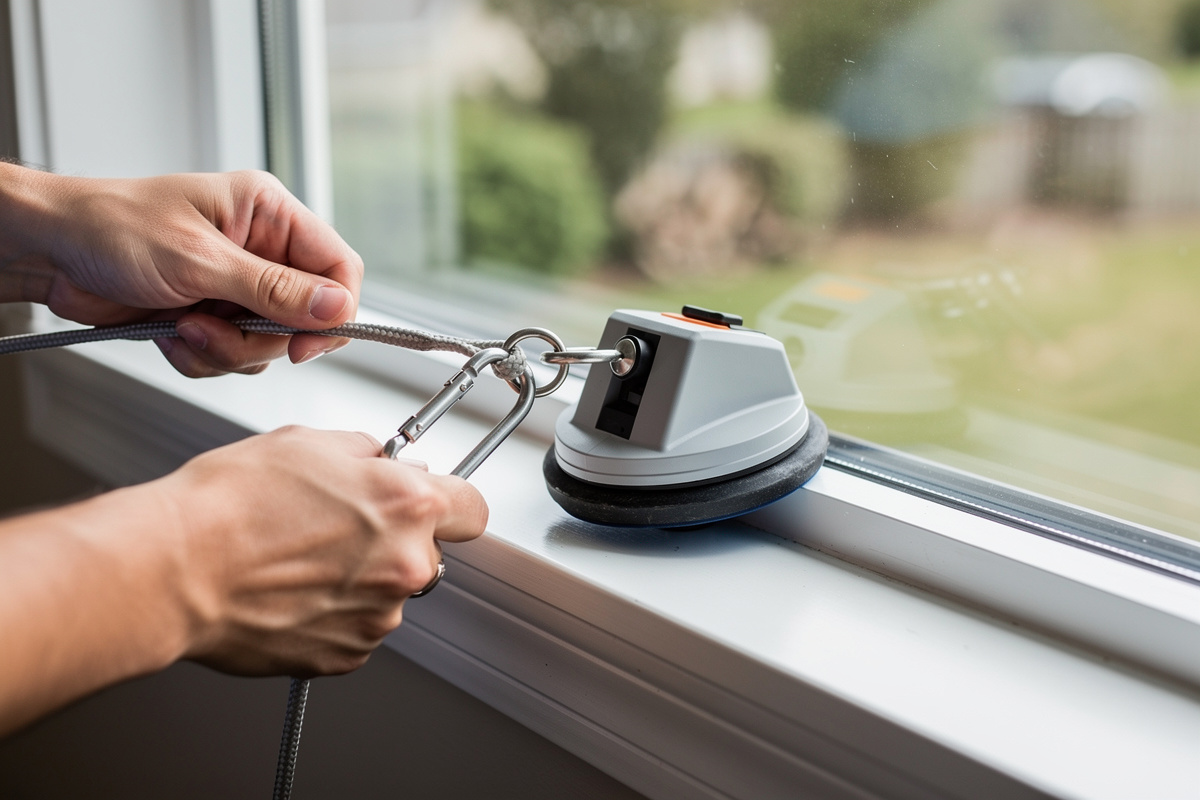
The combination of suction force, safety tether, and battery backup makes modern window robots a genuinely safer option for multi-story use than a ladder. I haven’t come across reports of widespread safety incidents with current-generation models used per manufacturer guidelines, and the risk profile is clearly lower than the ladder-based manual cleaning it replaces, where slips, overreaching, and instability cause the majority of home window-cleaning injuries.
Smart Home Integration for Window Robots
Window robot cleaners have less smart home integration than floor robots. Most models connect via Bluetooth to a smartphone app for remote start and path monitoring but lack Wi-Fi connectivity for voice assistant integration. A few premium models offer Wi-Fi with basic Alexa commands (start and stop), but room mapping, scheduling, and automation triggers are not yet standard features.
The practical limitation is that window robots require manual placement on each window — they cannot navigate between windows autonomously like floor robots move between rooms. Each cleaning session starts with you placing the robot on the glass, attaching the safety tether, and pressing start. This manual setup limits the automation benefit compared to floor robots that run entirely on schedule without human touch. However, the 3 to 5 minutes of setup per window still saves 15 to 30 minutes of manual cleaning per window, especially for high or hard-to-reach surfaces.
Window Robot Maintenance
Microfiber cleaning pads are the primary consumable. Wash pads after each use with warm water and mild detergent, then air dry. Replace pads every 3 to 6 months when they flatten and lose their scrubbing texture — $10 to $15 per set of replacement pads. Keep at least two sets so you can swap to a fresh pad while the used one dries.
Clean the suction ring (the rubber seal around the robot’s base that creates the vacuum grip) monthly by wiping it with a damp cloth. Debris or buildup on the suction ring reduces grip force and can cause the robot to slide or detach from the glass. Inspect the safety tether for fraying every 6 months and replace if the cable shows wear. The suction motor itself is maintenance-free for the life of the product.
Fitting a Window Robot Into a Local-First Setup
A window robot doesn’t fit into my Home Assistant automations the way the floor vacuum does — most of these units connect over Bluetooth only, with no local API and nothing that shows up as an entity on my network. I treat it as a manual-start tool rather than something on a schedule, the same way I treat a cordless drill: useful, automation-adjacent, but not automated. The one place it does intersect with the rest of the house is the safety tether anchor — I mounted a permanent suction-cup hook above each second-story window I clean regularly, so the setup step is grabbing the robot and clipping in, not hunting for something sturdy to tie off to first.
Cord management ends up being the real friction point in daily use, more than anything mechanical. Running an extension cord to a second-story window means routing it through the room rather than out a gap in the sash, and I keep a short indoor-rated cord reel near each window I clean often so I’m not dragging a cable across the house every time. If a model in your household loses grip mid-window — pads sliding rather than scrubbing cleanly — check the suction ring for a hair or grit buildup before assuming the motor is failing; that’s caused every slip I’ve had with mine.
A window robot is not an everyday appliance — it lives in a closet and comes out three or four times a year. But each time it runs, it earns back its shelf space by cleaning a dozen windows that would otherwise require a ladder, a squeegee, and an hour of precarious balancing. If you have second-story windows, skylights, or large glass doors that collect visible grime between professional cleanings, a $200-300 window robot pays for itself in the first year by replacing even one professional window-cleaning visit. The first time you watch it methodically buff a window while you drink coffee safely indoors, you will feel like you cheated physics.
Frequently Asked Questions
Do window cleaning robots actually work?
Yes. Current models clean standard glass windows effectively in 3 to 5 minutes per pane, removing dust, water spots, and light grime with spinning microfiber pads and cleaning solution. They leave a 5 to 15mm uncleaned edge strip.
Are window cleaning robots safe?
Modern window robots include strong vacuum suction (roughly 2,800 to 10,000+ Pa depending on model), safety tethers, and battery backup lasting 15 to 30 minutes. No widespread safety incidents have been reported with current-generation models used per manufacturer guidelines, and the risk profile is far lower than ladder-based manual window cleaning.
Can window robots clean outside windows?
Yes. Window robots are designed for both interior and exterior glass surfaces. Exterior cleaning is limited by wind above 15 to 20 mph and may require pre-treatment for heavy environmental buildup like tree sap or hard water deposits.
How long does a window robot take to clean one window?
A standard 3 by 4 foot window takes 3 to 5 minutes. Large picture windows or sliding glass doors take 8 to 15 minutes depending on size. Running a second pass on heavily soiled glass doubles the cleaning time.
Do window robots work on mirrors and shower glass?
Yes. Window robots work well on flat mirrors and glass shower doors. The surface must be smooth and flat with enough area for the robot to navigate, roughly 15 by 15 inches minimum.
How much do window cleaning robots cost?
Window cleaning robots range from $150 to $400 depending on features and brand. Premium models with stronger suction, dual cleaning pads, and app control cost $250 to $400. Budget models handle basic cleaning adequately at $150 to $200.
Related Articles
- Best Robot Vacuum 2026: Complete Buyer Guide
- Robot Mop: Best Dedicated Mopping Robots
- Robot Vacuum and Mop Combo: Complete Buyer Guide
- Smart Home Automation Ideas That Save Time
- Best Smart Home Accessories: Complete Guide