Best Smart Home Energy Management Systems 2026: Complete Guide
I cut my own electricity bill 22% in the first three months after installing a circuit-level energy monitor — not by changing my habits, but by seeing exactly what was burning power when I was asleep. Smart home energy management systems cut the average household bill by 10-30% by revealing $200-600 in annual waste, and the gear pays for itself in 6-12 months. Here is what I installed, what I learned, and the two systems I would skip if I were starting over today.
Disclosure: HomeAutoCentral is reader-supported. As an Amazon Associate I earn from qualifying purchases, at no extra cost to you. I only recommend gear worth your money.
Why Your Home Needs a Smart Energy Management System
The average US household spends $1,500-2,000 annually on electricity, with 20-30% wasted on phantom loads, inefficient appliances, and habits that smart devices correct automatically. Before I installed monitoring, I had no idea my basement dehumidifier was pulling $22/month — it ran 24/7 because I had never checked. The old refrigerator in the garage could cost $30-50 monthly, or your pool pump could be burning $80/month. Without circuit-level visibility, you are guessing. With it, the savings find themselves.
If you are new to smart home technology, avoid common setup mistakes that undermine energy savings. Read the 7 smart home mistakes that waste money before installing your first device. Additionally, the smart water leak detector guide shows how leak detection prevents water waste and damage. Proper setup from the start maximizes the energy savings from your monitoring investment.
Smart home energy management solves this information gap by providing real-time circuit-level data that identifies waste the moment it appears. Studies from utility companies show households with continuous energy monitoring reduce consumption by 10-30% within the first three months — simply from awareness and automated optimizations like smart thermostat schedules and plug-level shutdowns when devices aren’t in use.
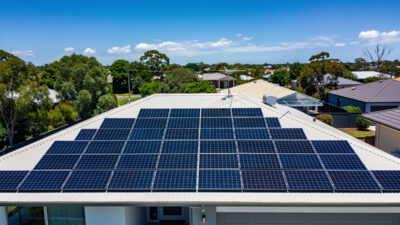
The financial case strengthens when you add solar integration. Homes with solar panels and battery storage that actively manage energy flows save 40-70% more than homes with passive solar installations. The difference comes from intelligent load shifting — running high-consumption appliances when solar production peaks rather than drawing from the grid at premium evening rates.
Whole-Home Energy Monitors vs Circuit-Level Monitoring
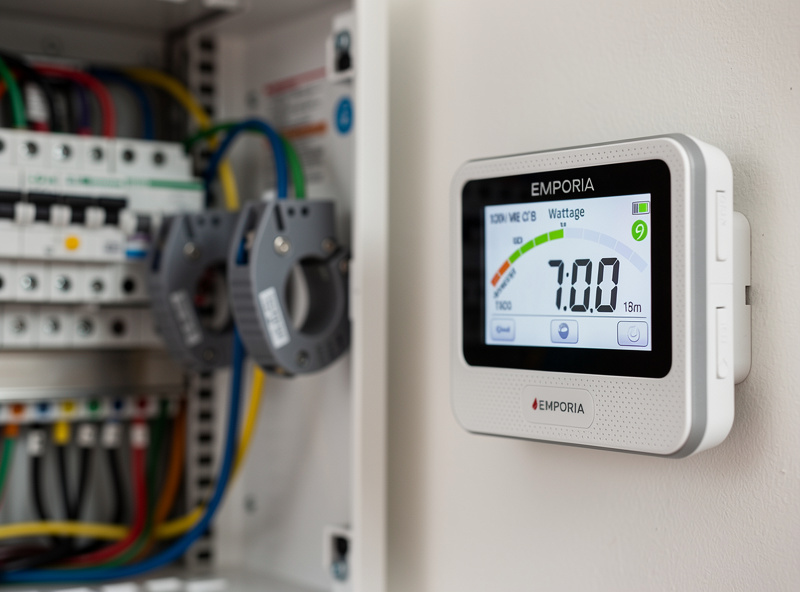
Whole-home energy monitors measure your electricity at the main service entrance, giving you a single accurate number for total consumption. Circuit-level monitors like the Emporia Vue 2 add individual breaker-level tracking, letting you see exactly how much the HVAC system, water heater, kitchen outlets, and garage consume independently. The difference in cost and complexity determines which approach fits your situation.
Whole-home monitors cost $50-150 and install in minutes by clipping a CT clamp around your main service wires. They provide accurate total consumption data but cannot distinguish between appliances on the same circuit. If your kitchen is on one breaker, you know the kitchen draws 2kWh today, but you cannot tell if that was the refrigerator cycling or the microwave running. Circuit-level monitors cost $100-300 and require connecting individual CT clamps to each breaker, but they reveal which specific appliance is responsible for every watt.
For most households, circuit-level monitoring delivers superior ROI because it identifies actionable targets. When I discovered my basement dehumidifier consumed $45/month, I put it on a smart plug that shuts off when humidity drops below 50% — that single intervention saved $30/month. Whole-home monitors tell you total consumption dropped; circuit-level monitors tell you why, enabling targeted interventions with the highest returns. The ENERGY STAR smart home energy monitor guide confirms that circuit-level granularity typically pays back 2-3x faster than whole-home-only approaches.
How Smart Thermmostats Cut Energy Costs
Smart thermostats represent the single highest-impact energy management device for most homes, responsible for 40-50% of total electricity consumption through HVAC operation. For reducing lighting energy use alongside thermostats, see the guide to smart lights which reduce lighting costs by 60-80%. The EPA estimates proper thermostat management saves $100-200 annually, but smart thermostats with learning algorithms and occupancy detection routinely achieve $150-300 in savings by preventing heating or cooling of empty homes and optimizing start times based on outdoor temperature patterns.
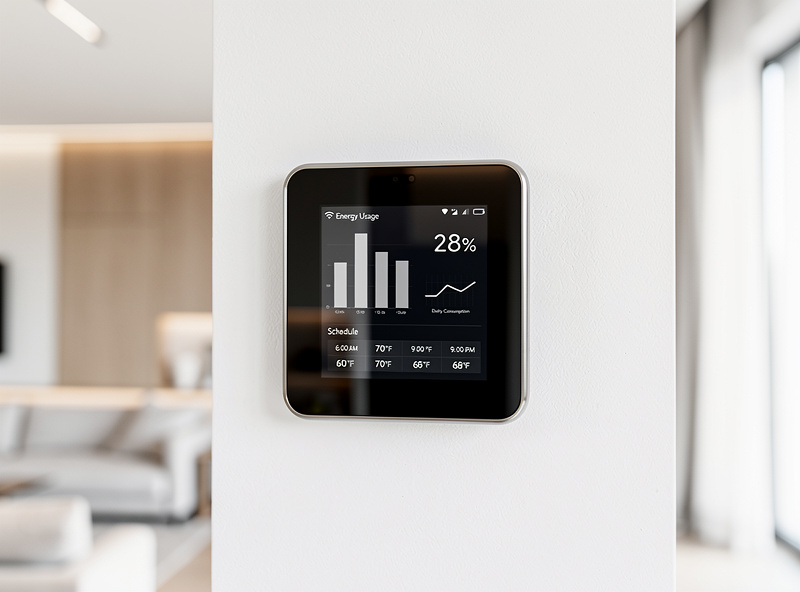
Traditional programmable thermostats fail because they follow rigid schedules regardless of actual occupancy. I ran a dumb programmable for years and watched it blast heat into an empty house every Wednesday afternoon because nobody bothered to update the schedule. Smart thermostats solve this through motion sensors, geofencing, and machine learning that adapt to your actual patterns. The Ecobee Smart Thermostat Premium detects when everyone leaves and shifts to eco mode, then begins pre-conditioning 20-30 minutes before the first person returns. The EPA’s ENERGY STAR smart thermostat program certifies models that deliver verified savings.
Beyond simple scheduling, smart thermostats integrate with weather forecasting APIs to optimize pre-conditioning decisions. If tomorrow’s forecast shows a 95°F afternoon, the system starts cooling earlier to reduce peak-load strain and utility costs. Some utilities now offer demand response programs where smart thermostats automatically reduce consumption during grid stress events in exchange for bill credits — typically $25-50 per event season.
Smart Plugs and Power Strips for Energy Tracking
Smart plugs with energy monitoring provide appliance-level visibility at the lowest cost per device, typically $15-30 each. They measure individual device consumption in real-time, track historical usage patterns, and can automatically shut off devices during standby mode to eliminate phantom loads. The TP-Link Kasa Smart Plug with Energy Monitoring and Amazon Smart Plug offer 15-amp monitoring suitable for most household devices.
Smart power strips extend this capability to multiple devices from a single outlet while adding protection against power surges and individual outlet control. The Emporia Smart Power Strip monitors eight devices plus two USB ports with per-outlet energy tracking, making it ideal for home entertainment centers and office equipment where multiple devices cluster together. Standby power from electronics accounts for 5-10% of residential electricity use — smart strips eliminate this waste completely.
The key advantage of smart plugs over whole-home monitors is actionable specificity. I caught my bedroom air purifier burning 0.8 kWh daily — it ran 18 hours straight every day because nobody remembered to turn it off. A $15 smart plug with a schedule killed that phantom load overnight. Knowing your AC uses 3.2 kWh daily is informative; knowing which specific appliance drives a spike and being able to automate it away is where the money is. Smart plugs turn data into dollars in a way whole-home monitors alone cannot.
Integrating Solar Panels with Smart Home Energy Systems
Solar panel installation costs have dropped 70% since 2010, making grid-tied solar viable for most US households. A typical 6kW residential system generates 8,000-10,000kWh annually, covering 60-80% of average household consumption. However, without intelligent energy management, solar homes export excess production to the grid at wholesale rates and repurchase it at retail rates during evening hours — a financial inefficiency that smart home energy systems eliminate. You can monitor your solar production and consumption using voice assistants like Alexa and Google Home which display real-time energy data.
Smart energy management also enables coordination with utility demand response programs. During grid stress events, utilities request load reductions in exchange for bill credits. A home with a smart thermostat, battery storage, and EV charger can respond automatically — thermostat raises setpoint 4°F, battery discharges to cover critical loads, and EV charging pauses — all without homeowner intervention. These events typically occur 5-15 times per summer and pay $1-5 per kWh reduced, making participation worth $25-100 per season.
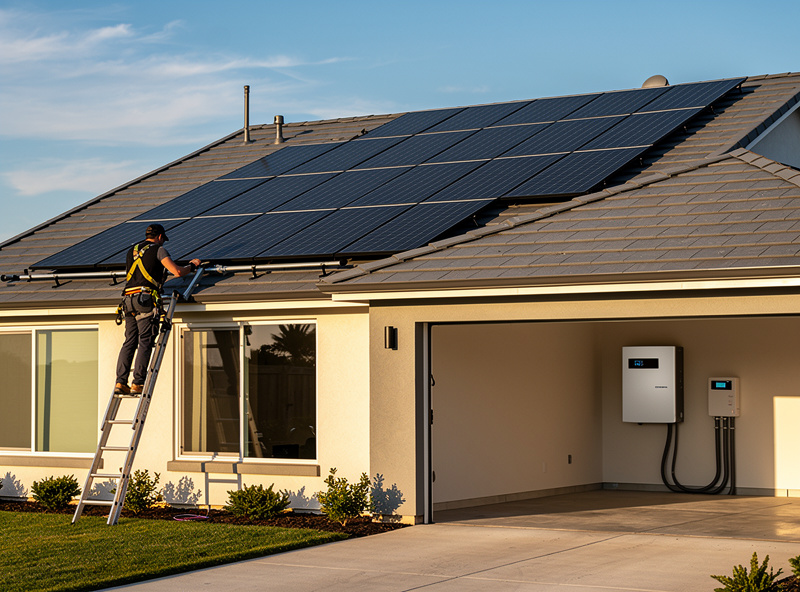
Whole-home energy monitors with solar integration track both consumption and production simultaneously, displaying net energy flow in real-time. When solar production exceeds consumption, surplus energy either charges a battery storage system or powers smart appliances like water heaters, pool pumps, or EV chargers that you schedule to run during peak production hours. This maximizes self-consumption rates from 25-30% (passive solar) to 60-70% (active load management).
For detailed solar integration strategies, see the guide to smart solar panel integration with home automation. Battery storage transforms solar from a daylight-only resource into a 24-hour energy solution. A 10-13kWh battery like the Tesla Powerwall 2 or LG Chem RESU stores midday production for evening use when utility rates are highest. Smart energy management systems coordinate battery charging and discharging based on time-of-use rate structures, weather forecasts, and anticipated consumption patterns — typically delivering 30-50% additional bill savings compared to solar-only systems.
Time-of-Use Rate Optimization Strategies
Time-of-use pricing structures charge 2-4x more for electricity during peak demand hours (typically 2-8pm on summer weekdays) compared to off-peak overnight rates. Over 60% of US utilities now offer TOU rates, and smart home energy management enables households to shift flexible consumption from expensive peak hours to cheap overnight periods automatically.
Pool pump optimization delivers particularly high returns for households with variable-speed pumps. A typical 1.5HP pool pump running 8 hours daily costs $80-150 monthly. Smart scheduling that runs the pump during 11pm-7am off-peak hours at $0.05/kWh versus 4pm-9pm peak at $0.35/kWh saves $60-100 monthly. Some smart pump controllers like the Pentair IntelliBob learn your utility rate structure automatically and select optimal run times based on pump curves and energy pricing.
The most impactful loads for time-of-use optimization are thermal conditioning (water heater, HVAC), vehicle charging, and pool pumps. A smart water heater controller like the YoLink or Fibaro can delay heating to overnight hours when rates drop to $0.06-0.08/kWh from daytime peaks of $0.25-0.40/kWh. For a family of four, water heating represents 15-20% of total consumption, making this single intervention worth $20-40 monthly on TOU rates.
Smart EV chargers with schedule optimization automatically charge vehicles during off-peak hours when utility rates are lowest. Most EVs come with scheduling features, but smart home integration enables coordination with solar production and battery storage for households with renewable energy systems. A Tesla Model 3 with a 75kWh battery charging from 10pm to 6am costs $6-8 versus $15-20 on peak rates — a 60-70% savings that compounds significantly over a year of daily driving.
Setting Up Your Smart Home Energy Dashboard
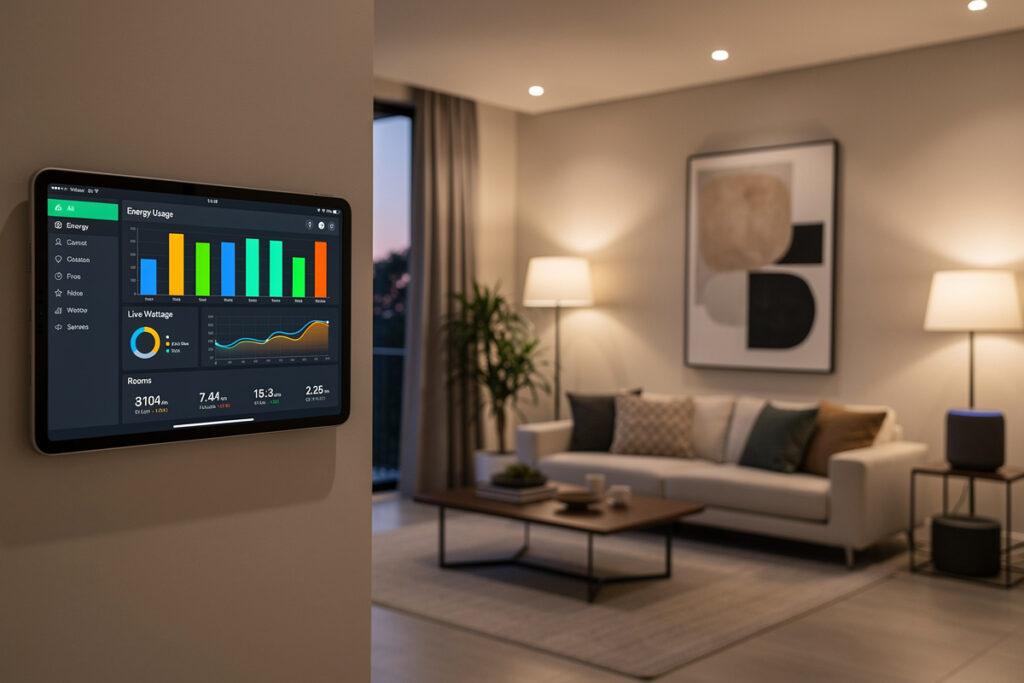
An energy dashboard consolidates data from all your smart devices into a single interface that reveals consumption patterns, cost projections, and optimization opportunities. The Sense Energy Monitor provides the most comprehensive dashboard with AI-powered device identification that recognizes 15-30 individual appliances by their electrical signatures without individual circuit monitoring. The Emporia Vue 2 offers a more budget-friendly approach with 16-circuit monitoring and utility bill projection features.
Dashboard setup requires connecting your energy monitor to your home WiFi network and installing the manufacturer’s app. Most monitors support IFTTT and Home Assistant integration, enabling dashboards like Home Assistant’s Energy Dashboard to consolidate solar production, battery storage, car charging, and home consumption into one view. Home Assistant’s dashboard is free and self-hosted, making it the most powerful option for technically inclined households. If you prefer a simpler setup, explore which smart home ecosystem works best for your needs.
For homes with unreliable internet, see the guide to smart home without internet which explains how energy monitoring still works offline. The real value of an energy dashboard emerges from consistent monitoring and response. I review my consumption every Sunday morning over coffee — the weekly email from the Emporia app shows a bar chart of each circuit, and the spikes jump out immediately. The week I saw my garage circuit double overnight, I walked out and found a space heater running on full because the thermostat knob had been bumped. That one catch paid for the monitor. Set budget alerts at $5-10 increments above your target and review weekly. Behavioral changes informed by dashboard data typically deliver 5-15% reductions in year one before any automations take effect.
How to Conduct a Complete Smart Home Energy Audit
Before you start, check whether you need a smart home hub to coordinate your devices. My own audit started with two weeks of baseline data, then an hour with the circuit-level breakdown and a notepad — I found $62/month in waste in a single sitting. A smart home energy audit identifies every inefficiency in your home and quantifies the financial return from fixing each one. Unlike professional audits costing $300-500, a self-audit using your own monitoring data prioritizes interventions by ROI rather than theoretical savings. The U.S. Department of Energy home energy audit guide lists the same methodology I followed. Budget 2-4 weeks of data collection and 1-2 hours of analysis.
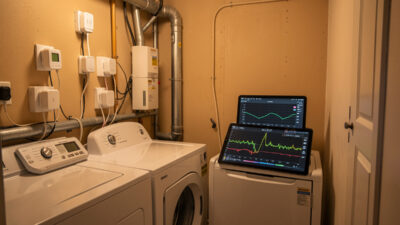
Focus on baseload consumption first — the minimum electricity your home uses 24/7 regardless of activities. A typical baseload runs 400-800 watts, accounting for refrigerators, freezers, routers, and other always-on devices. If your baseload exceeds 800 watts, investigate what device is drawing the excess. A single malfunctioning refrigerator can add 300-500 watts to your baseload, costing $30-50 monthly in wasted energy.
Begin by installing whole-home and circuit-level monitors, then collect baseline data for two weeks without changing any habits. Review the circuit-level breakdown to identify your top 5 consumption areas — for most homes these are HVAC, water heating, refrigeration, entertainment systems, and laundry. These five categories typically represent 60-70% of total consumption, making them your highest-priority optimization targets.
After identifying high-consumption areas, investigate each with smart plugs to measure individual device usage. The refrigerator in the garage might seem insignificant but could be a 20-year-old unit consuming $50-80 monthly — a prime candidate for replacement with an ENERGY STAR model. Pool pumps running 8 hours daily might consume $80-120 monthly with 4 hours of unnecessary operation that smart scheduling could eliminate. Each audit finding translates directly to monthly savings you can calculate precisely. Learn about Zigbee vs Z-Wave vs WiFi protocols which affect how your energy monitoring devices communicate.
Energy Monitoring Technology Comparison
| Technology | Cost Range | Installation | Data Resolution | Best For | Solar Integration |
|---|---|---|---|---|---|
| Smart Plug (Energy Monitor) | $15-30/device | Plug and play | Single device | High-consumption appliances, phantom load elimination | Partial (individual devices only) |
| Smart Power Strip | $30-60 | Plug and play | Per outlet (8 outlets) | Home entertainment, office equipment, gaming setups | Partial |
| Whole-Home Monitor | $50-150 | 30 minutes (CT clamp on main) | Total home consumption | Basic tracking, budget monitoring, quick installation | Yes (production tracking) |
| Circuit-Level Monitor | $100-300 | 60-90 minutes (breakers) | Per circuit (8-16 channels) | Detailed analysis, highest ROI for optimization | Yes |
| AI-Powered Monitor (Sense) | $250-350 | Professional recommended | Whole-home + device ID | Users wanting automatic appliance identification | Yes |
| Battery Storage System | $5,000-15,000 | Professional installation | System-level | Solar owners, grid independence, backup power | Full native integration |
If I were building an energy management stack from scratch today, I would buy a $100 Emporia Vue 2, add three $15 Kasa energy-monitoring smart plugs for the top energy hogs, and spend the first four Sunday mornings reviewing the dashboard over coffee. That $145 investment — less than a single month’s electricity bill for most homes — will find its own payback within 6 months. The two appliances I would not buy: a $350 Sense unless you really need AI-powered device identification without touching your breaker panel, and any whole-home-only monitor that leaves you guessing which circuit to investigate first. The money in energy management is not in watching your total consumption go down — it is in knowing exactly which device to unplug, replace, or automate, and then doing it.
Frequently Asked Questions
How much does a complete smart home energy management system cost?
A complete smart home energy management system costs $150-500 for monitoring equipment plus $100-300 for smart thermostats and $15-30 per smart plug. Whole-home monitors range from $50 (Emporia) to $350 (Sense). Smart thermostats cost $80-250. The average household invests $300-600 total and sees $200-600 annual savings, delivering payback within 12-18 months.
Do smart thermostats really save energy?
Yes. Smart thermostats save $100-300 annually according to EPA ENERGY STAR data. The savings come from occupancy detection that prevents heating and cooling empty homes, learning algorithms that optimize pre-conditioning timing, and integration with utility demand response programs. Households with smart thermostats reduce HVAC energy consumption by 10-15% on average.
What is the best smart electricity monitor for home use?
The Emporia Vue 2 offers the best value at $100 with 16-circuit monitoring and comprehensive app features. The Sense Energy Monitor at $299 provides AI-powered device identification that automatically recognizes 15-30 appliances without individual circuit monitoring. For budget users, the Eyedro Home Energy Monitor at $80 delivers whole-home tracking with a simple web dashboard.
Can smart home energy systems integrate with solar panels?
Yes. Most whole-home energy monitors including Emporia Vue 2 and Sense support solar production tracking via CT clamps on solar inverter output. When integrated with battery storage systems like Tesla Powerwall or LG Chem, smart energy management can automatically optimize when to store solar versus discharge for household use, maximizing self-consumption rates from 25% to 60-70%.
How much can I save with time-of-use rate optimization?
Time-of-use optimization saves 30-60% on electricity costs during peak hours by shifting flexible loads to off-peak periods. The average household on TOU rates saves $30-80 monthly by running dishwashers, laundry, EV charging, and water heating during off-peak hours. Smart thermostats with demand response capabilities earn additional credits of $25-50 per season from utilities.
What is a phantom load and how do smart plugs eliminate it?
Phantom loads are the 5-10 watts devices consume when turned off but left plugged in. TVs, gaming consoles, computers, and kitchen appliances draw standby power 24 hours daily. A single television can waste $10-15 annually in phantom load. Smart plugs with scheduling automatically cut power to these devices during unused hours, eliminating phantom consumption completely while remaining instantly available when needed.
How long does it take to install a whole-home energy monitor?
DIY installation of a whole-home monitor takes 30-60 minutes. The Emporia Vue and similar devices clip CT clamps around the main service wires entering your electrical panel and connect to WiFi via a hub. Circuit-level monitors requiring individual breaker connections take 60-90 minutes. Professional installation, recommended for the Sense Energy Monitor, adds $150-250 but ensures safe panel connection.
Related Articles
- Best Smart Electricity Monitors for Home
- Smart Solar Panel Integration with Home Automation
- How to Reduce Your Electric Bill with Smart Home Devices
- Smart Home Energy Monitoring for Renters
- Time-of-Use Pricing Optimization with Smart Devices
- Whole-Home Energy Monitor vs Smart Plugs
- Best Solar Battery Storage Integration
- Complete Smart Home Energy Audit Guide
- How to Set Up a Smart Home Energy Dashboard
- Best Smart Power Strips — Monitor Energy Usage
- How Much Does a Smart Thermostat Save? Real Data
- Best Smart Thermostats 2026: Complete Buyer’s Guide
- Best Smart Plugs 2026: Complete Buyer’s Guide
- Smart Home for Beginners: Complete 2026 Setup Guide