Smart Dishwasher Buyers Guide 2026: 3 Tiers Compared
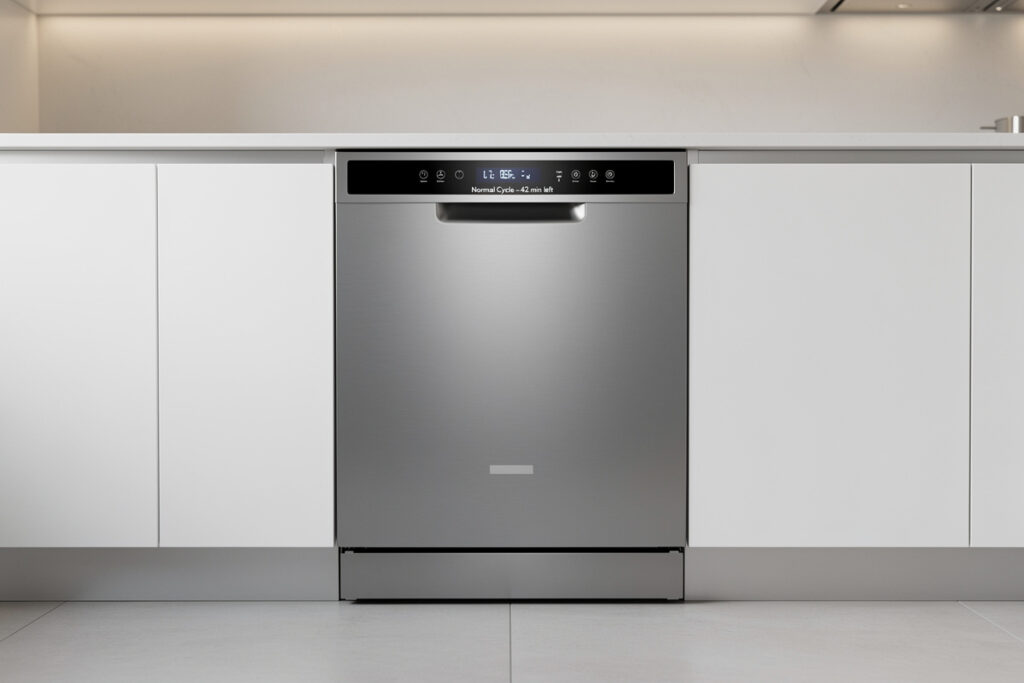
A smart dishwasher saves about 9 hours per year of “is it done yet?” check-ins and, when paired with time-of-use electricity scheduling, can meaningfully trim the electricity cost of running it. The 2026 smart dishwasher market starts at $649 for connected basics and climbs to $1,799 for fully-loaded built-ins with steam wash, third racks, and 38 dB whisper-quiet operation — and the right pick depends on whether you want pure end-of-cycle alerts or full energy-pricing optimization.
This guide covers what changes when a dishwasher gets connected, the three feature tiers worth knowing about, the ecosystem reality (Bosch and Miele dominate the premium connected category in 2026), and the maintenance push that genuinely extends machine lifespan.
What Makes a Dishwasher Smart in 2026
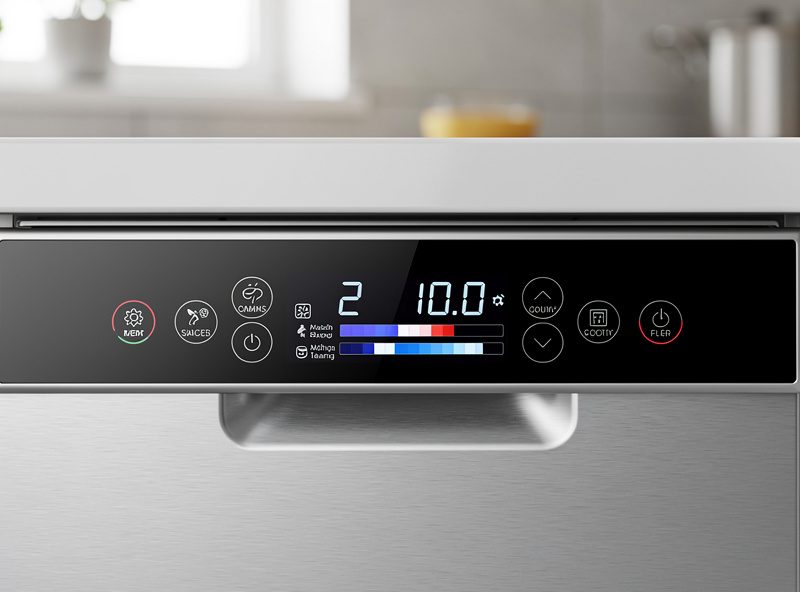
A smart dishwasher is a Wi-Fi connected dishwasher that pushes cycle-status notifications to your phone, accepts remote cycle start, and reports detergent and rinse-aid levels. The 2026 minimum viable feature set: cycle-end push, low-rinse-aid alert, remote cycle delay or start, and at least one major voice assistant integration. Premium tiers add machine-learning cycle selection, leak detection with auto-shutoff, and detailed energy reports.
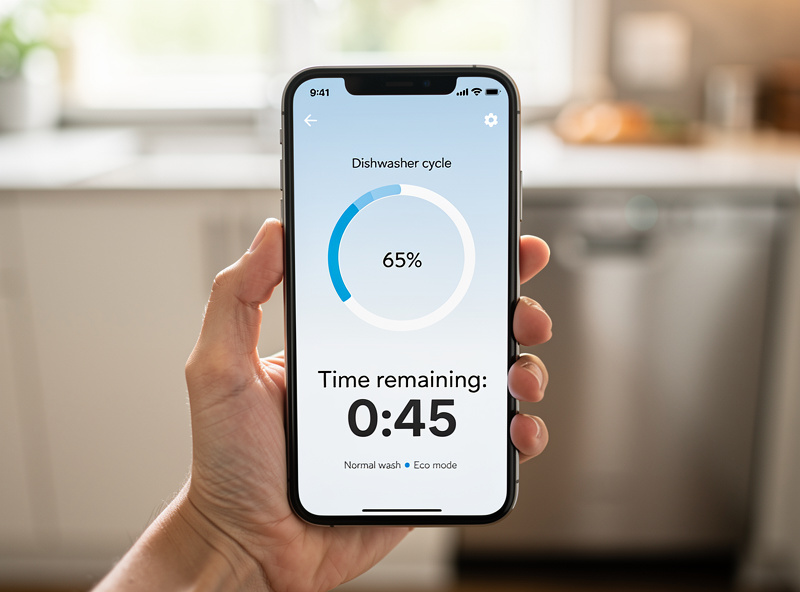
The single feature that earns the connected premium for most households is the cycle-end push notification. A standard dishwasher cycle takes 90-180 minutes; without a notification, owners typically check the door 2-4 times during the cycle, each check costing 30-90 seconds. A smart dishwasher push notification eliminates the checks — about 90 seconds saved per cycle, or roughly 9 hours per year for a household running a daily cycle.
Three Smart Dishwasher Tiers
| Tier | Price Range | Form Factor | Best Connected Feature |
|---|---|---|---|
| Connected Basic | $649-$899 | Standard 24-inch built-in | Cycle-end push + low-detergent alert |
| Connected Mid-Tier | $899-$1,299 | 24-inch built-in with third rack, 44 dB | Above + remote start + ML cycle selection |
| Premium Smart Built-In | $1,299-$1,799 | Fully integrated, 38-42 dB, steam wash | Above + leak auto-shutoff + energy reports |
Connected Basic is the right entry point for most renovating households. The $150-$300 premium over a non-smart equivalent buys cycle-end push, remote start, and detergent monitoring. Mid-tier adds third-rack flexibility and machine-learning cycle selection that adjusts wash time and water temperature based on soil sensors. Premium tier adds leak detection (which prevents the $1,500+ cost of a kitchen-floor flood) and steam wash cycles useful for serious entertainers.
Connected Features Ranked by Daily Value
1. Cycle-end push notification. Saves the 90-second “is it done?” check, runs roughly 365 times per year for daily-cycle households. Standard on every smart dishwasher.
2. Remote delayed start with time-of-use scheduling. Set the cycle to start at 12:30 AM during off-peak electricity pricing. The savings depend entirely on your utility’s peak/off-peak rate spread — see the worked example below — but it’s real money in any market with meaningful TOU pricing. Standard on smart dishwashers from 2023+ models.
3. Low rinse-aid and detergent alerts. Push notification when supplies run low, before the cycle starts running with degraded performance. Eliminates the cloudy-glasses problem from forgotten rinse-aid.
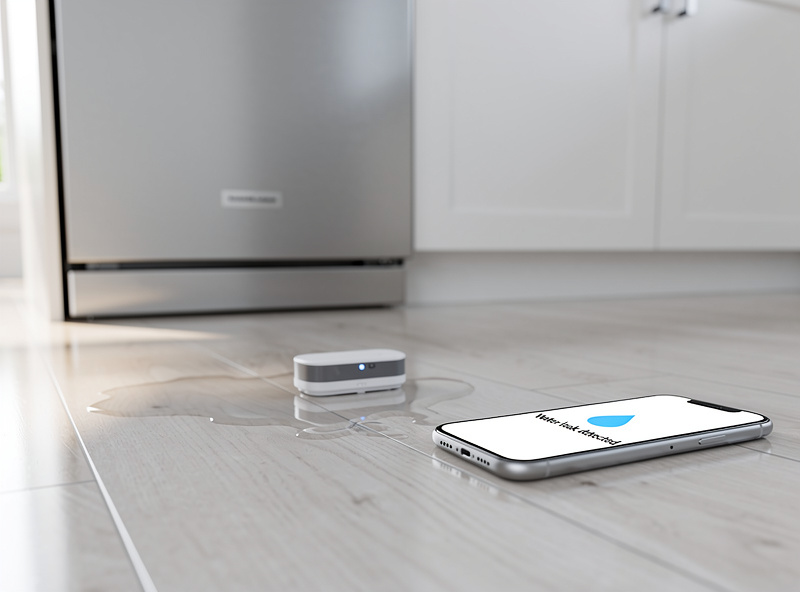
4. Leak detection with auto-shutoff (premium tier only). Bosch, Miele, and KitchenAid premium models include water-detection sensors that shut off the inlet valve and push an alert if a leak is detected. The $400-$600 premium pays for itself the first time it prevents a major leak — repair costs for water-damaged kitchen floors typically run $1,500-$5,000.
5. Machine-learning cycle selection. Soil sensors plus connected ML models adjust wash time, water temperature, and rinse cycles per load. Saves 5-12% water on lightly soiled loads, runs longer on heavy soils. Most useful for households with widely variable load types.
6. Voice control. Marginal usefulness for dishwashers — what voice command do you actually issue? “Cancel cycle” and “delayed start in 4 hours” are the only two that get used in practice.
Smart Dishwasher Ecosystem and Brand Reality
Bosch and Miele dominate the premium connected dishwasher category in 2026. Bosch Home Connect is the most refined dishwasher app on the market, with consistent firmware updates since 2020 and integration with both Alexa and Google Home. Miele MobileControl is similar in quality, with stronger Apple HomeKit support but a smaller US dealer network.
KitchenAid (Whirlpool sub-brand), GE Profile, and Samsung cover the mid-tier reliably. LG ThinQ is the strongest cross-platform option with native HomeKit support on 2024+ models. Frigidaire and budget brands offer connected basics but with less reliable apps and shorter firmware-support windows.
Matter has had a dishwasher device type since the Matter 1.2 specification shipped in late 2023, covering remote start, progress notifications, and fault alarms — but actual dishwasher-brand adoption of native Matter certification (rather than a proprietary app bridging into Alexa/Google/Home) has been slow, and as of 2026 most models on shelves still run their own cloud app rather than being natively Matter-certified.
Six Shopping Criteria for a Smart Dishwasher
1. Decibel rating at normal cycle. Smart features do not change machine noise. Premium smart models hit 38-42 dB (whisper-quiet, can run during dinner); mid-tier hits 44-46 dB; budget models 48-52 dB. Open-plan kitchens demand a sub-44 dB model; closed-kitchen households can save by going louder.
2. Energy efficiency tier. Smart features add 1-3 watts of standby draw, which is negligible. The big savings come from time-of-use scheduling, which only matters in markets with TOU electricity pricing. Verify ENERGY STAR Most Efficient certification.
3. Third-rack flexibility. Smart dishwashers in mid-tier and premium come with adjustable third racks for utensils. Mid-tier brands (KitchenAid, Bosch 500 series, Miele G7000) all include adjustable racks; budget connected models typically skip them.
4. App reliability and firmware update history. Bosch Home Connect has shipped firmware updates every 4-6 months since 2022. Miele MobileControl, LG ThinQ, and Samsung SmartThings follow similar cadences. Brands without firmware updates in the last 18 months have moved on from connected features.
5. Leak detection coverage. Premium smart dishwashers include leak sensors at the floor pan, inlet hose, and drain hose. Verify coverage on the spec sheet — some brands include only floor-pan sensors, missing the more common inlet-hose leaks.
6. Warranty on connected components. Most premium brands offer 5+ year coverage on the inverter motor and 1-3 years on the connected components. Budget brands often limit connected-component coverage to 1 year, which becomes expensive when the Wi-Fi module fails at year 4.
Energy and Operating Cost Reality Check
A standard dishwasher uses about 1.6 kWh per cycle for the wash and dry, plus 4-6 gallons of water (most modern dishwashers, smart or not). Smart dishwashers tied to time-of-use schedules save on the electricity portion by running during off-peak hours when rates drop — how much depends entirely on your utility’s actual rate spread. For a household with a 12-cent peak / 4-cent off-peak rate spread and 365 cycles per year, that works out to roughly $35-$50 in annual energy savings — meaningful payback on the $150-$300 connectivity premium over 4-6 years. Check your own utility’s published TOU rates before assuming any specific percentage savings; the spread varies enormously by region and plan.
Households without TOU pricing capture none of the energy savings. The push notification, remote start, and supply alerts are the only payback. Decide which features actually solve daily friction in your kitchen before paying the premium.
Smart Dishwasher Versus Smart Plug Plus Standard Dishwasher
The smart-plug shortcut works for some appliances but not for dishwashers. A standard dishwasher needs to be powered on, the cycle selected, and the door securely closed before pressing start — none of which a smart plug can automate. The cycle-start button on a non-smart dishwasher requires a physical press; cutting power with a smart plug does not start a cycle.
If you want the connected features, you need an actually-connected dishwasher. The cheapest meaningful smart-plug use case for kitchen appliances is morning coffee makers. For dishwashers, accept the $150-$300 premium for the connected model. See the broader category context in the smart kitchen appliances guide.
Checking Your Own Utility’s TOU Rates Before You Buy for the Savings
Before paying extra for a dishwasher specifically because of the time-of-use scheduling story, pull up your actual electric bill or your utility’s rate schedule and find the real peak and off-peak numbers, not a number from a buying guide. Utilities publish this on their rate-plan pages, and the spread varies enormously by region and even by plan within the same utility — some markets have a wide, worthwhile gap between peak and off-peak, and others barely bother tiering residential rates at all. A connected dishwasher bought purely for the energy-shifting angle in a flat-rate market is money spent for a feature you’ll never actually benefit from.
If your utility does offer real TOU pricing, the delayed-start feature is genuinely one of the more useful smart-kitchen automations, because it requires zero ongoing attention once it’s set — load the dishwasher after dinner, set it to start at your utility’s off-peak window, and never think about it again. That’s a meaningfully different value proposition than a feature like an inside-fridge camera that only pays off if you remember to use it every time you’re at the store. I treat this as one of the few genuinely load-bearing smart-kitchen features rather than a nice-to-have, precisely because it runs on autopilot once configured.
The other appliance in the house where the same off-peak logic pays off without any daily thought is the dryer, if yours has delayed-start scheduling — the two together cover most of a household’s shiftable evening electricity load. Everything else in the kitchen is either always-on (the fridge) or too short a cycle to matter (the coffee maker, the toaster), which is exactly why the dishwasher and the laundry machines are where the TOU story is actually worth chasing instead of a marketing bullet point on a spec sheet. Check both against your real rate schedule together before deciding either purchase is worth the connected premium on energy grounds alone — it’s a ten-minute exercise that turns a marketing claim into an actual household budget number instead of a guess borrowed from somewhere else entirely, and it’s the same habit worth applying to every energy-savings claim a spec sheet or a buying guide tries to sell you on, this one included.
Frequently Asked Questions
Is a smart dishwasher worth it?
A smart dishwasher is worth the $150-$300 premium for households running a daily cycle, especially in markets with a meaningful time-of-use peak/off-peak rate spread. The cycle-end push alone saves about 9 hours per year of waiting and checking. Single-cycle-per-week households rarely capture enough payback to justify the premium.
What is the best smart dishwasher brand?
Bosch leads the premium connected category with the most refined app (Home Connect) and consistent firmware updates since 2020. Miele matches on quality with stronger Apple HomeKit support. KitchenAid and GE Profile are the strongest mid-tier options. LG ThinQ has the best native cross-platform support including HomeKit on 2024-plus models.
Can you start a smart dishwasher remotely?
Yes — every smart dishwasher worth buying lets you start a cycle remotely once the door has been physically closed and locked. The door-closed safety lockout cannot be bypassed remotely. The most common remote use case is delayed start: load the dishwasher in the evening and schedule the cycle for 12:30 AM during off-peak electricity hours.
Do smart dishwashers really save energy?
Yes when paired with time-of-use electricity pricing — the actual savings depend on your utility’s specific peak/off-peak rate spread, so check your own bill rather than assuming a fixed percentage. Without TOU pricing, machine-learning cycle selection can trim some water and energy on lightly soiled loads, though the effect is modest. Standalone smart features (push, voice, supply alerts) save no energy directly.
Will a smart dishwasher work without internet?
Yes — every smart dishwasher continues to wash, rinse, and dry from the front-panel controls when internet is down. You lose remote start, push notifications, voice control, and any cloud-dependent features. Bosch Home Connect and Miele MobileControl both retain offline access to local cycle controls; budget brands sometimes degrade more visibly during outages.
How long do smart dishwashers last?
Premium smart dishwashers (Bosch, Miele) last 12-15 years with the inverter motor; mid-tier smart dishwashers last 8-12 years; budget smart dishwashers last 7-10 years. Connected components (Wi-Fi modules, displays) typically need replacement at year 5-8 if they fail at all. Plan for one connected-component repair in the 10-15 year ownership window.
Related Articles
- Smart Kitchen Appliances 2026: Complete Buyers Guide (parent hub)
- Smart Refrigerator 2026: 4 Tiers Compared
- Best Smart Home Energy Management Systems
- Smart Thermostat Save Money
- Best Smart Home Accessories 2026