Smart Humidifiers: Whole-Home and Room Picks
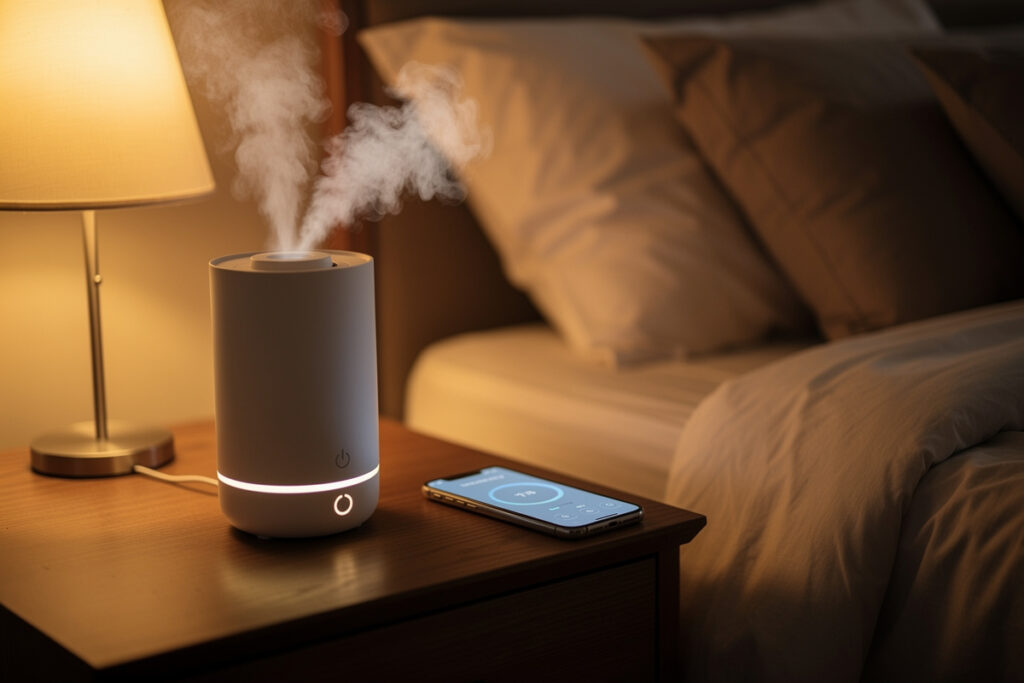
Smart humidifiers add 1 to 6 liters of water vapor per day to indoor air, reading humidity from the room and ramping up when it drops below your target setpoint. Indoor humidity below 30 percent (typical for winter heating in cold climates) causes dry skin, sore throats, static shocks, and worsened cold/flu symptoms (Mayo Clinic). The right smart humidifier holds 4 to 6 liters, integrates with Alexa or Google, costs $75 to $150, and pairs with a humidity sensor for room-level closed-loop control.
As an Amazon Associate I earn from qualifying purchases.
Quick Answer: Best Smart Humidifier 2026
For a bedroom-sized room (200 to 400 sqft), the Levoit Classic 300S ($90) is the value pick — 6L tank, ultrasonic cool mist, app and Alexa support, target setpoint, 60-hour run time on low. For larger spaces (600+ sqft) or whole-floor humidification, Levoit OasisMist 1000S ($150) covers more area. For top-fill convenience, Dreo HM713S ($120) lets you refill without removing the tank.
Do You Actually Need a Humidifier?
Indoor humidity targets: 40 to 50 percent year-round, 30 to 50 percent acceptable. Below 30 percent: dry mucous membranes, more colds, dry skin, cracked nail beds, electrostatic damage to electronics, wood furniture cracking. Above 60 percent: dust mites, mold risk, condensation on cold surfaces.
If you don’t already own a humidity sensor (cheap option: hygrometer $10, smart option: smart sensor $20-30), buy one before you buy a humidifier. Two weeks of data tells you whether you need humidification, dehumidification, or neither.
Climates that almost always need winter humidification: Boston, Chicago, Minneapolis, Denver, Calgary, Stockholm, all of New England, all of the Midwest, Mountain West. Climates that almost never need it: Florida, Houston, New Orleans, Seattle (rarely below 35 percent), Vancouver.
For the sensor side, see the Smart Humidity Sensor for Basement guide — the same sensors track upstairs humidity for whole-home awareness.
Cool Mist vs Warm Mist vs Evaporative
| Type | How It Works | Pros | Cons | Best For |
|---|---|---|---|---|
| Ultrasonic Cool Mist | Vibrates water into mist | Quiet, energy-efficient, smart features common | White mineral dust if hard water; needs cleaning | Most homes |
| Evaporative | Fan blows air through wet wick | No white dust, self-regulates humidity | Wick needs replacement, larger footprint | Hard-water areas, kids’ rooms |
| Warm Mist | Boils water, releases steam | Sterile output, slightly warming | Burn risk, energy-heavy | Adult-only spaces with no pets |
| Vaporizer | Boils water with eucalyptus tray | Cold relief | Burn risk, single-use | Sick days only |
For homes with kids, pets, or anyone who might bump into the unit, choose ultrasonic or evaporative. Skip warm mist.
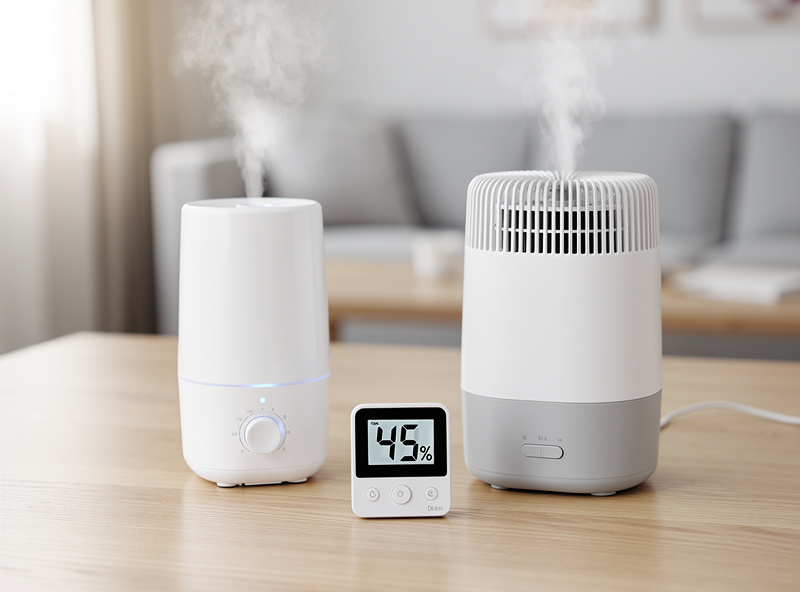
Top Smart Humidifier Picks 2026
Levoit Classic 300S — $90
The Levoit Classic 300S is the workhorse pick for most homes. 6L tank holds 60 hours on low, 25 hours on high. Ultrasonic cool mist with two settings plus auto mode. App control, Alexa, Google. Auto mode targets a humidity setpoint (45 percent) and ramps up or down based on the built-in sensor.
The Levoit app is one of the better humidifier apps — schedules, sleep mode, low-water alerts, run-time stats. Pairs with VeSync ecosystem so multiple Levoit devices share one app.
Drawback: the built-in sensor reads humidity at the device, not at the bed or far end of the room. Pair with a separate smart humidity sensor for accuracy.
Levoit OasisMist 1000S — $150
For larger rooms (450 to 750 sqft), open-plan studios, or whole-floor humidification. 6.5L tank, smart features, top-fill design. The “1000” in the name refers to mL/hour output rate.
Dreo HM713S — $120
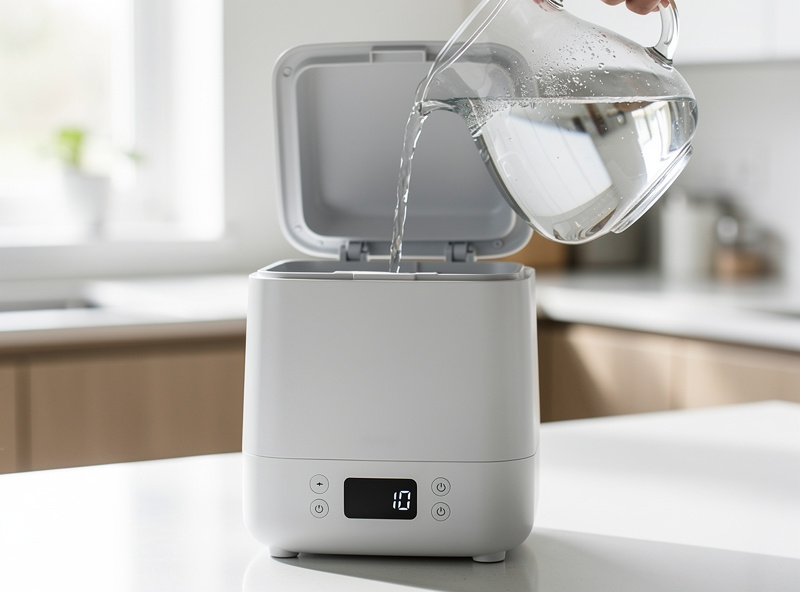
Top-fill design — open the lid and pour water in without removing the tank. 4L capacity, 50-hour run time on low. Smart app + Alexa. Quieter than Levoit at low setting (28 dB vs 32 dB). Good pick for nightstand placement next to a sleeping partner.
Govee H7160 — $75
Budget pick. 4L tank, ultrasonic, app + Alexa + Google. App is less polished than Levoit but functional. Good first humidifier if you don’t want to commit to a $100+ device.
Vornado Evap40 — $130 (manual, not smart)
Listed for context: not smart, but the gold standard for evaporative humidifiers. If you live in a hard-water area and you keep getting white mineral dust on furniture from your ultrasonic, this is the answer. No app, but works flawlessly.
Tank Size and Run Time
Tank size determines how often you refill. The math:
- 2L tank → 12-15 hours on medium → daily refill
- 4L tank → 30-40 hours on medium → every 1-2 days
- 6L tank → 50-60 hours on medium → every 2-3 days
- 8L+ tank → 80+ hours on medium → every 3-4 days
For nightstand use, prioritize quiet over capacity — a 2L unit refilled daily is fine. For living-room or whole-floor use, 6L+ is standard.
Smart Features That Actually Matter
Target humidity setpoint. The single most useful smart feature. Set 45 percent, and the device ramps up or down to maintain that level. Without setpoint control, you’re either over-humidifying (mold risk above 60 percent) or under-humidifying (dry symptoms remain).
External sensor pairing. Some smart humidifiers can read humidity from a separate sensor (the Levoit smart sensor, the Govee H5052) instead of their built-in sensor. This lets the device target humidity at your bed or your seating area, not at the device location 6 feet away.
Low-water alerts. Push notification when tank is below 25 percent — saves you from waking up to a dry room.
Schedule and routines. Run from 9 PM to 8 AM, off during the day, or pair with bedtime routine. Most apps support this.
Voice control. “Alexa, set bedroom humidifier to 45 percent” — useful occasionally but not daily.
For broader voice and routine integration, see the Voice Assistants and Smart Home Protocols guide.
Smart Features You Can Skip
Built-in essential oil diffuser. Most humidifiers warn that adding oils voids the warranty and clogs the ultrasonic disc. Skip this feature.
Color-changing night light. Cute, but most users disable it within a week.
Subscription apps. A few off-brand units gate features behind monthly subscriptions. Avoid.
Maintenance: The Real Cost
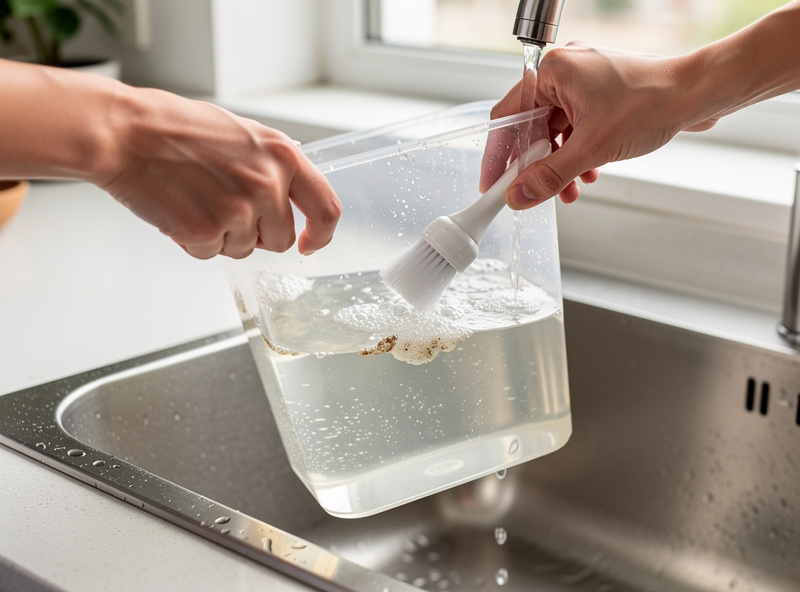
EVERY humidifier needs weekly cleaning. The protocol:
- Empty tank and base. Disassemble parts that touch water.
- Soak in 1:1 white vinegar/water for 20 minutes (kills mineral buildup).
- Brush ultrasonic disc gently with a soft toothbrush.
- Rinse thoroughly with clean water until vinegar smell is gone.
- Refill with distilled water if your tap water is hard (mineral content above 120 ppm). Distilled is $1.50/gallon at grocery stores.
Skip cleaning and you’re aerosolizing bacteria, mold spores, and biofilm. Humidifier lung (hypersensitivity pneumonitis) is a documented medical condition caused by inhaling pathogens from poorly maintained units.
If you cannot commit to weekly cleaning, choose evaporative (the wick filter is the bacteria barrier — replace every 1 to 3 months at $7-15) instead of ultrasonic.
Common Mistakes
Running humidifier without a setpoint. Without target humidity, you eventually push past 60 percent and start growing mold on cold walls and windowsills.
Placing on carpet or wood. Mist falls back as condensation around the unit. Use a waterproof tray or hard surface.
Using tap water with a high mineral count. The ultrasonic disc grinds minerals into airborne dust that coats furniture and electronics. Use distilled or invest in evaporative.
Buying tiny units for big rooms. A 2L humidifier in a 600 sqft living room cannot move humidity above ambient by more than a few percent. Match capacity to space.
For climate-aware automation, see the Best Smart Thermostat guide — modern smart thermostats coordinate humidifier output with HVAC cycles.
My Humidifier Integration
I run a smart plug on a warm-mist humidifier in the bedroom, tied to a Zigbee humidity sensor through Home Assistant. When bedroom humidity drops below 35%, common in Swedish winters when heating dries everything out, the humidifier turns on and runs until the sensor reads 45%. That 10-point band prevents short-cycling and keeps the room in the comfort zone overnight without manual intervention.
The integration took five minutes: smart plug on the humidifier, humidity sensor on the nightstand, one HA automation with high and low thresholds. The difference in sleep quality and morning dry-throat symptoms was immediate. The only maintenance is refilling the tank every two days in peak winter.
What is the best smart humidifier for 2026?
For most rooms 200 to 400 sqft, the Levoit Classic 300S ($90) is the best value: 6L tank, ultrasonic cool mist, app and Alexa, target humidity setpoint, 60-hour run time. For larger areas, the Levoit OasisMist 1000S ($150) covers up to 750 sqft.
How does a smart humidifier work?
A smart humidifier reads humidity from a built-in or paired sensor and ramps mist output up or down to hit a target setpoint (typically 45 percent). It connects via wifi to an app for control, scheduling, and integration with Alexa, Google Home, or HomeKit.
Is a smart humidifier worth it over a regular one?
Yes if you want consistent humidity (target setpoint feature is the key benefit), low-water alerts, and integration with smart sensors or thermostats. The smart layer adds about $20 to $40 over a comparable manual unit, recouped in convenience and accuracy within months.
Should I use distilled water in a smart humidifier?
Yes for ultrasonic models if your tap water is hard (above 120 ppm). Distilled prevents white mineral dust from coating furniture and electronics. Evaporative humidifiers tolerate hard tap water because the wick filter traps minerals.
Can humidifiers cause mold?
Yes if you over-humidify above 60 percent or fail to clean weekly. Maintain humidity at 40 to 50 percent and clean the tank with vinegar weekly. Humidifier lung from inhaling mold spores from a dirty unit is a documented medical condition.
What humidity should I set my smart humidifier to?
45 percent for most homes year-round. The Mayo Clinic recommends 30 to 50 percent. Below 30 percent causes dry symptoms; above 60 percent risks mold. Set your target to 45 percent and let the auto mode hold steady.
The warm-mist vs cool-mist choice matters for automation: warm-mist units heat water internally and draw more power (typically 150-300 watts), while cool-mist ultrasonic models sip power (under 30 watts) but need filter replacement more often. For a smart-plug setup, the warm-mist unit’s higher power draw is fine since the plug handles it and the energy monitoring gives you real cost data per cycle.
Related Articles
- Smart Air Purifier 2026: Complete Buyers Guide
- Smart Humidity Sensor for Basement
- Best Smart Home Sensors
- Voice Assistants and Smart Home Protocols
- Smart Home for Beginners