Smart Air Purifier 2026: Complete Buyers Guide
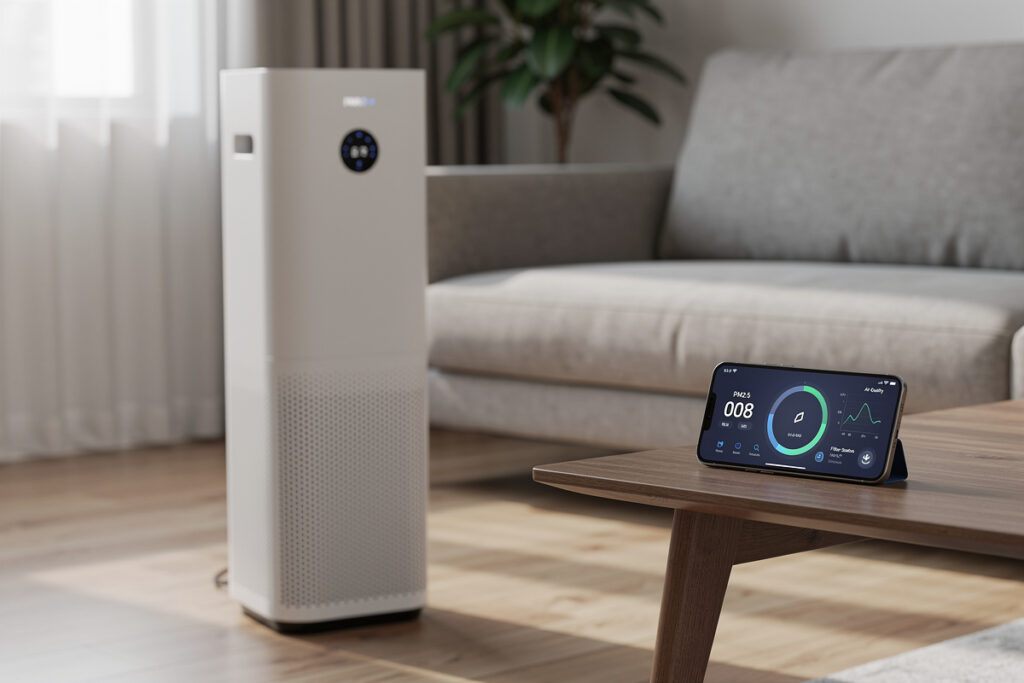
A smart air purifier in 2026 costs $150 to $700, runs from your phone, integrates with Alexa or Google Home, and reports indoor PM2.5 in real time. The category exploded post-pandemic — the EPA estimates indoor air is 2 to 5 times more polluted than outdoor air, and air-treatment devices have gone from a niche purchase to a mainstream one in millions of US households. This guide covers what “smart” means in this category, the four core products (purifier, humidifier, dehumidifier, fan/AC), how they integrate, and the picks worth your money in 2026.
Disclosure: HomeAutoCentral is reader-supported. As an Amazon Associate I earn from qualifying purchases, at no extra cost to you. I only recommend gear worth your money.
Quick Answer: What Smart Air Devices Do You Actually Need?
Most homes need exactly two: a smart air purifier sized for your largest room (bedroom or living room) and either a smart humidifier (winter dry air, below 30 percent RH) or smart dehumidifier (summer/basement, above 60 percent RH). Skip the smart fan unless you live somewhere without central AC. Total spend for a sensible 2-room setup: $300 to $600. Brands worth considering: Levoit, Coway, Dyson, Blueair (purifiers); Levoit, Govee (humidifiers); Frigidaire, Midea (dehumidifiers).
What Makes an Air Device “Smart”?
Three features qualify a device for smart-home integration:
- App control — power, fan speed, mode, schedule from a phone app. The bare minimum.
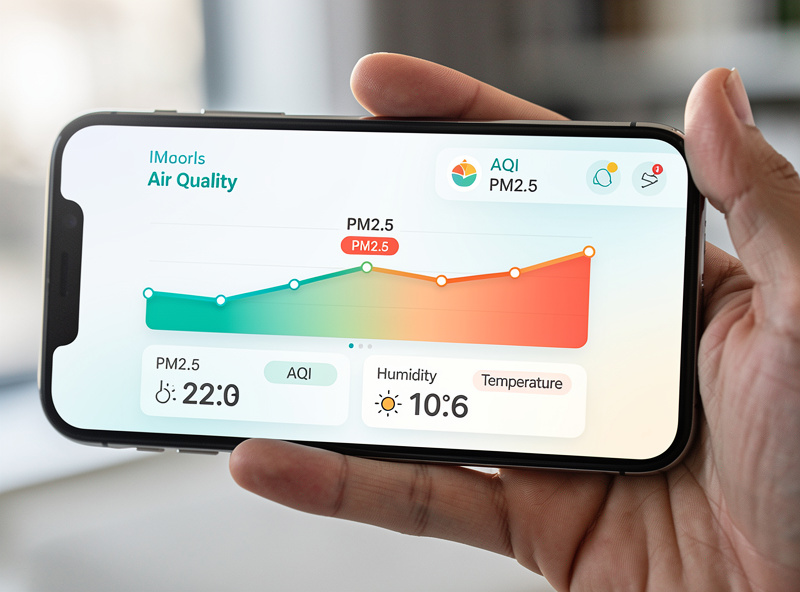
- Sensor reporting — real-time PM2.5, VOCs, humidity, or temperature reported back to the app and automation systems.
- Voice and ecosystem integration — Alexa, Google Home, Apple HomeKit, SmartThings, or Home Assistant.
A device with only #1 (app control) is “connected,” not really smart. The real value comes from #2 — sensor reporting that lets your smart home automate based on indoor air quality. For example: PM2.5 above 35 µg/m³ triggers the purifier to high speed and the smart vent to close until levels drop.
For the broader sensor side of this loop, see the Best Smart Home Sensors guide — many smart purifiers piggyback on standalone air quality monitors for richer data.
The Four Core Smart Air Devices
| Device | Job | Price Range | Top 2026 Picks | Replace Filter Every |
|---|---|---|---|---|
| Air Purifier | Remove PM2.5, smoke, dust, allergens | $150-$700 | Levoit Vital 200S, Coway 200M, Blueair 311i Max | 6-12 months |
| Humidifier | Add moisture (winter, dry climate) | $80-$250 | Levoit Classic 300S, Govee H7160 | Filter 1-3 months / clean weekly |
| Dehumidifier | Remove moisture (basement, summer) | $200-$500 | Frigidaire Gallery, Midea Cube | No filter / clean monthly |
| Fan / AC | Move air or cool | $60-$700 | Dreo MC710S (fan), Midea U-shaped (AC) | None / clean filters |
Smart Air Purifiers: The Most Important Device
The smart air purifier is the single most useful smart air device for most homes. PM2.5 (particulate matter under 2.5 microns) is the leading indoor pollutant — comes from cooking, dust, pet dander, candles, fireplaces, and outdoor smoke infiltration. The American Lung Association reports that long-term PM2.5 exposure correlates with cardiovascular disease, asthma, and reduced cognition.
A correctly sized purifier moves room air through a HEPA filter that captures 99.97 percent of particles 0.3 microns or larger. CADR (Clean Air Delivery Rate) measures effectiveness in cubic feet per minute. AHAM’s sizing rule is to match CADR to at least two-thirds of room floor area: 100 sqft room needs 65 CADR, 300 sqft needs 200 CADR, 600 sqft needs 400+ CADR.
Smart features that matter: real-time PM2.5 readout, auto mode that ramps fan based on sensor data, and integration with your home ecosystem. Skip wifi-only models without sensors — you’re paying smart pricing for connected pricing’s job.
Top 2026 picks:
- Levoit Vital 200S — 380 sqft coverage, PM2.5 + VOC sensors, Alexa/Google, auto mode.
- Coway Airmega 200M Smart — 361 sqft, dual filtration (HEPA + carbon), excellent build quality, popular Reddit pick.
- Blueair 311i Max — around 400 sqft per Blueair’s own listing, HEPASilent technology (very quiet), strong app, premium feel.
- Dyson Purifier Cool TP07 ($550) — purifier + tower fan combo, premium app, but expensive per CADR.
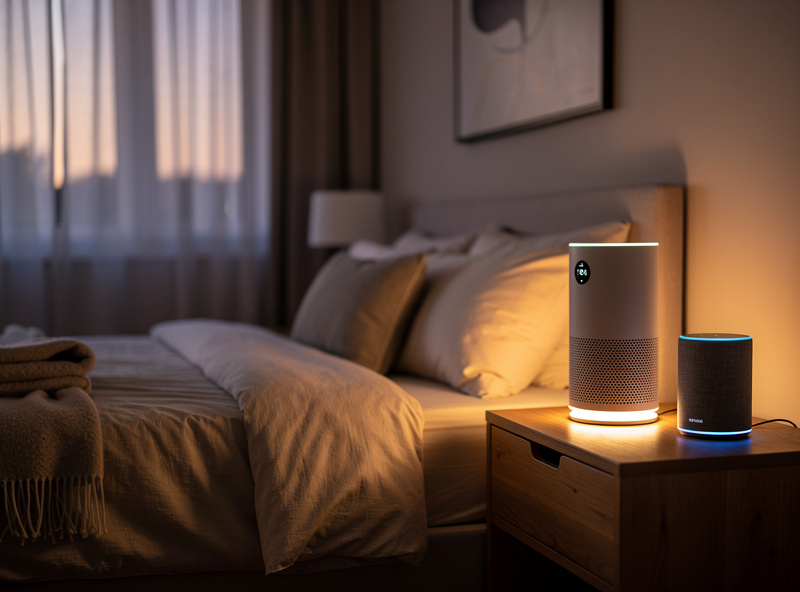
If your concern is whole-house allergen reduction, place purifiers in the bedroom and the largest room you spend time in, NOT the kitchen (cooking smoke overwhelms small purifiers). A bedroom unit running on auto overnight makes the biggest measurable health impact.
Smart Humidifiers: For Dry Winter Air
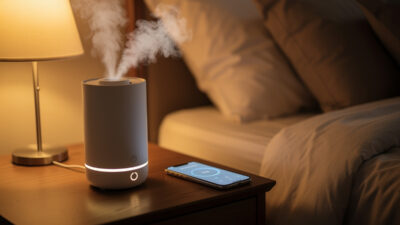
If indoor humidity drops below 30 percent (typical for winter heating in cold climates), a smart humidifier helps with skin irritation, respiratory comfort, sleep quality, and static electricity. The smart layer adds: target humidity setting (45 percent recommended), warning before water tank empty, and integration that links to a humidity sensor for room-level control.
Two types: ultrasonic (cool mist, quiet, easy to clean) and evaporative (warm or cool, no white mineral dust, more maintenance). Skip warm-mist humidifiers in homes with kids or pets — burn risk is real.
Top picks:
- Levoit Classic 300S — 6L tank, ultrasonic cool mist, app + Alexa, target humidity setpoint, 60-hour run time.
- Govee H7160 Smart Humidifier ($75) — affordable, app + Alexa + Google, basic but reliable.
- Dreo HM713S ($120) — top-fill design (no removing tank), 4L, smart features.
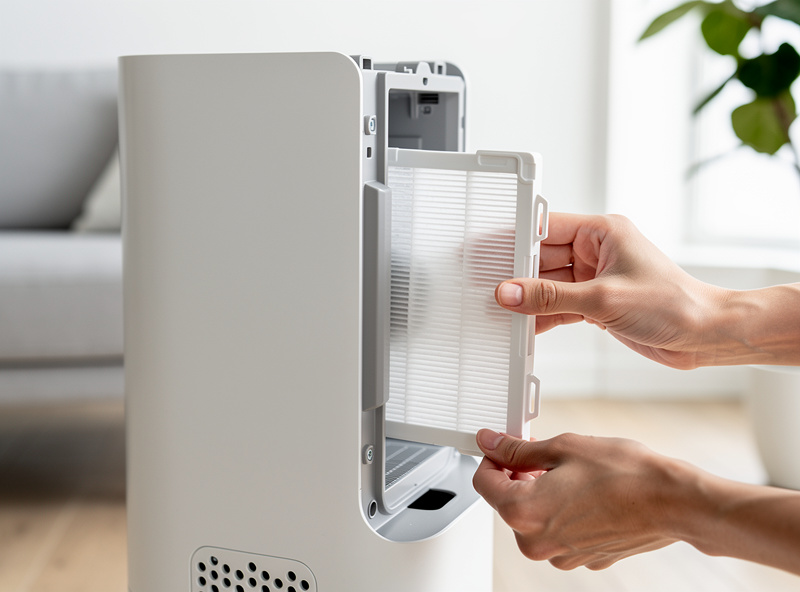
Maintenance reality: ALL humidifiers need weekly cleaning. White vinegar soak for the tank, brush the wick or membrane, refill with distilled water if your tap water is hard. Skip cleaning and you’re aerosolizing bacteria. The “smart” features don’t solve the cleaning problem.
Smart Dehumidifiers: For Summer and Basements
If indoor humidity climbs above 60 percent (typical for humid climates, basements, or summer in much of the US), a dehumidifier prevents mold, dust mites, and the musty smell that signals trouble. Smart dehumidifiers add target setpoint, automatic shutoff when reservoir is full, and pump-out drain options for unattended basement use.
Sizing: pints per day. Small bedroom (300 sqft) needs 20 pints/day. Average basement (1500 sqft) needs 35 to 50 pints/day. Whole-house humid (4000+ sqft) needs 70+ pints/day.
- Frigidaire Gallery FGAC5044W1 ($350) — 50 pint/day, smart wifi, Energy Star, pump option.
- Midea Cube — 50 pint/day, integrated drain pump, smart features. Strong picks for finished basements.
- hOmeLabs HMM4000A ($290) — 35 pint/day, basic smart features, value pick.
The thermostat side of climate control is covered in the Best Smart Thermostat guide — pair a smart dehumidifier with a thermostat that runs HVAC fan-only mode for whole-home dehumidification.
Smart Fans and Smart AC Units
Smart fans are useful in homes without central AC, in bedrooms (timed sleep), or as supplements during heat waves. Most smart fans are tower fans or pedestal fans with app control, voice integration, and oscillation patterns.
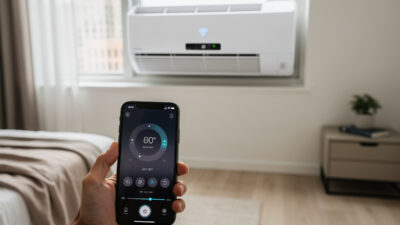
Smart window AC units are now the norm — even budget models include wifi. The smart layer means you can pre-cool your bedroom 30 minutes before bedtime from your phone, set vacation mode, and integrate with home routines.
- Dreo MC710S Tower Fan — 25 dB, 8-hour timer, app/voice, premium build.
- Midea U-Shaped Window AC ($350-$700 depending on BTU) — installs around the window so you can still open it, smart wifi, 35 percent quieter than typical.
- LG Smart Window AC ($300-$500) — 8000-15000 BTU options, ThinQ app, dependable.
The smart ceiling fan category exists but is small. Hunter, Big Ass Fans, and Haiku are the brands. Expect $200 to $800. Worth it only if you don’t already have a hardwired fan you like.
Ecosystem Integration: Alexa, Google, HomeKit, SmartThings
All four major smart air categories integrate with Alexa and Google Home. Apple HomeKit support is more selective — Levoit, Coway, and Dyson have limited HomeKit support. Home Assistant (the enthusiast platform) integrates broadly via various community plugins.
| Brand | Alexa | HomeKit | SmartThings | Matter | |
|---|---|---|---|---|---|
| Levoit | Yes | Yes | Limited | Yes | Roadmap 2026 |
| Coway | Yes | Yes | No | Limited | No |
| Dyson | Yes | Yes | Yes | Yes | No |
| Blueair | Yes | Yes | No | Limited | Roadmap |
| Frigidaire | Yes | Yes | No | Yes | No |
| Govee | Yes | Yes | Limited | Limited | Roadmap |
For deeper protocol context, see the Voice Assistants & Smart Home Protocols guide — Matter is the protocol that will eventually unify these in 2026 and beyond.
What to Avoid
Ozone-generating purifiers. Some “ionizers” produce ozone, which is lung-irritating and not recommended by the EPA at any level. Buy HEPA-only.
Tiny under-spec purifiers. A purifier rated for 100 sqft in a 400 sqft room is theater. Match CADR to actual room area.
Filterless “purifiers.” They typically just use UV or ionization without HEPA capture. They cannot remove particulate matter at any meaningful rate.
Subscription-only smart features. A few brands gate sensor data behind a $5-10/month app subscription. Skip — Levoit, Coway, and Blueair give you full sensor access in the free app.
Warm-mist humidifiers in homes with kids. Burn risk. Use cool-mist ultrasonic or evaporative.
Generic Amazon-brand “smart” devices with no support. When the wifi changes or the app updates, your device can become a brick. Stick to brands with 3+ year app track record.
Real-World Automation Examples
The point of smart air devices is the automation. Three real setups:
Smoke Season Auto-Defense: If outdoor air quality (from a Purple Air sensor or weather API) hits PM2.5 above 50, automatically close all smart vents, set the thermostat to recirculate, and run all purifiers on max. Reverses when outdoor levels drop below 25.
Bedroom Sleep Routine: 30 minutes before bedtime, the bedroom purifier ramps to medium, the humidifier targets 45 percent RH, the smart fan oscillates at 25 percent. All shut off at 6 AM as the smart blinds open.
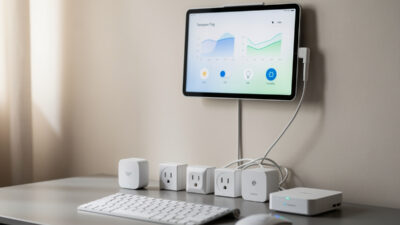
Cooking Spike Cleanup: Stove vent triggers (via smart plug current sensor) detect cooking, automatically setting the kitchen-area purifier to max for 30 minutes after the burner turns off.
For the smart sensor stack that drives these automations, see the Best Smart Home Energy Management Systems guide — current-sensing smart plugs are the trigger technology.
Total Cost of Ownership
| Setup | Hardware | Annual Filters | Annual Electricity | 5-Year Total |
|---|---|---|---|---|
| 1 purifier (bedroom) | $230 | $60 | $25 | $655 |
| 2 purifiers + humidifier | $540 | $140 | $60 | $1,540 |
| 2 purifiers + dehumidifier | $650 | $60 | $120 | $1,550 |
| Full home (3 purifier + humid + dehumid + 1 fan) | $1,200 | $200 | $200 | $3,200 |
Are smart air purifiers worth it?
For most households yes, especially in bedrooms used 8+ hours nightly and in homes with allergies, pets, smoke exposure, or wildfire seasons. The smart layer adds real automation value when paired with PM2.5 sensors. Under lab conditions a correctly sized HEPA purifier can reduce PM2.5 by roughly 50 to 90 percent, though real-world results run lower depending on room sealing and placement.
What is the best smart air purifier for 2026?
For value, the Levoit Vital 200S at $230 covers 380 sqft with HEPA, dual sensors, Alexa/Google, and a strong app. For premium use, the Blueair 311i Max ($350) is exceptionally quiet and covers around 400 sqft. Coway Airmega 200M ($300) is the Reddit favorite for build quality.
Do smart humidifiers actually need wifi?
The wifi adds value mainly through target humidity setpoints (45 percent), low-water alerts, and integration with humidity sensors. A non-smart humidifier you remember to refill works just as well — the smart layer is convenience, not air-quality improvement.
How big should my smart air purifier be?
Match CADR (Clean Air Delivery Rate) to room square footage at the right air-changes-per-hour rate. 100 sqft room needs about 65 CADR. 300 sqft room needs 200 CADR. 600 sqft room needs 400+ CADR. Always size up rather than down.
Can smart purifiers remove COVID and viruses?
HEPA filters capture 99.97 percent of particles 0.3 microns and larger. SARS-CoV-2 is around 0.1 microns but typically travels on larger respiratory droplets/aerosols. A CDC-led controlled study found HEPA air cleaners reduced exposure to simulated exhaled SARS-CoV-2 aerosols by up to 65 percent alone, and 90 percent combined with masking. They reduce risk; they do not eliminate it.
What smart air device should I buy first?
A smart air purifier sized to your bedroom. The bedroom is where you spend the most contiguous hours of the day, where particulate exposure most affects sleep and recovery, and where the auto-mode plus PM2.5 sensor returns the most measurable benefit per dollar.
Do smart air devices integrate with Matter?
Most do not yet support Matter as of 2026. Levoit, Blueair, and Govee have publicly announced Matter roadmaps. Existing Wi-Fi-based smart air devices use Alexa, Google Home, SmartThings, and HomeKit (selectively) for ecosystem integration.
Smart Air Quality & Climate Cluster
Each of the four core devices has its own deep-dive guide:
- Smart Humidifiers: Whole-Home and Room Picks — Levoit Classic 300S, Dreo HM713S, target setpoints, and weekly cleaning protocols.
- Smart Dehumidifiers: Basement and Crawlspace Picks — Midea Cube, Frigidaire Gallery, BTU sizing, drain options, real-world cost.
- Smart Fans: Tower, Pedestal, and Ceiling Picks — Dreo MC710S, Govee, Hunter, sleep mode, HVAC coordination.
- Smart AC Units: Window and Portable Smart Conditioners — Midea U-Shaped, LG ThinQ, BTU sizing, inverter compressor savings.
Related Articles
- Best Smart Home Sensors
- Best Smart Thermostat 2026
- Voice Assistants and Smart Home Protocols
- Best Smart Home Energy Management Systems
- Smart Home for Beginners