Best Smart Home Sensors 2026: Complete Buyer’s Guide

Smart home sensors are the invisible nervous system of modern home automation, monitoring everything from water leaks to air quality and sending instant alerts to your phone. The best smart home sensors of 2026 include water leak detectors that can help you avoid a water-damage claim — the Insurance Information Institute puts the average water damage claim well into five figures — smoke detectors with phone alerts, and air quality monitors tracking PM2.5 particles. A complete sensor network costs $100-300 and, per several major insurers, can qualify for premium discounts, typically in the 5-15% range depending on carrier and device.
Disclosure: HomeAutoCentral is reader-supported. As an Amazon Associate I earn from qualifying purchases, at no extra cost to you. I only recommend gear worth your money.
Sensors are the category that separates a house full of app-controlled gadgets from an actual smart home. In my setup, I run mmWave presence sensors in the living room and office (so lights stay on when someone is sitting still reading, not just when they’re walking), Zigbee temperature and humidity sensors in every grow tent and curing chamber, and door/window sensors on every exterior opening. The automation that earns its keep the most: the bathroom exhaust fan kicks on when humidity spikes above 65% and off when it drops below 50% — zero mold issues in three years. Here’s how to build a sensor network that actually does work.
Why Smart Home Sensors Matter in 2026
Home insurance claims from undetected problems cost homeowners billions annually. Smart sensors catch these issues before they become disasters:
- Water damage: Average $12,000 per incident — leak detectors alert within seconds
- Fire damage: Smart smoke detectors alert your phone even when you are away
- Mold remediation: $2,000-6,000 per treatment — humidity sensors prevent it
- Poor air quality: VOCs and PM2.5 particles cause respiratory issues — monitors detect them
- Break-ins: Window and door sensors trigger instant security alerts
Unlike traditional alarms that only sound locally, smart sensors integrate with your entire home automation system — turning on lights, closing valves, and notifying emergency contacts automatically.
Types of Smart Home Sensors
A comprehensive smart home sensor network covers six critical areas:
Water Leak Detection
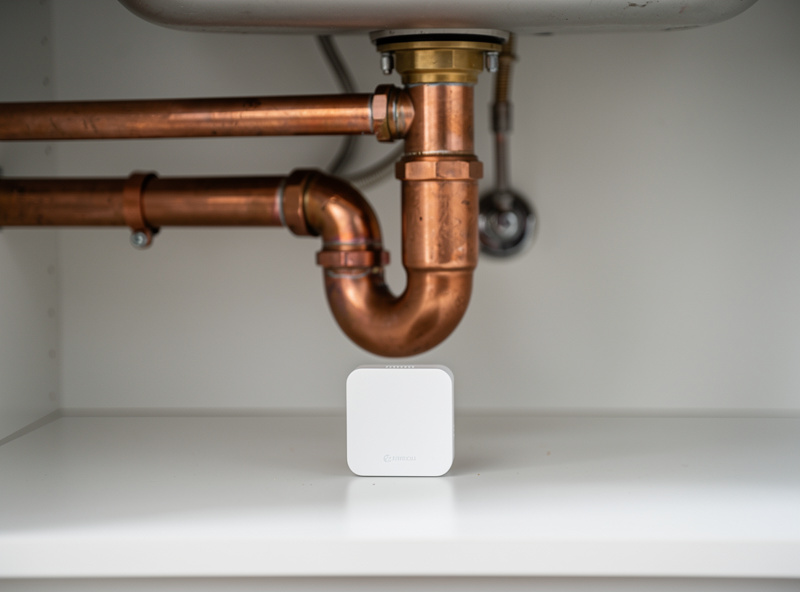
Water leak detectors use probe, float, or capacitive sensors to detect moisture near water heaters, washing machines, and under sinks. Top models like the Govee H5051 and Ring Flood and Freeze Sensor ($35) provide 100dB onboard sirens and instant phone notifications. Battery life ranges from 2-5 years depending on protocol. The average water damage claim costs $12,000, making leak detectors the highest-ROI sensor you can install. See the complete guide to smart water leak detectors for detailed comparisons.
Smoke and Carbon Monoxide Detection
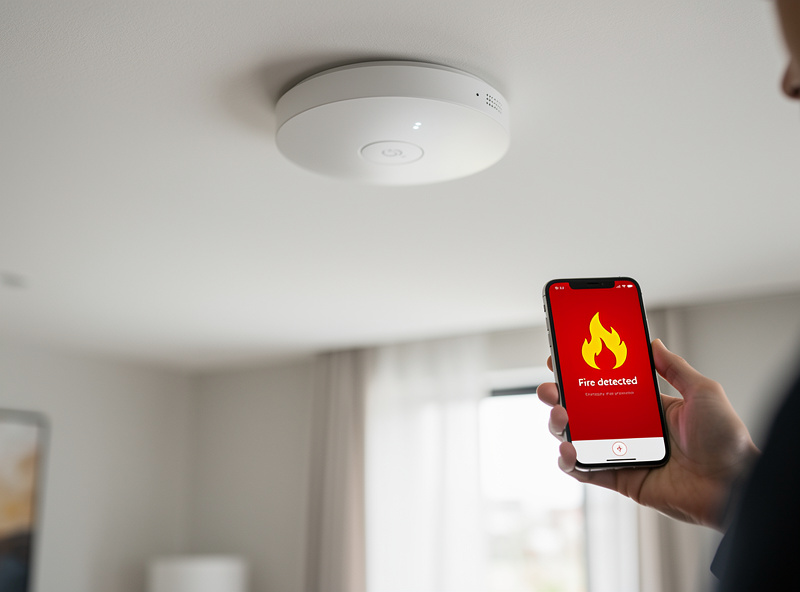
Smart smoke detectors combine traditional ionization and photoelectric sensing with WiFi connectivity, sending push alerts to your phone and integrating with smart home routines. Models like the Nest Protect and First Alert Onelink provide split-spectrum sensors that detect both fast-flaming and smoldering fires. The Nest Protect also includes a carbon monoxide detector with a 10-year sensor lifespan, and voice alerts that tell you which room has the alarm — the battery model runs on six replaceable Energizer Ultimate Lithium AA batteries rather than a sealed pack. Read the full review of smart smoke detectors for phone alerts.
Temperature Monitoring
Smart temperature sensors eliminate hot and cold spots by providing room-by-room climate data to your thermostat. These compact devices measure temperature and humidity in specific rooms, enabling precise zoning that can reduce energy bills by 10-15%. The Ecobee SmartSensor detects both temperature and occupancy, allowing your HVAC system to prioritize rooms that are actually in use. SensorPush HT1 offers Bluetooth monitoring with 200-foot range and free cloud data logging. Learn more in the guide to smart temperature sensors for each room.
Air Quality Monitoring
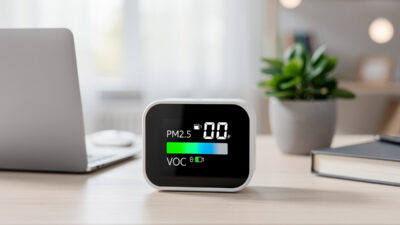
Smart air quality monitors track invisible indoor pollutants including PM2.5 particles, volatile organic compounds (VOCs), carbon dioxide, and humidity. The EPA estimates that indoor air can be 2-5 times more polluted than outdoor air, making monitoring critical for families with asthma or allergies. Devices like the Awair Element and Airthings View Plus provide real-time readings on color-coded displays and can trigger air purifiers or ventilation systems automatically when pollutant levels rise. See the detailed comparison of smart air quality monitors.

Window and Door Sensors
Magnetic contact sensors detect when windows or doors open or close, enabling security automations and climate control responses. The Ring Alarm Contact Sensor and Aqara Door/Window Sensor offer reliable detection with 2-3 year battery life. When paired with your smart thermostat, these sensors can automatically pause HVAC when a window is left open, saving 5-10% on energy bills. Pair smart window sensors with smart door sensors for complete perimeter monitoring that covers every entry point.
Plant and Garden Sensors
Smart plant watering sensors monitor soil moisture, light levels, and temperature to eliminate guesswork in plant care. Overwatering kills more houseplants than any other cause, yet determining the right watering schedule remains one of the biggest challenges for indoor gardeners. Devices like the Xiaomi Mi Flora and Parrot Flower Power connect to home automation systems and can trigger automatic watering systems when soil moisture drops below your plant’s specific threshold. Read the guide to smart plant watering sensors.
Basement Humidity Monitoring
Basement humidity sensors provide early warning of mold-favorable conditions, alerting the moment humidity exceeds 60%. Mold can establish colonies within 24-48 hours of moisture exposure, making early detection critical. When integrated with dehumidifiers and ventilation systems, sensors create automated mold prevention that maintains optimal 40-50% humidity year-round. For homes in humid climates, this single sensor can prevent $2,000-6,000 in mold remediation costs. See the guide to smart humidity sensors for basements.
Smart Home Sensor Comparison Table
| Sensor Type | Top Pick | Price | Battery Life | Key Feature | Protocol |
|---|---|---|---|---|---|
| Water Leak Detector | Govee H5051 | $12 | 2 years | 100dB siren | WiFi |
| Smoke Detector | Nest Protect | $119 | 6 AA (1-2 yrs) | Split-spectrum | WiFi/Thread |
| Temperature Sensor | Ecobee Sensor | $39 | 5 years | Occupancy detect | Bluetooth |
| Air Quality Monitor | Awair Element | $149 | Plug-in | 5 pollutant types | WiFi |
| Window Sensor | Aqara Contact | $15 | 2 years | HomeKit support | Zigbee |
| Door Sensor | Ring Contact | $20 | 3 years | Ring ecosystem | Proprietary |
| Plant Sensor | Xiaomi Mi Flora | $15 | 1 year | 4-in-1 monitoring | Bluetooth |
| Humidity Sensor | SensorPush HT1 | $25 | 2 years | Bluetooth range | Bluetooth |
Choosing the Right Sensor Protocol
Smart home sensors use different wireless protocols, each with strengths:
WiFi: Direct internet connection, no hub required, but higher power consumption. Best for plug-in devices like air quality monitors. Water leak detectors using WiFi typically last 2 years on batteries. Ideal for sensors that need frequent data transmission or video integration.
Zigbee: Mesh networking, low power, requires a hub. Ideal for distributed sensor networks where each device extends the network range. Aqara sensors use Zigbee 3.0 for reliable whole-home coverage. Zigbee operates on the 2.4 GHz band, same as WiFi, but uses different channels to avoid interference.
Z-Wave: Similar to Zigbee but operates on a different frequency (908 MHz in US), avoiding WiFi interference entirely. Ring Alarm sensors use Z-Wave for reliable security communication. The lower frequency provides better wall penetration than Zigbee.
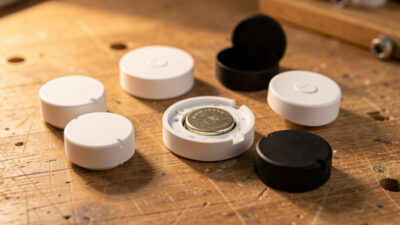
Bluetooth/Bluetooth LE: Short range (30-100 feet), very low power, no hub needed for local monitoring. Temperature and plant sensors commonly use Bluetooth with phone-based monitoring. Bluetooth LE sensors can last 1-2 years on a single coin cell battery.
Thread: The newest protocol, creating self-healing mesh networks with IP-based addressing. Nest Protect uses Thread for future-proof connectivity. Requires a Thread border router (Apple TV 4K, HomePod, or Nest Hub). Thread is designed to replace both Zigbee and Z-Wave long-term.
LoRa: Long-range wireless (up to 1/4 mile), extremely low power. YoLink sensors use LoRa for large properties and detached structures where WiFi cannot reach. LoRa sensors can last 5+ years on a single battery charge.
Smart Home Integration Guide
Sensors provide the most value when integrated into broader home automation systems:
Apple HomeKit: Aqara and Eve sensors offer native HomeKit support. Create automations like “when window opens, turn off AC” or “when leak detected, send notification to all devices.” HomeKit requires a HomePod or Apple TV as a hub for remote access and automation execution.
Amazon Alexa: Ring, Govee, and YoLink sensors integrate with Alexa for voice status checks and routine triggers. “Alexa, is there a water leak?” provides instant status. Alexa routines can chain multiple sensor responses together.
Google Home: Nest sensors provide the deepest Google Home integration. Third-party sensors like Govee work through IFTTT for Google Assistant routines. Google Home’s visual dashboard shows all sensor statuses at a glance.
Home Assistant: The most flexible platform, supporting Zigbee, Z-Wave, WiFi, and Bluetooth sensors natively. Create complex automations like “when basement humidity exceeds 60%, activate dehumidifier and send Telegram notification.” Home Assistant runs locally, so automations work even without internet.
For a complete overview of ecosystem compatibility, see the guide to the best smart home ecosystems.
Building Your Sensor Network Step by Step
Building a smart home sensor network does not require installing everything at once. Follow this phased approach to maximize protection while managing budget:
Phase 1 — Critical Protection (Week 1, $60-80): Install water leak detectors in the 3 highest-risk locations: under the water heater, behind the washing machine, and under the kitchen sink. Add a basement humidity sensor if you live in a humid climate. These sensors protect against the most expensive and common home insurance claims.
Phase 2 — Life Safety (Month 1, $200-390): Replace traditional smoke detectors with smart versions in bedrooms and hallways. The Nest Protect at roughly $119 each provides both smoke and carbon monoxide detection (battery model runs on 6 replaceable AA cells, not a sealed battery). For a typical 3-bedroom home, budget $200-390 for complete smoke coverage.
Phase 3 — Comfort and Efficiency (Month 2-3, $150-300): Add temperature sensors to rooms that run hot or cold. Place them in bedrooms for sleep comfort optimization and in the living room for daytime zoning. Air quality monitors go in the most-used room — typically the living room or home office.
Phase 4 — Security and Automation (Month 3-6, $60-100): Add window and door sensors to all ground-floor entry points. These serve dual purpose: security monitoring and climate control optimization. Pair with smart locks for complete entry management.
Phase 5 — Specialty Sensors (Ongoing, $15-50 each): Plant sensors for indoor gardens, additional humidity sensors for crawl spaces, and specialized detectors for unique areas like wine cellars or server rooms.
Complete Sensor Network by Room
Strategic sensor placement maximizes protection while minimizing cost:
Basement: Water leak detector near water heater, humidity sensor for mold prevention, temperature sensor for freeze protection. Total cost: $50-80. The basement is the highest-risk area because water heater failures and pipe bursts cause the most expensive damage.
Kitchen: Water leak detector under sink, smoke detector on ceiling, air quality monitor for cooking pollutants. Total cost: $160-200. Cooking generates PM2.5 particles and VOCs that an air quality monitor can detect and trigger ventilation.
Bathroom: Water leak detector near toilet and tub, humidity sensor for ventilation automation. Total cost: $35-60. Bathroom humidity sensors can automatically trigger exhaust fans when humidity exceeds 60%, preventing mirror fogging and mold growth.
Bedrooms: Smoke detector, temperature sensor for comfort zoning. Total cost: $150-160. Temperature sensors in bedrooms enable your HVAC to maintain different temperatures for sleeping versus daytime comfort.
Entry Points: Window sensors on all ground-floor windows, door sensor on main entry. Total cost: $60-100. Entry sensors serve dual purpose: security monitoring and climate control optimization.
Living Room: Air quality monitor, smart speaker for sensor announcements. Total cost: $150-200. The living room is typically the most-used space, making air quality monitoring most impactful here.
Complete home sensor network: $600-800 for comprehensive coverage across all rooms. Start with the basement and kitchen, then expand room by room as budget allows.
Automation Ideas with Smart Sensors
Once sensors are installed, these automations provide real value:
- Leak response: Water detected → close smart shutoff valve → turn on lights → send phone alert → start camera recording
- Fire response: Smoke detected → unlock smart locks → turn on all lights → notify emergency contacts → call fire department
- Climate optimization: Window opens → pause HVAC → notify phone → resume when window closes
- Mold prevention: Basement humidity above 60% → activate dehumidifier → turn on exhaust fan → alert if not resolved in 2 hours
- Air quality: PM2.5 above 35 → turn on air purifier → close windows → notify occupants
- Plant care: Soil moisture below 20% → activate smart watering system → log watering event
For more automation ideas, see the guide to smart home automation ideas. For outdoor-specific automation — driveway triggers, floodlight activation, and perimeter alerts — the outdoor motion sensor automation guide covers placement strategy and cross-device triggering.
Sensor Maintenance and Testing
Keep your sensor network reliable with regular maintenance:
Monthly: Test each sensor’s detection mechanism (water droplet for leak detectors, test button for smoke detectors). Verify app notifications are received on all devices. Check that automation rules are still executing correctly.
Quarterly: Check battery levels in app. Clean sensor contacts and lenses (mineral buildup on leak detectors reduces sensitivity). Verify sensor placement has not shifted from vibration or cleaning activities.
Annually: Replace batteries in all sensors even if showing good charge. Update firmware on all devices and hubs. Review automation rules and adjust based on usage patterns. Document your sensor inventory for insurance purposes.
Cost and ROI Analysis
Smart home sensors provide measurable return on investment:
| Sensor Type | Cost | Avoided Cost | ROI Timeline |
|---|---|---|---|
| Water Leak Detector | $12-50 | $12,000 average water damage | First incident prevented |
| Smart Smoke Detector | $100-130 | $30,000+ fire damage | Life-saving (priceless) |
| Humidity Sensor | $25-50 | $2,000-6,000 mold remediation | First mold event prevented |
| Air Quality Monitor | $100-200 | Reduced medical costs | 6-12 months health improvement |
| Temperature Sensor | $25-40 | 10-15% energy savings | 1-2 heating seasons |
| Window/Door Sensor | $15-25 | $2,500 average break-in cost | First intrusion prevented |
Insurance discounts of 5-15% are common for homes with monitored sensor systems, further improving ROI. Water leak detectors alone typically qualify for 2-5% discounts with most major insurers.
My Recommendation
Starter Kit ($60): 3 water leak detectors (Govee 3-pack, $30) + 1 humidity sensor ($25) + 1 door sensor ($15). Covers the highest-risk areas: water damage, mold, and entry monitoring. This setup protects against the most common and expensive home insurance claims.
Whole-Home Kit ($300): 5 leak detectors, 2 smoke detectors, 3 temperature sensors, 1 air quality monitor, 4 window/door sensors, 1 humidity sensor. Comprehensive coverage for a 2,000 sq ft home with basement, kitchen, bathrooms, bedrooms, and entry points.
Premium Kit ($600+): All of the above plus smart shutoff valve ($200), professional-grade air quality monitor ($200), and Thread-enabled sensors for future-proofing. This setup provides insurance-grade monitoring with professional documentation capabilities.
Start with the areas of highest risk — water damage and fire — then expand to comfort and air quality sensors. Every sensor you add makes your home safer and more efficient.
Frequently Asked Questions
How many smart home sensors do I need?
Start with 3-5 sensors covering your highest-risk areas: water leak detectors near water heaters and washing machines, a smoke detector, and a humidity sensor in the basement. Expand to 10-15 sensors for whole-home coverage including temperature, air quality, and entry monitoring.
Do smart home sensors work without internet?
Most sensors continue local detection and onboard alarms without internet. Water leak detectors sound their 85-100dB sirens, smoke detectors alert locally, and temperature sensors still measure. However, phone notifications, remote access, and smart home automations require internet connectivity.
What is the best protocol for smart home sensors?
Zigbee and Z-Wave are best for battery-powered sensor networks due to low power consumption and mesh networking. WiFi works well for plug-in devices like air quality monitors. Thread is the most future-proof protocol but requires compatible border routers. Choose based on your existing smart home ecosystem.
How long do smart sensor batteries last?
Battery life varies by protocol and usage. WiFi sensors last 1-2 years. Zigbee and Z-Wave sensors last 2-5 years. Bluetooth sensors last 1-2 years. LoRa sensors like YoLink last 5+ years. Most sensors provide low-battery alerts in their apps weeks before failure.
Can smart home sensors lower my insurance premiums?
Yes. Many insurers offer 5-15% discounts for homes with monitored leak detection, smoke detection, and security sensor systems. Water leak detectors alone can qualify for 2-5% discounts. Document your sensor placement and provide app logs to your insurer for maximum savings.
Do I need a hub for smart home sensors?
It depends on the protocol. WiFi sensors connect directly to your router. Zigbee, Z-Wave, and Thread sensors require a hub or bridge. Bluetooth sensors connect to your phone locally. If you plan to use multiple sensor types, a multi-protocol hub like Samsung SmartThings or Home Assistant provides the most flexibility.
How do I test my smart home sensors?
Test monthly: place a water droplet on leak detector contacts, press the test button on smoke detectors, open and close windows to trigger contact sensors. Verify that app notifications arrive on your phone and that any connected automations execute correctly. Check battery levels in the app quarterly.
If I were starting from zero, I’d buy three mmWave presence sensors (living room, office, bathroom), six door/window sensors (every exterior door plus the basement), and two temperature/humidity sensors (one for the HVAC zone reference, one for the basement humidity trigger). That’s about $200 worth of sensors that will pay for themselves in the first year from the HVAC optimization alone. Run them on Zigbee through a dedicated coordinator — not WiFi — for reliability and battery life, and wire every automation through your hub so one rule engine runs everything.
Related Articles
- Best Smart Water Leak Detectors — Prevent Damage (2026)
- Best Smart Smoke Detectors — Phone Alerts (2026)
- Best Smart Temperature Sensors for Each Room (2026)
- Best Smart Air Quality Monitors for Home (2026)
- Smart Window Sensors — Security and Climate Control (2026)
- Smart Door Sensors with Phone Notifications (2026)
- Smart Plant Watering Sensors — Never Overwater Again (2026)
- Smart Humidity Sensor for Basement — Prevent Mold (2026)
- Zigbee vs Z-Wave vs WiFi — Which Protocol Wins?
- Smart Home Automation Ideas for Every Room