Professional vs DIY Home Security Monitoring (2026)
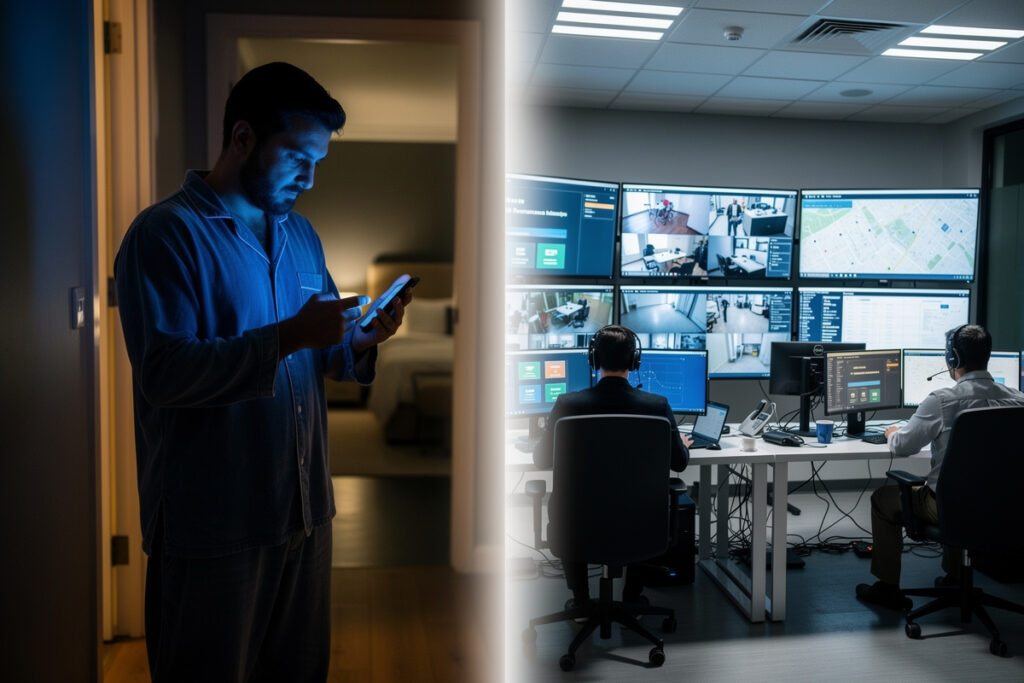
Professional vs DIY home security monitoring is a decision worth $1,200-$3,600 over 5 years. Pro monitoring at $20-$60/month gets a 24/7 central station that acknowledges the signal quickly — top-performing centers report averages around 20-45 seconds to first response — then attempts to verify the alarm before calling police on your behalf; DIY monitoring sends alerts to your phone for $0/month and you handle dispatch yourself. The right choice depends on four specific factors — how reliably you can answer your phone, how often you travel, your insurance discount math, and your local police’s response time to verified vs unverified alarms.
As an Amazon Associate I earn from qualifying purchases.
This guide replaces the generic “monitoring is worth it” or “save money DIY” debate with a clear decision framework grounded in real experience — I have lived with Ring Alarm pro monitoring for 18 months and also run a self-monitored Abode setup at a second property, so I have felt the exact trade-offs on both sides. Run yourself through the four-question test below and the answer becomes obvious. For the broader system landscape, see the smart home security systems hub.
What Each Type of Monitoring Actually Includes
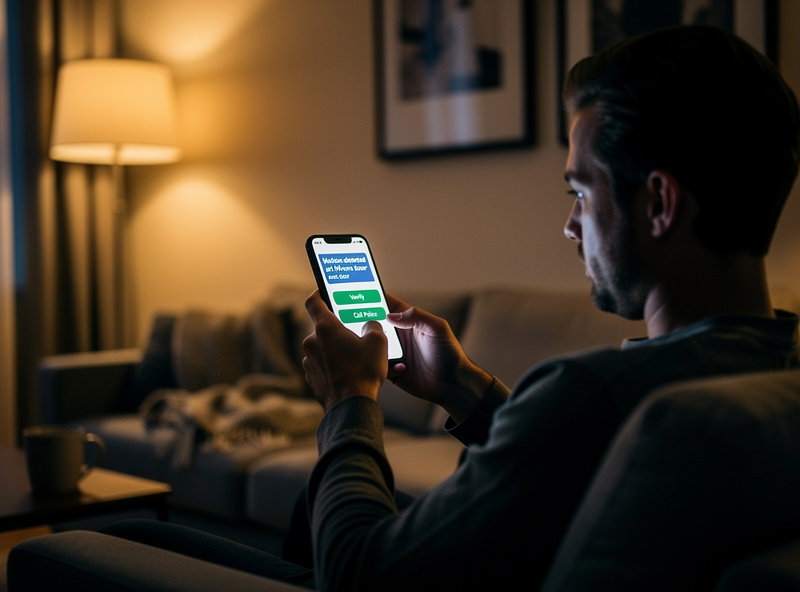
Professional monitoring means a central station receives alarm signals 24/7, attempts verification (often a phone call to you first), and dispatches police, fire, or EMS if you cannot be reached or confirm the emergency. DIY/self-monitoring means you receive a push notification on your phone when sensors trigger and you decide whether to call 911 yourself. The hardware doing the detecting is often identical — the difference is purely the response layer.
A third option exists: no monitoring, where the system arms/disarms locally and the siren triggers but no alert is sent anywhere. This is the cheapest tier (covered in the no monthly fee guide) and works as pure deterrent. Most buyers should be choosing between Pro and DIY/self, not between any of these and “no monitoring at all.”
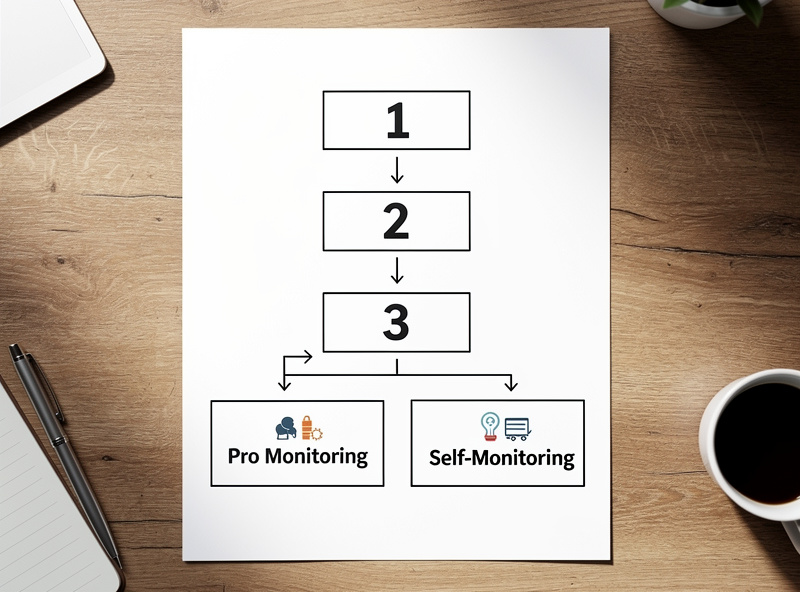
The 4-Question Decision Framework
Run through these four questions before reading any product reviews. Your answers determine the right monitoring tier.
| Question | If Yes → Pro Monitoring | If No → DIY/Self-Monitor |
|---|---|---|
| 1. Do you travel 4+ weeks per year (work or vacation)? | Yes — phone access is unreliable | No — you’re home or reachable |
| 2. Are you a heavy sleeper or have hearing impairments? | Yes — phone alerts may not wake you | No — you’ll wake to your phone |
| 3. Does your insurer offer 10%+ discount with monitoring? | Yes — discount may exceed monitoring cost | No — economics favor DIY |
| 4. Does your jurisdiction require verified alarm response? | Yes — pro verification is mandatory for police dispatch | No — police respond to all 911 calls |
If you answered Yes to 2+ of these, professional monitoring is genuinely worth it. If you answered No to 3-4, DIY/self-monitoring is the right choice. The $20-$60/month is then either a valid investment or wasted money based on your specific profile, not a generic “is monitoring worth it” answer.
The Response Time Reality
Marketing tends to blur “the center picked up the signal” with “police are on the way,” and those are very different numbers. Some monitoring providers report average signal-acknowledgment times in the 20-45 second range, but standard Enhanced Call Verification procedure requires at least two phone calls to the property before the center requests dispatch — which pushes the real average closer to several minutes, not seconds, in most standard (non-video-verified) setups. Self-monitoring depends entirely on you — how fast you wake, find your phone, verify, and call 911 — typically 30 seconds to several minutes.
The bigger real-world gap isn’t dispatch speed, it’s whether police respond at all. Most departments now deprioritize unverified alarms; as Slate’s reporting on home-security response rates notes, citing the International Association of Chiefs of Police, as many as 98% of security-system alarms are false, which is exactly why so many departments (Denver among them) now classify an unverified triggered alarm as a low priority call — sometimes with response times of 40+ minutes in mid-size cities, or no response at all in the largest ones. Verified alarms (confirmed by audio, video, or a monitoring operator) get bumped up that priority list. For events where the burglar is in and out in under 5 minutes regardless, no monitoring tier changes the outcome — the real value of pro monitoring here is getting police to show up at all, not shaving seconds off dispatch.
The Cost Math
Professional monitoring costs $20-$60/month, totaling $1,200-$3,600 over 5 years. Self-monitoring is $0/month. The honest comparison must include the homeowners insurance discount — typically 5-20% off annual premium with proof of monitoring. For a household paying $2,000/year in homeowners insurance with a 15% monitoring discount, that’s $300/year off, meaning $20/month monitoring nets out to $260/year cost ($240 monitoring – $300 discount = -$60). At higher premium levels with bigger discounts, monitoring is genuinely cheaper than self-monitoring once insurance is factored in.
Run your own numbers: call your insurer, ask the exact discount percentage with monitoring, multiply by your annual premium. If the discount equals or exceeds $240/year, the monitoring is free or net-negative. If the discount is $100/year or less, self-monitoring saves you real money. This calculation flips the answer for many buyers — particularly those with higher-value homes and higher insurance premiums. For deeper hardware-cost context, see the security systems hub with 5-year totals on each platform.
When Pro Monitoring Genuinely Wins
Three real scenarios where pro monitoring delivers value the DIY tier cannot match: heavy travelers, vulnerable household members, and verified-alarm jurisdictions.
Heavy Travelers
Business travelers, military deployments, snowbirds with secondary homes, frequent international vacationers. Phone access during travel is unreliable — international roaming, hotel Wi-Fi, time zone gaps. Self-monitoring fails when you cannot reliably answer the phone. Pro monitoring handles dispatch on your behalf without your involvement, which is exactly what you need when traveling.
Vulnerable Household Members
Households with elderly residents, young children alone, or members with hearing impairments who cannot reliably respond to phone alerts. The household member you’re protecting is often the one who cannot self-dispatch, and pro monitoring fills that gap. This is where a fast-acknowledging pro center genuinely matters — it removes the dependency on a household member responding correctly under stress, even if the actual police response still takes minutes, not seconds.
Jurisdictions Requiring Verified Alarms
An increasing number of US cities and counties (Las Vegas, Salt Lake City, Eugene OR, parts of California) only dispatch police to verified alarms — meaning the monitoring company must confirm an actual emergency through audio, video, or two-way verification before police respond. Self-monitored systems do not qualify and police will not respond to them. Check your jurisdiction’s verified-alarm policy before deciding — if you live somewhere requiring verification, pro monitoring is mandatory for any police response.
When DIY/Self-Monitoring Wins
Three scenarios where DIY monitoring is genuinely the better choice: home-based households, low premium discounts, and renters/apartment-dwellers.
Home-Based Households
You work from home, retired, or otherwise present at the property most of the time. Pro monitoring’s value drops dramatically because you can hear sensors trigger directly and respond in person. The $20-$60/month buys you very little when you’re already there — your own response is faster than the pro center’s call to you to verify.
Low Insurance Discount
Your homeowners insurance offers 5% or less discount with monitoring (or no discount at all for unmonitored sensors), and you have a relatively low annual premium. The math swings hard: at $1,200/year premium and 5% discount, monitoring saves you $60/year against $240 cost — a clear $180 net loss. Run the numbers; many lower-premium households are paying for monitoring without any economic offset.
Renters and Apartment Dwellers
You live in an apartment building with controlled-entry, neighbors close enough to hear a 100dB siren, and rental insurance that rarely offers monitored-system discounts. Self-monitoring + a good local siren + alert neighbors covers 95% of practical events. Pro dispatch adds little real value — the deterrent effect of the system is the active protective mechanism. For deeper renter-specific guidance, see the home security system for renters guide.
The Hybrid Approach: Start DIY, Upgrade if Needed
Every major DIY system (SimpliSafe, Ring Alarm, Abode, Wyze) allows you to add or drop monitoring at any time without contract penalties. The optimal strategy for new buyers is starting with DIY/self-monitoring for the first 6-12 months, observing your real usage patterns, and upgrading to pro monitoring only if the pattern reveals you need it.
Patterns that suggest you need to upgrade: missed phone alerts during sleep, declined alarm response from neighbors, repeated false-alarms you couldn’t verify in time, insurance offering a meaningful discount. Patterns that suggest you should stay self-monitored: every alert was actionable on phone, no events you missed, low insurance discount. The first 6-12 months provide actual data instead of theoretical estimates. Compare the underlying systems in SimpliSafe vs Ring Alarm and the no-fee picks in no monthly fee guide.
The Cellular Backup Question
Cellular backup is often confused with “monitoring.” They are different: cellular keeps the system online during Wi-Fi or power outages; monitoring means a central station receives alarms. In practice they’re bundled — most cellular backup is gated behind the paid monitoring tier.
For homes with reliable Wi-Fi and power, cellular adds little practical value. For households with frequent outages, fiber issues, or rural cellular gaps, it becomes essential. If outages are common where you live, that alone may justify the paid tier even if you don’t need pro dispatch.
False Alarm Considerations
Most jurisdictions charge $25-$200 per false-alarm dispatch, sometimes escalating with repeat offenders. Verification genuinely helps here — research on Enhanced Call Verification programs found jurisdictions that require a monitoring center to place calls before requesting dispatch saw false-alarm-to-police reductions in the 25-40% range, with camera/video-verified setups reporting considerably higher reductions — meaning pro monitoring may save real money in cities with aggressive false-alarm fines.
Self-monitored buyers tend to have higher false-alarm rates because they call 911 immediately on any phone alert without verifying. Discipline matters: install cameras at major entry points to visually verify before calling police. Subscription-free camera options are in the smart cameras without subscription guide.
Verdict: How to Decide
Run the 4-question framework. If 2+ “Yes” answers, pick pro monitoring at $20-$30/month — the math works. If 3-4 “No” answers, pick DIY/self-monitoring and add a couple cameras for visual verification. Either way, start by buying a flexible system (SimpliSafe, Ring Alarm, Abode) that lets you switch later without hardware replacement. The wrong move is committing to Vivint or ADT’s multi-year monitoring contract before you’ve validated whether monitoring is genuinely useful for your specific situation.
Frequently Asked Questions
Is professional monitoring worth it for home security?
Worth it for heavy travelers, vulnerable household members, and jurisdictions requiring verified alarms. Not worth it for home-based households, those with low insurance discounts, or apartment renters where neighbors and local sirens cover most practical events. Run the 4-question test before deciding.
How fast does professional monitoring respond compared to DIY?
Top-performing monitoring centers acknowledge a signal in roughly 20-45 seconds, but standard verification procedure requires at least two phone calls to the property before requesting police dispatch, which typically pushes real dispatch requests to several minutes rather than seconds. Self-monitoring depends entirely on you — typically 30 seconds to several minutes to notice, verify, and call 911. The bigger gap is that police widely deprioritize unverified alarms, so verified alarms (pro or camera-confirmed) tend to get a faster, higher-priority response than an unverified 911 call.
Can I switch from DIY to professional monitoring later?
Yes on every major DIY system. SimpliSafe, Ring Alarm, Abode, and Wyze all allow adding monitoring at any time without contract penalties or hardware replacement. The recommended approach is starting DIY for 6-12 months, observing your real usage, then upgrading to pro monitoring only if patterns reveal you need it.
Will my insurance company give a discount for self-monitored security?
Generally no. Most homeowners insurance discounts (5-20%) require a monitoring certificate from a third-party central station. Self-monitored systems do not qualify. Some insurers offer smaller hardware-only discounts (1-5%), but the larger discount that often makes monitoring net-positive economically requires pro monitoring.
Do I need cellular backup with self-monitoring?
Cellular backup is separate from monitoring but usually bundled with paid monitoring tiers. For households with reliable Wi-Fi and power, cellular adds little practical value. For households with frequent outages, fiber issues, or rural cellular gaps, cellular becomes essential. Most self-monitored systems lose cellular as a side effect of skipping the paid tier.
What about false alarm fees with self-monitoring?
Self-monitored buyers tend to have higher false-alarm rates because they call 911 directly on any phone alert without verifying. Most jurisdictions charge $25-$200 per false alarm. Enhanced Call Verification programs (the standard pro-monitoring verification step) have been shown to reduce false-alarm calls to police by roughly 25-40%, with video-verified setups reporting bigger reductions. To self-monitor effectively, install cameras at major entry points to visually verify before calling police.
Can professional monitoring work with any security system?
Pro monitoring is tied to specific systems — SimpliSafe monitoring works with SimpliSafe hardware, Ring Alarm with Ring, Vivint with Vivint, etc. You cannot mix-and-match. Some third-party monitoring services (Alarm Grid, Alarm Relay, Brinks) work with Honeywell, 2GIG, and Qolsys panels for buyers with existing legacy hardware.
Related Articles
- Smart Home Security Systems 2026: DIY vs Professional Monitoring
- Home Security Systems With No Monthly Fee
- SimpliSafe vs Ring Alarm: DIY System Comparison
- Vivint Smart Home Security: Honest Review
- Home Security Systems for Renters