SimpliSafe vs Ring Alarm: DIY Security Compared
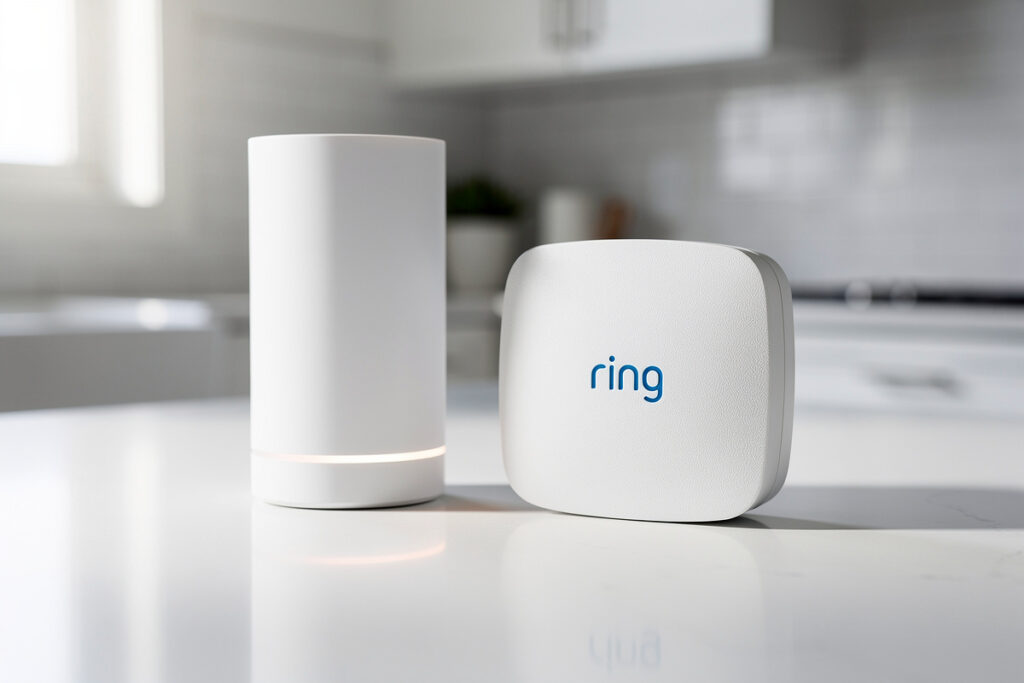
SimpliSafe vs Ring Alarm is the most-asked DIY home security system question in 2026. The short answer: pick SimpliSafe ($250 base kit, $20-30/month optional monitoring, no contract) if you want a security-first standalone system; pick Ring Alarm ($200 base kit, $20/month with cellular) if you already use Alexa or own Ring cameras and doorbells. Both install in 10-15 minutes, both have professional monitoring, both work without a contract.
As an Amazon Associate I earn from qualifying purchases.
I run a Ring Alarm system with eight Z-Wave sensors paired to my Home Assistant instance, and I helped a neighbor install SimpliSafe in their rental last year — so this comparison draws from hands-on time with both base stations, both apps, and both monitoring services. Where they diverge is ecosystem and philosophy. SimpliSafe is a security system that happens to talk to Alexa; Ring Alarm is a security system built inside Amazon’s ecosystem. This guide compares hardware, monitoring quality, smart home integration, 5-year cost, and the four buyer profiles where each clearly wins. For the broader system landscape including Vivint and Abode, see the smart home security systems hub.
Quick Answer: Which Should You Buy?
SimpliSafe wins for buyers who want a security-first standalone system with the cleanest no-contract DIY experience and limited smart home commitments. Ring Alarm wins for households already in the Amazon ecosystem (Alexa speakers, Ring cameras, Ring doorbell) where deep native integration delivers daily small wins. Both have 24/7 professional monitoring at the same $20/month price point.
If neither answer obviously fits — say you have an iPhone and minimal smart home — SimpliSafe is the safer bet because its security-first focus means fewer updates that change behavior unexpectedly. Ring Alarm gets new features faster (often within Alexa releases) but those changes occasionally break automations users had set up. SimpliSafe is “set and forget,” Ring Alarm is “always evolving.”
SimpliSafe vs Ring Alarm Side-by-Side
| Spec | SimpliSafe | Ring Alarm (2nd Gen) |
|---|---|---|
| Base Kit Price | $250 (8-piece) | $200 (8-piece) |
| Pro Monitoring | $20 Standard / $30 Pro Premium | $10 Basic / $20 Pro |
| Self-Monitor Option | Yes ($0) | Yes ($0) |
| Cellular Backup | Yes (with monitoring) | Yes (with Ring Protect Pro) |
| Battery Backup | 24 hours base station | 24 hours base station |
| Contract | None | None |
| Smart Home Hub | None (Alexa/Google voice only) | Z-Wave (700 series) |
| Native Voice Assistant | Alexa, Google (limited) | Alexa (native) |
| App Quality | Clean, reliable | Feature-rich, frequent updates |
| Sensor Battery Life | 3-10 years | 3-5 years |
| Range of Sensors | Door/Window, Motion, Glass, Temp, Water, Smoke, CO | Door/Window, Motion, Glass, Smoke/CO listener, Flood/Freeze |
| Camera Integration | SimpliSafe Cameras only | Full Ring camera + doorbell ecosystem |
| Smart Home Integration | Limited Alexa/Google routines | Deep Alexa, Z-Wave devices, Ring routines |
| Insurance Discount | 5-20% with monitoring certificate | 5-20% with monitoring certificate |
| 5-Year Cost (Pro Mon) | $1,450 ($250 + $1,200) | $1,400 ($200 + $1,200) |
Three patterns matter. First, total 5-year cost is essentially identical at the $20/month tier — within $50 of each other. Second, the only meaningful spec gap is the Z-Wave hub (Ring includes one, SimpliSafe does not) — this matters if you plan to add Z-Wave bulbs, locks, or thermostats and want to control them from the security system. Third, the camera ecosystem is where Ring’s lead is decisive: 50+ Ring camera models versus 4 SimpliSafe camera models, and tighter integration on the Ring side.
Hardware Quality and Sensor Range
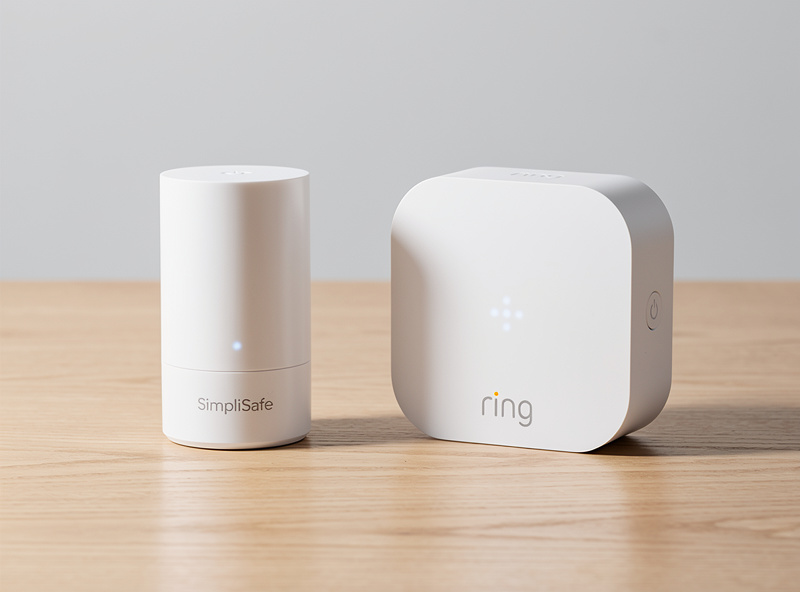
SimpliSafe wins on sensor battery life — door/window sensors run 5-10 years on a single CR-2032 versus Ring’s 3-5 years. Ring wins on hardware variety, with more sensor types (notably the Ring Floodlight Cam Wired Pro that doubles as both camera and motion sensor) and a brighter backlit keypad.
The visual difference matters in some homes. SimpliSafe sensors are deliberately understated — small, matte-white, designed to disappear on white trim. Ring sensors are larger, with a visible orange LED that blinks on trigger — useful for confirming a door opened, but the glow is obvious in a dark hallway. For homeowners who want security gear to vanish, SimpliSafe wins; if you already own Ring cameras and want a matching aesthetic, Ring is fine.
Monitoring Quality
Both companies use third-party monitoring centers that operate under UL 827 (Central Station Alarm Services) standards. SimpliSafe and Ring both contract with major monitoring providers — the specific center depends on your location. Response time from alarm trigger to dispatch depends on the monitoring center’s verification procedure (typically a phone call to the premises before contacting emergency services) and on your local emergency services’ intake process. Neither company publishes guaranteed dispatch times, and any specific second-count you see in marketing materials is a best-case figure, not a contractual guarantee. The practical experience: both are professional monitoring that calls you first, then dispatches if you confirm or do not answer.
SimpliSafe’s $30 Pro Premium plan adds visual verification (the agent reviews recorded camera clips before dispatching) and 24/7 dispatch — meaningful upgrades that explain the price step. Ring’s equivalent is bundled into the standard $20 Pro plan, making Ring Alarm slightly better value at the upper monitoring tier. For most households, the basic $20 SimpliSafe Standard or Ring Pro plan is enough; the upgrade is mainly for high-value properties or households with frequent travel. The deeper monitoring debate is in the professional vs DIY monitoring guide.
Smart Home Integration: Where Ring Wins
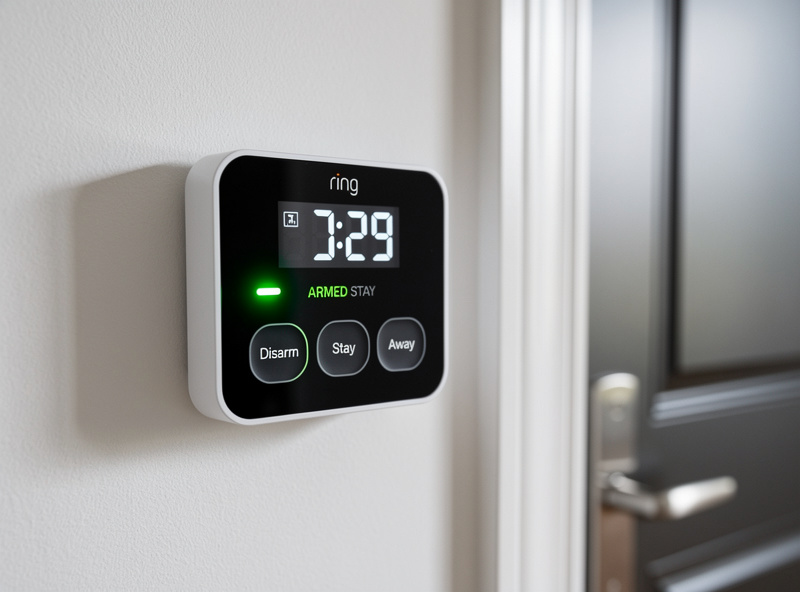
Ring Alarm has a built-in Z-Wave 700-series hub, native Alexa integration (arm/disarm by voice with PIN, see camera feeds on Echo Show), and deep Ring routines that span cameras, doorbells, alarm, and Alexa devices. SimpliSafe has Alexa and Google Assistant compatibility for basic voice commands but no Z-Wave hub and limited routine support. For households running Alexa-based smart homes, Ring is decisively better.
In my own Home Assistant setup, the Ring Alarm Z-Wave hub is the reason I chose it over SimpliSafe — the sensors report to both the Ring app and HA simultaneously, so my automations stay local. For households with mixed ecosystems or Apple HomeKit, neither wins outright — Abode is the better pick (covered in the security systems hub). For comparison-shopping by ecosystem fit, the best smart home ecosystem comparison covers the broader Alexa vs Google vs HomeKit decision. Voice control by both works but differs in scope: Ring lets you arm-stay, arm-away, and disarm with PIN over voice; SimpliSafe only allows arm. Disarm-by-voice on SimpliSafe was deliberately disabled in 2024 for security reasons.
Camera Ecosystem: Ring’s Decisive Lead
Ring sells 50+ camera and doorbell models in 2026 spanning $35 (Ring Indoor Cam) to $349 (Ring Spotlight Cam Pro Battery), all integrated tightly into the Ring Alarm system. SimpliSafe sells four camera models (SS3 Smart Alarm Doorbell Pro, Outdoor Cam, SimpliCam, Smart Lock) — adequate but limited. If you need more than basic indoor and doorbell coverage, Ring wins decisively.
For the doorbell-specific decision, the Nest vs Ring Doorbell comparison covers the head-to-head. For subscription-free camera options that work with either system as third-party gear, see smart cameras without monthly subscription. For privacy considerations applying to all camera-equipped security systems, the indoor security camera privacy guide is mandatory reading before placing cameras inside the home.
Install Experience: Both Are Genuinely DIY
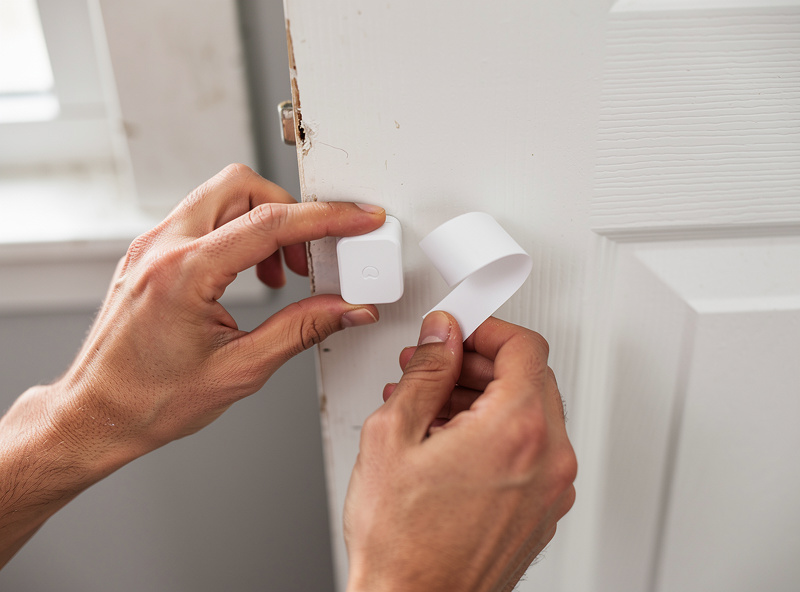
Both SimpliSafe and Ring Alarm install in 10-15 minutes — open the box, plug in the base station, scan the QR code in the app, peel-stick the sensors, and the system is live. No drilling required for standard door-frame mounting.
Ring’s app onboarding is slightly faster (8-10 minutes) thanks to tight Amazon-account integration. I set up SimpliSafe in a neighbor’s apartment and discovered the keypad battery was dead on arrival — had to wait 3 days for a replacement before finishing the install, a delivery gap that does not exist with Ring because you can grab a replacement at any Best Buy or Home Depot. SimpliSafe takes 12-15 minutes for first-time users because it requires creating a new SimpliSafe account. Both companies offer paid pro install at $99-$149 for larger homes — usually unnecessary.
5-Year Cost Comparison
At the $20/month tier, SimpliSafe and Ring Alarm cost essentially the same over 5 years — $1,450 vs $1,400. Without monitoring, both function as local-siren systems for $0/month after the $200-250 hardware purchase.
The cost-saving move on either system is starting with monitoring for 6-12 months (to establish an insurance baseline), then dropping to self-monitoring once you trust the setup. No contract penalties either way. You lose cellular backup and pro dispatch when you drop monitoring, but keep the local siren and phone alerts. For truly $0/month options, see home security system no monthly fee.
Four Buyer Profiles: Clear Winners
Profile 1: Already Owns Ring Cameras or Doorbell — Ring Alarm
You already have a Ring video doorbell or camera installed. Ring Alarm slots into the same app and account, and integration like “armed-away triggers all cameras to enter motion-detection mode” works automatically. Adding SimpliSafe means running two separate apps and accounts — a daily-friction tax you will eventually abandon.
Profile 2: Heavy Alexa Household — Ring Alarm
You have multiple Alexa devices and use them for routines, smart bulbs, and timers. Ring Alarm extends Alexa naturally — arm via voice, see camera feeds on Echo Show, run Alexa routines that include the alarm. SimpliSafe has Alexa support but it is much shallower and feels like an add-on rather than a native integration.
Profile 3: Security-First, Minimal Smart Home — SimpliSafe
You want a security system, period. You don’t run a smart home, don’t plan to, and just want the sensors and monitoring to work for the next 5 years without surprise app updates breaking things. SimpliSafe is the more conservative product and the right pick. Their reputation for stability is well earned — features change slowly, and the company prioritizes security center reliability over feature velocity.
Profile 4: Apple HomeKit Household — Pick Abode Instead
Neither SimpliSafe nor Ring Alarm support HomeKit natively in 2026. Abode is the only major DIY system that does — covered in the security systems hub.
Final Verdict
For buyers without existing Ring gear, SimpliSafe is the slightly safer pick — refined hardware, longer sensor batteries, fewer breaking changes. For Amazon-ecosystem households, Ring Alarm wins decisively on integration depth. Neither pick is catastrophic — both work — but ecosystem fit makes one unambiguously better.
Need broader context including Vivint, Abode, and ADT? See the parent smart home security systems hub. Considering whether to skip monitoring entirely? No monthly fee guide. Are you a renter? Home security for renters. For doorbell-specific decisions, Nest vs Ring Doorbell.
Frequently Asked Questions
Which is better: SimpliSafe or Ring Alarm?
Neither is universally better. SimpliSafe wins for security-first buyers who want a stable standalone system with no smart home commitments. Ring Alarm wins for households already using Alexa devices or Ring cameras and doorbells. Both cost about the same over 5 years at the $20/month monitoring tier.
Does SimpliSafe work with Alexa?
Yes, but with limited functionality. SimpliSafe supports Alexa for basic voice arming (arm-stay, arm-away) but does not allow disarm-by-voice for security reasons. The integration is shallower than Ring Alarm’s native Alexa support, which permits PIN-protected disarm and live camera feeds on Echo Show.
Can I use Ring Alarm without a Ring Protect subscription?
Yes. Ring Alarm functions as a self-monitored local-siren system without any subscription — the base station triggers the siren, sensors report status to the app, and you receive phone alerts. You lose cellular backup, professional monitoring dispatch, and Z-Wave smart home integration. Ring Protect Pro at $20/month adds those back.
Does SimpliSafe require a monthly fee?
No, SimpliSafe works fully without monitoring — local siren, sensor alerts, and phone notifications all function for $0/month. Professional monitoring at $20-30/month adds central station dispatch, cellular backup, and visual verification. Self-monitored SimpliSafe is a legitimate setup, just without the insurance discount that monitored systems qualify for.
How long does SimpliSafe sensor battery last?
SimpliSafe door/window sensors run 5-10 years on a single CR-2032 battery, motion sensors 3-5 years on AAA, and the keypad 2-3 years. Ring Alarm sensors are slightly shorter at 3-5 years for door/window contacts. Both systems alert in-app when battery is low — typically a 30-60 day advance warning before total depletion.
Is Ring Alarm or SimpliSafe better for renters?
Both work well for renters because both use peel-and-stick sensor mounting (no drilling), no contracts, and easy uninstall when you move. Ring Alarm has a slight edge if you already own Ring cameras you want to integrate. SimpliSafe has a slight edge for renters who don’t want any additional accounts. Both ship in cardboard boxes that double as moving boxes when relocating.
Can SimpliSafe and Ring Alarm be combined?
Not directly. Each is a complete security system with its own base station and account. You cannot connect a SimpliSafe sensor to a Ring Alarm panel or vice versa. If you want both ecosystems, you’d run them separately — which is impractical and not recommended. Pick one and commit to it for 5+ years.
Related Articles
- Smart Home Security Systems 2026: DIY vs Professional Monitoring
- Vivint Smart Home Security: Honest Review
- Professional vs DIY Home Security Monitoring
- Home Security Systems for Renters
- Nest vs Ring Doorbell — Which Smart Doorbell Wins?