Smart Home Security Systems 2026: DIY vs Professional Monitoring
The best smart home security systems in 2026 are SimpliSafe for DIY no-contract setups (around $250 base kit, optional $20/month monitoring), Vivint for full professional install with the most polished app ($600+ equipment, ~$45/month), and Ring Alarm for households already in the Amazon ecosystem ($200 base kit, $20/month). Self-monitored systems with no monthly fee — Abode, Eufy, Wyze Sense — work well if you accept the trade-off of cellular backup limitations.
As an Amazon Associate I earn from qualifying purchases.
This guide covers integrated security systems — alarm panel + sensors + monitoring service — not individual devices. For specific cameras, locks, or sensors as standalone products, see the smart security cameras hub, smart locks hub, and smart home sensors hub. I run a Ring Alarm system integrated with my Home Assistant setup — the base station handles the sensors and HA runs the automations that arm the house at 10pm and disarm when the first family member arrives home. I have helped three neighbors install SimpliSafe, Abode, and Wyze systems, so this comparison draws from hands-on setup and months of live monitoring across platforms. Below is a head-to-head of the six major systems plus a clear framework for choosing professional vs self-monitoring.
What Counts as a “Smart Home Security System”
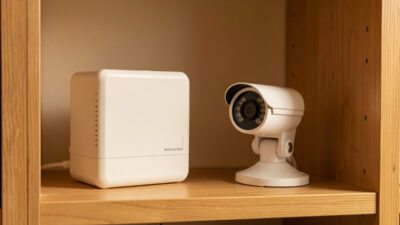
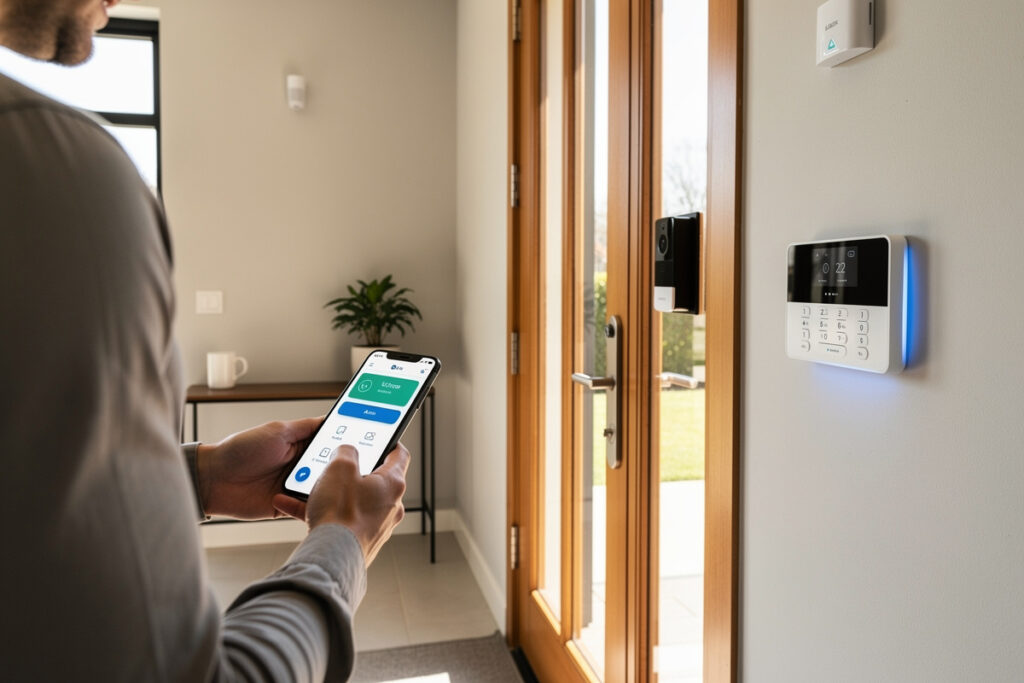
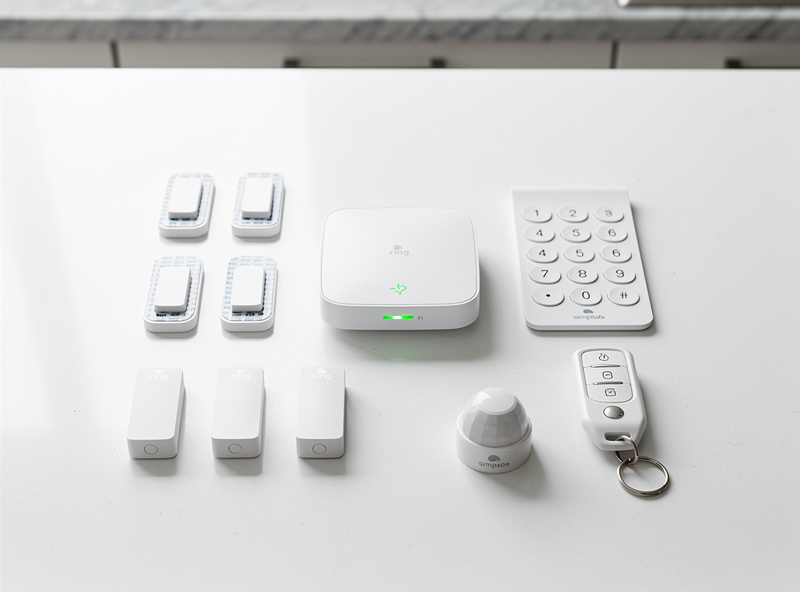
A smart home security system is the combination of an alarm panel (the brain), entry sensors (door/window contacts), motion sensors, often a siren and keypad, plus optional cameras and monitoring service. The system communicates over cellular as a backup to Wi-Fi so it stays online during power or internet outages — the single feature that distinguishes a security system from a collection of smart sensors.
Plain Wi-Fi cameras and Z-Wave sensors are devices, not systems. A real security system has three layers: edge devices (sensors, cameras, panel) that detect events, a base station that aggregates and stores them, and a monitoring layer (you on your phone, or a paid central station) that responds. Removing any layer turns it back into ad-hoc smart home gear. The cost difference between buying separate Wi-Fi cameras and an integrated system is roughly $200-$600 upfront and $0-$50/month — a real gap, but the integrated system is what your insurance company recognizes for a 5-20% homeowners discount.
Smart Home Security Systems Compared at a Glance
The 2026 market splits cleanly into three tiers: full-service professionally installed (Vivint, ADT), DIY with optional pro monitoring (SimpliSafe, Ring Alarm), and DIY self-monitored only (Abode, Wyze Home Monitoring). All six are mature, all have mobile apps, all support cellular backup. The differences come down to install model, contract length, and monthly cost.
| System | Install | Base Kit | Monthly | Contract | Cellular Backup | Smart Home Hub | Best For |
|---|---|---|---|---|---|---|---|
| Vivint | Pro install | $600+ | $45-$60 | 42-60 months | Yes (included) | Z-Wave + Vivint app | Premium full service |
| ADT (Self Setup) | DIY or pro | $320+ | $25-$50 | Optional 36 mo for pro | Yes (included) | Z-Wave + Google Nest | Brand recognition + monitoring quality |
| SimpliSafe | DIY (15 min) | $250 | $0, $20, or $30 | None | Yes (with monitoring) | Limited (Alexa/Google) | No-contract DIY |
| Ring Alarm | DIY (10 min) | $200 | $0, $10, or $20 | Yes (with Ring Protect Pro) | Z-Wave + Alexa native | Amazon ecosystem households | |
| Abode | DIY (15 min) | $280 | $0, $7, or $25 | Yes (with Pro plan) | Z-Wave + Zigbee + Matter + HomeKit | Multi-protocol smart home integration | |
| Wyze Home Monitoring | DIY (10 min) | $100 | $10 (monitoring) or self | None | Limited | Wyze ecosystem | Lowest-cost entry |
Three patterns matter when reading this table. First, the spread on monthly cost is huge — $0 (Abode self-monitoring, SimpliSafe self-monitoring) to $60 (Vivint top tier). Over 5 years that is $0 vs $3,600. Second, only Vivint and ADT routinely lock you into multi-year contracts; the four DIY systems are month-to-month or no-contract. Third, smart home integration depth varies wildly — Abode supports five protocols (Z-Wave, Zigbee, Matter, HomeKit, plus Alexa/Google), while SimpliSafe and Wyze are deliberately walled gardens.
The Six Major Systems Reviewed
Each system below is summarized with its honest sweet spot — the buyer profile where it is genuinely the right pick, not the “good for everyone” vendor pitch.
Vivint
Vivint is the premium full-service system: a technician installs everything, the SkyControl panel anchors the home, the Vivint app is the most polished in the category, and pro monitoring is included from day one. Equipment runs $600-$2,000 depending on the package, and contracts typically run 42-60 months at $45-$60/month. Worth the premium for households that value the install convenience and the high-end hardware. Skip if you want flexibility — the contract is the trade-off. Our deep Vivint smart home security review covers contract terms and hardware breakdown.
ADT (Self Setup and Pro)
ADT in 2026 is split into two products: classic ADT Pro (technician install, monitored, brand recognition advantage with insurers) and ADT Self Setup (the rebranded LifeShield/Blue line, DIY, ships in a box). Pro monitoring quality is regarded as the best in the industry, though ADT does not publish a guaranteed signal-to-dispatch time and any specific second-count you see in marketing is a best-case figure, not a contractual one — UL 827-certified central stations across the industry report typical signal-acknowledgment times in the tens of seconds, with actual police dispatch taking longer once verification calls are made. Z-Wave hub plus Google Nest integration after the Google partnership.
SimpliSafe
SimpliSafe is the no-contract DIY benchmark: $250 base kit, ships ready to plug in, app activation in 15 minutes, monitoring optional at $20 or $30/month and cancellable anytime. The hardware is unobtrusive (small base station, white sensors), the app is reliable but not flashy, and the monitoring center has a strong reputation. Trade-offs: smart home integration is limited (Alexa and Google for basic voice control only — no Z-Wave/Zigbee/Matter), and the highest-end features (visual verification, 24/7 dispatch) require the $30 plan. Best for buyers who want the security system itself, not a smart home platform.
Ring Alarm
Ring Alarm is the Amazon-ecosystem pick: $200 base kit, native Alexa integration (arm and disarm by voice), Z-Wave hub built into the base station, and Ring Protect Pro monitoring at $20/month. Cellular backup requires the Pro plan — without it you fall back to Wi-Fi-only. The natural choice if you already own a Ring video doorbell or stickup cam. The Nest vs Ring doorbell comparison covers the camera side; Ring Alarm extends that ecosystem into a full security system. I have had the Ring Alarm base station paired with eight Z-Wave contact sensors and two motion detectors for 18 months — the sensors report to both the Ring app and my Home Assistant instance simultaneously via the Z-Wave coordinator passthrough, so my automations run locally even if the cloud is down. Limitation: deeply tied to Amazon’s account ecosystem, so if you ever leave Alexa, you also leave Ring.
Abode
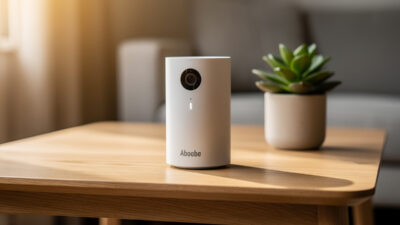
Abode is the smart-home-integrator’s choice: $280 base kit, Z-Wave + Zigbee + Matter + Apple HomeKit + Alexa + Google all native. The Iota all-in-one base station includes a 1080p camera and motion sensor in the same hub. Three monitoring tiers — $0 self-monitored (cellular limited), $7/month basic, $25/month Pro with cellular and pro monitoring. The most flexible system for households running mixed-protocol smart home setups. Trade-off: smaller user base means slower customer support response than SimpliSafe or Ring.
Wyze Home Monitoring
Wyze Home Monitoring is the lowest-cost name-brand entry at $100 for the base kit including hub, keypad, two entry sensors, and one motion sensor. Pro monitoring through Noonlight is $10/month — the cheapest in the category. Cellular backup is limited and Wyze’s smart home integration is Wyze-only. Best as a starter system or for second properties where total spend matters most. Skip for primary residences if reliability is critical — Wyze has had documented data breaches and the monitoring service is white-labeled.
Professional Monitoring vs Self-Monitoring vs No Monitoring
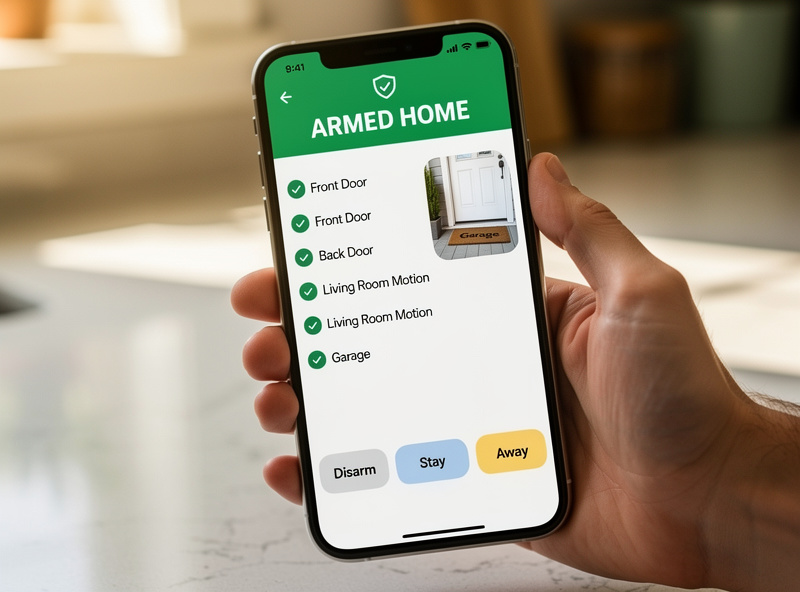
Professional monitoring means a 24/7 central station gets every alarm, attempts to verify it (typically a phone call to you first), and dispatches police/fire/EMS on your behalf. No monitoring company publishes a guaranteed dispatch time — signal acknowledgment at a well-run center is fast, but the full verify-then-dispatch process realistically runs from under a minute to several minutes depending on the provider’s verification procedure. See the professional vs DIY monitoring guide for the full breakdown of where that time actually goes. When a SimpliSafe alarm trips the 105 dB siren in a 2,000 sq ft house, the sound is physically uncomfortable at close range — you cannot ignore it, and neither can your neighbors. Self-monitoring sends alerts to your phone only — you decide whether to call. No monitoring means the system arms/disarms locally and sirens trigger but no alert is sent anywhere. The right choice depends on how often you can actually respond to a 3 AM phone alert.
The honest framing: professional monitoring is worth $20-$30/month if you travel often, sleep heavily, or live alone — situations where you cannot reliably react to a phone notification. Self-monitoring is fine for most households where someone is reachable and the system mostly deters opportunistic intruders. No monitoring (just the local siren) is enough for many apartments and second homes where the goal is “make noise, scare them off” rather than dispatching police. For the deeper analysis, see the professional vs DIY monitoring guide. If monthly cost is the deciding factor, the no monthly fee guide walks through the systems that work fully without a subscription.
Components of a Modern Security System
An integrated security system in 2026 typically combines six device categories. The system vendor (Vivint, SimpliSafe, etc.) provides the panel and base sensors; you can usually add cameras, locks, doorbells, and smart lighting from compatible third parties. This means the security system becomes the integration backbone for the rest of your smart home.
Cameras
Indoor and outdoor cameras for visual verification of alarm triggers and live monitoring. Most systems work natively with their own brand (Ring with Ring, Vivint with Vivint Outdoor Camera Pro) and with major third-party cameras via app integrations. For brand-agnostic camera picks, see the best smart security cameras 2026 hub. For the privacy considerations that come with always-on cameras, the indoor camera privacy guide is mandatory reading. Subscription-free options are covered in cameras without monthly subscription.
Doorbells and Door Sensors
Video doorbells alert you when packages arrive or strangers approach the door — they double as visual verification when entry sensors trigger. Door sensors confirm whether the front door actually opened (most false alarms come from kids forgetting to disarm). The Nest vs Ring doorbell head-to-head covers the doorbell side; smart door sensors with phone notifications covers the contact sensors.
Smart Locks
Smart locks let your security system auto-lock when armed-away and unlock when disarmed. Locks also enable temporary access codes for cleaners, dog walkers, or rental guests — recorded events appear in the security app. Pick from the best smart locks 2026 hub. If you have lock-hacking concerns, the can smart locks be hacked guide covers the real attack surface.
Sensors (Motion, Window, Smoke, Water)
Beyond door contacts, modern security systems support motion, glass-break, smoke, CO, and water-leak sensors that all report to the same panel. Smoke and CO integration in particular qualify many systems for life-safety monitoring — a meaningful insurance discount. see the best smart home sensors hub for the full sensor lineup, or jump to the smart window sensors guide for the contact-and-vibration option.
Security Lighting
Motion-activated outdoor lights and smart bulbs with armed-away schedules deter intruders and improve camera footage at night. The smart motion sensor lights guide covers wired and battery options; smart outdoor lights for home security goes deeper on the security-specific use cases.
Total Cost: Hardware + Monitoring + Installation
5-year total cost varies more than monthly price suggests because of contract terms, equipment leases, and self-monitoring options. Vivint runs $3,300-$4,800 over 5 years (equipment + monitoring), SimpliSafe runs $250-$2,050 depending on monitoring tier, and Abode self-monitored is just the $280 hardware. The right “value” depends on whether you actually use the monitoring.
Quick math on each: Vivint at $45/month for 60 months = $2,700 monitoring, plus $600-$2,100 equipment. SimpliSafe at $20/month for 60 months = $1,200, plus $250 kit, optional and cancellable. Ring Alarm at $20/month with Ring Protect Pro = $1,200 + $200 kit. Abode Pro at $25/month = $1,500 + $280, but the $0 self-monitored tier reduces 5-year cost to just $280. Wyze at $10/month = $600 + $100 kit. The cheapest viable 5-year integrated security spend is Abode at $280 (self-monitored) or Wyze at $700 (basic monitoring) — both ahead of Vivint by $2,000-$4,000.
Best Smart Home Security System by Use Case
The right system depends on your situation more than your budget. The mismatch between use case and product is the single most expensive mistake — buying Vivint for a renter or SimpliSafe for a 5,000 sq ft estate both end badly.
Homeowner, Wants Pro Install: Vivint or ADT Pro
You have a permanent home, value the install convenience, and want the highest-grade equipment. Vivint for app polish and integrated outdoor cameras; ADT for monitoring quality and brand-recognition discount with insurers.
Homeowner, DIY Tolerant: SimpliSafe, Ring Alarm, or Abode
You can install your own gear and prefer no contract. SimpliSafe if you want a clean security-only system. Ring Alarm if you already own Alexa devices. Abode if you run a multi-protocol smart home and want HomeKit + Matter + Z-Wave + Zigbee in one place.
Renter: Ring Alarm, Abode, or SimpliSafe
You need no-drill installation, portability if you move, and short-term commitment. All three top DIY systems work for renters, but cellular backup, peel-stick mounting, and lease-friendliness differ. The home security system for renters guide covers the renter-specific trade-offs in detail.
Lowest Total Cost: Abode Self-Monitored or Wyze
You want a real security system but refuse a monthly fee. Abode self-monitored ($280 one-time, $0/month) and Wyze Home Monitoring ($100 + $10/month) are the only two that work with no recurring cost. Trade-off: self-monitoring requires you to actually answer your phone at 3 AM.
SimpliSafe vs Ring Alarm: Direct Comparison
If you have already narrowed to the two most popular DIY systems, the SimpliSafe vs Ring Alarm head-to-head ranks them across hardware, monitoring, ecosystem, and 5-year cost.
Integration With Your Existing Smart Home
If you already have Alexa, Google Home, or Apple HomeKit running smart bulbs and thermostats, the security system slots in as another device in those ecosystems — but the depth of integration varies wildly. Abode supports all three plus Matter; Vivint and SimpliSafe support Alexa and Google for arm/disarm voice commands but no two-way device control.
The integration matters most for routines: “Goodnight” routine that locks the doors, arms the alarm, dims the lights, and sets the thermostat is only as good as the weakest link. If your security system cannot accept commands from Alexa, your routine has to handle the alarm separately, which most users abandon within months. For ecosystem-fit guidance, see the best smart home ecosystem comparison. New to smart home overall? Start with the smart home for beginners guide.
Common Buyer Mistakes
The four most expensive mistakes are: signing a multi-year contract without reading the cancellation terms, skipping cellular backup to save $5/month, mounting outdoor cameras too high (35°+ down angles miss faces), and assuming pro monitoring will get police dispatched faster than 911. Each mistake costs hundreds to thousands over the lifetime of the system.
I watched a neighbor sign a 60-month Vivint contract and try to cancel when they moved 18 months later — the early termination fee was the full remaining balance plus equipment buyout, nearly $2,000. The contract trap is the most common with Vivint and ADT — early termination fees often equal the remaining contract balance, sometimes $1,500+. Skipping cellular means a Wi-Fi-only system goes dark the moment power or internet drops; “$5/month” feels small until your alarm fails to call out during the one event it was supposed to handle. Camera mounting matters because too-high cameras give you the top of an intruder’s head, not their face — manufacturer placement guidance generally lands around 7-10 feet high with a moderate downward tilt, which is the range that actually captures faces instead of the crown of someone’s head. The pro-monitoring myth: most calls still go through 911, monitoring just adds a verification step. Avoid the broader category-wide mistakes in the smart home mistakes guide.
Frequently Asked Questions
What is the best smart home security system in 2026?
For DIY no-contract setups, SimpliSafe at $250 base kit and optional $20/month monitoring is the best all-around pick. For full-service professional install, Vivint at $600+ equipment and $45-60/month leads on app polish and hardware quality. For Amazon-ecosystem households, Ring Alarm at $200 plus $20/month integrates natively with existing Alexa devices.
Do I need professional monitoring or is self-monitoring enough?
Professional monitoring at $20-30/month is worth it if you travel often, sleep heavily, or live alone — situations where you cannot reliably respond to a phone alert. Self-monitoring is fine for most households where someone is reachable and the system primarily deters opportunistic intruders. Pro monitoring’s real advantage isn’t a guaranteed second-count — it’s that a verified alarm tends to get a faster, higher police-priority response than an unverified 911 call.
Can I install a smart home security system myself?
Yes for DIY systems — SimpliSafe, Ring Alarm, Abode, and Wyze all ship ready to install in 10-20 minutes with peel-and-stick sensors and a base station that connects via app. Vivint and traditional ADT Pro require a technician install. DIY installs are typical for renters and homeowners who want to avoid contracts.
Are there smart home security systems with no monthly fee?
Yes. Abode supports a fully self-monitored tier at $0/month after the $280 hardware purchase. Wyze offers $10/month basic monitoring or fully self-monitored. SimpliSafe also works without monitoring (just local siren and phone alerts). Trade-off is no professional dispatch, no cellular backup on self-monitored tiers, and no insurance-discount certification.
Does a smart home security system work without internet?
Modern security systems include cellular backup specifically for internet outages. The base station switches to cellular when Wi-Fi drops, so monitoring continues. UL 1023, the standard covering household burglar-alarm system units, requires a minimum standby battery backup (commonly around 4 hours) so the panel keeps working through a power outage, which is part of why UL-listed monitored systems pair that battery backup with a cellular or other redundant communication path. Without cellular backup (typical on free monitoring tiers), the system reverts to local-only — siren still triggers but no remote alert. Cellular is included automatically with all professionally monitored systems.
Will a smart home security system lower my homeowners insurance?
Yes, typically 5-20% off your annual premium with proof of professionally monitored security and life-safety (smoke/CO) integration. Insurers want documentation: the monitoring certificate from your provider plus a copy of the contract. Self-monitored systems usually do not qualify for the discount because there is no third-party verification.
What is the difference between SimpliSafe and Ring Alarm?
SimpliSafe is a security-first standalone system with limited smart home integration but the strongest no-contract DIY reputation. Ring Alarm is built around Amazon’s ecosystem with native Alexa, Z-Wave hub, and tight integration with Ring cameras and doorbells. Pick SimpliSafe for security focus, Ring Alarm if you already use Alexa devices.
Related Articles
- Vivint Smart Home Security: Honest Review
- SimpliSafe vs Ring Alarm: DIY System Comparison
- Home Security Systems With No Monthly Fee
- Professional vs DIY Home Security Monitoring
- Home Security Systems for Renters