Smart Bulb Color Temperature Explained — Warm vs Cool (2026)
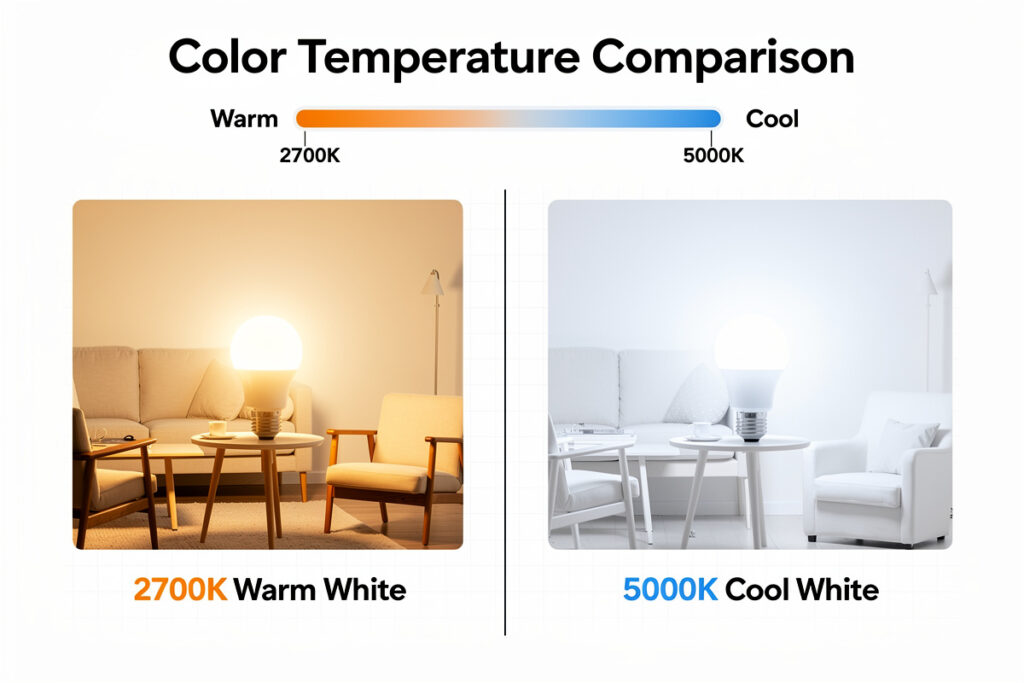
Smart bulb color temperature, measured in Kelvin (K), determines whether light appears warm and yellow (lower Kelvin) or cool and blue (higher Kelvin). Temperatures range from 2200K (warm candlelight) to 6500K (daylight), with 2700K-3000K serving as standard warm white for homes. Understanding color temperature helps you choose bulbs that create the right atmosphere for each activity, support your circadian rhythm, and prevent eye strain in work or relaxation spaces.
As an Amazon Associate I earn from qualifying purchases.
The Kelvin scale measures the color appearance of light, not heat output. Lower numbers (2200K-3000K) produce yellowish, cozy light ideal for relaxation. Higher numbers (4000K-6500K) generate bluish, energizing light that improves focus and mimics natural daylight.
Understanding the Kelvin Scale
The Kelvin temperature scale for lighting ranges from approximately 1000K to 10000K, though most residential bulbs fall between 2200K and 6500K. Here’s what each range looks like in practice:
Warm White (2200K-3000K)
Warm white produces yellowish, cozy illumination similar to traditional incandescent bulbs or sunset light:
- 2200K: Candlelight, fire glow, very warm amber
- 2400K: Sunset, dimmed incandescent, warm and relaxing
- 2700K: Standard warm white, most common residential bulb temperature
- 3000K: Slightly cooler warm white, crisp but still cozy
Use warm white in living rooms, bedrooms, dining rooms, and anywhere you want relaxation and comfort. The yellow tones feel welcoming and don’t interfere with evening melatonin production.
Neutral White (3500K-4100K)
Neutral white offers balanced illumination without strong color bias:
- 3500K: Neutral with slight warmth, versatile for mixed-use spaces
- 4000K: True neutral, clear and clean without warmth or coolness
- 4100K: Cool neutral, slightly energizing but not harsh
Neutral white works well in kitchens, bathrooms, home offices, and transitional spaces where you need clarity without the clinical feel of cooler temperatures.
Cool White/Daylight (5000K-6500K)
Cool white and daylight temperatures mimic natural midday sun:
- 5000K: Cool white, crisp and bright, good for task lighting
- 5500K: Balanced daylight, closest to natural noon sunlight
- 6000K: Daylight with slight blue tint, very energizing
- 6500K: Overcast daylight, slightly bluish, maximum alertness
Use cool white in workspaces, garages, retail environments, and anywhere requiring maximum visibility and alertness. These temperatures boost concentration but feel harsh in relaxation areas.
How Color Temperature Affects Mood and Health
Circadian Rhythm Impact
Your body uses light color temperature to regulate its internal clock:
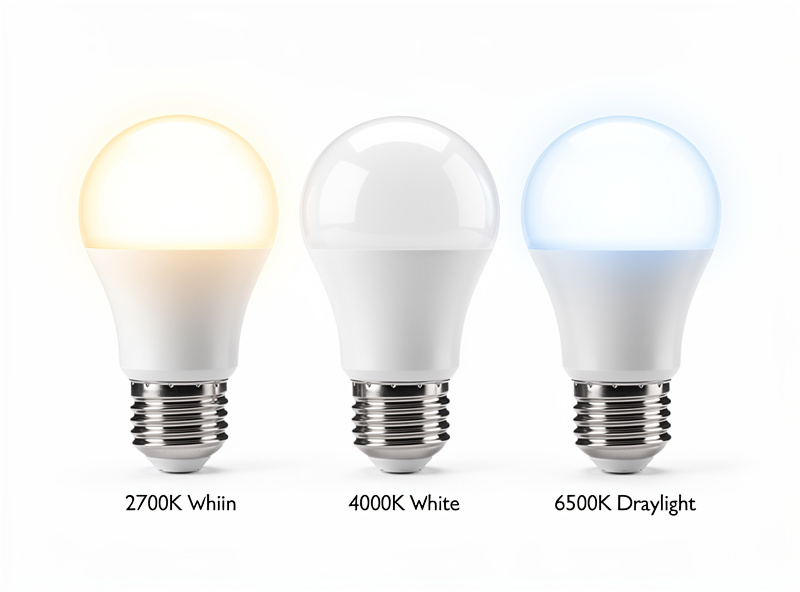
- Morning/Day: Cool white (5000K-6500K) suppresses melatonin and increases alertness, cortisol, and productivity
- Evening: Warm white (2200K-2700K) allows natural melatonin production, preparing your body for sleep
- Night: Very warm amber (under 2200K) or red light minimizes sleep disruption during nighttime activities
Exposure to cool blue light in the evening confuses your circadian rhythm, potentially causing sleep difficulties. The American Medical Association’s 2016 guidance on blue-rich LED lighting warns that blue-rich white light at night is linked to disrupted sleep and other health concerns — that guidance targeted outdoor street lighting specifically, but the underlying blue-light-at-night mechanism applies indoors too.
Smart bulbs with tunable white capabilities automatically shift throughout the day to support your natural rhythm, providing energizing cool light in morning and relaxing warm tones in evening.
Psychological Effects
Beyond biological impacts, color temperature influences emotional states:
- Warm light (2700K): Creates intimacy, relaxation, and comfort. Feels cozy and welcoming.
- Neutral light (4000K): Provides clarity and balance without emotional bias. Feels clean and organized.
- Cool light (5000K+): Promotes alertness, focus, and productivity. Can feel clinical or harsh in excess.
Restaurants use warm lighting (2400K-2700K) to create intimate dining experiences. Offices and schools use cooler lighting (4000K-5000K) to maintain alertness and productivity.
Visual Comfort and Eye Strain
Different tasks require different color temperatures for optimal comfort:
- Reading: 3000K-4000K provides good contrast without harsh blue light that strains eyes
- Computer work: 4000K-5000K maintains alertness, though many prefer 3000K for reduced blue light exposure
- Detailed tasks: 5000K-6500K offers maximum contrast and clarity for crafts, repairs, and precision work
- Relaxation: 2200K-2700K reduces eye strain and supports evening wind-down
Learn how to optimize lighting for bedroom comfort and sleep quality with our dedicated guide.
Smart Bulb Features for Color Temperature Control
Tunable White Bulbs
Tunable white smart bulbs adjust across a range of color temperatures, typically 2200K-6500K. You control the exact warmth or coolness through smartphone apps, voice commands, or automation schedules. A Philips Hue White Ambiance bulb is a popular tunable-white pick.
Popular tunable white options include:
- Philips Hue White Ambiance (2200K-6500K)
- TP-Link Kasa Tunable White (2500K-6500K)
- Wyze Bulb (2700K-6500K)
- LIFX Mini Day & Dusk (2500K-6000K)
These bulbs cost $10-30 each and provide flexibility that standard single-temperature bulbs cannot match.
Full Color RGB Bulbs
RGB smart bulbs offer millions of color options in addition to white temperature control. While primarily used for accent lighting and entertainment, they also provide white light across temperature ranges.
RGB bulbs typically produce white light less efficiently than dedicated tunable white bulbs because they mix red, green, and blue LEDs rather than using dedicated white LEDs. However, the color flexibility makes them versatile for spaces serving multiple purposes.
Circadian Lighting Features
Advanced smart bulbs include automatic circadian rhythm support that shifts color temperature throughout the day without manual intervention:
- Morning (6-9 AM): Gradual shift from warm to cool white
- Day (9 AM-5 PM): Maintains energizing cool white (4000K-5000K)
- Evening (5-8 PM): Gradual transition back to warm white
- Night (8 PM-6 AM): Very warm amber or dimmed settings
Nanoleaf Essentials and certain Philips Hue configurations offer native circadian lighting support.
Choosing Color Temperature by Room
Bedrooms: 2200K-2700K
Prioritize warm, relaxing light that supports sleep:
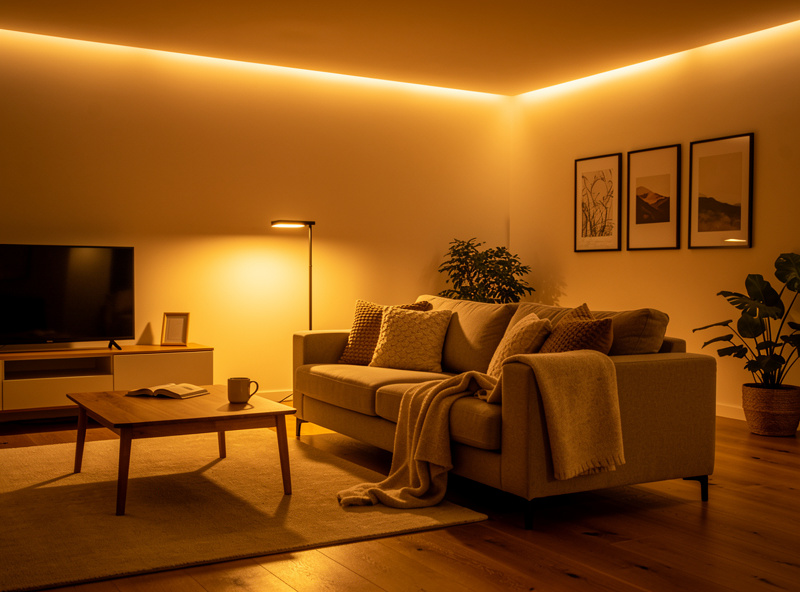
- Use 2700K for general illumination and reading in bed
- Shift to 2200K or “candlelight” mode 1-2 hours before sleep
- Consider tunable white bulbs for morning wake-up routines with gradual shifts to cooler light
Read the complete guide to selecting smart bulbs for bedrooms for detailed recommendations.
Living Rooms: 2700K-3000K
Living rooms serve multiple purposes from entertaining to TV watching:
- 2700K creates welcoming atmosphere for guests and relaxation
- 3000K provides slightly better visibility for reading and activities
- Avoid temperatures above 3500K, which feel too clinical for residential spaces
Kitchens: 3000K-4000K
Kitchens need clear visibility for food preparation and safety:
- Task areas (counters, stove): 3500K-4000K for maximum clarity
- General lighting: 3000K-3500K balances visibility with warmth
- Under-cabinet lighting: 4000K provides excellent contrast for detailed work
Bathrooms: 3000K-4000K
Bathrooms require accurate color rendering for grooming:
- Vanity lighting: 3500K-4000K provides true color accuracy for makeup and shaving
- Overhead lighting: 3000K-3500K for general illumination
- Nightlight: 2200K-2700K for late-night visits without sleep disruption
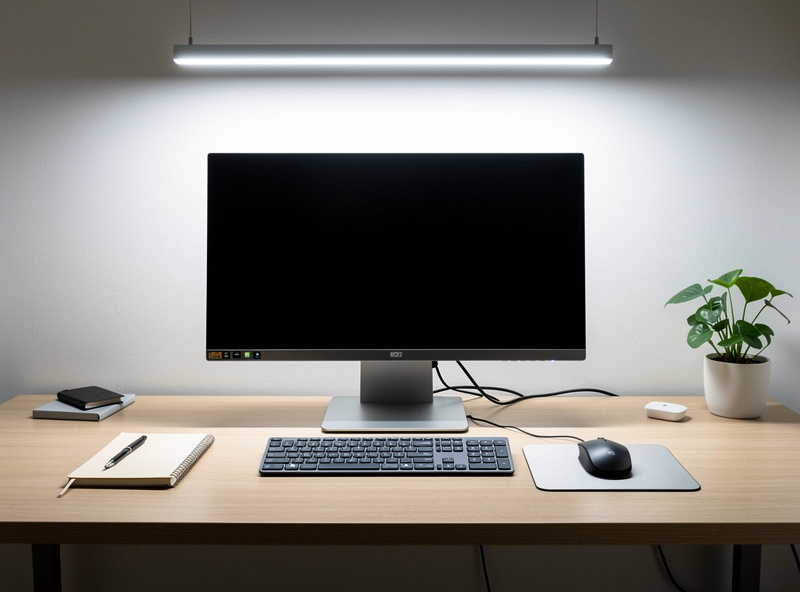
Home Offices: 4000K-5000K
Workspaces benefit from energizing light that maintains alertness:
- Task lighting: 4500K-5000K for focus and productivity
- General lighting: 4000K provides good visibility without harshness
- Consider shifting to 3000K after work hours for better evening transition
Garages and Workshops: 5000K-6500K
Task-oriented spaces need maximum visibility:
- Use 5000K-6000K for detailed mechanical work and tool identification
- 6500K mimics daylight for color-critical tasks like painting or staining
- Consider motion-activated lighting to save energy in rarely used spaces
Color Temperature and Color Rendering
Color temperature describes light warmth/coolness, while Color Rendering Index (CRI) measures how accurately colors appear under that light. Both matter for quality lighting:
- CRI 90+: Excellent color accuracy, objects look natural
- CRI 80-89: Good color rendering, suitable for most residential use
- CRI below 80: Poor color accuracy, objects may look unnatural
A 2700K bulb with CRI 95 produces more accurate, pleasing illumination than a 2700K bulb with CRI 70, even at the same temperature. Premium smart bulbs typically offer CRI 90+ across their temperature range.
Check CRI specifications when selecting bulbs for areas where color accuracy matters, such as bathrooms, art studios, kitchens, and retail spaces.
Common Color Temperature Mistakes
Mixing Temperatures in Open Spaces
Avoid using dramatically different color temperatures in visible proximity. A 2700K living room adjacent to a 5000K kitchen creates jarring, unpleasant contrast. Choose complementary temperatures (2700K and 3000K, or 3500K and 4000K) for adjacent spaces.
Using Cool Light in Bedrooms
Cool white light (4000K+) in bedrooms interferes with sleep preparation. Even if you prefer brighter illumination for reading, shift to 2700K or warmer at least one hour before bed to support natural melatonin production.
Ignoring Task Requirements
Using 2700K throughout an entire home ignores the functional needs of different spaces. Kitchens, workshops, and offices benefit from cooler temperatures that provide better visibility and alertness. Match temperature to room function rather than using one temperature everywhere.
FAQ
What color temperature is best for reading?
4,000-5,000K neutral to cool white provides the best reading light. This range offers high contrast between text and page without the harshness of daylight-equivalent 6,500K. Avoid warm 2,700K for reading as it causes eye strain during extended sessions.
What is the most relaxing color temperature?
2,200-2,700K warm white is most relaxing. This range mimics candlelight and sunset tones that signal your brain to produce melatonin for sleep. Many smart bulbs offer a dedicated relax or evening mode that automatically selects temperatures in this range.
Can color temperature affect productivity?
Yes, though the exact size of the effect varies by study. Office-lighting research has found that higher color temperature (5,000K+) improves self-reported concentration and sleepiness for shift workers compared to standard warm-white lighting. Treat 4,000-5,000K as the daytime-alertness range and expect a real but modest effect, not a guaranteed productivity multiplier.
Should I use different color temperatures in each room?
Yes. Use 2,700K warm white in bedrooms and living rooms for relaxation, 3,500-4,000K neutral white in kitchens and bathrooms for task visibility, and 5,000K cool white in home offices for focus. Smart bulbs make this easy with per-room schedules.
What does tunable white mean?
Tunable white smart bulbs adjust color temperature across a range, typically 2,200K to 6,500K, without changing colors. This differs from color-changing RGB bulbs. Tunable white is more useful for daily life because it adapts lighting to activities throughout the day.
Do all smart bulbs support color temperature adjustment?
No. Basic smart bulbs offer only fixed warm white (2,700K) with dimming. Tunable white bulbs adjust temperature across a range. Full-color RGB bulbs include tunable white plus 16 million colors. Check specifications before purchasing if color temperature control matters to you.
Bottom Line
Smart bulb color temperature, measured in Kelvin, determines whether light appears warm and yellow (2200K-3000K) or cool and blue (4000K-6500K). Understanding this scale helps you create appropriate atmospheres for different activities and supports your natural circadian rhythms.
Use warm white (2700K) for living rooms and bedrooms to create cozy, relaxing environments that support evening melatonin production. Choose neutral to cool white (3500K-5000K) for kitchens, bathrooms, and workspaces where clarity and alertness matter. Select tunable white smart bulbs to adjust temperature throughout the day, providing energizing cool light in morning and relaxing warm tones in evening.
When selecting bulbs, consider both temperature range and CRI (Color Rendering Index) for the best visual experience. Premium options like Philips Hue White Ambiance and Nanoleaf Essentials offer wide temperature ranges (2200K-6500K) with excellent color accuracy.
Ready to choose smart bulbs for your specific needs? Explore the guides to the best smart home devices for 2026 and hub-free smart lighting options to build your ideal lighting system.
Related Articles
- Best Smart Lights 2026: Complete Buyer Guide
- Best Smart Bulbs for Bedroom — Sleep Better
- How to Set Smart Lights to Simulate Sunrise
- Smart Light Strip Behind TV — Setup Guide
- Do Smart Bulbs Use Electricity When Off?