Do Smart Bulbs Use Electricity When Off? (2026)
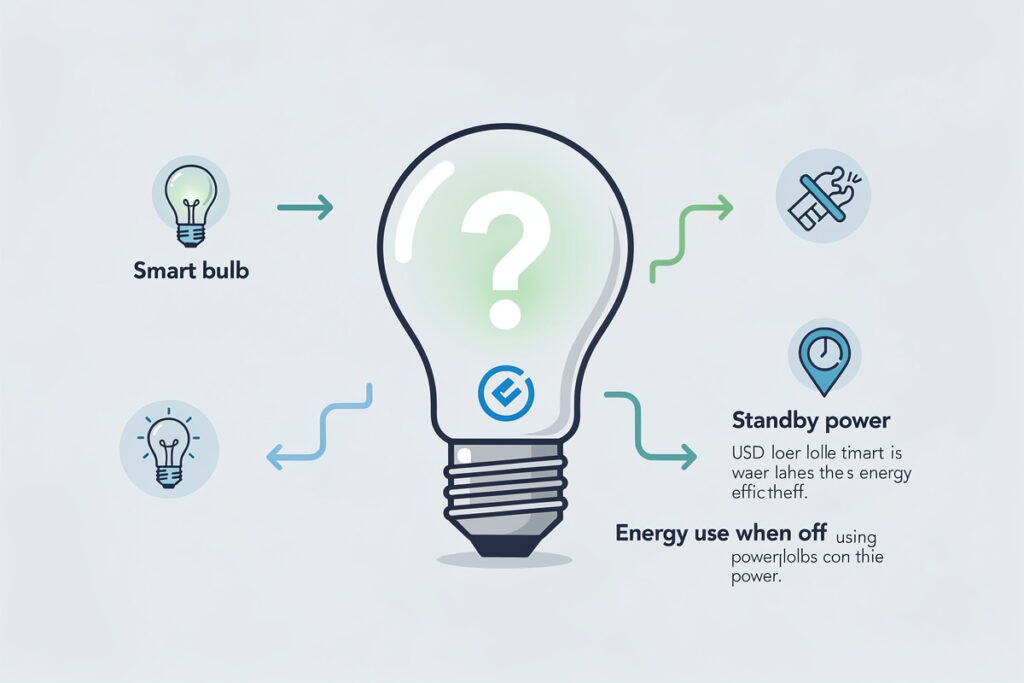
Yes, smart bulbs use a small amount of electricity when turned off, typically consuming 0.2 to 0.5 watts in standby mode to maintain Wi-Fi connectivity and respond to app or voice commands. This phantom power draw costs approximately $0.50 to $2 per year per bulb, depending on your electricity rates and the specific bulb model. While measurable, this standby consumption is negligible compared to the energy savings smart bulbs provide through dimming, scheduling, and efficient LED technology — see the complete smart lights buyer guide for top picks.
Understanding standby power helps you make informed decisions about smart home energy use and calibrate expectations for electricity costs. The convenience of remote control and automation comes with a minimal energy trade-off.
As an Amazon Associate I earn from qualifying purchases.
Why Smart Bulbs Use Power When Off
Smart bulbs aren’t truly “off” when you press the power button in an app or give a voice command. Instead, they enter a low-power standby state that maintains essential functions:
- Wi-Fi or Zigbee/Z-Wave radio: The wireless chip stays active to receive commands from your network
- Microprocessor: A small internal computer monitors for signals and manages bulb functions
- Memory storage: Settings, schedules, and connection credentials remain stored and accessible
- Capacitors and power regulation: Circuitry maintains readiness to instantly activate full brightness
This standby power is similar to your television, microwave, or any device with instant-on capabilities. The technology requires constant low-level energy to remain responsive.
Standby Power Consumption by Brand
Standby consumption varies between manufacturers and connection types. Here are typical ranges for popular smart bulb brands:
| Brand/Type | Standby Watts | Annual Cost* |
| Philips Hue (Zigbee) | 0.1-0.3W | $0.15-0.40 |
| Wyze Wi-Fi Bulb | 0.3-0.5W | $0.40-0.65 |
| TP-Link Kasa Wi-Fi | 0.3-0.4W | $0.40-0.50 |
| LIFX Wi-Fi Bulb | 0.5-1.0W | $0.65-1.30 |
| Sengled Wi-Fi Bulb | 0.2-0.4W | $0.25-0.50 |
| GE Cync Bluetooth/Wi-Fi | 0.2-0.5W | $0.25-0.65 |
| Nanoleaf Thread Bulb | 0.2-0.4W | $0.25-0.50 |
*Based on average U.S. electricity rate of $0.15 per kWh. Adjust for your local rates.
Zigbee bulbs (like Philips Hue) generally use less standby power than Wi-Fi bulbs because Zigbee requires less energy to maintain connections. Wi-Fi radios consume more power but offer direct router connection without hubs.
Calculating Real Electricity Costs
Annual Cost for a Single Smart Bulb
Formula: (Standby watts × 8760 hours × electricity rate) ÷ 1000 = annual cost
Example for a Wyze bulb at 0.4W standby:
- 0.4 watts × 8,760 hours = 3,504 watt-hours (3.504 kWh) per year
- 3.504 kWh × $0.15 = $0.53 per year
At $0.20 per kWh (common in Europe and high-cost U.S. regions):
- 3.504 kWh × $0.20 = $0.70 per year
Cost for Multiple Bulbs
Scale these calculations based on your smart bulb count:
- 5 bulbs: $2.50-3.50 annually
- 10 bulbs: $5.00-7.00 annually
- 20 bulbs: $10.00-14.00 annually
- 50 bulbs: $25.00-35.00 annually
Even with 20 smart bulbs throughout your home, standby power costs less than a single restaurant meal per year.
Energy Savings vs. Standby Cost
Smart bulbs more than offset their standby consumption through energy efficiency and intelligent features:
LED Efficiency Gains
A 60-watt equivalent smart LED consumes 9-12 watts when on, compared to 60 watts for an incandescent bulb. Over 3 hours of daily use:
- Incandescent: 60W × 3 hours = 180 watt-hours daily
- Smart LED: 10W × 3 hours = 30 watt-hours daily
- Daily savings: 150 watt-hours (0.15 kWh)
- Annual savings: 54.75 kWh = $8.21 per bulb per year
A single smart bulb saves more in active use than 10-20 bulbs cost in standby power combined.
Dimming Savings
Dimming a smart bulb to 50% brightness typically reduces power consumption by 40-60%, not just 50%. LED dimming works more efficiently than incandescent dimming. If you routinely dim lights for ambiance, savings multiply beyond basic LED efficiency.
Example: A 10-watt smart bulb dimmed to 50% might consume only 4 watts rather than 5 watts, saving an additional 10% energy compared to linear expectations.
Scheduling and Automation
Smart schedules prevent lights from staying on unnecessarily. Forgotten lights that automatically turn off after bedtime or when you leave home save substantial energy over time. Even one “forgotten light” prevented per week adds up to meaningful savings.
Learn more about setting up efficient schedules in the guide to smart home equipment that actually saves money.
How to Minimize Standby Power
If you want to reduce standby consumption further, consider these strategies:
Choose Zigbee Over Wi-Fi
Zigbee bulbs use 30-50% less standby power than Wi-Fi alternatives. The trade-off is requiring a hub, but the Philips Hue ecosystem offers excellent reliability with lower standby consumption.
Use Physical Switches Strategically
Completely cutting power with a physical wall switch eliminates standby draw entirely. However, this defeats smart functionality until power restores. Reserve this approach for:
- Seasonal lighting (holiday decorations, guest rooms)
- Infrequently used fixtures (basement, garage)
- Bulbs you rarely control remotely
Install smart switches instead of smart bulbs in locations where you want both physical control and standby elimination for connected non-smart LED bulbs.
Group Bulbs on Smart Switches
Install one smart switch to control multiple non-smart LED bulbs. You eliminate standby power for 3-6 bulbs while maintaining smart control through the single switch. This approach works best for overhead fixtures with multiple bulbs.
Explore smart bulbs versus smart switches to determine the best approach for each room.
Unplug During Extended Absences
For vacation homes or seasonal properties, physically unplug smart bulbs or turn off circuit breakers to eliminate all standby consumption during months of non-use.
Measuring Your Actual Consumption
Curious about your specific bulbs? Use these methods to measure real-world standby power:
Kill A Watt Meter
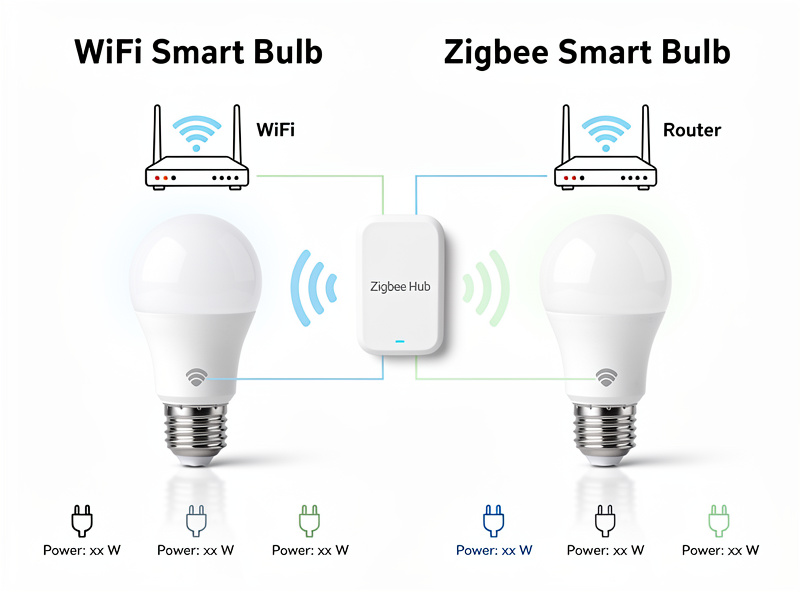
A Kill A Watt electricity usage monitor ($25-35) plugs between your bulb and socket to measure actual wattage. Turn the bulb “off” via app and read the standby consumption directly. This provides precise measurements for your exact model and firmware version.
Smart Plug with Energy Monitoring
Plug a lamp containing your smart bulb into a smart outlet with energy monitoring (like TP-Link Kasa HS110 or Wyze Plug). The app displays real-time and historical power consumption, including standby measurements when the bulb is off.
These plugs themselves use 1-2 watts, so factor that into calculations.
Whole-Home Energy Monitors
Systems like Sense or Emporia Vue detect individual device signatures and can identify smart bulb standby patterns. While expensive ($200-300), they provide comprehensive visibility into all phantom loads throughout your home.
Environmental Impact Considerations
Standby power has minor environmental impact that smart bulbs offset through efficiency:
Carbon Footprint Math
Average U.S. electricity generation produces roughly 0.8 pounds of CO2 per kWh, per the U.S. Energy Information Administration. A single smart bulb’s annual standby consumption of 3-5 kWh produces roughly 2.4-4 pounds of CO2.
Meanwhile, replacing one 60-watt incandescent with a smart LED saves approximately 50 kWh annually, preventing 42.5 pounds of CO2 emissions. Net environmental benefit: 38+ pounds of CO2 reduced per bulb.
Lifecycle Impact
Smart bulbs last 15,000-25,000 hours compared to 1,000 hours for incandescents. Fewer replacements mean reduced manufacturing, packaging, and transportation emissions over time.
The standby power question becomes irrelevant when considering total lifecycle environmental impact. Smart bulbs are unequivocally better for the environment despite phantom loads.
FAQ
How much does smart bulb standby power cost per year?
A single smart bulb drawing 0.3 watts in standby costs approximately $0.40-$1.00 per year depending on your electricity rate. For a household with 10 smart bulbs, total standby cost runs $4-$10 annually, which is far less than the $50-$100 saved through efficient LED technology and automated scheduling.
Do smart bulbs use more standby power than regular LEDs?
Yes. Regular LED bulbs draw zero watts when switched off because they have no WiFi radio or processor. Smart bulbs draw 0.2-0.5 watts to maintain their wireless connection. However, smart bulbs save more energy overall through dimming, scheduling, and occupancy-based automation that regular LEDs cannot provide.
Can I reduce smart bulb standby power?
You can cut standby power by physically switching off smart bulbs at the wall switch, but this defeats the purpose of smart control. A better approach is choosing Zigbee or Thread bulbs (like Philips Hue), which typically draw less standby power than Wi-Fi models such as LIFX.
Do smart bulbs use electricity when the app says off?
Yes. When you turn off a smart bulb through the app, it enters standby mode but stays connected to WiFi. The bulb continues drawing 0.2-0.5 watts to listen for commands. Only cutting power at the physical switch eliminates all electricity consumption.
Are WiFi smart bulbs worse for standby than Zigbee?
Yes. WiFi smart bulbs typically draw 0.3-0.5 watts in standby, while Zigbee and Thread bulbs draw 0.1-0.2 watts. If you have many smart bulbs, hub-based protocols reduce total standby consumption, though the hub itself draws 2-5 watts continuously.
Does smart bulb standby power affect my electric bill?
Negligibly. Ten smart bulbs in standby 24/7 add roughly $4-$10 to your annual bill. Compare this to a single incandescent bulb left on for 8 hours daily costing $8-$15 per year. Smart bulbs save far more through efficient LED technology than they cost in standby draw.
Bottom Line
Smart bulbs consume 0.2 to 0.5 watts in standby mode, costing approximately $0.50 to $2 per bulb annually depending on your electricity rates and specific model. While this phantom power is real and measurable, it pales in comparison to the energy savings smart bulbs provide through LED efficiency, dimming capabilities, and scheduling automation.
A typical smart bulb saves $8-15 annually in active use compared to incandescent bulbs, offsetting standby costs many times over. Even compared to non-smart LEDs, the additional standby draw is negligible considering the convenience and automation benefits.
Zigbee-based bulbs like Philips Hue use less standby power than Wi-Fi alternatives, but the difference amounts to cents per year. Choose bulbs based on features, reliability, and ecosystem compatibility rather than standby consumption concerns.
The real energy savings come from using your smart bulbs effectively: dimming lights routinely, setting schedules to prevent waste, and taking advantage of automation. These practices save dollars monthly while standby costs pennies annually.
Looking for ways to maximize smart home efficiency? Check out the guide to the best smart home devices for 2026 that save both energy and money.
Related Articles
- Best Smart Lights 2026: Complete Buyer Guide
- Smart Bulb vs Smart Switch: Complete Comparison
- Best Smart Lights That Work Without a Hub
- Best Smart Bulbs for Bedroom
- Smart Bulb Color Temperature Explained