Smart Sous Vide Buyers Guide 2026: Anova vs Joule
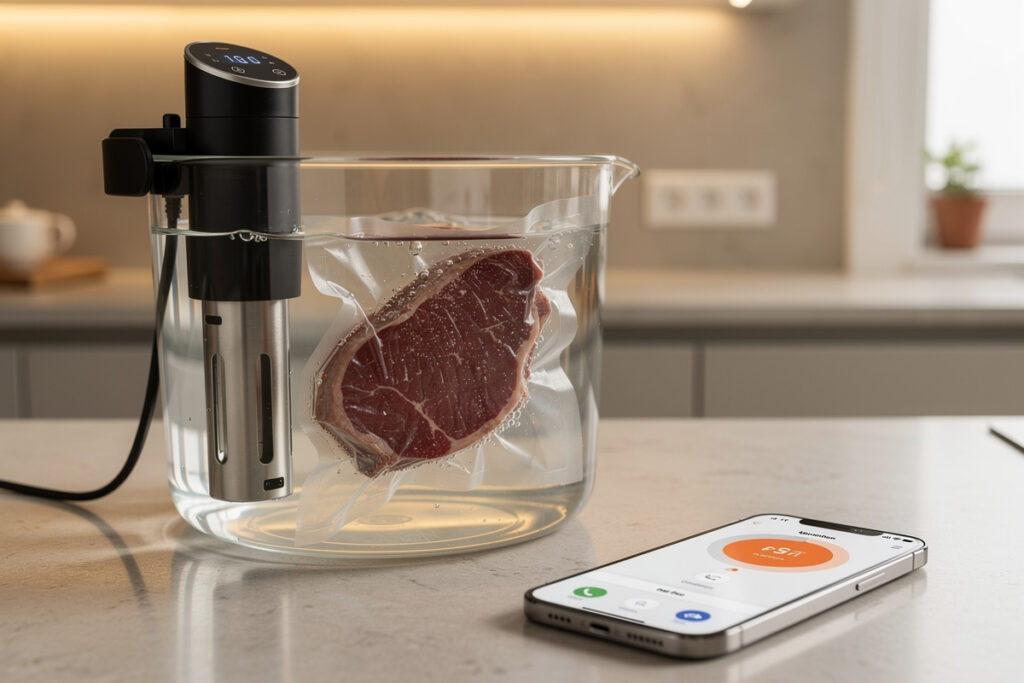
A smart sous vide circulator hands you restaurant-grade steak, perfect chicken breasts, and walk-away cooking windows because the precise water temperature, the cook duration, and the finish-time alert all manage themselves on your phone. The 2026 smart sous vide market starts at $129 for connected immersion circulators and reaches $249 for premium units with multi-stage cooking and Wi-Fi recipe library — a far smaller price band than other smart kitchen categories, which makes the buying decision almost entirely about app quality.
This guide covers what changes when sous vide gets connected, the three product tiers, the two brands that dominate the category, and the specific recipes where smart features actually deliver versus the ones where a $79 dumb circulator works just as well.
Disclosure: HomeAutoCentral is reader-supported. As an Amazon Associate I earn from qualifying purchases, at no extra cost to you. I only recommend gear worth your money.
What a Smart Sous Vide Circulator Does
A smart sous vide circulator is an immersion-heating device with Wi-Fi or Bluetooth connectivity, a companion app for recipe push, and finish-time push notifications. The 2026 working definition: must allow remote temperature adjustment mid-cook, push a notification when the target temperature is reached and again when the cook timer ends, and integrate with at least one major voice assistant. Bluetooth-only models that only work within 30 feet of the device do not earn the smart label in 2026.
The single feature that earns the connected premium for most households is the recipe-pushed cooking program. Sous vide cooking depends on temperature accuracy and time — chicken breast at 140°F for 90 minutes vs 145°F for 60 minutes give wildly different textures, and both times sit well past the minimum hold needed for safe pasteurization at those temperatures (the USDA/ARS chicken time-temperature data puts the 140°F minimum at about 25 minutes and the 145°F minimum at about 8 minutes for a 7-log Salmonella reduction — see the MSU Extension summary of the USDA/FSIS poultry tables). The Anova or Joule app pushes the exact temperature and time for hundreds of cuts and proteins, eliminating the “what was the temperature again?” lookup mid-prep.
Three Smart Sous Vide Tiers
| Tier | Price Range | Wattage | Best Connected Feature |
|---|---|---|---|
| Compact Smart Circulator | $129-$179 | 800-1,000W | Recipe push + finish notification |
| Family-Size Smart Circulator | $179-$229 | 1,000-1,200W | Above + voice control + multi-stage cook |
| Premium Smart Circulator | $229-$249 | 1,200W + faster heat-up | Above + container kit + sensor probes |
Compact and Family-Size cover the vast majority of home cooks. The $50-$100 difference between tiers comes from heat-up speed (faster recovery when adding cold ingredients) and bath capacity (10-liter vs 18-liter container support). Buy Family-Size if you sous vide for 4+ people or batch-cook proteins for the week; Compact otherwise.
Connected Features Ranked by Daily Value
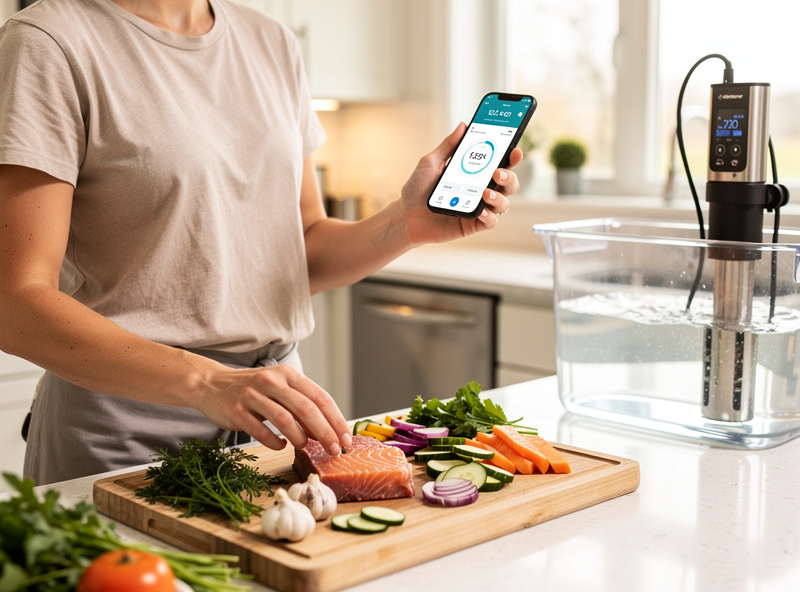
1. Recipe push from app. Anova’s in-app recipe library is the deeper of the two; Joule’s ChefSteps-curated collection is smaller but tightly edited by professional chefs. Tap the recipe in the app, the temperature and time push to the device. Eliminates the temperature-and-time lookup that happens at the start of every cook. It’s the most-used connected feature on any smart sous vide.
2. Finish-time push notification. Sous vide cooks run 60 minutes to 48 hours. Without a notification, owners stand at the counter or set a separate phone timer; with a push, the device pings the moment the cook is done.
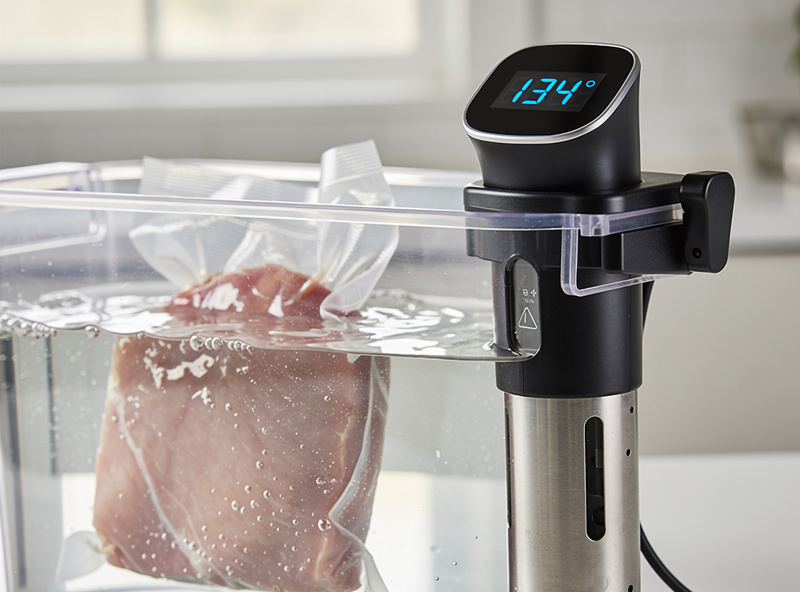
3. Remote temperature adjustment. Useful when a meeting runs late and you want the cook to hold at a finishing temperature longer. Drop from 134°F (medium-rare) to 130°F (rare-medium) and the bath cools without ruining the cook.
4. Multi-stage cooking (premium tier). Anova Pro and Joule support multi-stage programs: 12 hours at 145°F, then 30 minutes at 155°F, then hold. Useful for tougher cuts (brisket, short rib) that benefit from a temperature ramp.
5. Voice control. “Alexa, set sous vide to 134 degrees and 90 minutes” works on Anova and Joule. Most-used voice command is “stop the cook” when you walk in early; lesser used for setting temps because the app is faster.
6. Cooking community recipes. Both apps have user-shared recipes. Useful for discovering recipes you would not have looked up; not core to weeknight cooking.
Smart Sous Vide Brand Reality: Anova vs Joule
Anova and Joule (Breville sub-brand) are the two names that dominate the smart sous vide conversation — nearly every buying guide and forum thread on the category comes back to one or the other. Anova has the larger recipe library, broader Alexa and Google Home integration, and stronger Android app reliability. Joule has the more elegant industrial design, better iOS app reliability, and Apple HomeKit support. Both have shipped firmware updates within the last 6 months and both have a multi-year track record of continued app support.
Other brands (Inkbird, Wancle, Greater Goods Connected) offer Wi-Fi sous vide at lower prices but with less reliable apps and shorter firmware-support windows. Choose Anova or Joule unless price is the dominant constraint.
Six Shopping Criteria for a Smart Sous Vide
1. App ecosystem alignment. Anova is the clear pick for Android households and broader Alexa/Google integration. Joule is the clear pick for iOS-only households and Apple HomeKit users.
2. Wattage and heat-up speed. 800W circulators heat 6 liters of water from room temperature to 140°F in about 25 minutes; 1,200W circulators do it in 14 minutes. Heat-up speed matters more for large baths (entertaining) than small (weeknight protein).
3. Maximum bath size supported. Anova Precision 3.0 is rated for baths up to roughly 18 liters (5 gallons); Joule’s own guidance allows an even bigger bath in a covered, insulated container (see ChefSteps’ official Joule FAQ). Both comfortably exceed any home use case. Buy a 12-liter container regardless — large enough for a week of meal prep, small enough to store.
4. Display quality and on-device controls. Anova has a clear backlit display; Joule’s display is minimal (assumes you use the app). For households that sometimes prefer to set temperature directly without the phone, Anova’s display is clearly better.
5. Recipe library size and quality. The Anova Culinary app’s free library is the broader of the two, plus a Pro subscription tier with additional guided cooks. Joule’s recipes are all included free, curated by the ChefSteps team. Both libraries are high-quality; Anova is broader.
6. Firmware update history. Anova ships firmware updates on a noticeably more regular cadence than Joule, though both brands are still actively maintaining their apps and devices. Lower-tier brands (Inkbird, Wancle) update far less often, when they update at all — worth checking each brand’s own release notes before you buy if firmware support matters to you.
When Smart Sous Vide Pays Back the Premium
Smart sous vide circulators cost $50-$120 more than dumb equivalents at the same wattage. The payback comes from three places: eliminated temperature lookups (saves 60-90 seconds per cook), finish-time push notifications (eliminates the timer-on-phone workflow), and recipe-pushed multi-stage programs that would be unwieldy to manage manually.
For households cooking sous vide weekly or more, the smart features earn the premium fast. For households cooking sous vide occasionally (1-2 times per month), a $79 dumb circulator works just as well — the recipe lookup and timer setup take the same effort whether the device is connected or not. Smart sous vide is one of the most discretionary smart-kitchen purchases; buy on use frequency.
Smart Sous Vide Versus Smart Pressure Cooker
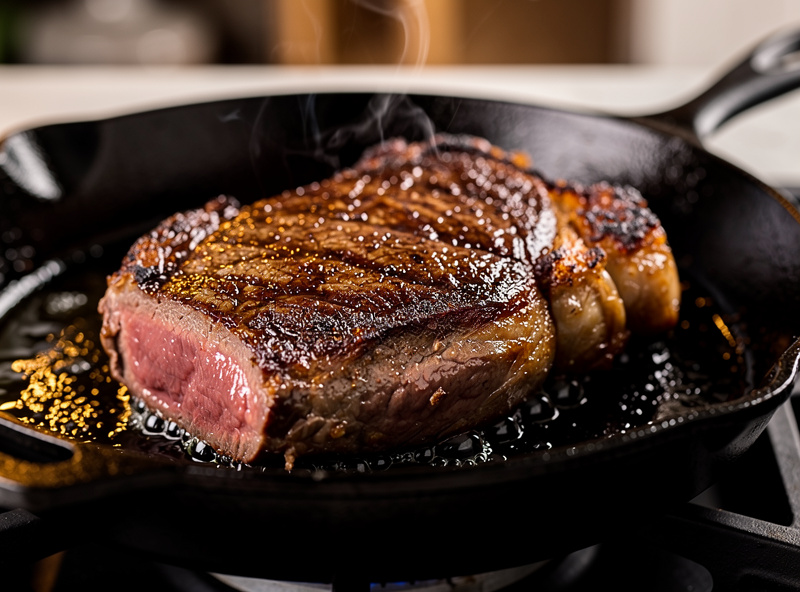
Sous vide and pressure cookers solve opposite problems. Sous vide gives you long unattended cooks at precise low temperatures (134°F medium-rare steak for 2 hours, 165°F chicken for 1.5 hours); pressure cookers give you fast cooks at high pressures (90-minute braised short rib in 35 minutes). Both have smart-connected versions; the right choice depends on whether your bottleneck is time-on-clock (pressure cooker wins) or texture-precision (sous vide wins).
Many serious cooks own both. They serve different roles in the kitchen. See the smart pressure cooker buyers guide for the comparison detail and the smart kitchen appliances overview for the full ecosystem context.
Frequently Asked Questions
What is the best smart sous vide circulator?
Anova Precision 3.0 leads on recipe library size, broader Alexa and Google Home support, and Android app reliability. Joule by Breville leads on iOS app polish, Apple HomeKit support, and industrial design. Both have shipped firmware in the last 6 months and both have a multi-year track record of continued app support.
Is a smart sous vide worth it over a regular sous vide?
Smart sous vide is worth the $50-$120 premium for households cooking sous vide weekly or more often. The recipe push, finish notification, and multi-stage programs save 60-90 seconds per cook and eliminate the temperature-lookup workflow. For 1-2 times per month users, a dumb circulator works just as well and saves the premium.
Can you cook unattended with a smart sous vide?
Yes — long unattended cooks are the core sous vide use case. Vacuum-seal the protein, drop in the bath, set the temperature and timer in the app, and walk away. The push notification fires when the cook completes. Common unattended cooks: 90-minute chicken breast, 2-hour ribeye steak, 24-hour pork shoulder, 48-hour beef short rib.
Does a smart sous vide work without internet?
Yes — smart sous vide circulators continue to cook from on-device controls when internet drops. Anova has a clear backlit display with full controls; Joule’s minimal display assumes you use the app, so Joule degrades more visibly during outages. Bluetooth control still works without internet for both brands when within 30 feet.
Do you need a vacuum sealer to use a sous vide?
No — a $20 box of zip-top freezer bags with the water displacement method works for 90% of home sous vide. Vacuum sealers add convenience and slightly better food longevity for batch cooking, but are not required. Many experienced home cooks recommend starting with zip-top bags and adding a vacuum sealer only if batch cooking becomes regular practice.
How long do smart sous vide circulators last?
Anova and Joule typically last 5-7 years with weekly use. The motor and impeller are the main wear points. Connected components (Wi-Fi, Bluetooth modules) are rarely the failure point. Plan for one replacement in a 10-year ownership window if you cook sous vide often.
Related Articles
- Smart Kitchen Appliances 2026: Complete Buyers Guide (parent hub)
- Smart Air Fryer Buyers Guide 2026
- Smart Oven Buyers Guide 2026
- Smart Coffee Maker Buyers Guide 2026
- Voice Assistants & Smart Home Protocols Guide