Smart Oven Plug Timing Automation (Done Safely)
Smart oven plug timing automation is the most misunderstood appliance project on the internet, so let me start with the line that matters: you never switch the heating element of an oven or cooktop on a plug. Full stop. What you actually automate is timing, presence-aware safety, and notifications — a power-draw watch that warns you if the oven has been pulling heat far longer than any recipe should while the house is empty. In my setup that single “left on while away” alarm is worth more than every gimmicky cooking automation combined.
I run a local-first Home Assistant install, and the oven is where I am most conservative of anywhere in the house. A washer or dishwasher on a plug is fine because cutting its power is at worst an inconvenience; cutting an oven’s power mid-roast, or worse, having a relay fail closed on a heating element, is a genuine hazard. So the entire approach here is monitor-and-alert, with switching reserved only for low-wattage countertop cookers that are built to be unplugged. Here is how I think about it and what I actually run.
The hard line: never automate the element
A built-in oven and a cooktop are high-wattage, hardwired, code-regulated appliances, and they are not candidates for plug switching under any circumstances. Wall ovens routinely pull 2,000-3,500 W and are wired to a dedicated 240 V circuit with no plug to begin with; a gas range’s safety depends on its own flame-supervision, which an external automation must never override. The risk is not theoretical — a stuck relay on a heating element is a fire, and no convenience justifies it. The Electrical Safety Foundation International is unambiguous that high-draw, hardwired circuits are not where you improvise switching.
This is the clearest case of the rule I repeat across the smart home appliance automation hub: automate what the appliance tells you and what you can safely schedule, never the dangerous core function. For the oven, “what it tells you” is power draw and time; that is the whole automation surface, and it is plenty. The high-draw reasoning is the same logic I lay out in the smart plug for a space heater guide — heating elements and undersized switching do not mix.
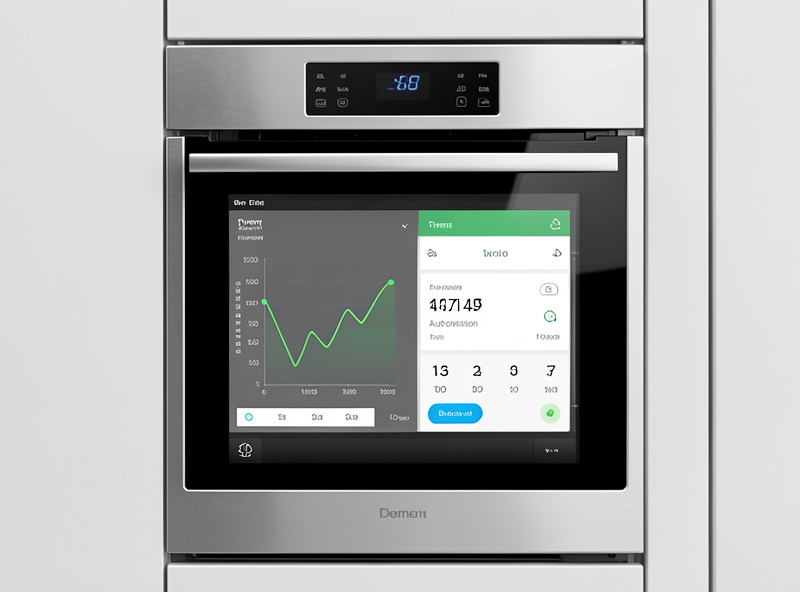
What you actually monitor: power and time
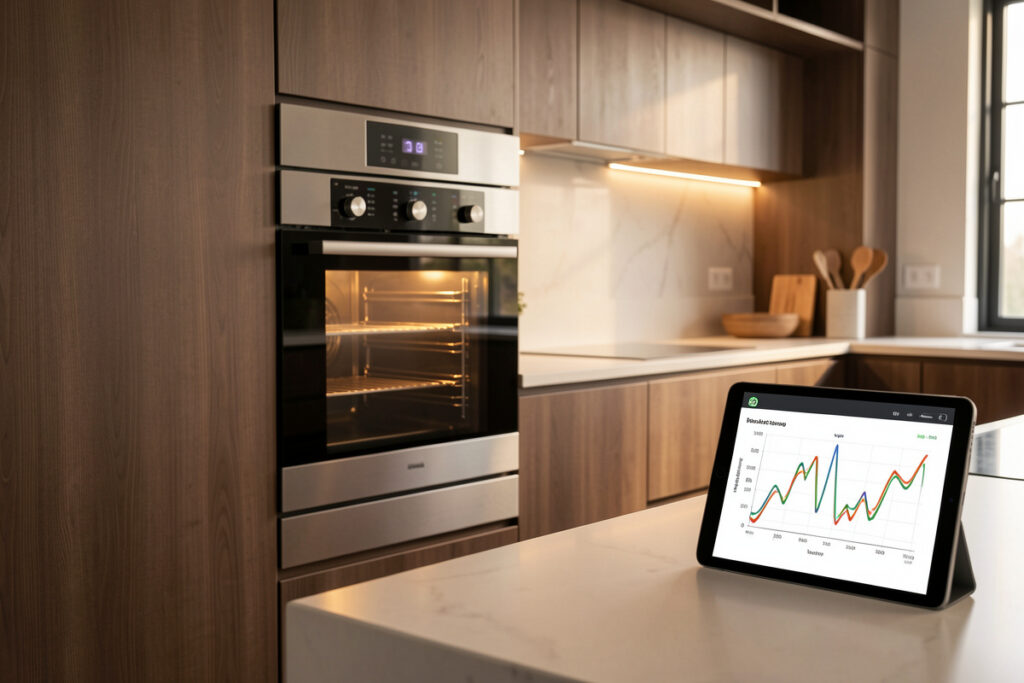
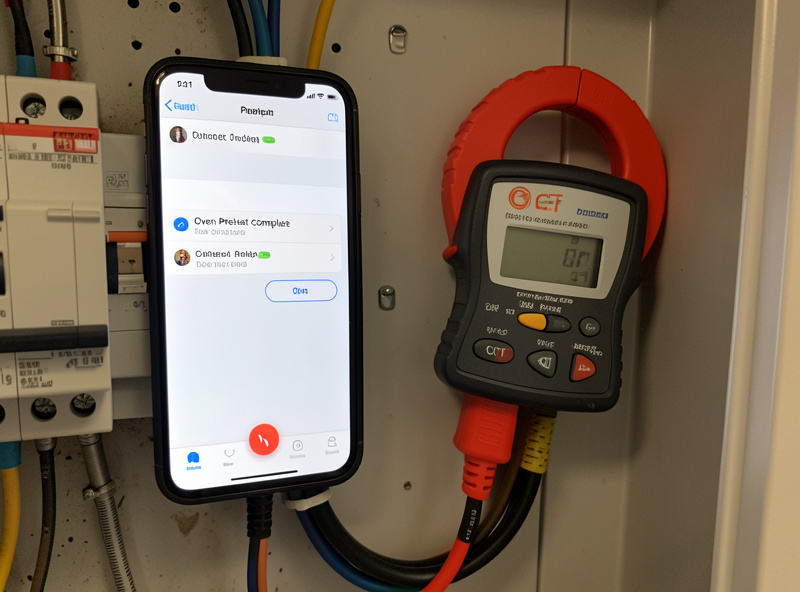
The useful oven automation reads the circuit’s power draw and reasons about how long the heat has been on. For a built-in oven, I monitor the dedicated circuit with a clamp-based energy meter rather than an inline plug — there is physically nothing to switch, which is exactly what I want on a high-draw cooking circuit. The meter tells the hub a simple truth: the oven is drawing heating power right now, and it has been for X minutes.
That single fact powers the only oven automation I genuinely rely on. When the oven has been pulling element-level power for longer than a sensible ceiling — I use 90 minutes as a default — and the house has gone into “away” mode, the hub fires a high-priority alarm. It is the digital answer to “did I leave the oven on?”, and it has caught a forgotten preheat for me more than once. Unattended cooking is the leading cause of home fires according to the U.S. Fire Administration, which is exactly the failure mode this alarm targets. The clamp-monitoring method is covered in smart appliance energy monitoring, with the panel-versus-plug decision in whole-home energy monitor vs smart plugs.
Presence is what makes the safety alarm smart
A “leave the oven on” alarm is only useful if it knows whether anyone is home and cooking. I drive it off real presence — mmWave and motion sensors plus room logic — not “a phone joined the Wi-Fi,” which is laggy and lies when a phone sleeps. If the kitchen shows occupancy, a long bake is presumably intentional and the hub stays quiet. The alarm only escalates when the oven is drawing heat and the house has emptied and nobody has been in the kitchen for a stretch.
That three-condition logic — heat on, house away, kitchen unoccupied — is what separates a useful alert from a nuisance that you mute after a week. It runs entirely on the local hub, so it fires even during an internet outage, which matters because you want a forgotten-oven alarm to be the most reliable automation you own. The presence hardware behind it is covered in the best smart home sensors, and the hub side in do you need a smart home hub.
Timing the preheat and the meal
The legitimate “timing” automations are notifications, not power switching. A preheat-done alert is a small luxury that works without touching the element: I learn the oven’s preheat power signature — a sustained high draw that tapers as it reaches temperature and the element starts cycling — and the hub notifies me when that taper happens, meaning the oven is at temperature and ready. No guessing, no standing in the kitchen watching a dial.
The same power curve gives a “cooking finished if you set a timer” nudge and an end-of-cook reminder to actually take the food out. None of this requires the oven to be connected or smart; it all comes from reading the circuit. I name these entities to the house scheme — kitchen_oven_power, kitchen_oven_state — so the timing automations read cleanly alongside the rest of the appliance layer. For the broader reading-appliance-curves technique, the method is identical to what I use on the laundry pair in smart washer dryer automation.
The one place switching is fine: countertop cookers
Low-wattage countertop appliances designed to be unplugged — a slow cooker, a rice cooker, a kettle, a small air fryer — are a different story, and a properly rated energy plug is genuinely useful there. These pull 700-1,500 W, are built to sit on a plug, and have no hardwired safety system to override. On a slow cooker I run a simple auto-off: if it has been drawing power for longer than the longest sensible cook and the house is away, the hub cuts it and tells me.
Even here I size the plug above the appliance’s peak and keep it on a mesh radio for reliable reporting — a kettle’s inrush is brief but real. The plug-versus-switch reasoning is in smart plug vs smart switch, and which plugs expose clean local control is in best smart plugs. The dividing line is simple: if it is hardwired or built-in, monitor only; if it is a countertop appliance made to be unplugged, switching is on the table.
The mistakes people make trying to automate an oven
The most common mistake is the one this whole guide exists to prevent: buying a high-amp “smart” outlet or relay and wiring it into a range circuit to “control” the oven. It is unsafe, it usually is not even code-compliant on a 240 V circuit, and it solves a problem nobody actually has — you do not need to remotely switch an oven, you need to know its state. The second mistake is trusting a connected oven’s own app as the automation layer. Those features route through a vendor cloud, lag, and get sunset on the manufacturer’s schedule, so the “smart” oven you paid a premium for goes dumb in a firmware update.
The third mistake is building the left-on alarm without presence, so it fires every time you do a long Sunday roast and you mute it inside a week. The fix is the three-condition logic — heat on, house away, kitchen unoccupied — and a sensible time ceiling rather than a hair-trigger. The fourth is putting the monitoring on Wi-Fi in the noisiest room of the house and wondering why it drops mid-cook. Every one of these is avoidable by sticking to the principle that the oven’s automation surface is power and time, read locally, and nothing else. The same discipline I apply to the fridge in smart refrigerator integration with Home Assistant applies here: monitor hard, switch never, keep it local.
Radio and network choices for a cooking circuit
Kitchens are RF-busy and full of competing 2.4 GHz devices, so I keep oven monitoring off Wi-Fi. A clamp energy meter or a mesh plug reporting over Zigbee or Z-Wave stays reliable where a Wi-Fi unit would drop first. For the dedicated oven circuit specifically, a Z-Wave or MQTT-reporting clamp in the panel is my preference because it lives at the breaker, away from the kitchen RF noise entirely.
Whatever you choose, keep it on a segmented IoT network — dozens of chatty devices on the flat home LAN is how a smart home turns flaky, and a monitoring device that drops mid-cook is worse than none. The radio comparison is in Zigbee vs Z-Wave vs Wi-Fi and the segmentation approach in the smart home VLAN guide. Get the monitoring right, leave the element alone, and the oven becomes a quietly safer appliance without ever handing a heating element to an automation.
As an Amazon Associate I earn from qualifying purchases. For the dedicated oven circuit I would use a panel CT-clamp energy monitor rather than any inline plug.
Keep Building
- Smart Home Appliance Automation (hub)
- Smart Appliance Energy Monitoring
- Smart Washer & Dryer Automation
- Dishwasher Smart Plug Automation
- Best Smart Home Appliances with Local Control