Smart Pressure Cooker 2026: Instant Pot vs CHEF iQ
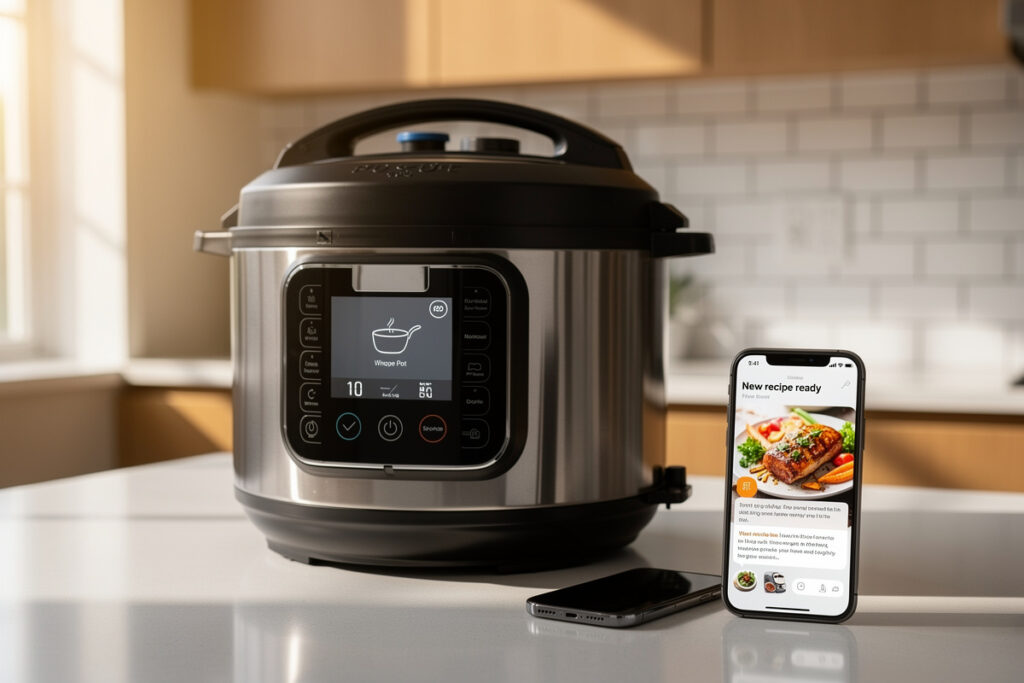
A standard $79 Instant Pot pressure-cooks a 90-minute braise down to 35 minutes and does it well. A smart pressure cooker costing $129 to $249 does the same cook and adds recipe-pushed time-and-pressure programs, cycle-end push notifications, and remote start from your phone — the question is whether those connected features justify the premium, or whether a dumb pot and a kitchen timer delivers the same result for half the price. The answer splits along cooking frequency: households running a pressure cooker 3-plus times per week extract daily value from recipe push and multi-stage automation, while households pulling it out once a month are paying for a Wi-Fi module they will never configure.
This article compares the smart layer against the $79 baseline, the two dominant brands against each other, and the multi-function consolidation against the countertop appliances it claims to replace. Every section is framed as a comparison because the entire category is a comparison: smart versus dumb, Instant Pot versus CHEF iQ, multi-function versus dedicated single-purpose, built-in sous vide versus a dedicated circulator. By the end, the decision should be obvious for your specific kitchen rather than a generic recommendation that ignores how you actually cook.
What $79 Already Buys: The Dumb Instant Pot Baseline
A $79 standard Instant Pot delivers pressure cooking, slow cooking, rice, saute, steam, yogurt, and keep-warm — seven functions from a single countertop device. The pressure cooking itself is identical to what the smart version produces: same sealed chamber, same high-pressure environment, same cook times, same natural-versus-quick release cycle. The food does not know whether the pot has Wi-Fi. A braise comes out the same whether you set the timer on a front panel or push it from an app.
What the $79 pot lacks is everything the smart layer adds: no app, no recipe push, no cycle-end notification, no voice control, no remote start, no multi-stage programming. Every cook requires manually selecting the function, setting the time, and walking back to the pot when the timer ends to confirm the float valve has dropped and the lid is safe to open. For experienced pressure-cook owners who know their recipes by heart — the 35-minute pot roast, the 8-minute hard-boiled egg, the 3-minute rice — that manual loop is muscle memory, and the smart layer adds little to nothing. For owners still learning time-and-pressure variables, or for households where one person does the cooking and another manages the timing from across the house, the smart layer removes friction that the manual pot cannot address.
The honest framing: a smart pressure cooker does not cook better food than a dumb one. It removes the operational friction around the cooking — the lookup, the timing, the checking, the transition between stages. Whether that friction matters enough to justify $50-$80 extra depends entirely on how often you encounter it.
Three Price Bands Compared Side by Side
The 2026 smart pressure cooker market splits into three tiers by price, capacity, and feature depth. The table below lays out the landscape before diving into what each band delivers.
| Category | Price Band | Capacity | What the Smart Layer Adds |
|---|---|---|---|
| Connected Basic Multi-Cooker | $129-$179 | 6 quart | Recipe push and cycle-end notification |
| Family-Size Smart Multi-Cooker | $179-$229 | 8 quart | Voice control and multi-stage cook |
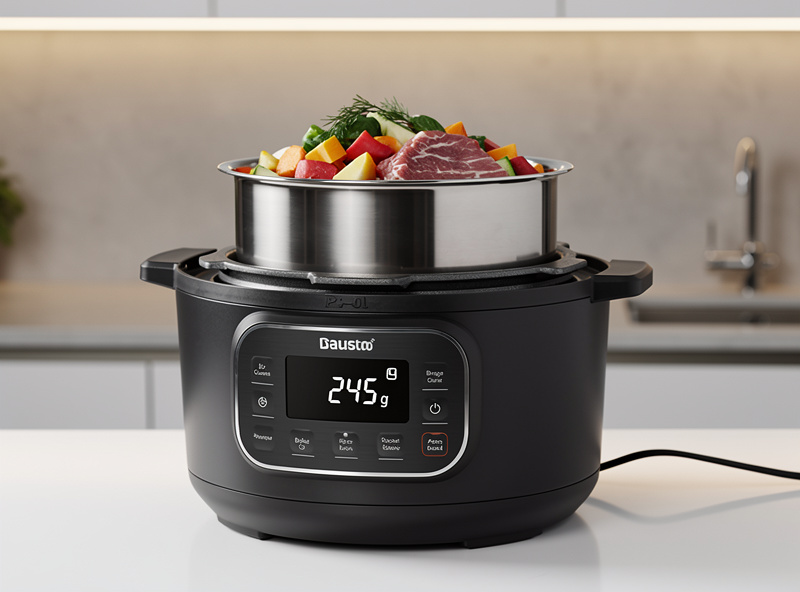
| Premium Smart Multi-Cooker | $229-$249 | 8 quart plus scale | Built-in scale and sous vide mode |
The connected basic tier covers weeknight cooking for 2-4 people on a 6-quart pot, which is the sweet spot for most households. The family-size 8-quart suits 4-6 person households or anyone batch-cooking proteins for the week — meal-prep enthusiasts, large families, households that cook once and eat for four days. The premium tier — the CHEF iQ Smart Multi-Cooker and Instant Pot Pro Plus — adds a built-in ingredient scale that turns the pot into a recipe-aware cooking station: the recipe app knows the weight of what you added and adjusts cook time accordingly. That scale is the single feature that separates the premium tier from the family-size tier in daily use — without it, the two are functionally identical except for pot diameter.
As an Amazon Associate I earn from qualifying purchases.
Recipe Push and Cycle Alerts: The Manual Steps They Replace
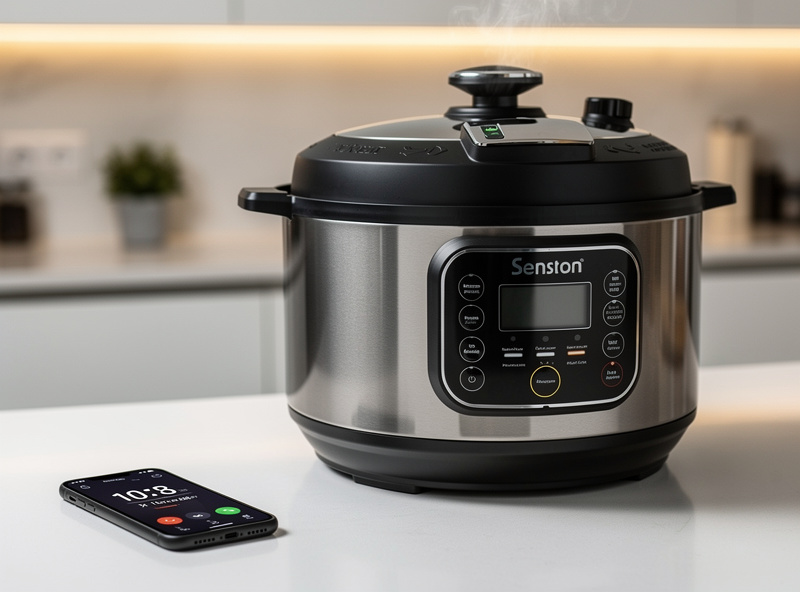
Recipe push is the connected feature most owners cite as the one that justifies the premium over a dumb pot, and the reason is structural rather than cosmetic. Pressure cooking depends on three variables — cook time, pressure level (high versus low), and natural-versus-quick release — that owners frequently misremember or look up every single time. A frozen-chicken recipe might call for 12 minutes at high pressure with a 10-minute natural release; a pot roast calls for 35 minutes at high pressure with full natural release; dried beans call for 30 minutes at high pressure with natural release. Misremember any one of those three variables and the result ranges from tough to inedible to, in the case of undercooked beans, actively unsafe.
A recipe-pushed program sends all three variables to the device from the app with a single tap, eliminating the lookup and the risk of setting the wrong combination. The app knows the recipe; the pot executes it. For households cooking from recipes rather than from memory, this is the feature that transforms the pressure cooker from a device that demands pre-cook research into one that demands only that you put the ingredients inside and tap a screen.
Cycle-end push notification addresses the second friction point, which is less about safety and more about standing around. Pressure cooking has two phases: the actual pressure cook (15-90 minutes depending on the recipe) and the natural-release window (5-30 minutes additional, during which the pressure drops on its own and the food continues cooking gently). Without a notification, owners check the pot 2-4 times to confirm the float valve has dropped — opening the app, glancing at the countdown, closing it, walking away, repeating. A push notification telling you the full cycle is complete and the lid is safe eliminates those check-ins entirely. You stop monitoring the pot and trust the alert, which frees you to do something productive in the intervening time.
Multi-stage cooking is where the smart layer pulls clearly and unambiguously ahead of manual operation. Consider a recipe that calls for sauteing aromatics for 8 minutes, then pressure-cooking for 35 minutes, then dropping to keep-warm indefinitely. On a smart pot, the three stages chain automatically — you tap the recipe once and walk away. On a dumb pot, the same recipe requires three separate button presses at three separate times: set saute for 8 minutes, return to press pressure cook for 35 minutes when the saute timer ends, return again to confirm keep-warm mode engages when the pressure cycle completes. That is three interruptions to your evening, each of which requires you to be in the kitchen at a specific moment. The smart pot collapses them into zero interruptions after the initial setup.
Instant Pot Pro Plus Versus CHEF iQ: Where Each Wins
Instant Brands and CHEF iQ are the only two names tracking seriously in the 2026 smart pressure cooker category, and the comparison between them breaks down along clean lines that map to different cooking styles. The Instant Pot Pro Plus leads on recipe library breadth and broad ecosystem support — its app covers the widest range of recipes from basics through advanced, with more community-submitted content and broader compatibility across Instant Brands’ multi-cooker lineup. If you already own an Instant Pot accessory ecosystem (silicone lids, steamer baskets, egg bites molds), the Pro Plus slots into that ecosystem seamlessly.
CHEF iQ leads on app polish, multi-stage programming depth, and the built-in scale on the flagship model. The CHEF iQ app is more tightly curated than Instant Pot’s broader-but-messier library, with better integration between the recipe screen and the cooking program — the push-to-device flow feels more intentional, less like a database dump. The built-in scale is the differentiator that no Instant Pot model matches: it weighs ingredients as you add them to the pot, and the app guides recipe scaling based on actual weight rather than volume estimates. For households that already cook by weight on a smart kitchen scale, the integrated scale removes the transfer step between weighing and cooking.
Both brands support Alexa and Google Home with voice commands for status checks, timer queries, and basic control — the broader voice-platform landscape is covered in the voice assistants and smart home protocols guide. Apple HomeKit support shifts across model years and firmware versions in this category — check each brand’s current app listing before purchase rather than relying on a guide’s snapshot, because smart-home platform support changes over a product’s life and both brands have been inconsistent about HomeKit commitments.
Other smart pressure cooker brands exist — Greater Goods Connected, several off-brand Amazon listings — but with weaker app support and shorter firmware-update track records. For a device you expect to run for 5-8 years, firmware cadence matters: Instant Brands and CHEF iQ both ship updates regularly and are actively maintaining their apps. Off-brand models often lose firmware support long before the device reaches end of life, which means the connected features you paid for degrade into manual-only operation while the heating element still has years left.
Stainless Versus Plastic: Build Quality Above the UL 1026 Floor
Every electric pressure cooker sold in the US meets UL 1026, the safety standard for household electric cooking appliances. That standard mandates a lid-lock interlock that physically prevents opening the pot while residual pressure remains inside — a baseline every reputable model meets regardless of price tier. This is the safety floor, not a premium feature, and it means that even the cheapest electric pressure cooker on the market will not open while pressurized.
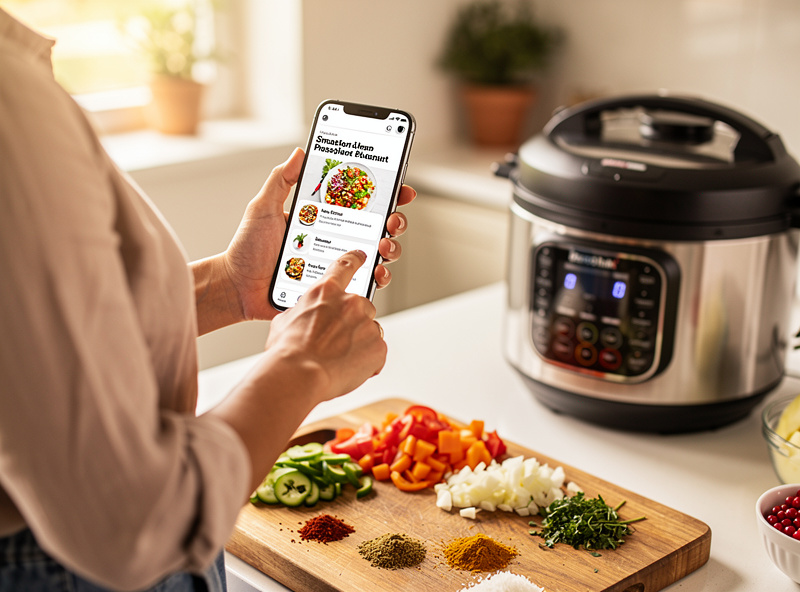
Build quality varies above that floor in ways that affect longevity and daily experience. Premium models — the Instant Pot Pro Plus and CHEF iQ flagship — use stainless-steel lids with metal float valves. Budget models often substitute plastic for the float valve and certain lid components. Stainless lasts longer and tolerates the thermal cycling of repeated pressure cooking better than plastic, which becomes brittle over years of heat exposure. The difference is not visible on day one, but it shows up in year four when the plastic float valve on a budget model cracks and starts leaking steam mid-cook.
The same split applies to inner pots. Both Instant Pot Pro Plus and CHEF iQ flagship use stainless-steel inner pots — dishwasher-safe, scratch-resistant, and effectively permanent under normal use. Cheaper models sometimes ship non-stick coated inner pots that need replacement every 3-4 years at $25-$45 per pot as the coating degrades and eventually flakes. Stainless is the clear long-term choice; non-stick is acceptable only if the price gap justifies the eventual replacement cost, which at $25-$45 every few years, it rarely does.
Consolidation Math: What a 7-Function Multi-Cooker Actually Replaces
A smart multi-cooker running 7-9 functions — pressure cook, slow cook, rice, saute, steam, yogurt, sous vide, warm — consolidates 4-5 separate countertop devices into one footprint. The counter-space savings are real and measurable for small kitchens where every appliance competes for the same strip of granite. The trade-off is more nuanced than the marketing suggests: a multi-cooker does each function competently but rarely as well as a dedicated single-purpose appliance at the same task.
The rice function produces acceptable rice but not as good as a dedicated Zojirushi rice cooker, which costs more but produces noticeably better results through fuzzy-logic temperature control that a multi-cooker cannot replicate. The sous vide mode holds temperature but not with the active circulation precision of a dedicated stick immersion circulator. The slow-cook function works but runs slightly hotter than most dedicated slow cookers, which affects recipe timing. The saute function is genuinely good — direct bottom heat with adjustable temperature — and is the one mode that matches or beats a dedicated pan for browning aromatics before a pressure cycle.
For counter-space-constrained households, the consolidation is the primary value proposition — more than the connected features, more than the recipe push. Replacing a slow cooker, a rice cooker, a yogurt maker, and a steamer with one device frees up real estate that matters in a kitchen where counter footage is the binding constraint. For households with ample counter space, keeping dedicated devices and skipping the multi-cooker produces better results per function at the cost of more appliances to store.
Pressure Cooking Versus Oven Braising: The Energy Gap
A pressure cooker uses roughly 50-70% less energy than oven braising the same dish, because the sealed chamber cooks faster and the heating element draws lower wattage than a full oven running for hours. A 35-minute pressure-cooked braise consumes a fraction of the electricity of a 3-hour oven braise at 325°F, and the Wi-Fi module on a smart model adds only 1-3 watts of standby draw — less than $4 per year — which is negligible next to the cooking-energy savings.
The smart layer itself does not save additional energy during the cook; the heating element draws the same wattage whether the pot has Wi-Fi or not. The consolidation argument is where energy savings compound for energy-conscious households: one multi-cooker replacing 4-5 separate devices also eliminates the combined standby draw of those devices sitting plugged in, each drawing 1-5 watts around the clock. Over a year, the standby savings alone can add up, though the exact figure depends on local electricity rates and how many devices you actually unplug versus just stop using.
Operating costs beyond electricity come down to consumables. Gasket replacement every 2-3 years ($10-$15) is universal across all electric pressure cookers — the silicone ring absorbs odors over time and eventually loses its seal. On non-stick models, inner-pot replacement every 3-4 years ($25-$45) adds to the lifetime cost. Stainless inner pots last the lifetime of the device and have no replacement cost, which is one reason the premium tier’s stainless pot is a better long-term value than the sticker price suggests.
Built-In Sous Vide Mode Versus a Dedicated Circulator
Premium smart pressure cookers — the CHEF iQ flagship and the Instant Pot Pro Plus — include sous vide modes that let the pot hold a precise low temperature with the lid on but no pressure, effectively turning it into a water bath. This is a genuine feature, not a marketing checkbox: it works, it holds temperature within an acceptable range for most sous vide applications, and it saves a separate countertop appliance for households that sous vide occasionally.
The comparison with a dedicated circulator is where the limitation becomes visible. Pressure cooking and sous vide represent opposite cooking philosophies: fast at high pressure (35-minute braised short rib, 18-minute pot roast) versus slow at precise low temperature (2-hour ribeye at 134°F, 90-minute chicken breast at 145°F). A dedicated Anova Precision Cooker Pro or Breville Joule circulates water actively, holding temperature to a tighter band than a pressure-cooker lid can achieve without circulation. The difference shows up on long cooks — a 24-hour brisket sous vide exposes temperature drift that a 2-hour steak cook does not, and the dedicated circulator handles the long cook without drift while the multi-cooker wanders.
For households that sous vide weekly, the dedicated circulator is the right tool. For occasional use — once or twice a month, for relatively short cooks — the built-in mode is adequate and saves both counter space and the cost of a separate device. The full comparison, including which model to choose for your cooking style, lives in the smart sous vide buyers guide, and the broader ecosystem context is in the smart kitchen appliances overview.
Frequently Asked Questions
Which smart pressure cooker leads the category?
Instant Pot Pro Plus leads on recipe library breadth and broadest ecosystem support with Alexa and Google Home. CHEF iQ Smart Multi-Cooker leads on app polish, multi-stage programming, and the built-in ingredient scale on the flagship model. Both brands maintain active firmware pipelines and multi-year app support track records.
Is the connected premium over a $79 Instant Pot justified?
For households pressure-cooking 3-plus times per week, the recipe push and cycle-end notifications justify the $50-$80 premium by eliminating the time-and-pressure lookup and the repeated lid checks. For households using a pressure cooker once a month or less, a $79 standard Instant Pot delivers the same cooking result without the premium.
Does a smart multi-cooker genuinely replace other appliances?
A 7-9 function smart multi-cooker consolidates 4-5 separate devices: pressure cooker, slow cooker, rice cooker, yogurt maker, and steamer. Premium models with sous vide add a 6th. Each function is competent but rarely matches a dedicated single-purpose appliance. Counter-space savings are the primary benefit for small kitchens.
What functionality depends on an internet connection?
Front-panel controls keep working without internet — pressure cooking, slow cooking, saute, all operate normally. You lose recipe push, voice control, cycle-end notifications, and remote start when the connection drops. The cooking is unaffected; only the smart layer goes dormant until internet returns.
Keep Building
- Smart Kitchen Appliances 2026: Complete Buyers Guide (parent hub)
- Smart Sous Vide Buyers Guide 2026: Anova vs Joule
- Smart Air Fryer Buyers Guide 2026
- Smart Kitchen Scale 2026: Recipe, Macro, Coffee Picks
- Voice Assistants & Smart Home Protocols Guide