Smart AC Units: Window and Portable Smart Conditioners
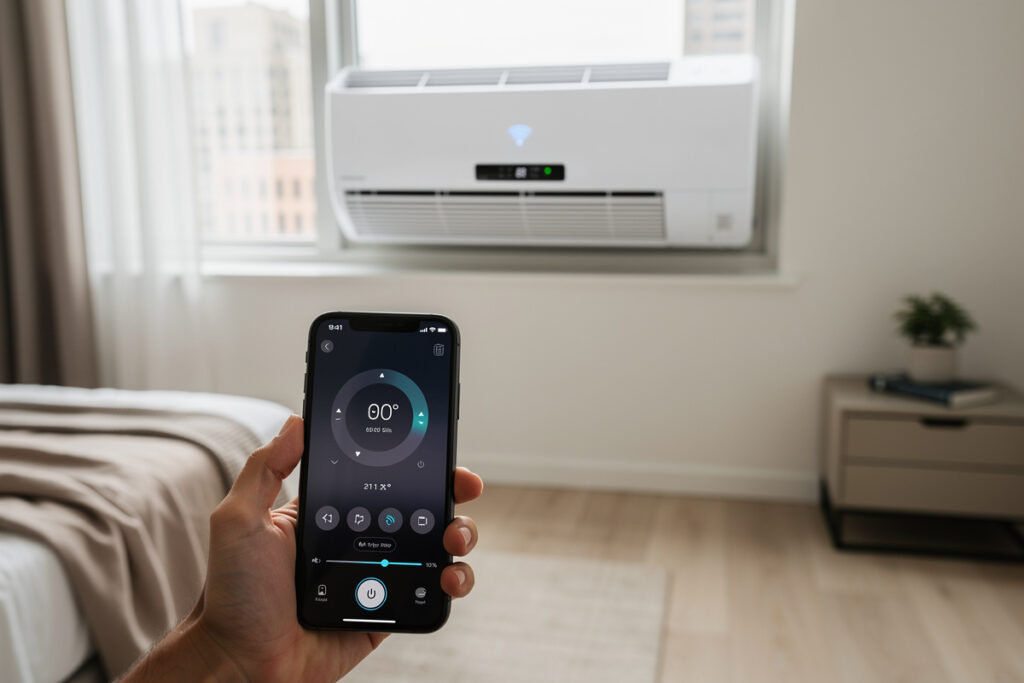
Smart window AC units now dominate the under-$700 cooling market — wifi, voice, scheduling, and ecosystem integration are standard from $300 up. The 2026 hardware leap is the U-shaped Midea design (35 percent quieter, allows window to still open) and inverter compressor models that cut electricity by roughly 35-40 percent vs traditional single-speed units. This guide covers BTU sizing, top picks at every price tier, smart features that matter for cooling vs heating, and when to buy a portable instead.
Quick Answer: Best Smart AC Unit 2026
For a 250 to 400 sqft bedroom, the Midea U-Shaped 8000 BTU ($350) is the top pick — saddle design lets you still open the window, 42 dB quiet operation, wifi + Alexa + Google. For larger rooms, the LG ThinQ 12000 BTU ($450) covers up to 550 sqft. For value, the Frigidaire Smart 8000 BTU ($280) skips premium quiet operation but hits all smart-feature checkboxes. For portable cooling without window install, Whynter ARC-14SH ($550) covers 500 sqft with smart wifi.
BTU Sizing: The First Decision
BTU (British Thermal Unit) capacity must match room area. Undersizing means the unit runs 24/7 without reaching setpoint and never dehumidifies. Oversizing means short-cycling — quick cooling without dehumidification, leaving the room cold and clammy.
| Room Area | BTU Recommended | Typical Use Case |
|---|---|---|
| 100-150 sqft | 5,000-6,000 | Small bedroom, home office |
| 150-250 sqft | 6,000-8,000 | Bedroom, dining room |
| 250-400 sqft | 8,000-10,000 | Master bedroom, large home office |
| 400-550 sqft | 10,000-12,000 | Living room, open concept |
| 550-700 sqft | 12,000-14,000 | Large living room, studio apartment |
| 700-1,000 sqft | 14,000-18,000 | Open floor plan, garage workshop |
| 1,000-1,400 sqft | 18,000-23,000 | Large open space, mini-split needed |
Add 10 percent for sunny rooms, 10 percent for rooms with heat-generating equipment (kitchens), 30 percent for rooms with high ceilings (over 8 feet).
Top Smart AC Picks 2026
Midea U-Shaped Smart Window AC — $350-$700 by BTU
The Midea U is the design innovation that justifies its premium pricing. The unit is U-shaped — the compressor (loud part) sits outside the window, the cool air handler sits inside, and the saddle design lets you still open and close the window with the unit installed. 35 percent quieter than traditional window AC at 42 dB, and the inverter compressor is rated up to 35 percent more energy-efficient than single-stage compressors per Midea’s own spec.
Smart features: wifi via SmartHome app + Alexa + Google. Voice control for setpoint and modes. Scheduling, sleep mode (gradual 2-hour ramp-down), and notification alerts.
Sizing: 8000 BTU ($350) for bedrooms; 10000 BTU ($450) for medium rooms; 12000 BTU ($550) for living rooms. The 12000 BTU model is the sweet spot for most American homes.
LG ThinQ Smart Window AC — $300-$500
The LG ThinQ line is the broadest in the smart AC category. 8000, 10000, 12000, 14000, and 18000 BTU options. Wifi via ThinQ app + Alexa + Google + SmartThings (LG owns SmartThings, so integration is best in class). 6-speed fan, multiple modes, scheduled cooling.
Sound: not as quiet as Midea U (typically 50-55 dB at low setting). Build quality is excellent and ThinQ app reliability is consistently praised.
Frigidaire Smart Window AC — $280-$450
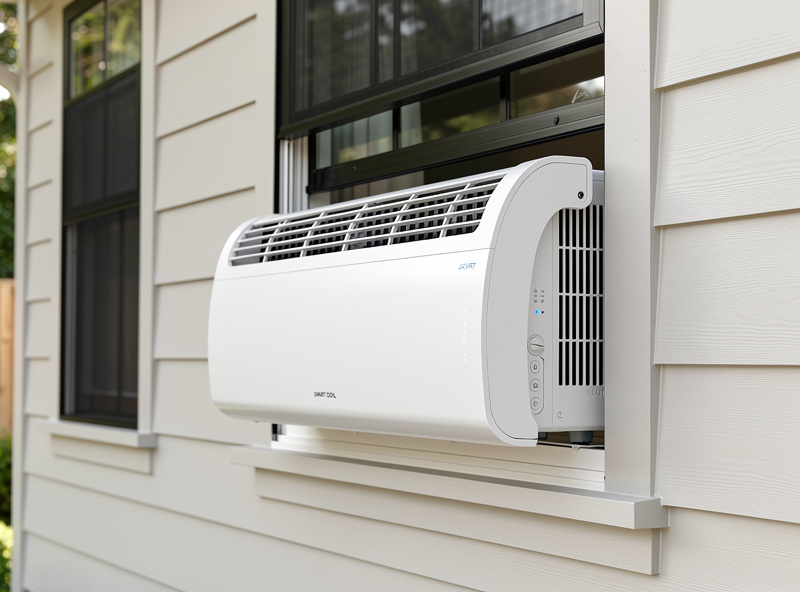
The value pick. Standard window AC form factor, smart wifi via Frigidaire app + Alexa + Google. Build is solid, app is functional. Lacks Midea U’s quiet design and LG’s ecosystem integration depth, but $80 to $150 cheaper at every BTU tier.
GE Profile Cleanstay Window AC — $400-$600
Premium pick with Microban antimicrobial filter and self-cleaning cycle. Wifi via GE SmartHQ app + Alexa + Google. Worth it if you have allergies or asthma — the antimicrobial coating is genuinely useful.
Smart Window vs Smart Portable AC
| Factor | Smart Window AC | Smart Portable AC |
|---|---|---|
| Cooling efficiency | Higher (15-25 percent more efficient) | Lower (heat exhausts through hose loses cool air) |
| Initial cost (8K BTU) | $280-$400 | $350-$550 |
| Installation | Window-mount kit, 20-30 minutes | Plug in, fit hose to window kit |
| Storage off-season | Remove or leave | Easy roll-away |
| Apartment renter approved? | Often yes (depending on building) | Always yes |
| Weight | 40-80 lbs | 50-90 lbs |
| Noise (low setting) | 40-55 dB | 50-58 dB |
Choose window AC if you can install one. Choose portable if you can’t.
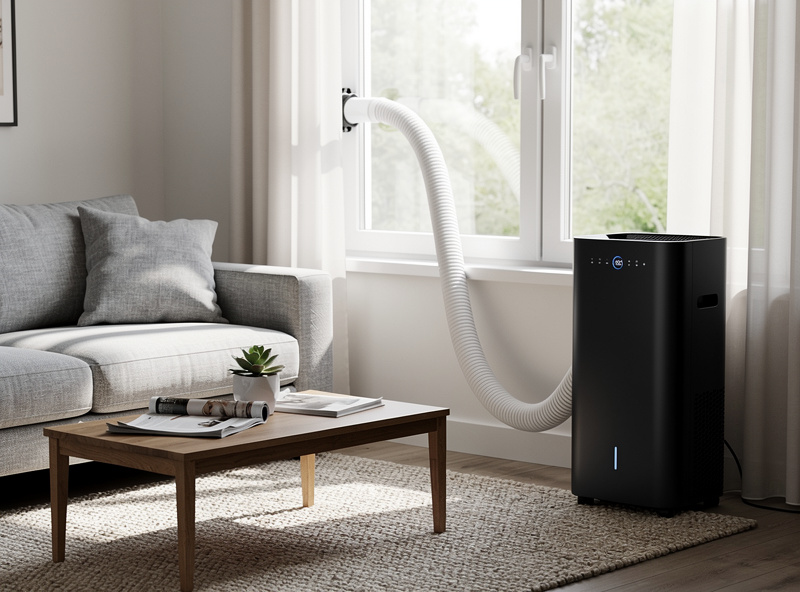
For renter constraints and choices, see the Smart Devices for Apartment Renters guide — the same constraints apply to AC.
Smart Features That Actually Matter
Pre-cooling schedule. Cool the bedroom 30 minutes before bedtime so it’s at 72°F when you walk in. Saves you from sleeping on a sweaty pillow while you wait for cooling to catch up.
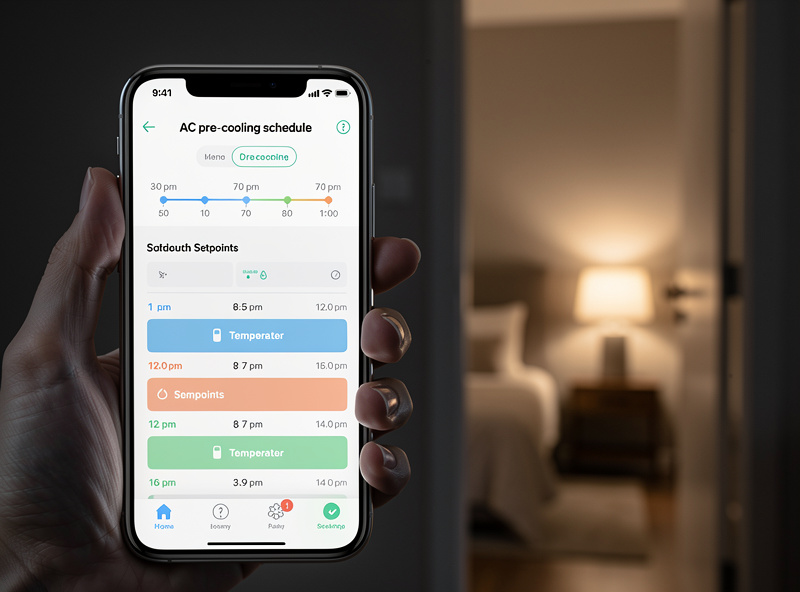
Sleep mode. Gradually raises temperature 2-3 degrees over 4-6 hours. Body temp naturally drops during sleep — fewer cold-wake-ups at 4 AM.
Geofencing. Auto-off when you leave home, auto-on as you approach. Works through smart-home routines (not direct in most AC apps).
Setpoint hold + dehumidify. Smart units hold setpoint within 1-2°F vs 4-5°F for non-smart. Dehumidify-only mode removes moisture without aggressive cooling — useful for damp shoulder seasons.
Energy reporting. Daily/weekly kWh use and cost in the app. Helpful for tracking summer electricity bills before they hit.
For a complete smart-energy stack, see the Best Smart Home Energy Management Systems guide.
Smart Features That Don’t Matter
Color-coded LED display. Pretty, but irrelevant.
Built-in air ionizer. EPA does not recommend ozone-emitting ionizers. Disable.
Voice-only control without app. Limited utility — you’ll want app for scheduling.
“Eco mode” on cheap models. On premium inverter units, Eco mode adjusts compressor speed dynamically (real efficiency gain). On cheap units, Eco mode just turns the AC off and on intermittently — same effect as setting a higher temperature.
Window AC Installation Smart Tips
Smart layer doesn’t change physical install — but it does interact with where you place the unit. The wifi antenna sits inside the AC body, so signal can be poor in masonry buildings or far from a router. Test wifi connection BEFORE drilling brackets or sealing.
For double-hung windows, the lower sash holds the AC. For casement windows (crank-out style), you need a portable AC instead — window AC will not seal in casement.
Side-curtain seals always need supplemental weather-stripping (foam tape, $5) regardless of brand. Without supplemental sealing, your AC fights ambient infiltration.
Most building codes do not require permits for window ACs under 12000 BTU, but check HOAs and apartment building rules. Some buildings ban side-protruding window units for liability and aesthetic reasons; the Midea U-shape often passes these restrictions because the unit doesn’t protrude past the wall plane.
Smart AC + Smart Thermostat Coordination
If you have central HVAC + a window AC supplementing one room (common in 2nd-floor bedrooms or sun-baked rooms), the smart pair lets the window AC run only when the central AC can’t keep up. The smart thermostat tracks the room sensor; if room temp exceeds setpoint by 2°F while central AC runs, trigger the window unit.
The full setup is covered in the Best Smart Thermostat guide and Smart Temperature Sensor for Rooms guide.
Operating Cost
| BTU | EER (Inverter) | EER (Non-Inverter) | Cost/Hour @ $0.15/kWh |
|---|---|---|---|
| 8,000 | 15 | 11 | $0.08-$0.11 |
| 10,000 | 14 | 10 | $0.11-$0.15 |
| 12,000 | 13 | 9 | $0.14-$0.20 |
| 14,000 | 12 | 9 | $0.18-$0.23 |
Inverter compressor models (Midea U, LG ThinQ premium) save roughly 35-40 percent in real-world operation by modulating compressor speed instead of cycling on/off. Annual savings: $80 to $200 depending on use.
Common Mistakes
Wrong BTU. Oversize = clammy room. Undersize = unit runs constantly. Use the table above as the starting point.
Skipping side seals. Most AC units include foam side seals — install them. Without seals, your AC is fighting outside heat infiltration.
Buying cheap “smart” without inverter. A $250 wifi AC without inverter compressor costs $80-150/year more in electricity than a $400 inverter unit. The premium pays back in 2-3 summer seasons.
Filter neglect. Wash the washable filter monthly during cooling season. Dirty filter cuts efficiency 15-25 percent.
For cooling without window AC, see the Smart Fans guide — fan + AC combination is more efficient than AC alone for shoulder seasons.
As an Amazon Associate I earn from qualifying purchases.
My Portable AC Automation
My portable AC unit sits on a heavy-duty smart plug rated for 15 amps, controlled by the bedroom temperature sensor. When the bedroom hits 74F at night, the AC runs until it drops to 70F. The smart plug handles the inrush current fine, these units pull about 900 watts running but spike higher on compressor startup. Verify the plug rating before trusting it: a standard 10-amp smart plug on a portable AC is a fire risk. The automation saves real money by cooling only when the room actually needs it.
Are smart window ACs worth the upgrade?
Yes for inverter compressor models — they cut electricity 30 to 40 percent vs single-stage compressors. The smart layer adds pre-cooling schedules, sleep mode, and voice control. Skip the smart layer if you’ll always use the same setting and never adjust remotely.
What is the quietest smart window AC?
The Midea U-Shaped at 42 dB on low is the quietest smart window AC tested in 2026. The U-shape design routes the loud compressor outside the window. LG ThinQ premium models run 50 to 55 dB. Frigidaire and GE land in the 55 to 60 dB range.
How many BTU do I need?
100-150 sqft: 5,000-6,000 BTU. 150-250 sqft: 6,000-8,000 BTU. 250-400 sqft: 8,000-10,000 BTU. 400-550 sqft: 10,000-12,000 BTU. Add 10 percent for sunny rooms, 30 percent for high ceilings.
Can a smart AC integrate with my thermostat?
Yes through smart-home routines. Most smart thermostats can trigger a window AC via Alexa, Google Home, SmartThings, or HomeKit when a room sensor exceeds setpoint. Direct thermostat-to-AC pairing is rare; routine-based coordination is the standard approach.
Should I get a window or portable smart AC?
Window AC is 15 to 25 percent more efficient and typically 10 to 30 dB quieter than portable. Choose window if your window can host one. Choose portable if you have casement windows, building restrictions, or want to roll the unit between rooms.
How much does a smart window AC cost to run?
An 8,000 BTU inverter unit costs $0.08 to $0.11 per hour at $0.15 per kWh. Running 8 hours a day for 4 summer months totals $80 to $110. Non-inverter units cost 30 to 40 percent more. Sleep mode and pre-cooling schedules can cut bills another 10 to 20 percent.
Related Articles
- Smart Air Purifier 2026: Complete Buyers Guide
- Smart Humidifier: Whole-Home and Room Picks
- Smart Dehumidifiers: Basement and Crawlspace
- Smart Fans: Tower, Pedestal, and Ceiling
- Best Smart Thermostat 2026